

(UroToday.com) The 2026 GU ASCO annual meeting featured a urothelial carcinoma session and a presentation by Dr. Can Aydogdu discussing integrating genomic profiling and circulating tumor DNA monitoring to optimize surveillance strategies in muscle-invasive bladder cancer.
Up to 50% of patients with muscle-invasive bladder cancer relapse following curative-intent therapy, underscoring limitations of current surveillance with imaging and cystoscopy. ctDNA enables detection of molecular residual disease and early recurrence; the genomic factors associated with ctDNA detection and their prognostic relevance remain poorly defined. Integrating ctDNA monitoring with tumor genomic profiling may refine surveillance strategies and improve biologic risk stratification in muscle-invasive bladder cancer.
Patients with histologically confirmed urothelial carcinoma who underwent curative-intent treatment (radical cystectomy, neoadjuvant chemotherapy + radical cystectomy, or trimodality therapy) between September 2022 – August 2025 were retrospectively identified. ctDNA testing (Signatera assay) was performed before treatment initiation and every 3 months thereafter. Tumor genomic profiling was conducted using the Altera comprehensive genomic panel (> 400 genes).
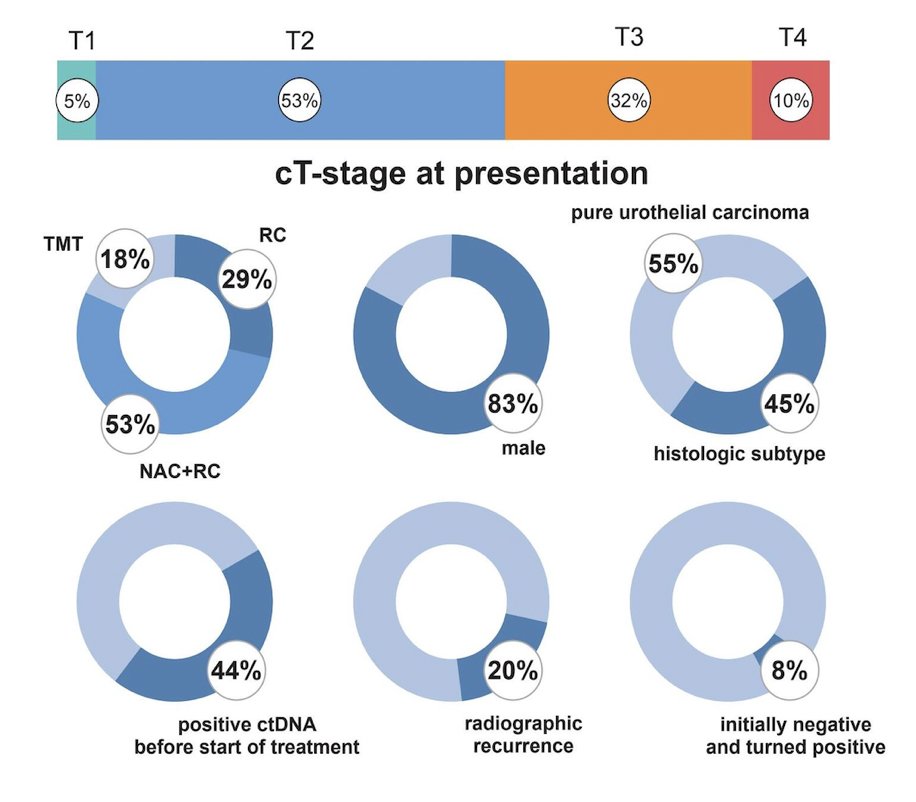
A total of 66 patients were included, with a median age of 69.5 years and 83% male patients. Treatment modalities included neoadjuvant chemotherapy + radical cystectomy in 53%, radical cystectomy alone in 29%, and trimodality therapy in 18%. At diagnosis, clinical stage was T1 5%, T2 53%, T3 32%, and T4 10%, with pure urothelial carcinoma histology in 55%. Pre-treatment ctDNA was positive in 44%. Over a median follow-up of 9.6 months, radiographic recurrence occurred in 20%, 77% of whom were ctDNA-positive at baseline. Among initially ctDNA-negative cases, 8% converted to positive and 92% remained negative during surveillance:
Across all patients, the most frequently altered genes were TERT (74%), TP53 (61%), ARID1A (23%), KMT2D (23%), and RB1 (23%):
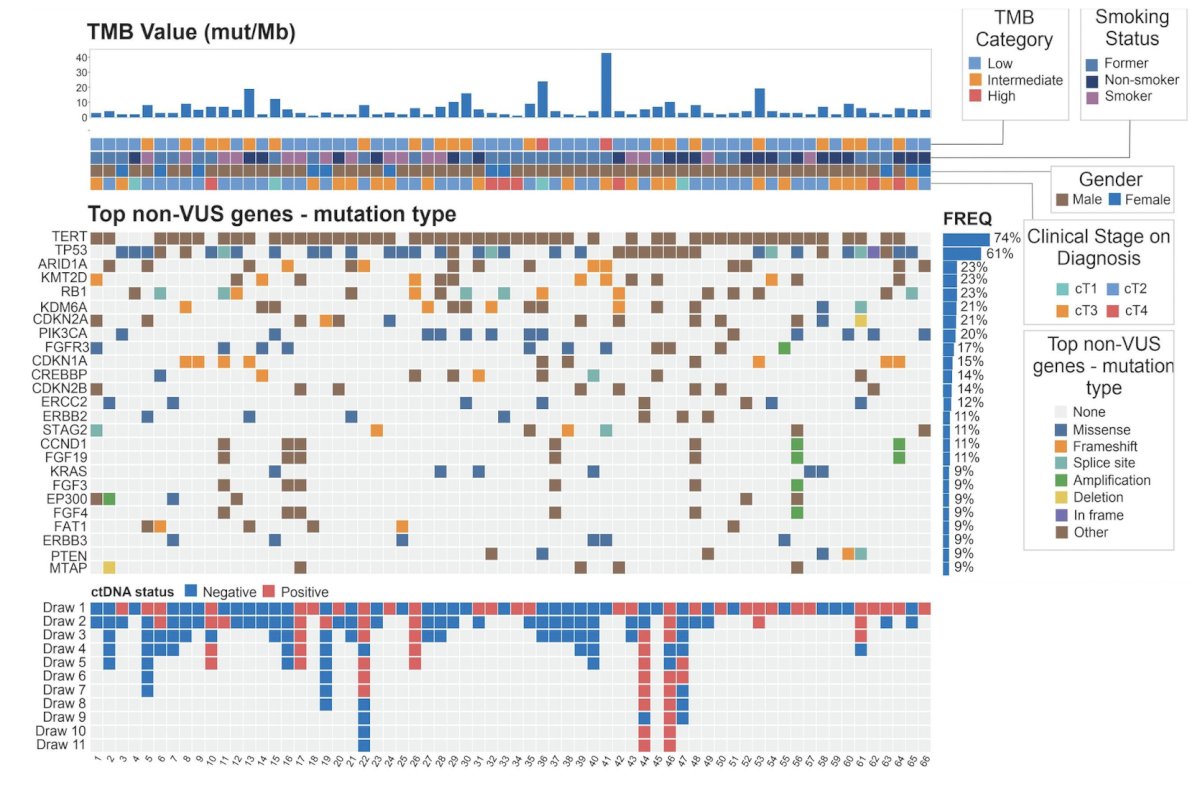
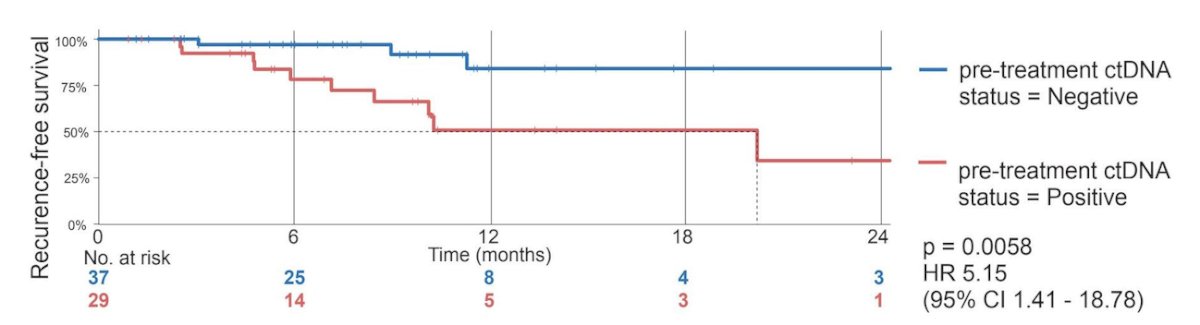
ctDNA positivity was significantly associated with ERBB3 (OR 0.06; p = 0.024) and TP53 (OR 3.2; p = 0.044). Patients with baseline ctDNA positivity had inferior recurrence-free survival versus those that were baseline ctDNA negative (HR 5.15, 95% CI 1.41–18.78; p = 0.0058):
Dr. Aydogdu concluded his presentation discussing integrating genomic profiling and circulating tumor DNA monitoring to optimize surveillance strategies in muscle-invasive bladder cancer with the following take-home points:
- ctDNA positivity was associated with specific genomic alterations in muscle-invasive bladder cancer, suggesting a biologic basis for molecular disease detection
- Integration of ctDNA monitoring with tumor genomic profiling may enhance surveillance and risk stratification
- Initial ctDNA negativity remained undetectable in the majority of cases following curative-intent therapy, supporting further investigation of treatment de-escalation strategies in this subgroup
Presented by: Can Aydogdu, MD, University Hospital, LMU Munich, Munich, Germany