

(UroToday.com) The 2026 GU ASCO annual meeting featured a urothelial carcinoma session and a presentation by Dr. Joep de Jong discussing the association of non-luminal subtype with overall survival in high-risk non muscle invasive bladder cancer patients. Non muscle invasive bladder cancer accounts for approximately 75% of all bladder cancer cases, and high-risk non muscle invasive bladder cancer is generally treated by complete TURBT followed by intravesical therapy. While intravesical BCG is considered an effective adjuvant therapy, high-risk non muscle invasive bladder cancer includes a clinically heterogeneous group of cancers with a wide range of recurrence and progression rates. Unfortunately, historical risk stratification models based on clinicopathologic features are relatively inaccurate, and robust prognostic tests are lacking. Furthermore, novel therapeutic regimens have recently been explored, highlighting the need for biomarkers for clinical decision-making.
Decipher Bladder is a transcriptome-wide molecular subtyping assay that classifies bladder cancers into luminal and non-luminal subtypes. While this assay had initially been developed for clinical decision-making in muscle invasive bladder cancer, recent retrospective studies revealed utility for predicting pathological upstaging in high-risk non muscle invasive bladder cancer patients undergoing radical cystectomy surgery. Namely, the Decipher non-luminal subtype was significantly associated with higher pathological stage at radical cystectomy, when compared to high-risk non muscle invasive bladder cancer that was classified as Decipher luminal molecular subtype. These findings suggest improvement in clinical staging of high-risk non muscle invasive bladder cancer by characterizing bladder cancer biology.
The Bladder Cancer Prognosis Programme (BCPP) consists of a follow-up study of bladder cancer patients recruited via 16 urology centers in the West Midlands and a bladder cancer Biobank. In this study, Dr. de Jong evaluated the prognostic performance of Decipher Bladder among high-risk non muscle invasive bladder cancer cases included in the BCPP registry. Furthermore, they leveraged Decipher GRID v3.1 for an independent prognostic evaluation of the Lund subtyping classes in high-risk non muscle invasive bladder cancer.
The Decipher Bladder genomic subtyping classifier (Veracyte) was performed on bladder TURBT specimens from high risk non muscle invasive bladder cancer patients included in the prospectively followed Bladder Cancer Prognosis Programme registry (University of Birmingham, UK). Genomic subtyping classifier, a classifier originally developed for muscle invasive bladder cancer were evaluated for the primary endpoint of overall survival using Kaplan-Meier and Cox hazards analysis. Subgroup analyses included very high risk non muscle invasive bladder cancer as categorized by the 2024 Guidelines on non muscle invasive bladder cancer by the European Association of Urology (EAU).
A total of 259 high risk non muscle invasive bladder cancer patients were analyzed of which 67 patients (26%) were stage Ta and 192 patents were stage T1 (74%):
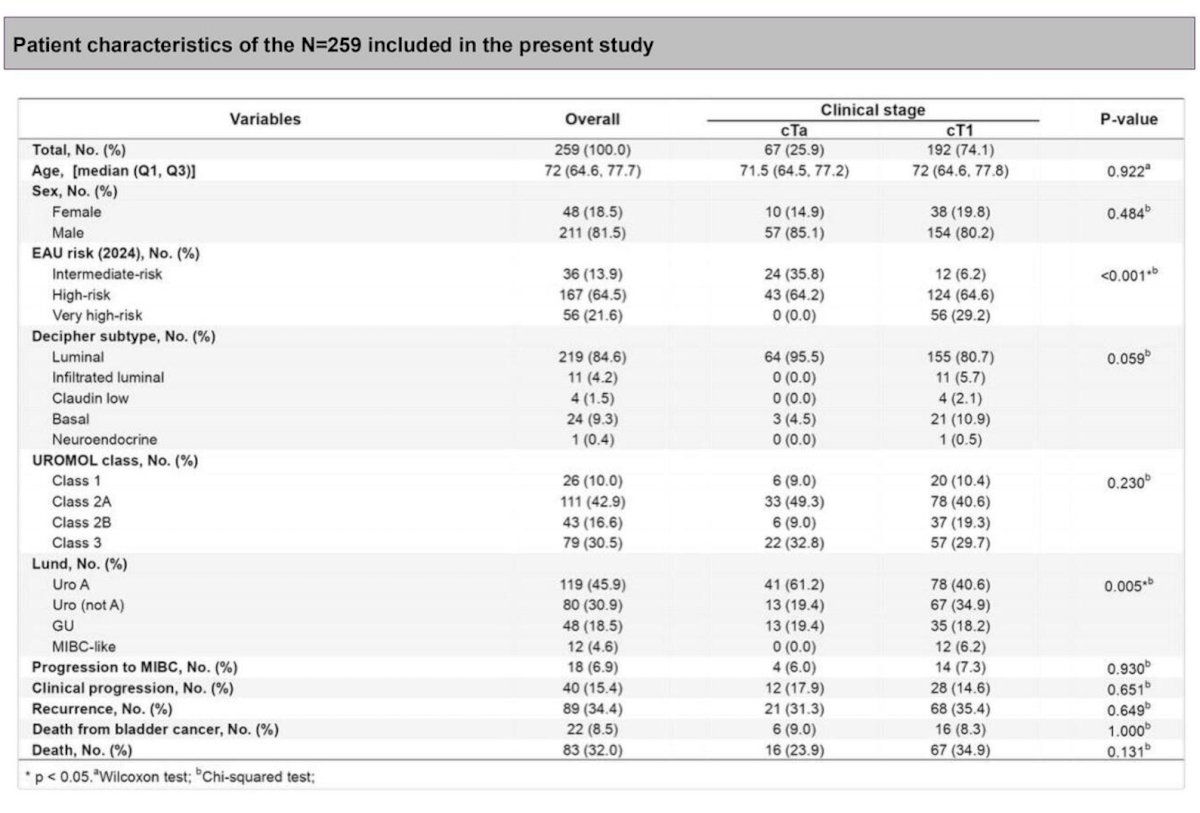
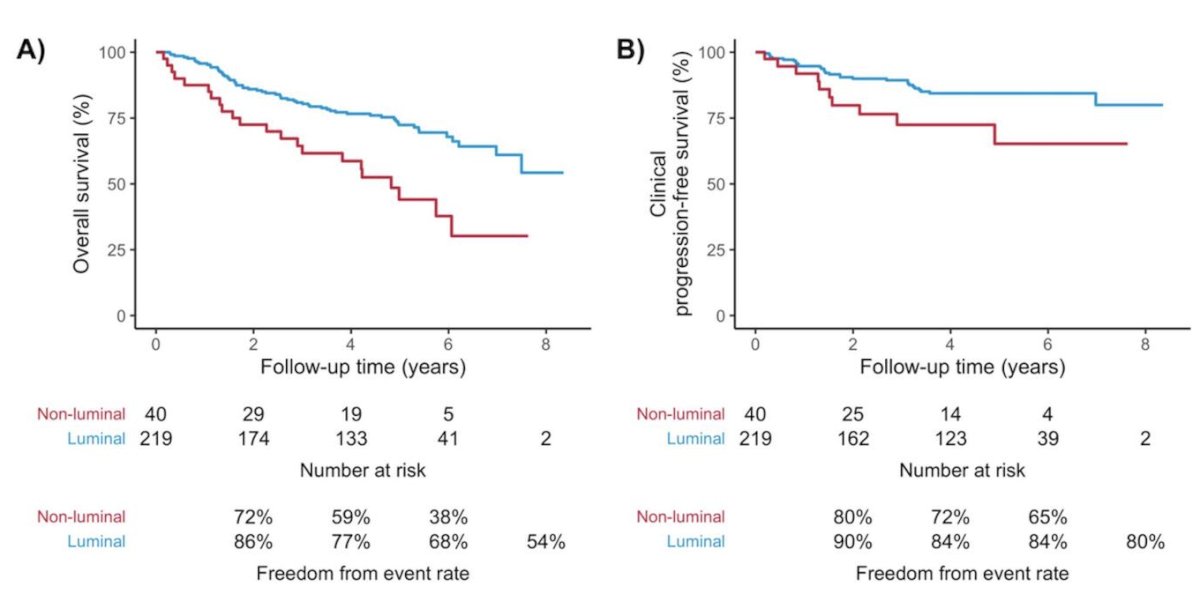
Overall, 83 patients (32%) died with median follow-up time for censored patients of 5.2 years (IQR 4.1-5.9 years). Molecular subtyping identified 219 luminal and 40 non-luminal tumors. Comparing luminal and non-luminal high risk non muscle invasive bladder cancer, the investigators found no significant differences for patient age and sex, whereas cT1 disease was significantly more present among non-luminal disease (p = 0.007).
Patients with non-luminal tumors had worse overall survival with 22 (55%) deaths in patients with non-luminal tumors and 61 (28%) deaths in patients with luminal tumors, corresponding to 5-year overall survival estimates of 44% for non-luminal and 72% for luminal high risk non muscle invasive bladder cancer. These findings were also corroborated for progression free survival:
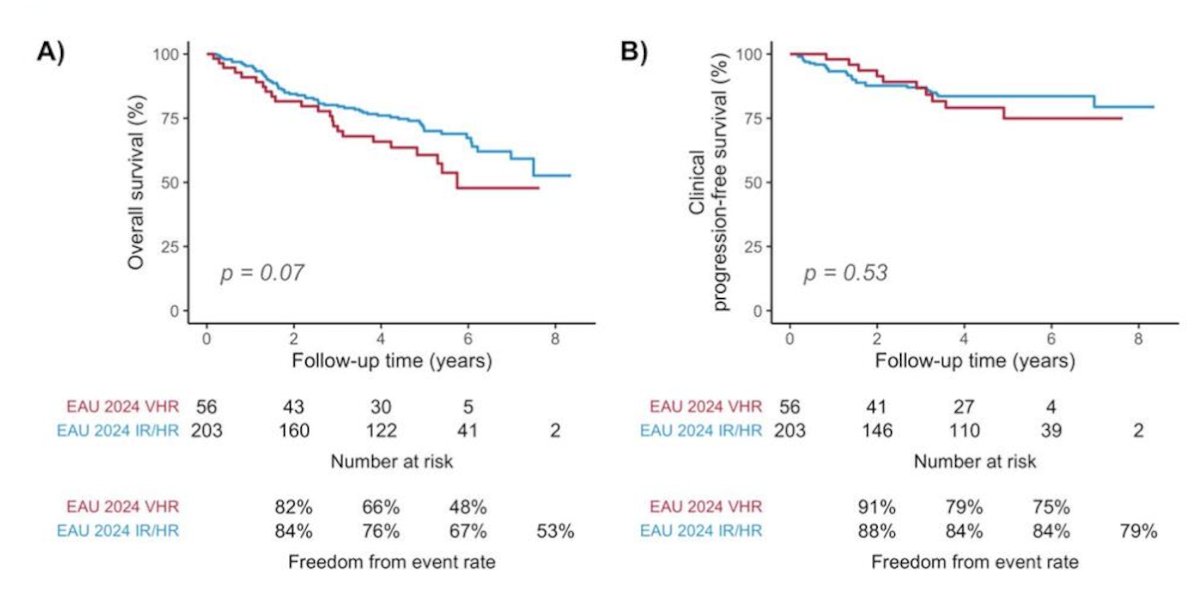
Multivariable analyses revealed a significant association between molecular tumor subtype and overall survival after adjusting for baseline clinical variables (HR 1.91, 95% CI 1.16 - 3.15, p = 0.01). Application of the EAU 2024 guidelines revealed 56 patients (22%) were classified as very-high risk. Among these, non-luminal subtype at baseline trended towards association with overall survival (p = 0.07) but not progression free survival (p = 0.53):
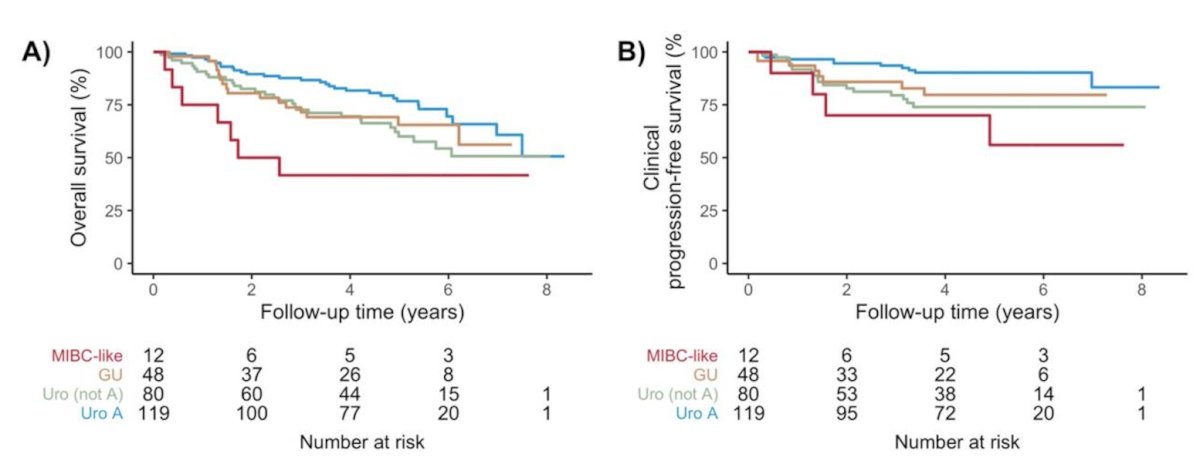
The following Kaplan-Meier estimates highlight overall survival and progression free survival by Lung:
Dr. de Jong concluded this presentation discussing the association of non-luminal subtype with overall survival in high-risk non-muscle invasive bladder cancer patients by emphasizing that non-luminal tumors at initial presentation harbor more aggressive disease among high risk non muscle invasive bladder cancer, reflected by worse overall survival on long-term follow-up as compared to luminal tumors.
Presented by: Joep de Jong, MD, Erasmus University Medical Center, Rotterdam, The Netherlands
Written by: Zachary Klaassen, MD, MSc – Urologic Oncologist, Associate Professor of Urology, Georgia Cancer Center, Wellstar MCG Health, @zklaassen_md on Twitter during the 2026 Genitourinary (GU) American Society of Clinical Oncology (ASCO) Annual Meeting, San Francisco, CA, Thurs, Feb 26 – Sat, Feb 28, 2026.
Related content: Biomarker-Based Classification Evaluated for Predicting Progression in High-Risk NMIBC - Joep de Jong