

(UroToday.com) The 2025 GU ASCO annual meeting featured a prostate cancer trials in progress session and a presentation by Dr. Arun Azad discussing EvoPAR-Prostate01, a phase III, double-blind, placebo-controlled, 2-cohort, randomized study of saruparib (AZD5305) in combination with androgen receptor pathway inhibitors in patients with metastatic hormone-sensitive prostate cancer (mHSPC) with and without homologous recombination repair mutation.
ADT + androgen receptor pathway inhibitors have improved outcomes for patients with mHSPC, but patients will eventually progress to mCRPC, which is associated with poor survival outcomes. PARP inhibitors, in combination with androgen receptor pathway inhibitors, are approved for treatment of metastatic castration-resistant prostate cancer (mCRPC). PARP inhibitor utilization in earlier lines of treatment may result in greater magnitude of benefit. Furthermore, the efficacy of PARP inhibitor therapy for patients with HHR mutation mHSPC are being assessed in the ongoing phase III studies TALAPRO-3 and AMPLITUDE.
Saruparib is a potential best-in-class PARP inhibitor, which selectively inhibits and traps PARP1, has minimal effect on PARP2, and hence may offer an improved therapeutic window compared with currently approved nonselective PARP inhibitors. In the PETRA study, the favorable safety profile and low dose reduction rate observed with saruparib monotherapy compared with approved PARP inhibitors suggests that patients may be able to remain on treatment longer at an optimal dose (60 mg daily), which may improve efficacy. Moreover, the efficacy and safety of saruparib plus androgen receptor pathway inhibitors for the treatment of mHSPC and mCRPC are being assessed in the phase I/IIa PETRANHA study. The phase III EvoPAR-Prostate01 study (NCT06120491) is evaluating the efficacy and safety of saruparib plus physician’s choice of androgen receptor pathway inhibitor (abiraterone, darolutamide, or enzalutamide) compared with placebo plus physician’s choice of androgen receptor pathway inhibitor in participants with mHSPC.
This is a 2-cohort, 2-arm, randomized, double-blind, placebo-controlled, multicenter global study. Key eligibility criteria include (i) age ≥18 years, (ii) histologically confirmed mHSPC (de novo or recurrent low- or high-volume disease), (iii) ECOG PS 0-1, and (iv) confirmed, prospectively defined HRR gene mutation status (defined by the presence/absence of pathogenic/likely pathogenic mutations in ≥1 of the genes BRCA1, BRCA2, ATM, CDK12, PALB2, RAD51B, RAD51C, RAD51D, and BARD1). Participants must be receiving ADT throughout the study or have undergone bilateral orchiectomy, and must be suitable for treatment with androgen receptor pathway inhibitors. Key exclusion criteria include prior therapy with PARP inhibitors, prior chemotherapy or androgen receptor pathway inhibitors in the mHSPC setting (prior androgen receptor pathway inhibitors for localized disease permitted), and history of, or suspected, myelodysplastic syndrome/acute myeloid leukemia. Participants are allocated to either the HRR mutation or non-HRR mutation cohort based on prospective testing of both tumor tissue and circulating tumor DNA. Participants are randomized 1:1 to receive saruparib plus physician’s choice of androgen receptor pathway inhibitor or placebo plus physician’s choice of androgen receptor pathway inhibitor. Treatment continues until disease progression, unacceptable toxicity, or participant-initiated withdrawal: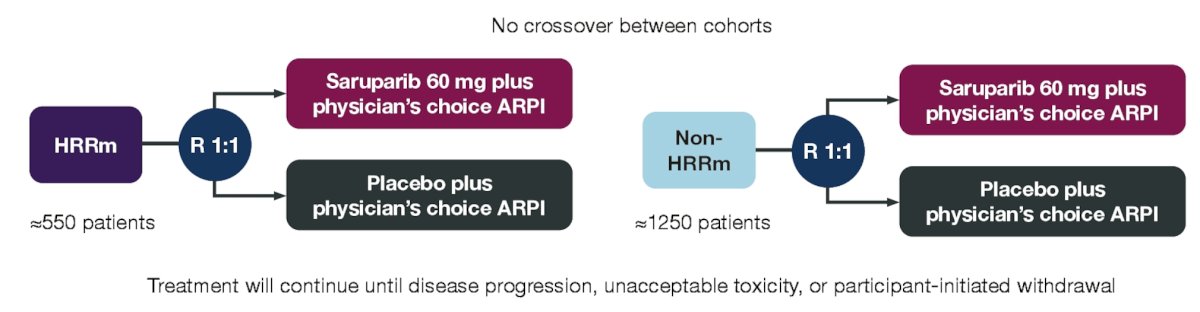
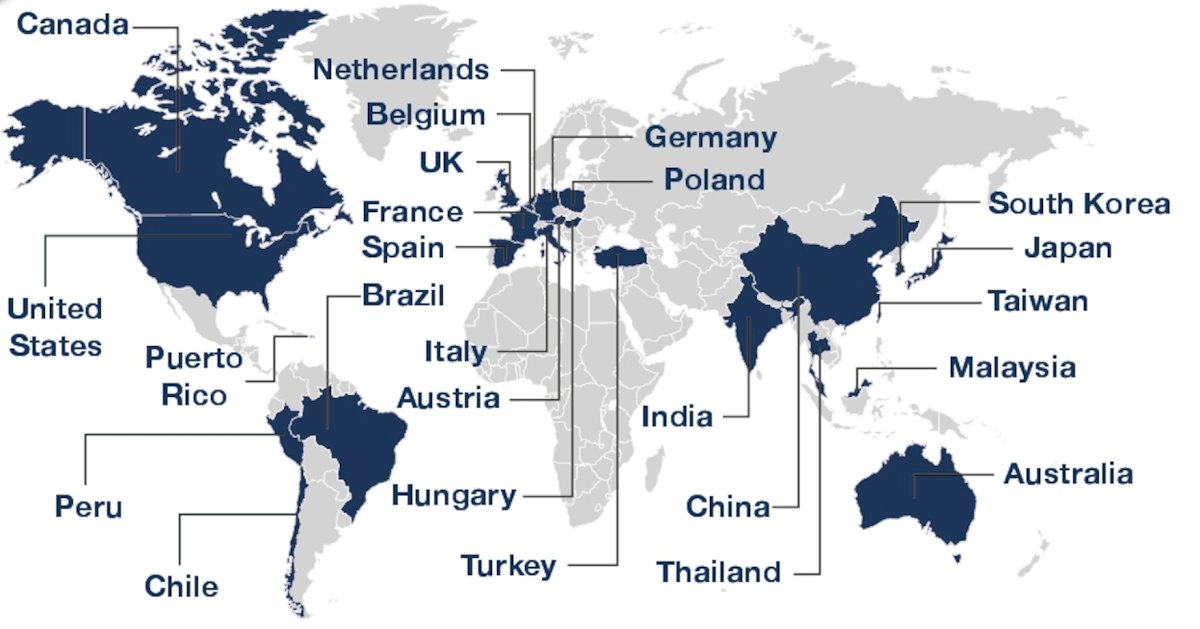
The primary endpoint is radiographic progression free survival, with overall survival a key secondary endpoint. Planned statistical analyses of radiographic progression free survival and overall survival will be conducted within each cohort using a stratified log-rank test. Approximately 1,800 participants (550 HRR mutation; 1,250 non-HRR mutation) will be randomized. Enrollment began in November 2023 and is ongoing, with 371 study sites recruiting or planning to recruit patients from 25 countries across Asia-Pacific, Europe, North America, and South America:
Presented by: Arun Azad, MBBS, PhD, FRACP, Peter MacCallum Cancer Centre, Melbourne, Australia
Written by: Zachary Klaassen, MD, MSc – Urologic Oncologist, Associate Professor of Urology, Georgia Cancer Center, Wellstar MCG Health, @zklaassen_md on Twitter during the 2025 Genitourinary (GU) American Society of Clinical Oncology (ASCO) Annual Meeting, San Francisco, CA, Thurs, Feb 13 – Sat, Feb 15, 2025.