

(UroToday.com) The 2025 GU ASCO annual meeting featured a prostate cancer session and a presentation by Dr. Maarten J. van der Doelen discussing re-treatment of metastatic castration-resistant prostate cancer (mCRPC) patients with radium-223 therapy in daily practice.
Radium-223 is a therapeutic option for mCRPC patients with symptomatic bone metastases and consists of up to 6 monthly injections.1 Importantly, after the approved 6 radium-223 injections, treatment may be repeated. This study presented at GU ASCO 2025 evaluated the safety and efficacy of radium-223 re-treatment in mCRPC patients in routine clinical practice.
This multicenter, retrospective cohort study included patients with bone mCRPC who previously received 6 consecutive injections of radium-223 according to standard of care, and received at least one radium-223 re-treatment injection between 2014 and 2024. Patients with visceral metastases were excluded. The primary endpoint was safety (hematological and non-hematological adverse events, including skeletal-related events) up to 30 days after last radium-223 injection, and secondary endpoints included (i) the number of administered injections, (ii) overall survival, and (iii) alkaline phosphatase (ALP) and (iv) PSA responses. Exploratory analyses intended to find variables associated with ALP response during re-treatment and completion of radium-223 re-treatment.
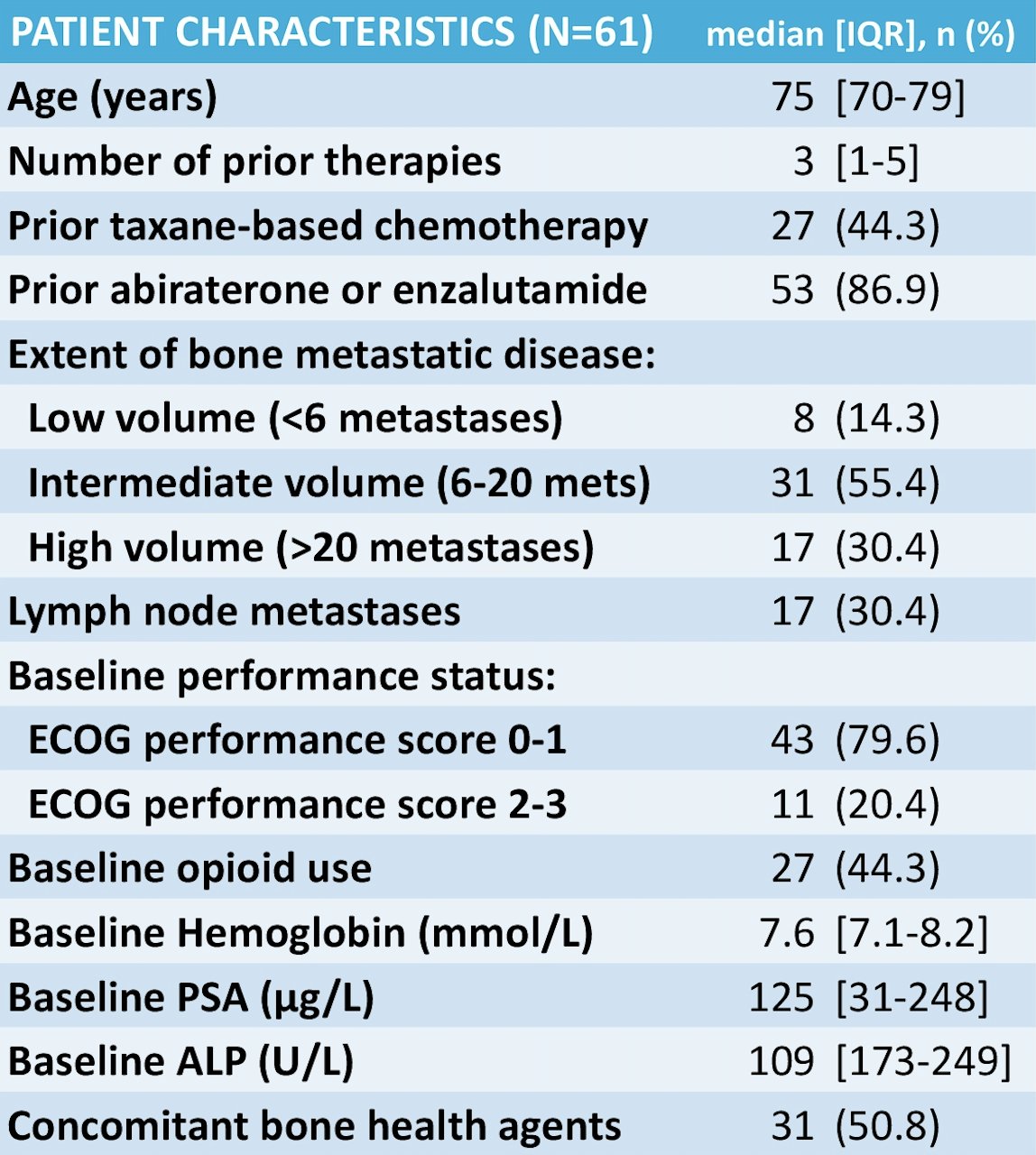
Across 7 Dutch medical centers, 61 patients were included. The median age was 75 years (IQR 70-79), 44.3% received prior chemotherapy, 86.9% previously received at least one androgen receptor pathway inhibitor, and 50.8% received concomitant bone health agents. The median number of prior systemic therapies was 3 (IQR 1-5) and 79.6% of patients had an ECOG performance status ≥1:
Overall, 95% of patients had at least one hematological adverse event, including 14% grade 3 hematological adverse events. In total, 44 (75%) patients experienced at least one non-hematological adverse event during radium-223 re-treatment. No grade 4-5 adverse events occurred. There were 11 (18%) patients that developed a skeletal-related event during radium-223 re-treatment, including 2 (3.3%) patients with spinal cord compression: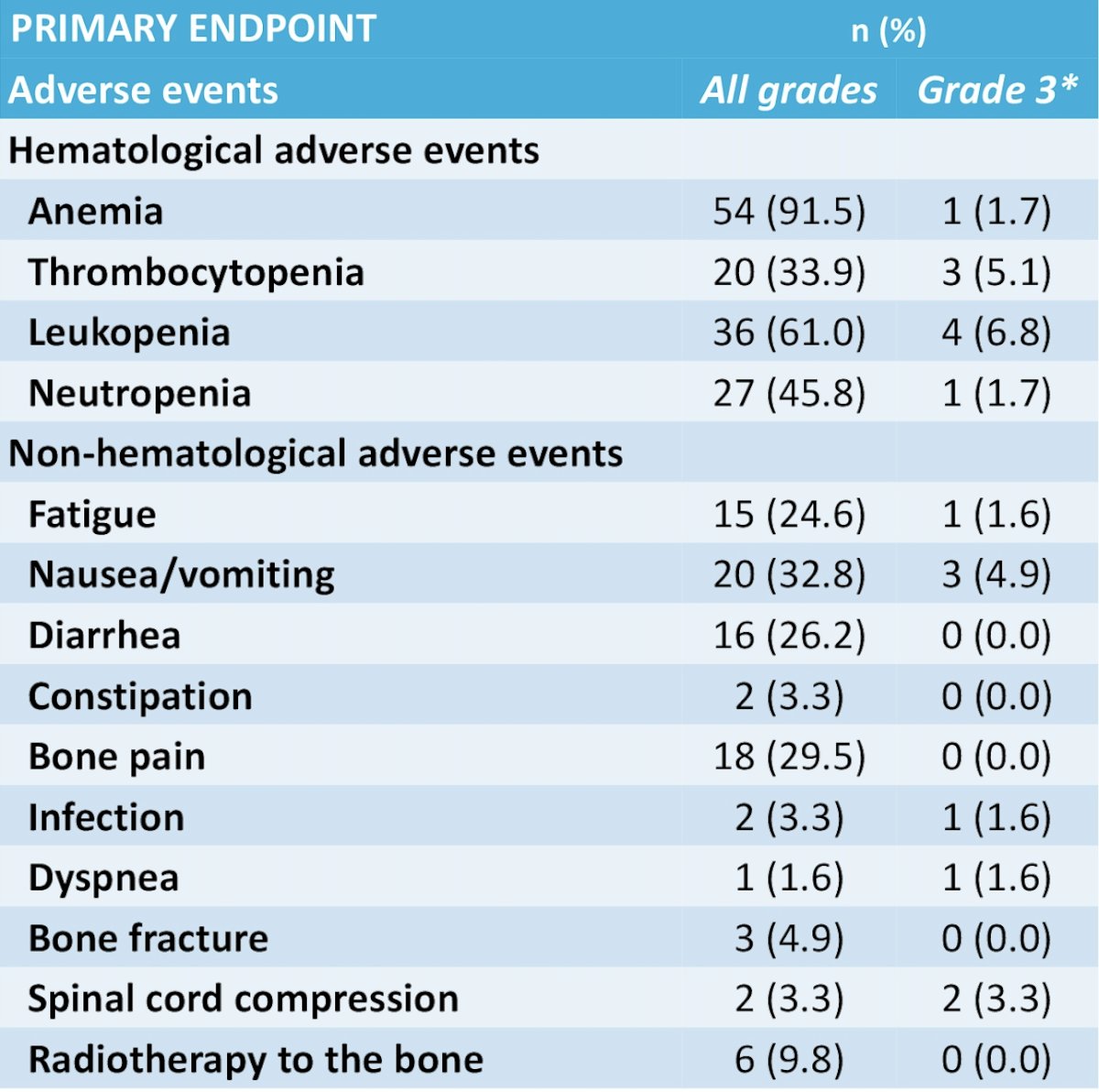
Time until the first skeletal-related event was 9.5 months (95% CI, 6.2-12.8) and patients received a median number of 6 radium-223 re-treatment injections (range: 1-12). Overall survival was 16.9 months (95% CI 11.9-21.9) from the start of re-treatment, 55.9% of patients had a ≥30% ALP response, and 11.9% had a ≥30% PSA response. Other than elevated ALP levels at baseline, no variables were associated with ≥30% ALP response during radium-223 re-treatment. High baseline hemoglobin levels, no prior chemotherapy and a PSA response ≥30% during the initial radium-223 therapy were predictors for completion of 6 radium-223 re-treatment injections.
Dr. van der Doelen concluded his presentation discussing re-treatment of mCRPC patients with radium-223 therapy in daily practice with the following take-home points:
- Radium-223 re-treatment was safe, with low incidence of hematologic and non-hematologic adverse events, including skeletal-related events
- The high number of administered injections and the high ALP and PSA response rates suggest benefit in this cohort of advanced mCRPC patients
- Further research should directly compare the efficacy of life prolonging therapies to determine the position of radium-223 re-treatment within the therapeutic landscape of mCRPC
Presented by: Maarten J. van der Doelen, Radboud University Medical Center, Nijmegen, Netherlands
Written by: Zachary Klaassen, MD, MSc – Urologic Oncologist, Associate Professor of Urology, Georgia Cancer Center, Wellstar MCG Health, @zklaassen_md on Twitter during the 2025 Genitourinary (GU) American Society of Clinical Oncology (ASCO) Annual Meeting, San Francisco, CA, Thurs, Feb 13 – Sat, Feb 15, 2025.
Reference:
- Parker C, Nilsson S, Heinrich D, et al. Alpha emitter radium-223 and survival in metastatic prostate cancer. N Engl J Med 2013;369(3):213-223.