

(UroToday.com) The 2025 American Society of Clinical Oncology Genitourinary (ASCO GU) cancers symposium held in San Francisco, CA was host to the Trials in Progress Poster Session A: Prostate Cancer. Dr. Michael J. Morris presented the trial in progress poster 289: CONVERGE-01: Dosimetry, randomized dose optimization, dose escalation, and efficacy of ac-225 rosopatamab tetraxetan in participants with PSMA-positive castration-resistant prostate cancer.
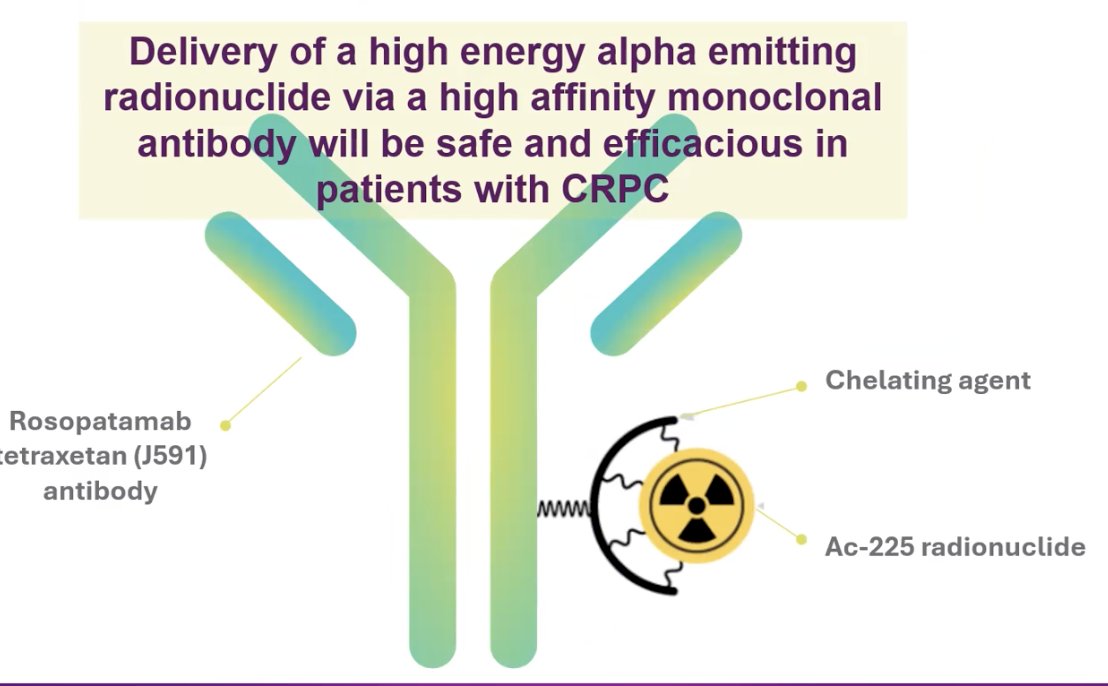
Dr. Morris highlighted that prostate-specific membrane antigen (PSMA) is a well-established target in both imaging and therapy for metastatic castration-resistant prostate cancer (mCRPC). The use of an alpha emitter as a radionuclide, combined with a high-affinity monoclonal antibody for protein targeting in PSMA-targeted radiopharmaceutical therapy (TRT), offers the potential for improved precision and potency compared to alternative approaches. These features offer improved precision and potency as therapeutic agents compared to other alternatives.
This drug is not unfamiliar to the prostate cancer community, Ac-225 rosopatamab tetraxetan (CONV01-ɑ, formerly Ac-225-J591) has been evaluated for safety and efficacy in sequential investigator-initiated trials, showing encouraging results in patients with and without prior exposure to PSMA-directed Lu-177 small-molecule-based TRT. (1,2)
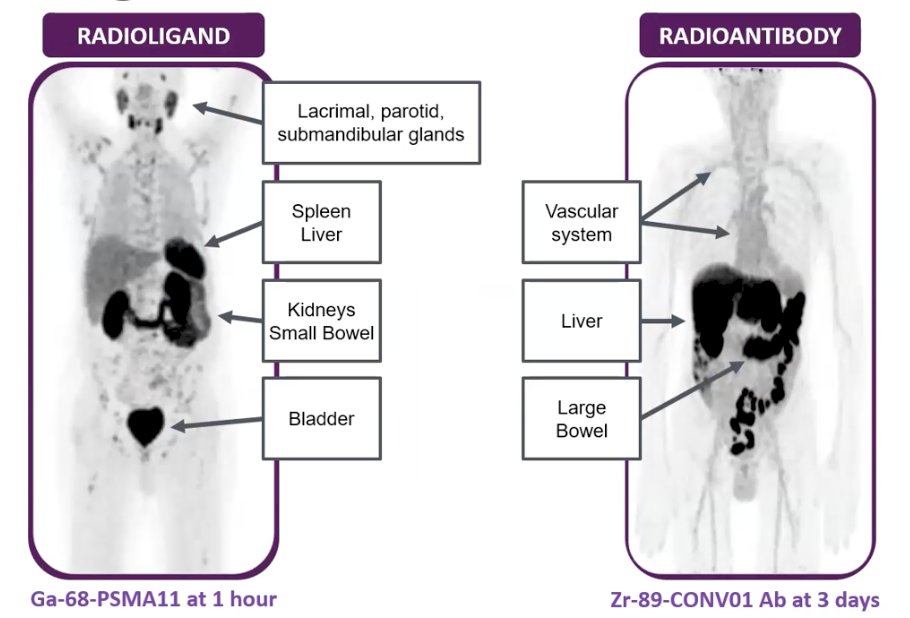
Dr. Morris emphasized that CONV01-ɑ exhibits a distinct biodistribution compared to small-molecule PSMA-targeting agents. Notably, it shows no detectable uptake in salivary or lacrimal glands, reducing the risk of associated toxicity. Its hepatobiliary excretion minimizes concerns about renal toxicity seen with radioligands. Additionally, CONV01-ɑ demonstrates potentially superior uptake and retention in bone and small-volume lesions. He highlighted differences in imaging between small-molecule radioligands (Ga-68 PSMA) at 1 hour post-administration and radioantibodies (Zr-89 CONV01-ɑ) at 3 days post-administration as shown in the figure below.
The phase II CONVERGE-01 trial in progress was presented by Dr. Morris, this is the first industry-sponsored study of CONV01-ɑ and will further advance the understanding of safety and efficacy in patients with progressive PSMA PET-positive CRPC.
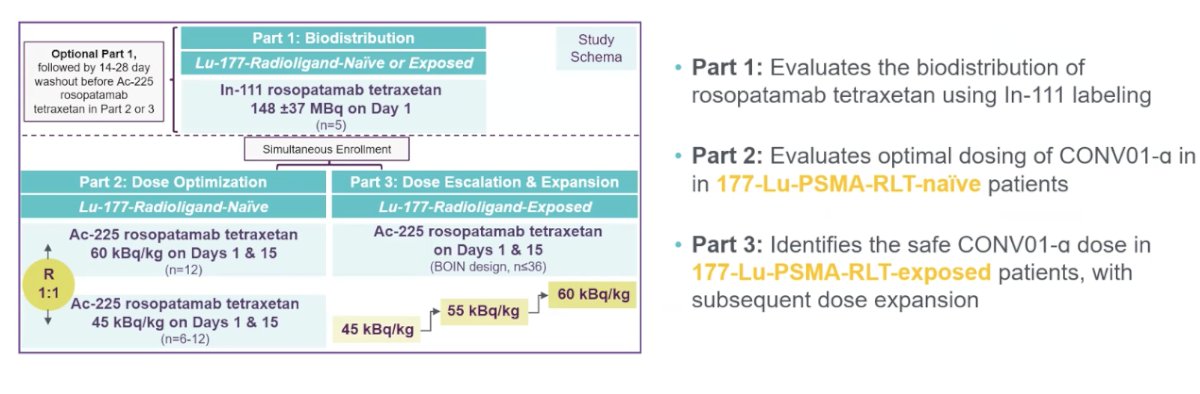
The study is being conducted in three parts, the study design and the objectives of each part is summarized below:
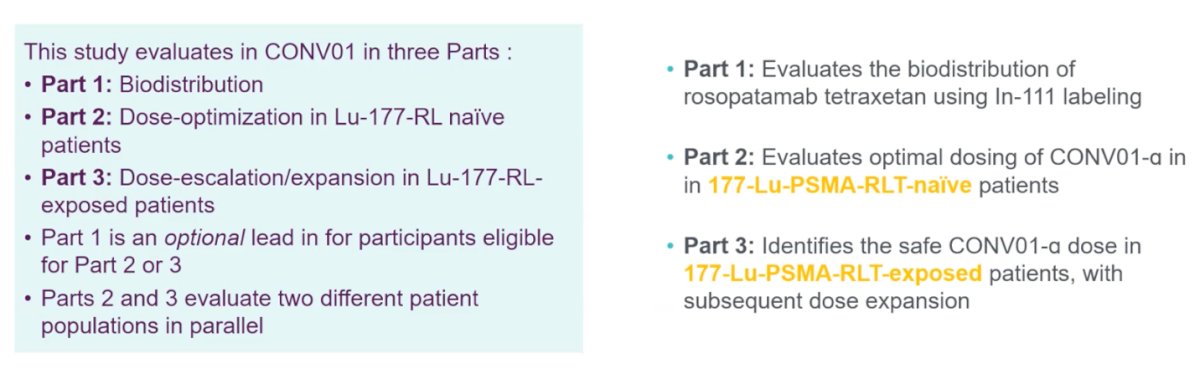
Notably, there is a maximum of five patients in the biodistribution cohort, and Parts 2 and 3, recruit parallel.
Key study-wide inclusion criteria and objectives and endpoints are shown below:
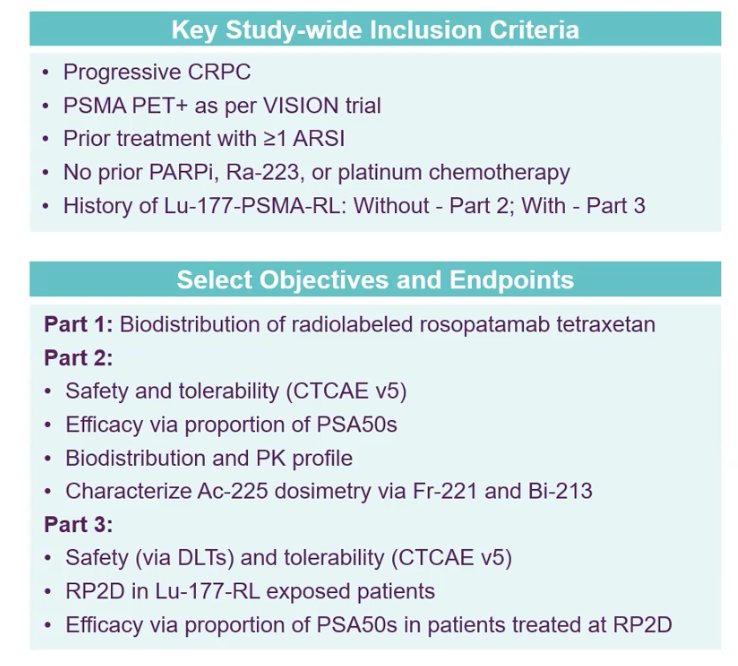
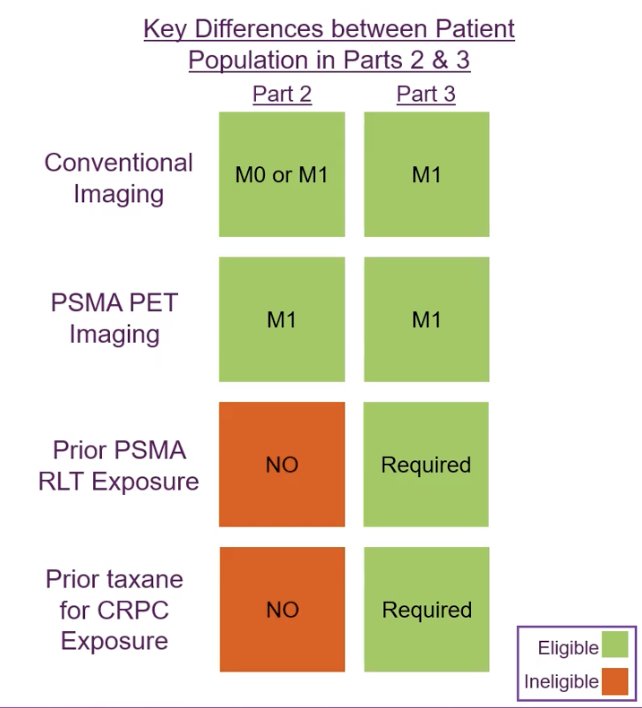
Notably, there are key differences between part 2 and part 3 in defining disease distribution for CRPC. Part 2 allows the inclusion of non-metastatic CRPC patients based on conventional imaging. Regardless of whether they are enrolled in part 2 or part 3, all patients must have PSMA PET–visualized disease. Moreover, in Part 3, patients are required to have been exposed to prior RLT. Key differences between these populations in parts 2 and 3 are depicted below.
Exclusion criteria include: Superscans on Tc-99 bone scintigraphy, prior platinum-based chemotherapy or PARP inhibitor use, and prior PSMA-targeted non-TRT use. Additional P2-specific exclusions are: prior chemotherapy for CPRC and radiopharmaceuticals.
The study design is illustrated below, briefly, CONV01-α (P2/P3) will be given in a single cycle of two fractions on days 1 and 15.
For the statistical approach, investigators will have exploratory endpoints including rPFS, ORR, and duration of response via RECIST v1.1 (PCWG3-modified where appropriate), genomic and imaging biomarker nomination.
Dr. Morris summarized his presentation with the following messages:
- CONV01-a is a high affinity actinium-225-conjugated radioantibody targeting PSMA with strong pre-clinical and clinical data for safety and efficacy in CRPC
- CONVERGE-01 is a phase Il study evaluating the safety and efficacy of CONV01-a in CRPC, both in patients with and without prior exposure to PSMA-directed Lu-177-radioligand therapy (e.g., Lu-177-PSMA-617, Lu-177-PSMA-I&T)
- Enrollment in the CONVERGE-01 phase II study began in August 2024 and is ongoing in this multicenter study.
Presented by: Michael J. Morris, MD, Medical Oncologist, prostate cancer section head, Division of Solid Tumor Oncology, at Memorial Sloan Kettering Cancer Center in New York, NY.
Written by: Julian Chavarriaga, MD – Urologic Oncologist at Cancer Treatment and Research Center (CTIC) via Society of Urologic Oncology (SUO) Fellow at The University of Toronto. @chavarriagaj on Twitter during the 2025 Genitourinary (GU) American Society of Clinical Oncology (ASCO) Annual Meeting, San Francisco, CA, Thurs, Feb 13 – Sat, Feb 15, 2025.
Related content: Exploring Actinium-225 in PSMA-Targeted Therapy for Prostate Cancer - Michael Morris
- Tagawa ST, Thomas C, Sartor AO, Sun M, Stangl-Kremser J, Bissassar M, Vallabhajosula S, Huicochea Castellanos S, Nauseef JT, Sternberg CN, Molina A, Ballman K, Nanus DM, Osborne JR, Bander NH. Prostate-Specific Membrane Antigen-Targeting Alpha Emitter via Antibody Delivery for Metastatic Castration-Resistant Prostate Cancer: A Phase I Dose-Escalation Study of 225Ac-J591. J Clin Oncol. 2024 Mar 1;42(7):842-851. doi: 10.1200/JCO.23.00573. Epub 2023 Nov 3. PMID: 37922438; PMCID: PMC10906595.
- Jones T. Nauseef et al., A phase I/II dose-escalation study of fractionated 225Ac-J591 for progressive metastatic castration-resistant prostate cancer (mCRPC) in patients with prior treatment with 177Lu-PSMA. JCO 41, TPS288 (2023).DOI:10.1200/JCO.2023.41.6_suppl.TPS288