

(UroToday.com) The 2025 GU ASCO annual meeting featured a prostate cancer session and a presentation by Dr. Abhishek Solanki discussing Decipher® risk stratification of radiorecurrent prostate cancer, a correlative analysis of the F-SHARP trial of salvage reirradiation.
A third of patients with biochemical recurrence after radiation therapy have intraprostatic radiorecurrence on PSMA PET/CT, and patients with intraprostatic radiorecurrence have worse metastasis-free survival, which is a surrogate for progression to lethal prostate cancer. Dr. Solanki and colleagues previously reported at ASTRO 2024 the results from the F-SHARP clinical trial that demonstrated salvage reirradiation using focal dose-escalated high dose rate (HDR) brachytherapy is safe and effective: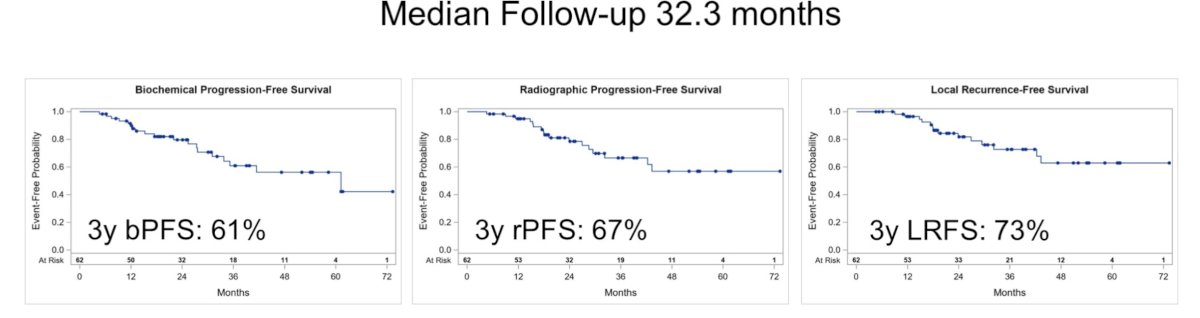
At the 2025 GU ASCO meeting, Dr. Solanki examined the Decipher score to determine if it could be a tool to risk stratify patients with intraprostatic radiorecurrence.
F-SHARP is a multi-institutional phase I/II trial of focal dose-escalated salvage HDR for intraprostatic radiorecurrence. Patients were recruited from 2017-2023 at three centers. Eligibility criteria included a history of localized prostate cancer treated with any form of definitive radiation therapy and biopsy-proven intraprostatic radiorecurrence with no regional or distant metastasis. Of the 62 participants, 37 consented for the biomarker correlative study, and 31 (50%) had sample data passing quality control for Decipher analysis. De-identified data from 146,940 patients tested (2016-2024) with the Decipher prostate genomic classifier were retrieved from the GRID registry and used to create a matched cohort based on NCCN risk at diagnosis. Univariable Cox proportional hazards models were used to compare oncologic, CTCAE v4.03 toxicity, and EPIC-26 HRQoL events by Decipher risk group.
The biomarker cohort had similar baseline characteristics to the overall trial cohort. Overall, 30% received ADT with initial radiation therapy (73% external beam, 27% LDR brachytherapy). The median time from initial radiation therapy to enrollment in Decipher low (<0.45) was 16.9 years, compared to 8.0 and 7.4 years in the intermediate (0.45-0.6) and high (>0.6) score patients. At recurrence, 71% had high Decipher risk (median score 0.67) as compared to only 35% (median score 0.48) in the matched GRID cases (n=130,760). Decipher score was not associated with toxicity or quality of life post-HDR (all p > 0.05). Higher Decipher score was associated with an increased risk of biochemical progression-free survival (HR 1.70, 95% 1.05-2.75), local recurrence-free survival (HR 2.30, 95% CI 1.02-5.18), and radiographic progression-free survival (HR 2.47, 95% CI 1.23.-4.97):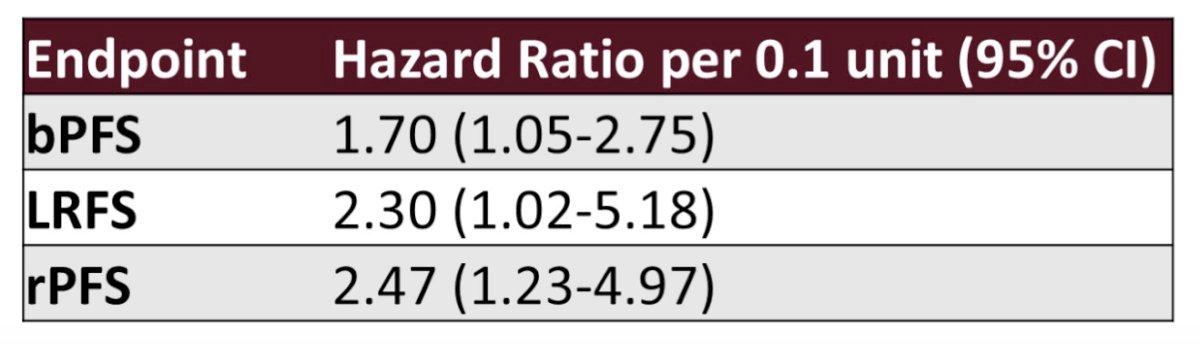
At 3 years, biochemical progression-free survival was 43% versus 75%, local recurrence-free survival was 58% versus 100%, and radiographic progression-free survival was 42% versus 100% for Decipher high versus lower risk (<0.6):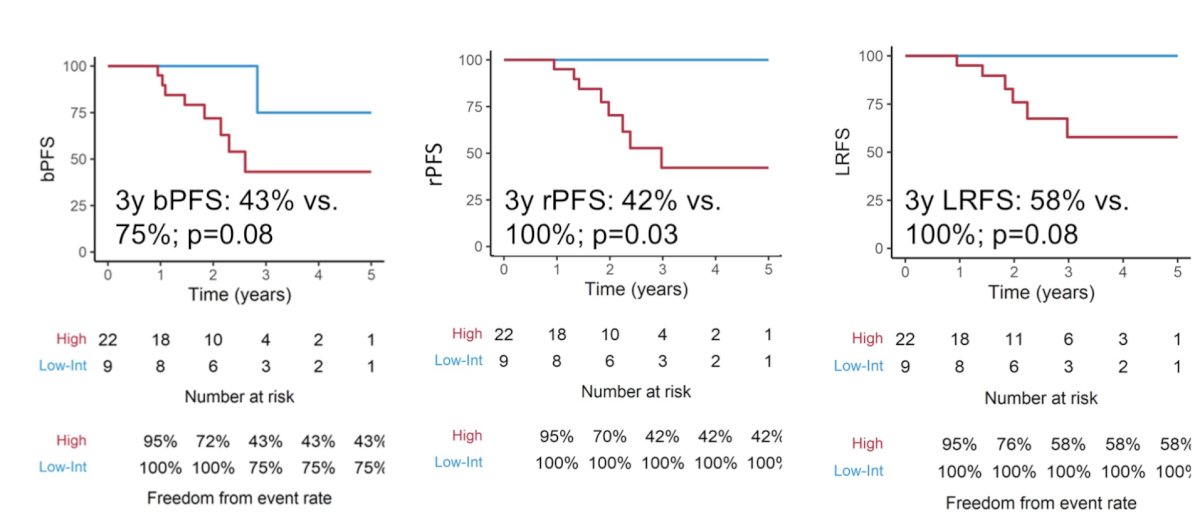
Dr. Solanki concluded his presentation discussing Decipher risk stratification of radiorecurrent prostate cancer, a correlative analysis of the F-SHARP trial of salvage reirradiation with the following take-home points:
- Salvage reirradiation is a growing indication for radiation therapy in prostate cancer
- This is the first use of genomic risk stratification in this setting
- Nearly a third of patients with intraprostatic radiorecurrence have a lower Decipher risk score, and our data suggest especially favorable outcomes with salvage HDR.
- Future studies to determine how Decipher risk stratification can be used to tailor further treatment intensification with systemic therapy for those most at risk of reirradiation failure are warranted
Presented by: Abhishek A. Solanki, MD, Loyola University, Chicago, IL
Written by: Zachary Klaassen, MD, MSc – Urologic Oncologist, Associate Professor of Urology, Georgia Cancer Center, Wellstar MCG Health, @zklaassen_md on Twitter during the 2025 Genitourinary (GU) American Society of Clinical Oncology (ASCO) Annual Meeting, San Francisco, CA, Thurs, Feb 13 – Sat, Feb 15, 2025.