

(UroToday.com) The 2025 GU ASCO annual meeting featured a prostate cancer session and a presentation by Dr. Elisabeth Heath discussing real-world treatment patterns and outcomes in advanced prostate cancer from the PRECISION data platform. There are several real-world data sources for prostate cancer, each with its own limitations, the most notable of which is an incomplete picture of the multidisciplinary clinical management of prostate cancer.
The PRECISION data platform, the largest, most comprehensive, and continually updated real-world evidence source on patients with advanced prostate cancer to date, was created in both academic and community settings across the United States. The platform includes a wide variety of prostate cancer-specific data variables among patients with metastatic hormone-sensitive prostate cancer (mHSPC) and metastatic castration-resistant prostate cancer (mCRPC) treated across the US. This study presented at GU ASCO 2025 aimed to provide an overview of the characteristics, treatment patterns, and clinical outcomes among patients with mHSPC and mCRPC included in PRECISION to date.
The PRECISION platform is a proprietary dataset developed by Novartis comprising patient-level electronic medical records and claims, representing the advanced prostate cancer population in the US community, academic, urology, and medical oncology settings. This data is retrospective, longitudinal, and multicenter, with a current study period of December 14, 2018 to December 14, 2023:
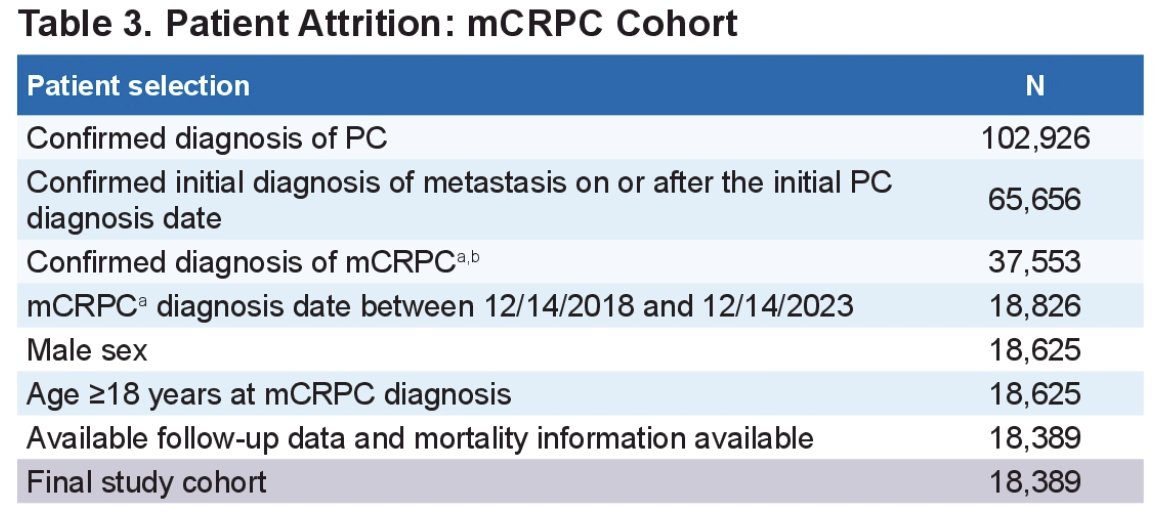
At the time of the analysis, the PRECISION platform included 65,656 patients with metastatic prostate cancer, of whom 52,178 had mHSPC and 37,553 had mCRPC at some point during their disease duration. Overall, 35,439 patients met all of the criteria for inclusion in the mHSPC cohort: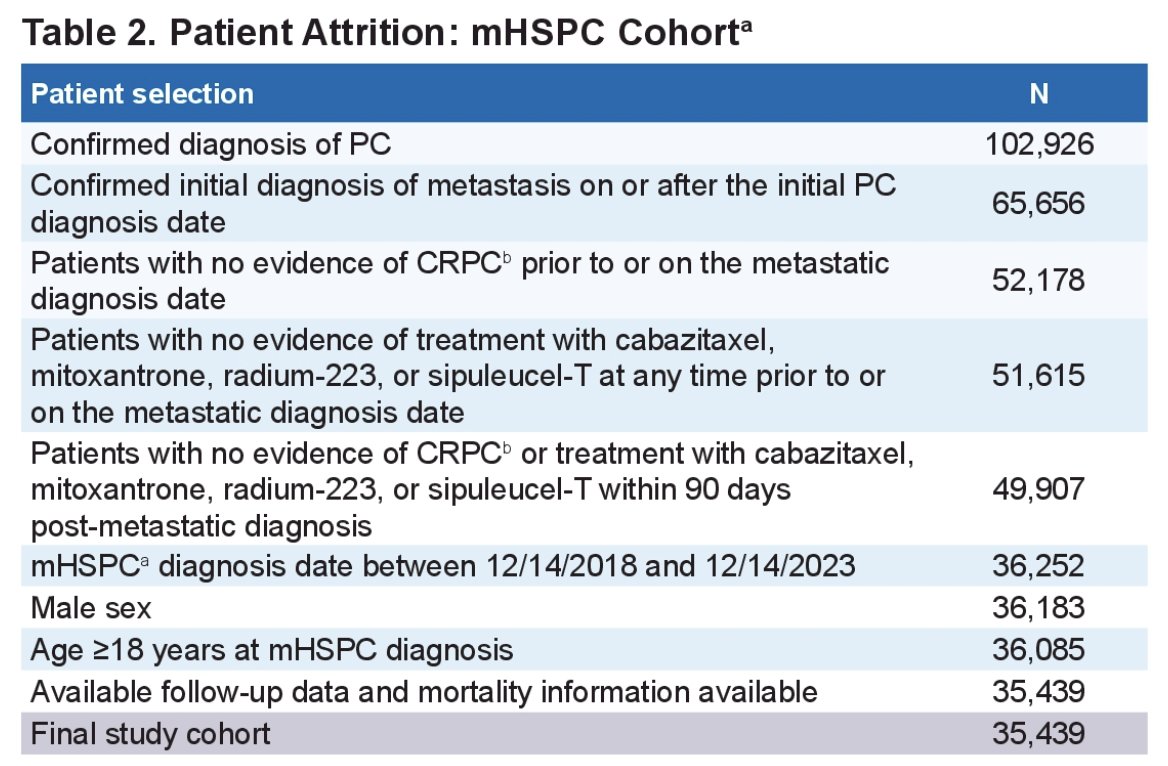
And 18,389 met all of the inclusion criteria for the mCRPC cohort:
Among the mHSPC cohort, the median age was 74 years (IQR 67-81), 43% and 57% were treated by medical oncologist and urologists, respectively, and 17% and 83% were treated at academic and community centers, respectively. Among the mCRPC cohort, the median age was 75 years (IQR 69-82), 50% and 50% were treated by medical oncologist and urologists, respectively, and 24% and 76% were treated at academic and community centers, respectively. Overall, 63-67% of patients were white and 13-14% were black. The majority of patients in both cohorts were from the South and were married or in a partnership.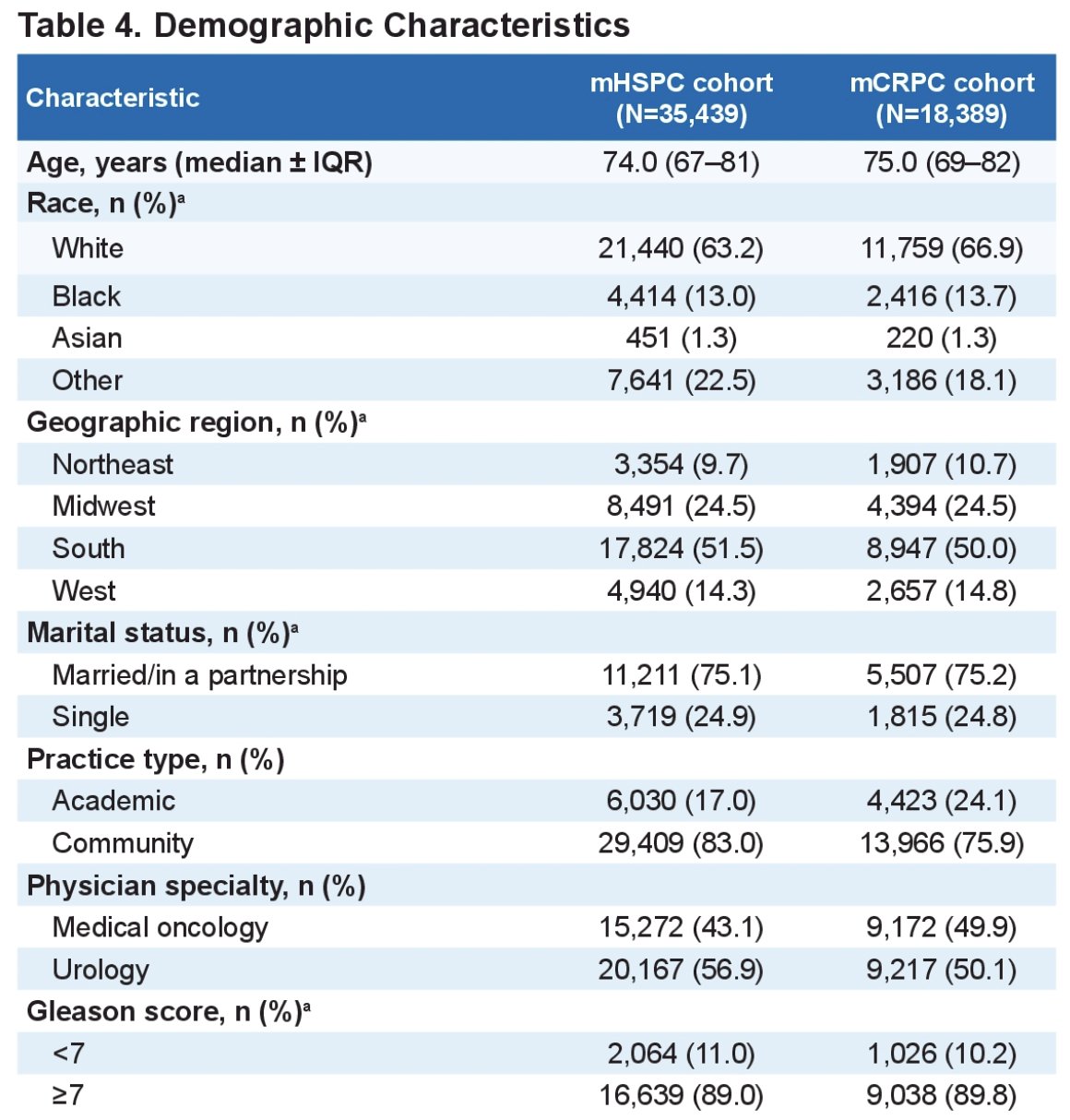
The most common comorbidity in both cohorts was diabetes, followed by renal disease. The median PSA levels were 5.7 ng/mL (IQR 0.8-25.9) in the mHSPC cohort, and 4.2 ng/mL (0.8-17.0) in the mCRPC cohort: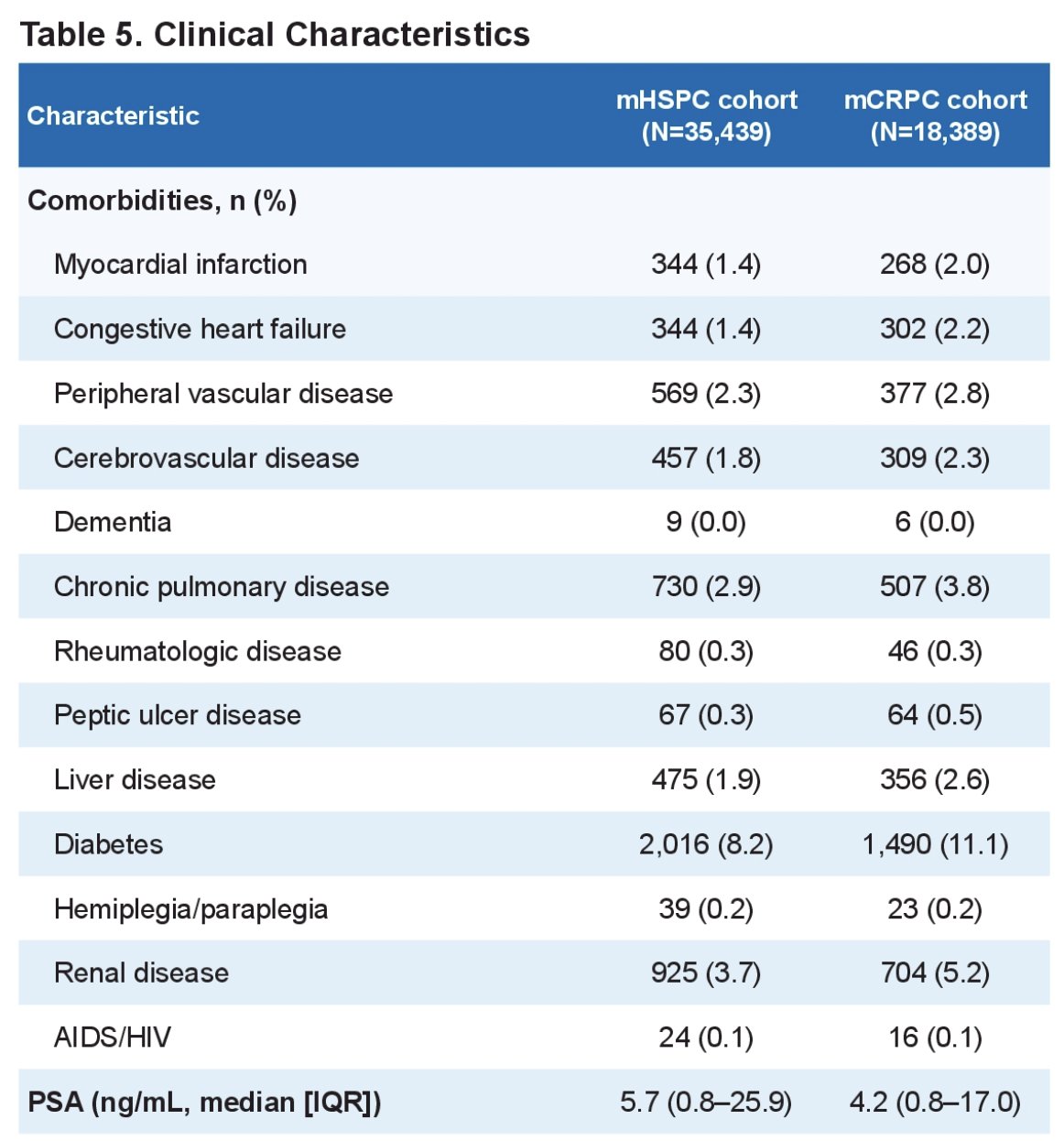
In the mHSPC cohort, 78% received ADT, 24% as monotherapy, and 54% in combination with another systemic therapy. Overall, 61% received other systemic first line therapies, of which 52% had an androgen receptor pathway inhibitor, 2% had a taxane, <1% had another chemotherapy, immunotherapy, PARP inhibitor, or radiopharmaceutical; 6% received combination therapy. In the mCRPC cohort, 83% received ADT, of which 11% received monotherapy, and 72% in combination with another systemic therapy. Overall, 78% received other systemic first line therapies, including 67% receiving an androgen receptor pathway inhibitor, 5% a taxane, <1% a PARP inhibitor or radiopharmaceutical, and 5% a combination therapy: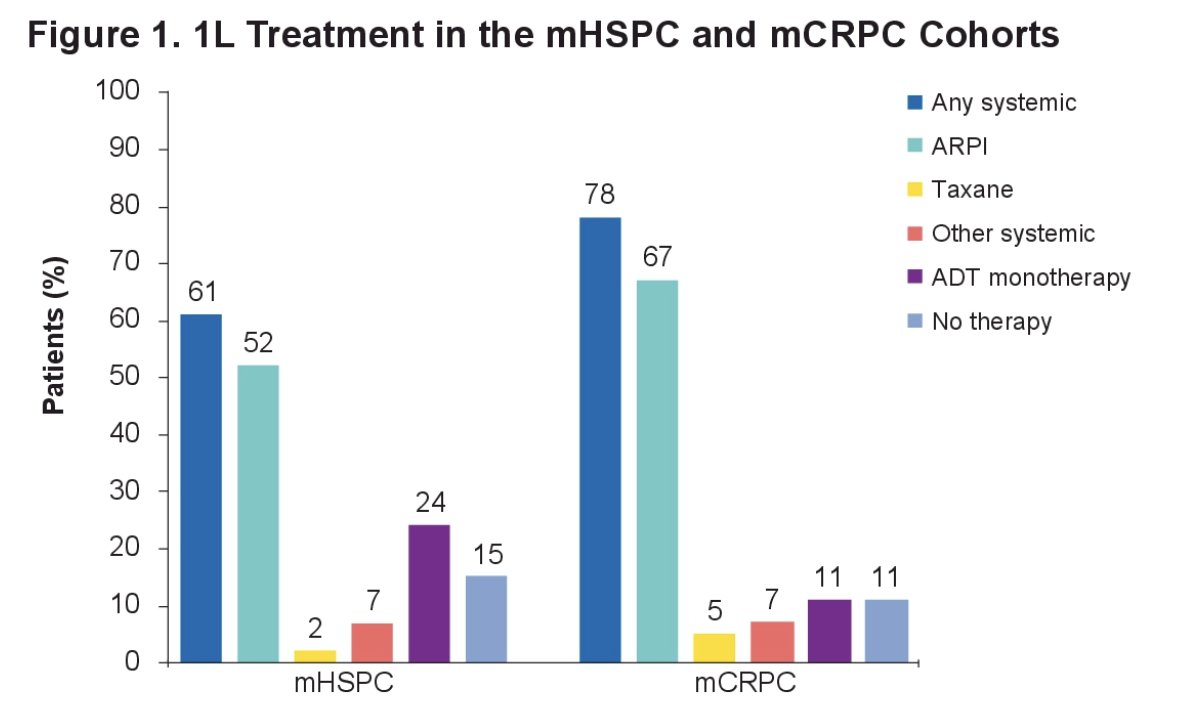
In addition, 2% of patients received the recently approved therapy 177Lu-PSMA-617 at some point during their mCRPC disease duration. The median overall survival was not reached in the mHSPC cohort and was 29.0 months (95% CI 28.2-29.7) in the mCRPC cohort: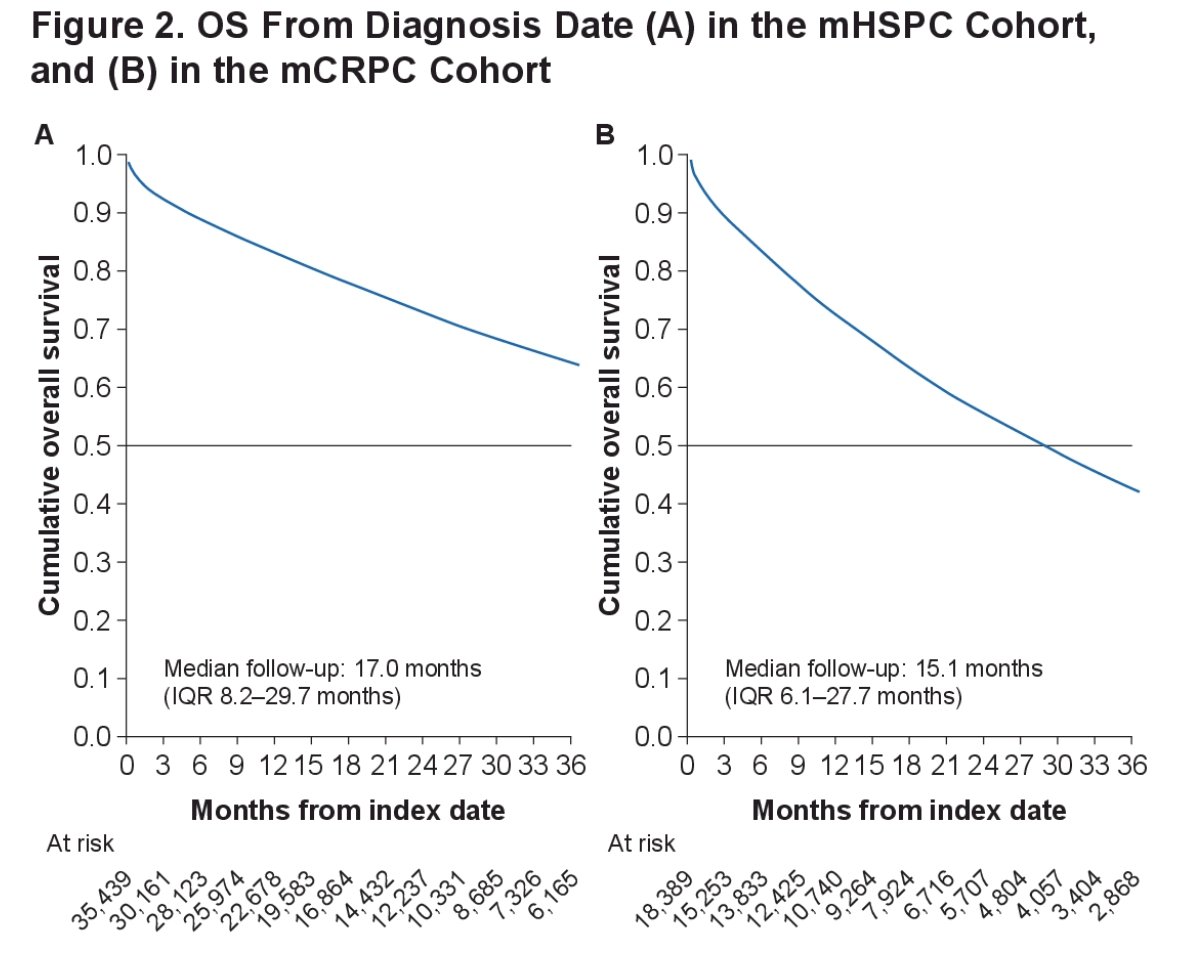
Dr. Heath concluded her presentation discussing real-world treatment patterns and outcomes in advanced prostate cancer from the PRECISION data platform with the following take-home points:
- This analysis provides key insights into the patients included in the PRECISION data platform
- This multidisciplinary dataset provides a 50/50 split between oncology and urology centers, and a 20/80 split between academic and community settings.
- The observed clinical profile, treatment patterns, and outcomes comprise the most comprehensive representation of current treatment practice in the U.S
- Future analyses of clinical outcomes with existing and novel therapies could contribute significantly to our understanding of opportunities to improve the treatment of patients with mHSPC and mCRPC in the .US
Presented by: Elisabeth I. Heath, MD, FACP, Karmanos Cancer Center, Detroit, MI
Written by: Zachary Klaassen, MD, MSc – Urologic Oncologist, Associate Professor of Urology, Georgia Cancer Center, Wellstar MCG Health, @zklaassen_md on Twitter during the 2025 Genitourinary (GU) American Society of Clinical Oncology (ASCO) Annual Meeting, San Francisco, CA, Thurs, Feb 13 – Sat, Feb 15, 2025.
Related content: Real-World Treatment Patterns in Advanced Prostate Cancer from PRECISION Data Platform - Oliver Sartor