

(UroToday.com) The 2025 American Society of Clinical Oncology (ASCO) Genitourinary (GU) Annual Symposium held in San Francisco, CA between February 13–15, 2025 was host to a rapid oral abstract prostate cancer session. Dr. Robert Thomas presented the results of a randomised, double-blind placebo-controlled trial evaluating the gut health influence of a specific phytochemical-rich food capsule +/- a probiotic/prebiotic blend on symptoms and prostate cancer progression.
Dr. Thomas noted that the "gut-prostate axis" is increasingly being recognised as an influencer of prostate cancer (PCa) incidence and progression via its effect on inflammation, oxidative stress, and immune surveillance. Murine models have shown that improving the gut microbiome can delay cancer progression.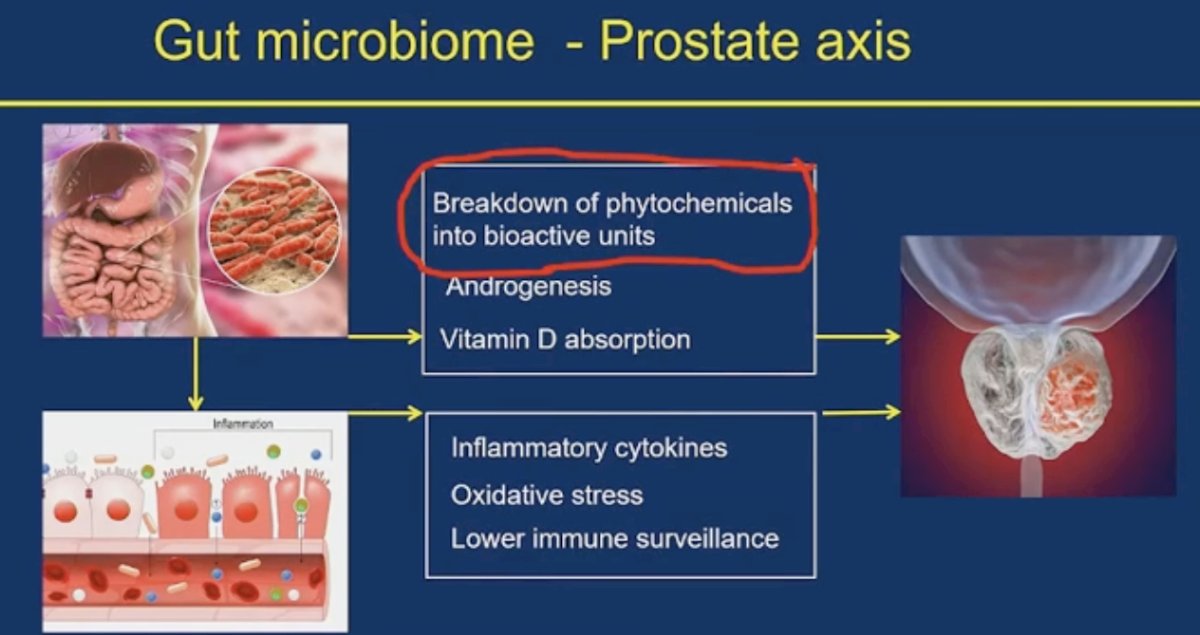
Boosting phytochemical rich foods have previously been shown to inhibit prostatic-specific antigen (PSA) progression in men with indolent PCa and are potent prebiotics, working in synergy with lactobacillus probiotics, and vitamin D. Until now, no study has evaluated this dietary combination in men with PCa.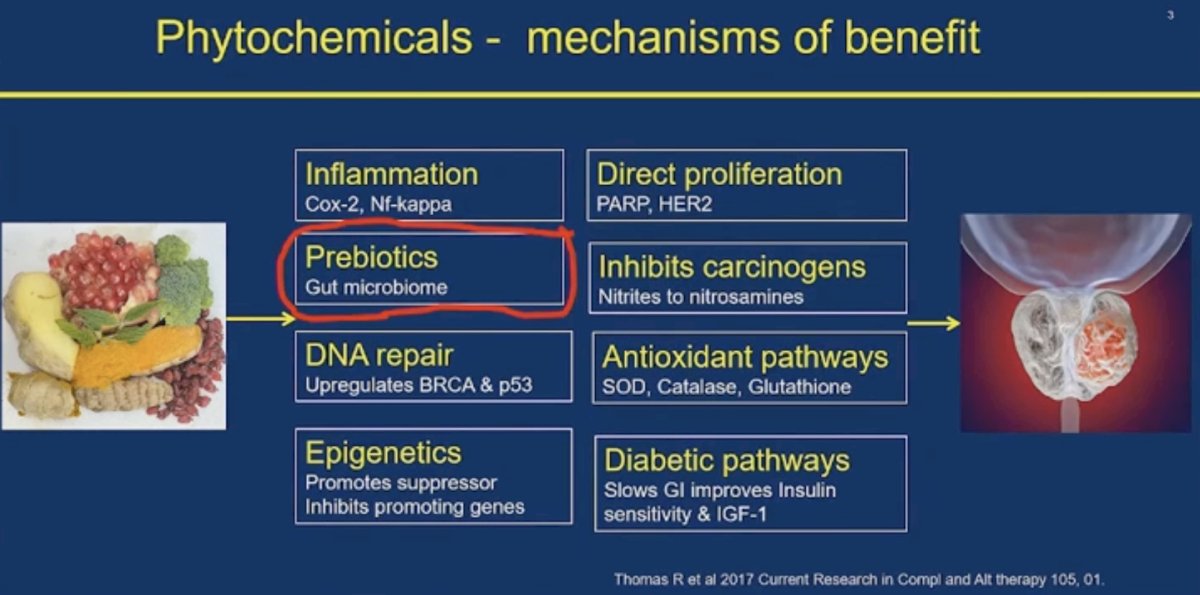
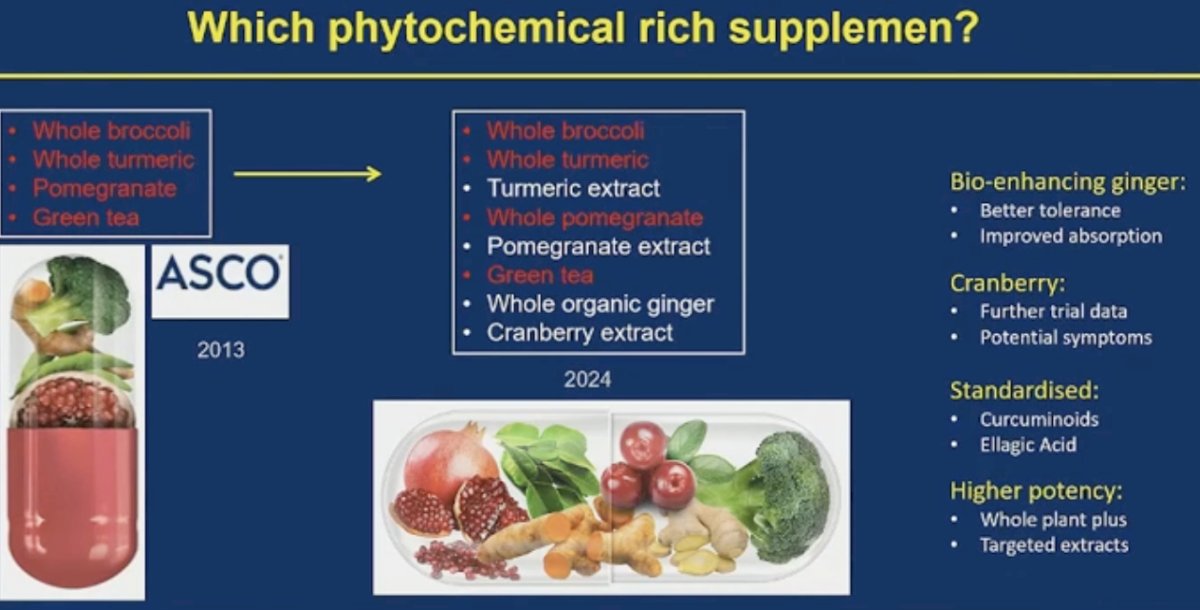
212 men with PSA progressing PCa (average age 74.5 years) managed with surveillance were given a phytochemical rich supplement uniquely containing both standardised extracts and whole purified organic ginger, cranberry, pomegranate, turmeric, broccoli and green tea.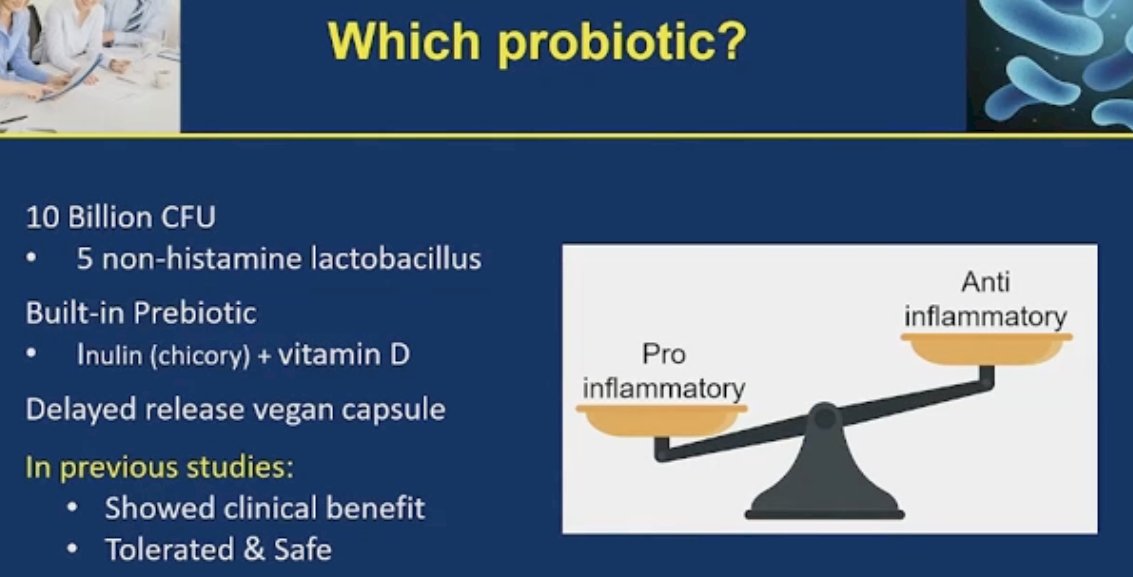
Men were then randomised (1:1) to a placebo or a probiotic blend of 5 lactobacillus probiotics with prebiotic inulin and vitamin D for 16 weeks.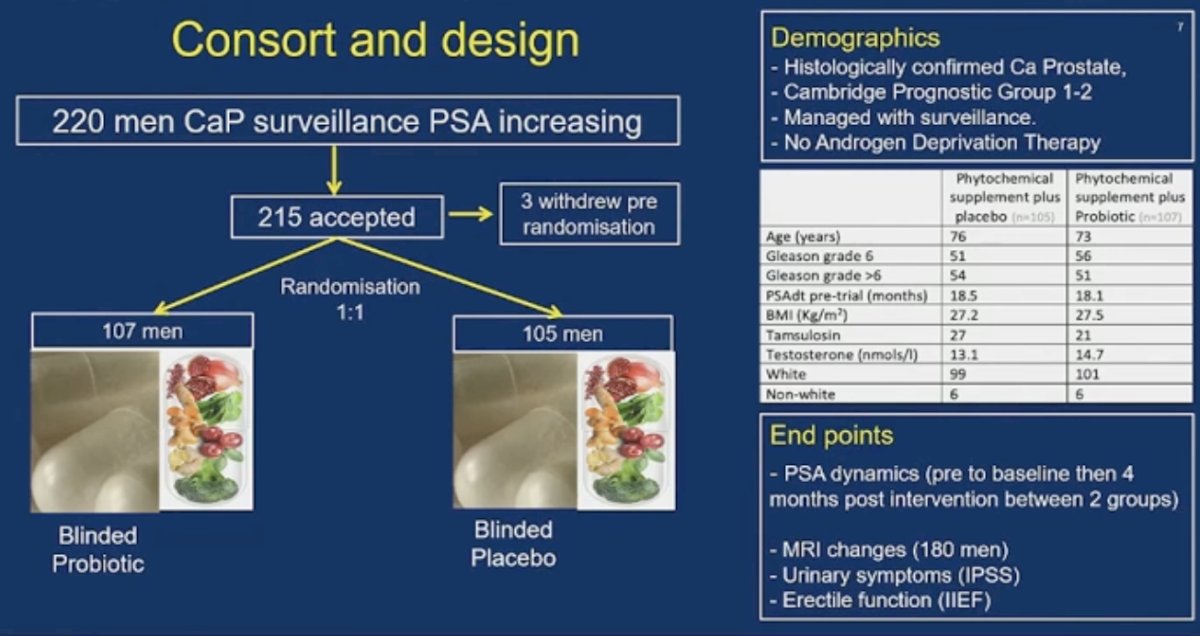
For the 105 men on phytochemical rich supplement + placebo, the average rate of PSA rise pre to post baseline changed from 19.6% to 6.2% - a statistically significant reduction of 13.4% (paired t-test p<0.01).
For the 107 men on phytochemical rich supplement + probiotic blend, the rate changed from a 21.7% rise to a 20% fall - a reduction of 41.7% (p<0.0001). There was a statistically significant greater difference in PSA dynamics comparing the phytochemical rich supplement + probiotic blend versus the phytochemical rich supplement + placebo groups (28.3%, p<0.0001).
The International Prostate Symptom Score and the International Index of Erectile Function were significantly better in the phytochemical rich supplement + probiotic blend group (10.5 versus 14.1; 26.6 versus 23.7 respectively, both p<0.001). 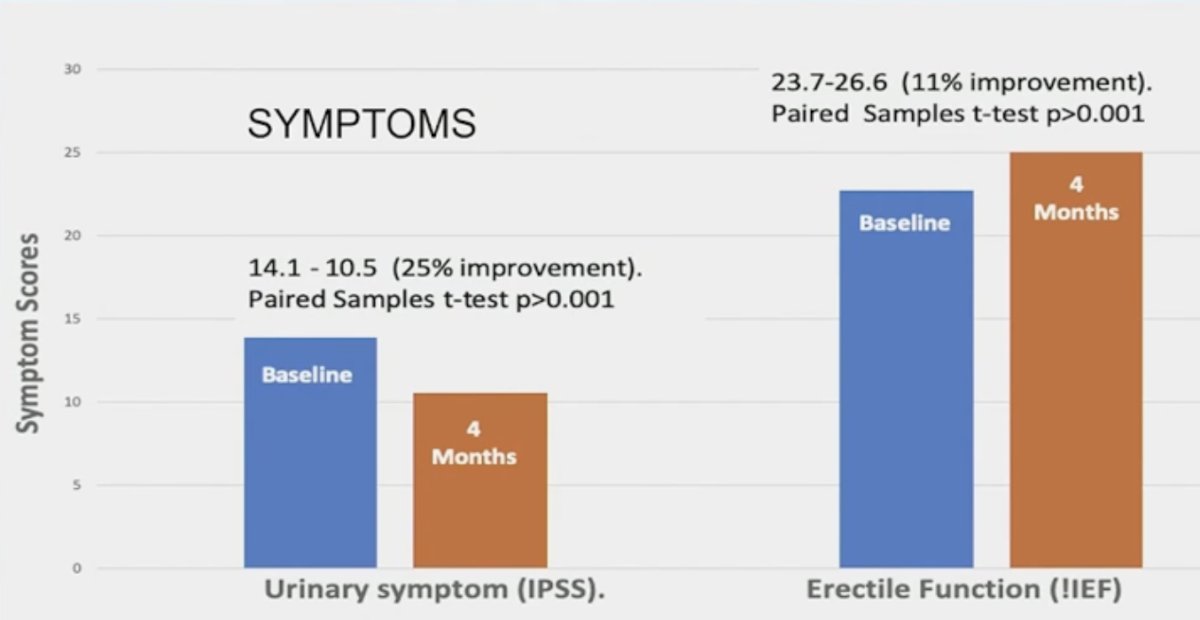
Both treatment arms had good treatment tolerance. 5% reported some bloating, but conversely 14% reported improved gut symptoms. There was no difference in testosterone levels. Pre- and post-treatment MRIs were available in 180 men. In 10, the MR-visible disease was reported to shrink, 164 stabilised, and in 6 worsened, with PSA progressing at a higher-than-average rate in all 6 patients, suggesting no PSA masking effect.
Dr. Thomas concluded as follows:
- Boosting phytochemical rich food with this supplement slows PSA progression and improves urinary symptoms
- This is the world's 1st robust randomized controlled trial showing that a specific lactobacillus supplement further reduced PSA progression
- Longer term follow up is underway
- This data provides self-help nutritional advice that is welcomed by men
- Further gut health research in this field is justified
Presented by: Robert Thomas, Professor, Consultant Oncologist at Bedford & Addebrookes Cambridge University Hospitals, Cambridge, UK
Related content: Gut Microbiome and Prostate Cancer: How Diet Impacts Disease Progression - Robert Thomas
Written by: Rashid K. Sayyid, MD, MSc – Robotic Urologic Oncology Fellow at The University of Southern California, @rksayyid on Twitter during the 2025 Genitourinary (GU) American Society of Clinical Oncology (ASCO) Annual Meeting, San Francisco, CA, Thurs, Feb 13 – Sat, Feb 15, 2025.