

(UroToday.com) The 2025 GU ASCO annual meeting featured a prostate cancer session and a presentation by Dr. Shuang Zhao discussing validation of the prostate cancer radiation therapy gene expression score (PORTOS) in phase III trials assessing a gene signature predictor of dose-response to prostate radiation. NRG/RTOG 01261 and SAKK 09/10 2 were phase III randomized trials examining whether higher dose resulted in better response/outcomes in prostate cancer patients following definitive and post-operative radiation therapy, respectively. RTOG 0126 showed a benefit for radiation therapy dose escalation from 70.2Gy to 79.2Gy, however SAKK 09/10 did not show a benefit from 64Gy to 70Gy. The initial development of PORTOS and the subsequent work-flow to date are highlighted as follows:
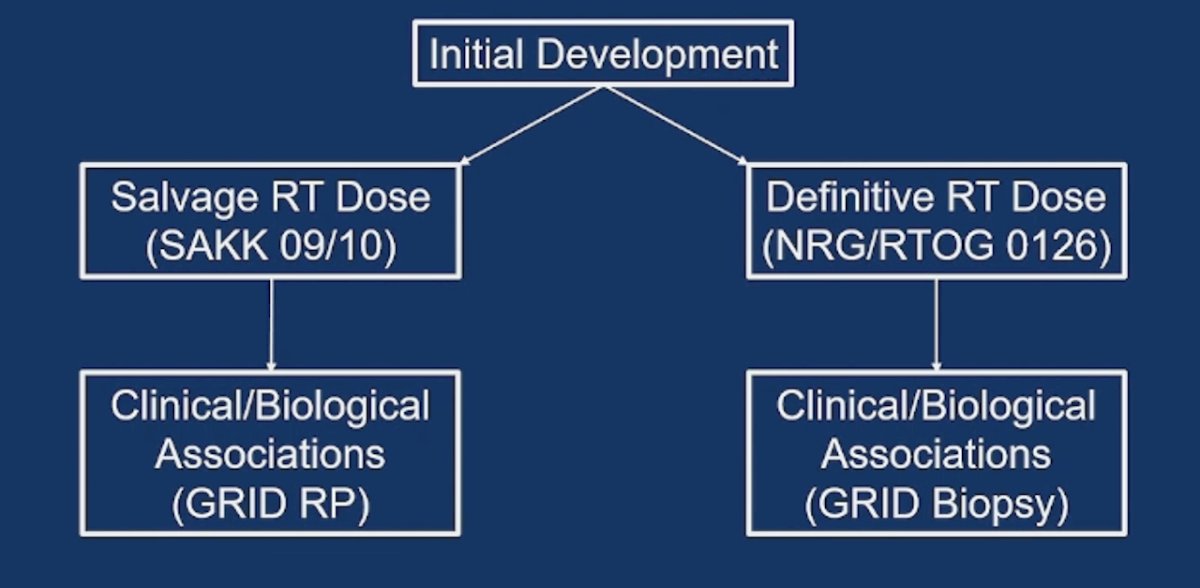
Dr. Zhao and colleagues hypothesized that the 24-gene PORTOS could distinguish patients who benefited from radiation therapy dose escalation in both trials.
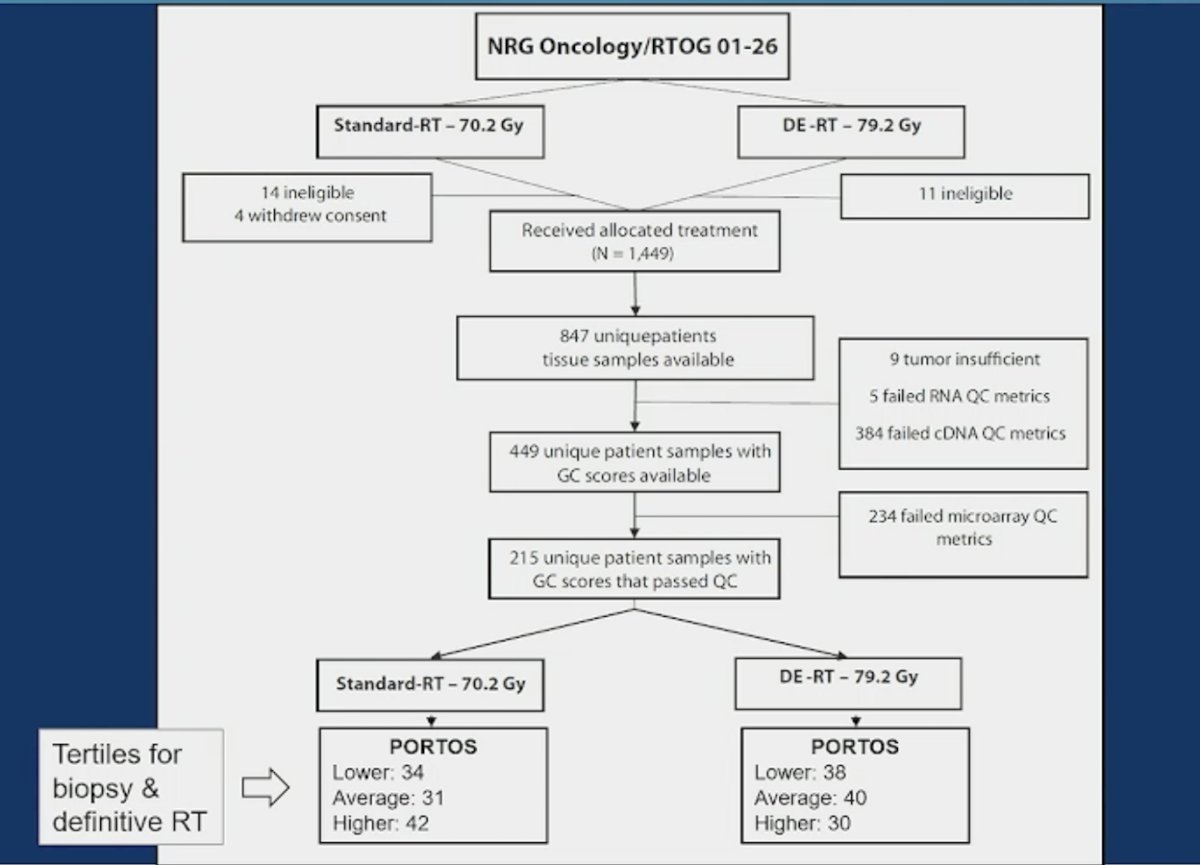
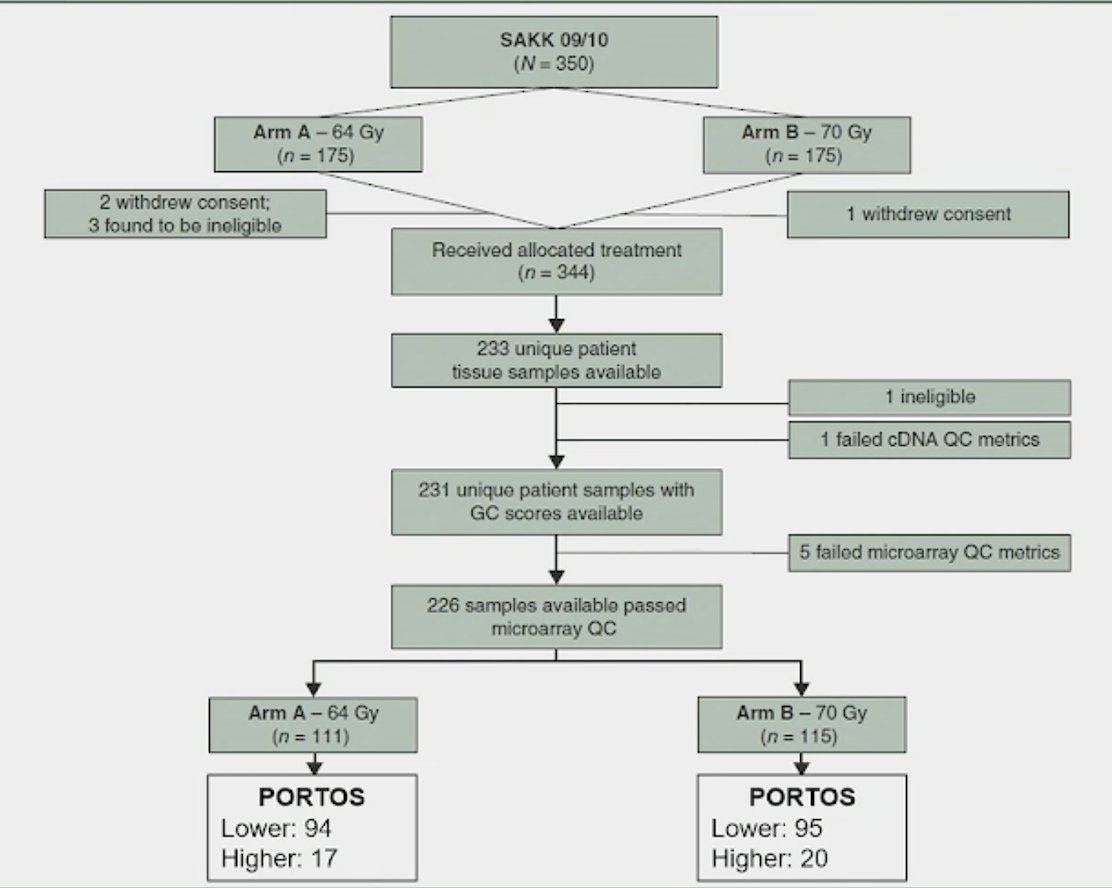
PORTOS scores were calculated on biopsy samples in RTOG 0126 and prostatectomy samples in SAKK 09/10, as previously published.1,2 Since the original PORTOS cutoffs were in the post-op setting, the investigators utilized tertile score groups in RTOG 0126, whereas the published PORTOS cutoffs were used for SAKK 09/10. The primary objective was to evaluate PORTOS as a predictive biomarker for the benefit of radiation therapy dose escalation on biochemical failure via the Phoenix criteria in RTOG 0126 (n = 215):
and clinical progression free survival in SAKK 09/10 (n = 226):
In addition, they also investigated clinical and molecular correlates of PORTOS in a large real-world dataset of 31,107 prostate biopsy samples and 42,407 radical prostatectomy samples.
In the post-op SAKK 09/10 trial, only patients in the higher PORTOS score group benefited from radiation therapy dose escalation (clinical progression free survival HR 0.19, 95% CI 0.05-0.70; p = 0.01), with a significant biomarker-treatment interaction between lower versus higher PORTOS and treatment arm (p = 0.003):

In RTOG 0126, in patients with lower tertile PORTOS scores, there was no difference in Phoenix biochemical failure (subdistribution HR 1.03, 95% CI 0.45-2.36, p = 0.94). However, for patients in the middle and higher tertile PORTOS score range, there was a significant benefit for radiation therapy dose escalation for Phoenix biochemical failure:
- Middle PORTOS: subdistribution HR 0.45, 95% CI 0.22-0.90, p = 0.02
- Higher PORTOS: subdistribution HR 0.30, 95% CI 0.12-0.75, p = 0.009
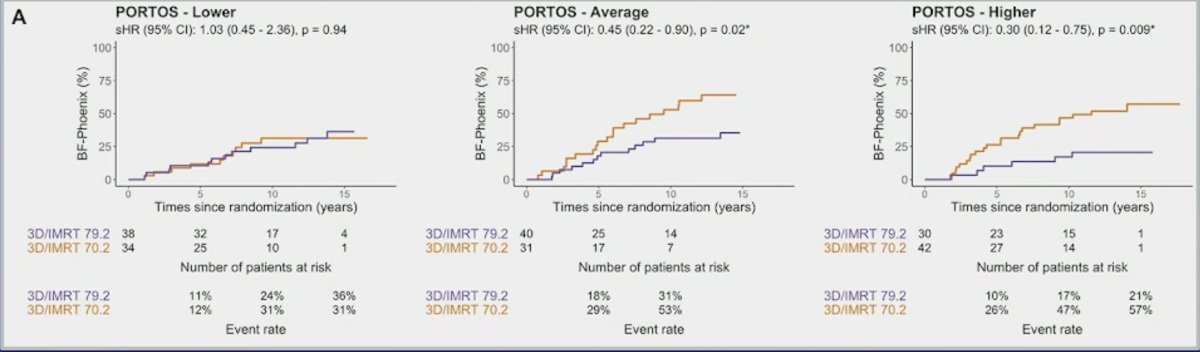
An interaction test indicated a significant difference in benefit for dose escalation between higher and lower PORTOS groups (p = 0.003). Of note, PORTOS was not consistently associated with clinicopathologic variables in either trial or in the large real-world biopsy or prostatectomy datasets. Biologically, in the real-world datasets, PORTOS was modestly associated with hypoxia signatures consistent with its role in radio-resistance, and strongly associated with immune signatures and molecular subtypes:
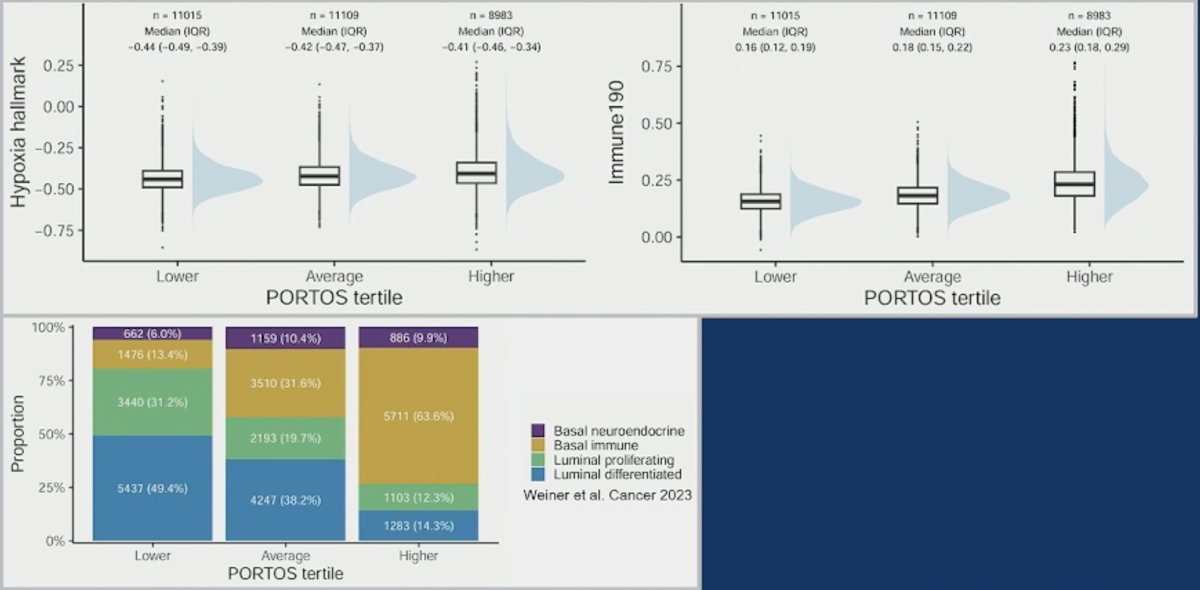
Dr. Zhao concluded this presentation discussing validation of PORTOS in phase III trials assessing a gene signature predictor of dose-response to prostate radiation with the following take-home points:
- PORTOS predicts salvage dose response in SAKK 09/10 and predicts definitive dose response in NRG/RTOG 0126
- PORTOS is also associated with hypoxia and immune response
- Dr. Zhao states that they are advocating to rename PORTOS to the PrOstate cancer Radiation Therapy Outcomes Score
- Studies involving PORTOS and ENI, toxicity and ADT are ongoing
Presented by: Shuang Zhao, MD, Department of Human Oncology, University of Wisconsin-Madison, Madison, WI
Written by: Zachary Klaassen, MD, MSc – Urologic Oncologist, Associate Professor of Urology, Georgia Cancer Center, Wellstar MCG Health, @zklaassen_md on Twitter during the 2025 Genitourinary (GU) American Society of Clinical Oncology (ASCO) Annual Meeting, San Francisco, CA, Thurs, Feb 13 – Sat, Feb 15, 2025.
References:
- Michalski JM, Moughan J, Purdy J, et al. Effect of standard vs dose-escalated radiation therapy for patients with intermediate-risk prostate cancer: The NRG Oncology RTOG 0126 Randomized Clinical Trial. Jama Oncol. 2018 Jun 14;4(6):e180039.
- Ghadjar P, Hayoz S, Bernhard J, et al. Dose-intensified versus conventional-dose salvage radiotherapy for biochemically recurrent prostate cancer after prostatectomy: The SAKK 09/10 Randomized Phase 3 Trial. Eur Urol. 2021 Sep;80(3):306-315.