

(UroToday.com) The 2025 American Society of Clinical Oncology Genitourinary (ASCO GU) cancers symposium held in San Francisco, CA was host to Poster Session A: Prostate Cancer. Dr. Yeonjung Jo presented Abstract 109: Time from medication order to administration of cabazitaxel (C) vs. lutetium Lu-177 vipivotide tetraxetan (Lu) in patients (pts) with metastatic castration-resistant prostate cancer (mCRPC).
Dr. Jo began his poster presentation by noting that both cabazitaxel and lutetium (Lu-177) are effective treatment options for patients with mCRPC who have progressed on docetaxel and an ARPI, each demonstrating an overall survival benefit in landmark phase 3 trials and the randomized phase 2 TheraP trial. Notably, TheraP found a higher PSA response and fewer grade 3+ adverse events with lutetium compared to cabazitaxel.1 However, in real-world settings, administering lutetium requires extensive coordination across multiple specialties, including nuclear medicine, urology, and medical oncology, which could delay treatment initiation. To assess this, Dr. Jo and colleagues analyzed a large US-based nationwide database to compare the time from medication order to first administration for cabazitaxel versus lutetium.
They used patient level data from the nationwide Flatiron Health electronic health record (EHR)-derived de-identified database. The inclusion criteria for this study were:
- Availability of the date of the first order of single-agent Cabazitaxel or Lutetium
- Availability of the date of first administration of the drugs in pts with mCRPC.
The investigators used the Wilcoxon rank-sum test to compare the median days between medication order to administration between these 2 agents and a stratified analysis by practice type and insurance was performed.
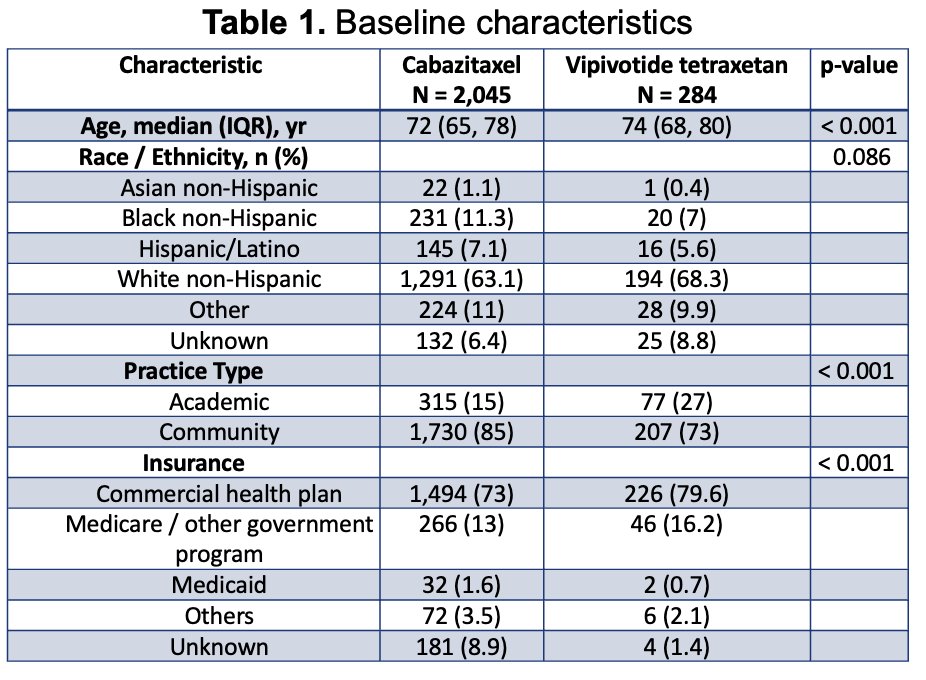
They identified a total of 2,329 orders for both treatment options, with 2,045 orders for cabazitaxel and 284 for lutetium. Notably, patients in the lutetium cohort were significantly older than those in the cabazitaxel cohort (median age 74 vs. 72, p < 0.001), more likely to be treated at academic centers (27% vs. 15%, p < 0.001), and more likely to have commercial health insurance coverage (79.6% vs. 73%, p < 0.001). The baseline characteristics of the cohorts are summarized in the table below:
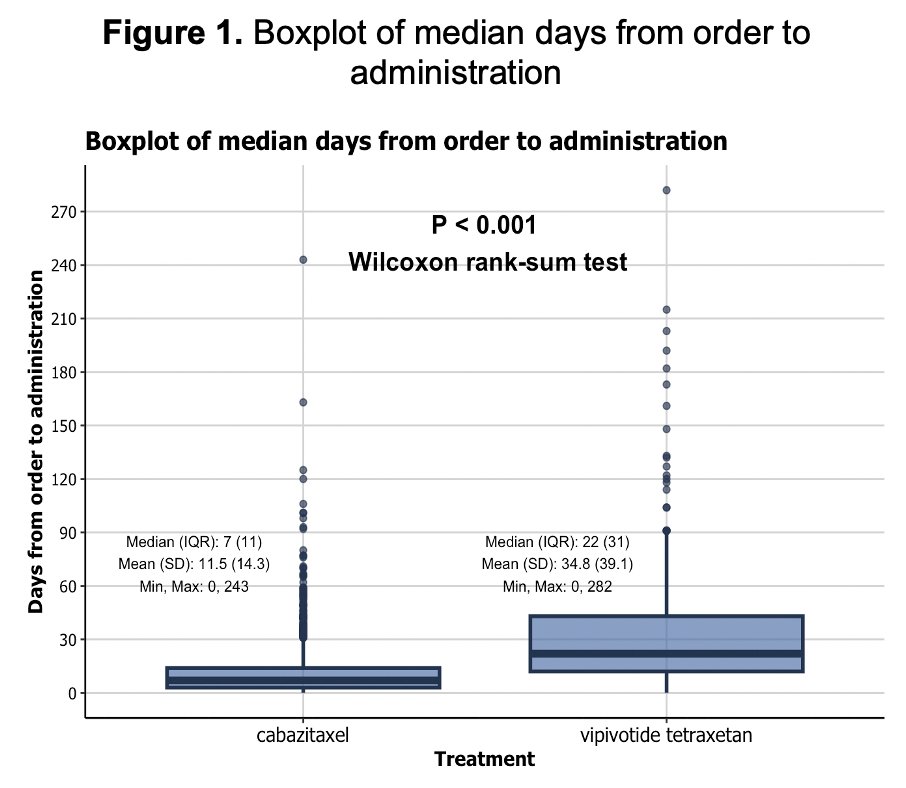
The median time from medication order to administration was significantly longer with Lutetium (median 22 days, IQR 12-43) versus cabazitaxel (median 7 days, IQR 3-14), as illustrated in the boxplot below:
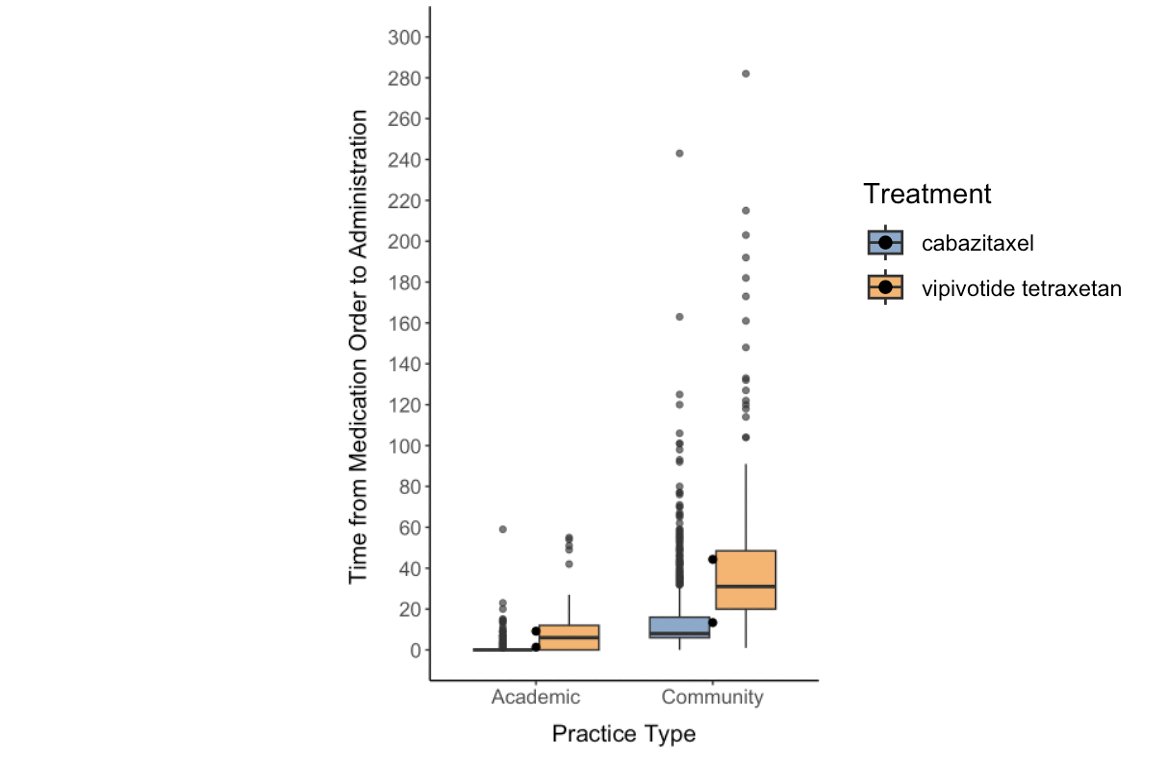
The investigations performed analyses comparing median time to medication administration by practice type and by insurance status. Notably, the time from medication order to administration was significantly longer with Lutetium vs. Cabazitaxel in both academic (median 6 vs. 0 days, p < 0.001) and community practices (median 31 vs. 8 days, p < 0.001) as shown below:
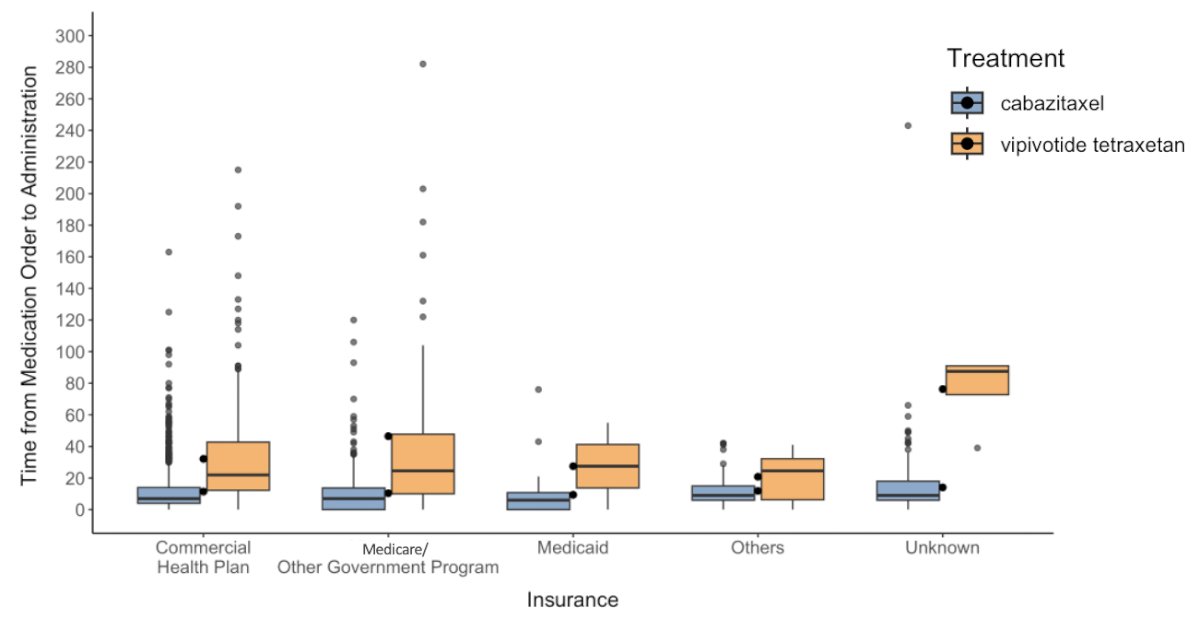
Interestingly, the median time from medication order to administration was significantly longer for lutetium compared to cabazitaxel in both commercial health plans (median 22 vs. 7 days, p < 0.001) and Medicare patients (median 25 vs. 7 days, p < 0.001). The boxplot below illustrates the median days from order to administration by insurance status:
Dr. Jo concluded his presentation with the following takeaways:
- Results from this retrospective study using a large US-based nationwide database, show that it takes significantly longer to administer Lutetium compared to Cabazitaxel. Regardless of the practice type or the health insurance status.
- These results could inform healthcare policies aimed at improving access to Lutetium and guide treatment selection in the clinic.
Presented by: Yeonjung Jo, Ph.D. Candidate, Biostatistics. Huntsman Cancer Institute University of Utah School of Medicine. Salt Lake City, Utah, United States.
Written by: Julian Chavarriaga, MD – Urologic Oncologist at Cancer Treatment and Research Center (CTIC) via Society of Urologic Oncology (SUO) Fellow at The University of Toronto. @chavarriagaj on Twitter during the 2025 Genitourinary (GU) American Society of Clinical Oncology (ASCO) Annual Meeting, San Francisco, CA, Thurs, Feb 13 – Sat, Feb 15, 2025.
References: