

(UroToday.com) The 2025 GU ASCO annual meeting featured a prostate cancer session and a presentation by Dr. Oliver Sartor discussing the real world PRECISION data platform assessing clinical outcomes of prompt versus deferred 177Lu-PSMA-617 initiation for metastatic castration-resistant prostate cancer (mCRPC) based on prior androgen receptor pathway inhibitor and taxane chemotherapy exposure. For patients with mCRPC, systemic treatment options include androgen receptor pathway inhibitors, taxanes, immunotherapies, radioactive isotopes, radioligand therapies, and PARP inhibitors. Given the broad therapeutic arsenal for mCRPC, with overlapping indications, selecting the optimal treatment sequence is challenging in clinical practice. 177Lu-PSMA-617 is a PSMA targeting radioligand therapy approved in March 2022 for the treatment of adult patients with PSMA positive mCRPC who have been treated with at least one androgen receptor pathway inhibitor and at least one taxane.1 The aim of this study presented at GU ASCO 2025 was to evaluate the PSA responses and overall survival among patients with mCRPC receiving 177Lu-PSMA-617 based on prior androgen receptor pathway inhibitor and taxane treatment exposure.
This retrospective, observational study used real-world data from the PRECISION data platform, a harmonized dataset of advanced prostate cancer patients in the US from community urology centers, as well as academic and community oncology centers. Patients with mCRPC who had received ≥1 dose of 177Lu-PSMA-617 between March 23, 2022, and July 31, 2024, after prior treatment with ≥1 androgen receptor pathway inhibitor and ≥1 taxane, were included:
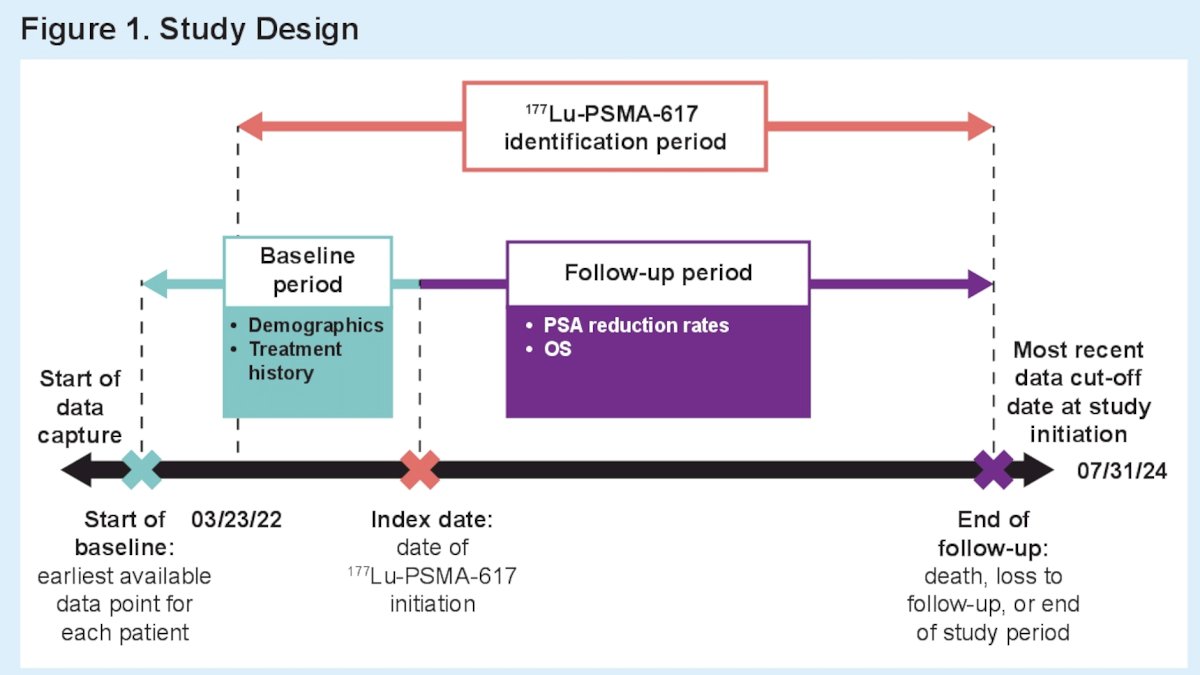
To assess PSA response, the baseline PSA value obtained within 90 days before starting 177Lu-PSMA-617 was compared with the on-treatment PSA value obtained ≥28 days after 177Lu-PSMA-617 initiation. The number of patients achieving PSA reductions ≥50% (PSA50) and ≥80% (PSA80) were estimated, with patients classified into two cohorts based on prior androgen receptor pathway inhibitor and taxane exposure:
(1) Prompt cohort: after only 1 androgen receptor pathway inhibitor and 1 taxane
(2) Deferred cohort: >1 androgen receptor pathway inhibitor and/or >1 taxane

Patient characteristics and treatment patterns were evaluated descriptively, and overall survival from 177LuPSMA-617 initiation was estimated using Kaplan–Meier methodology.
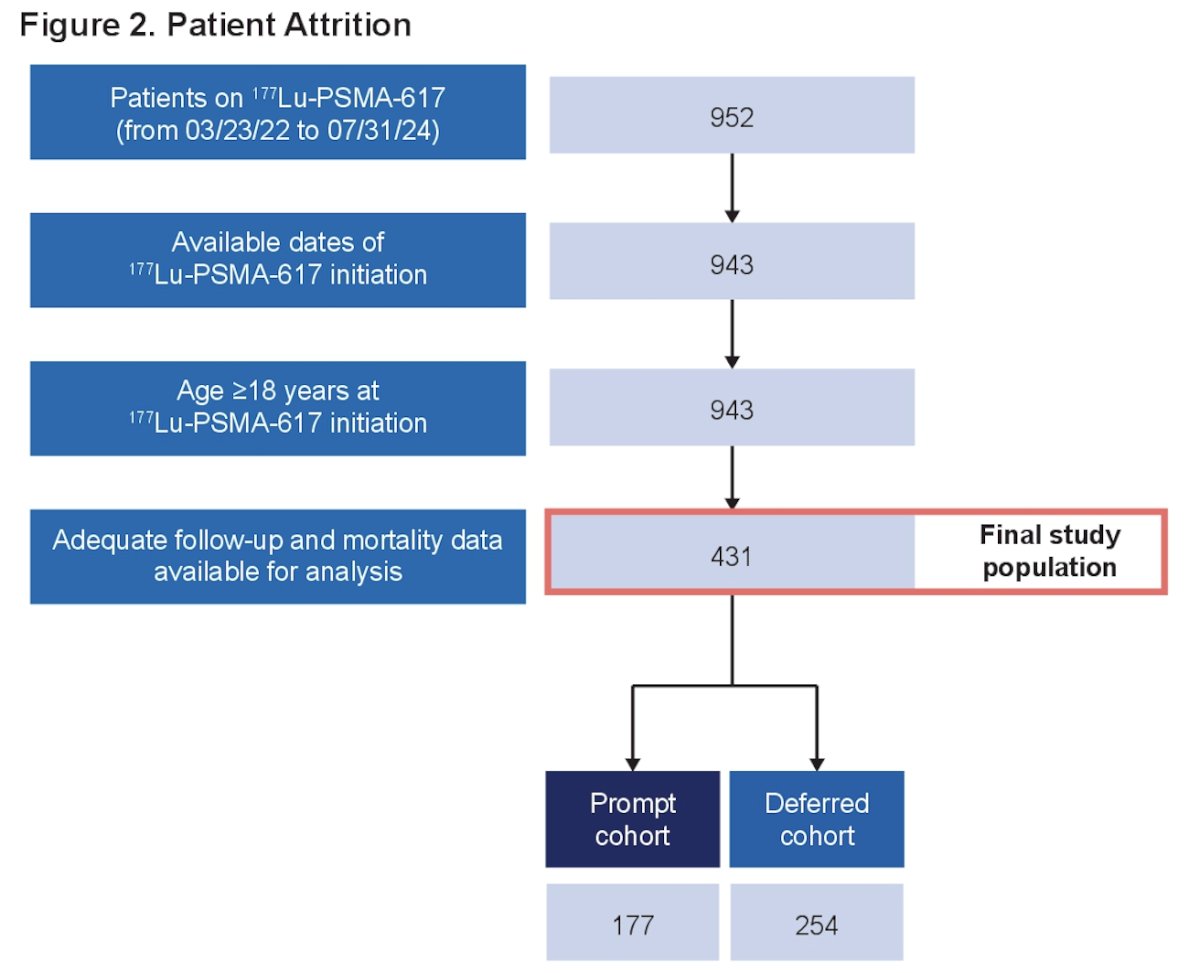
A total of 431 patients were included: 177 patients in the prompt cohort and 254 patients in the deferred cohort:
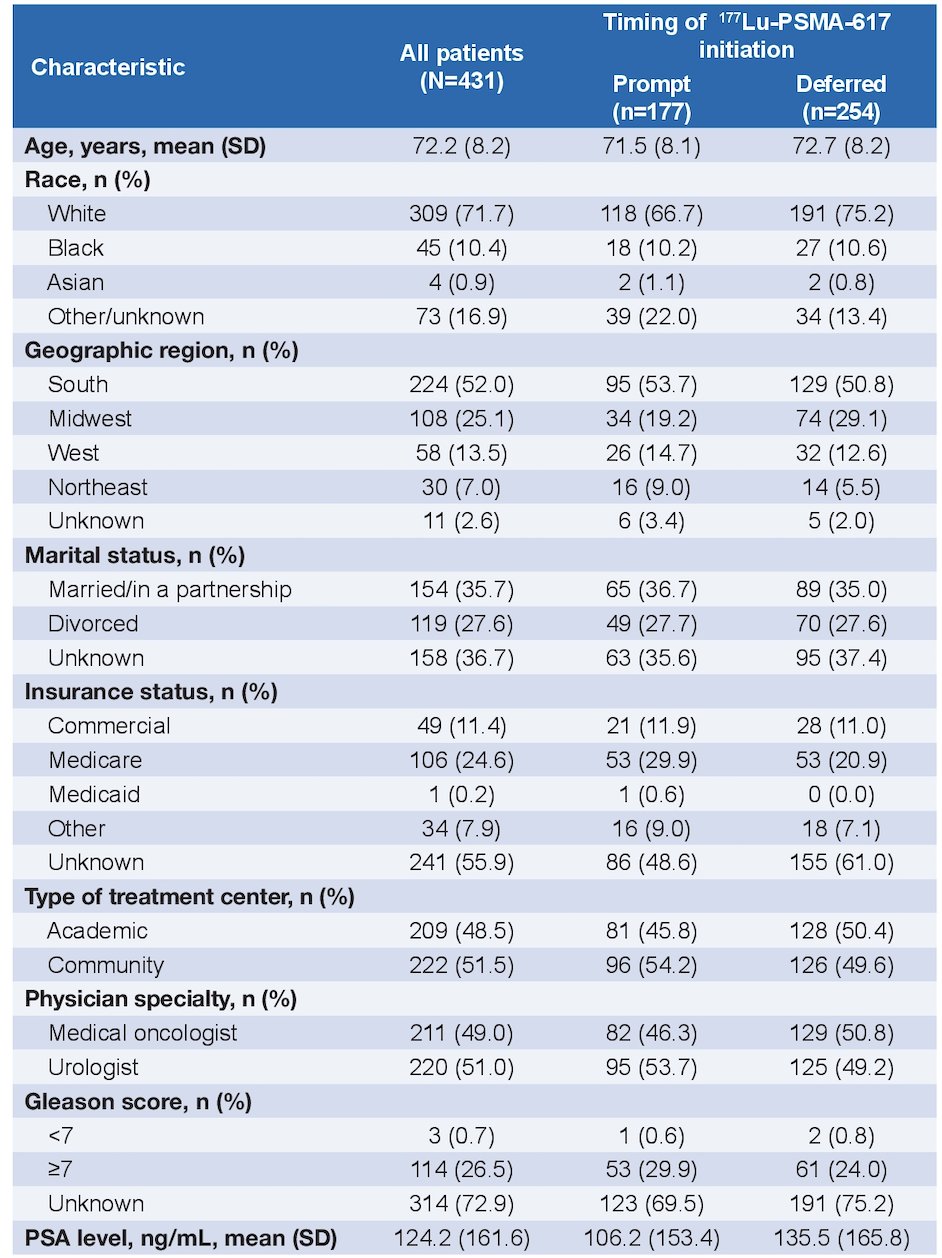
The mean age was 72.2 (SD 8.2) years and most demographic characteristics were balanced between groups. Patients in the deferred cohort had higher mean PSA levels at baseline (135.5 ng/mL versus 106.2 ng/mL):
The percentage of patients who received distinct therapies (1 or 2+ androgen receptor pathway inhibitors/taxanes) across the study population prior to initiating 177LuPSMA617 are shown as follows:

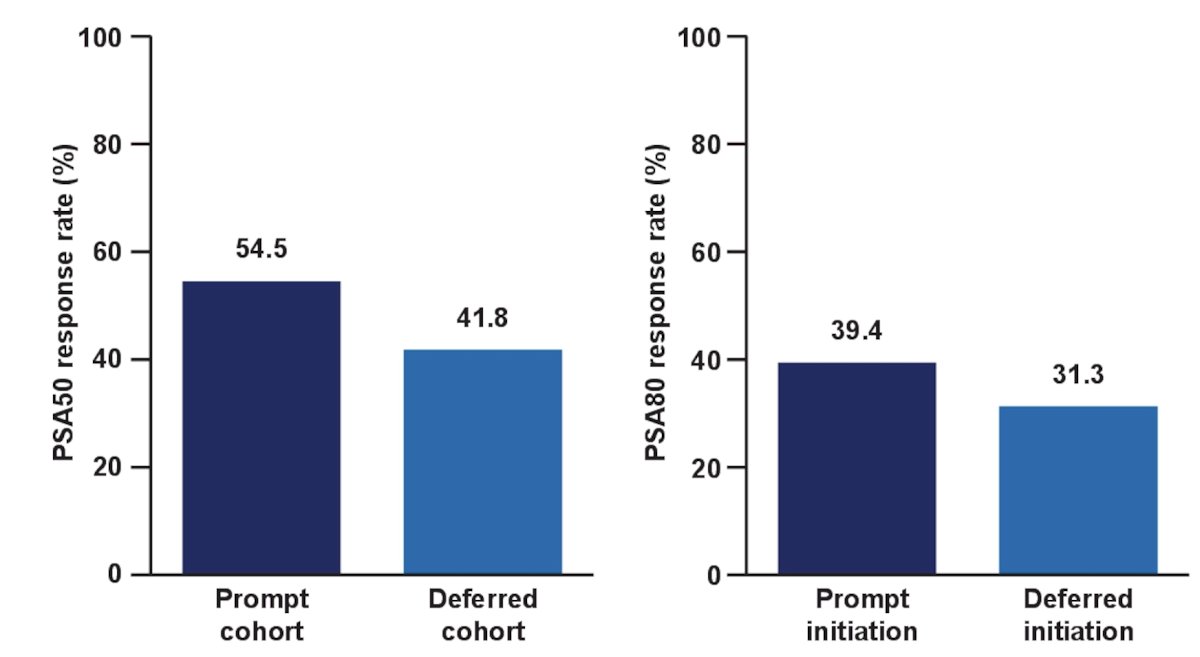
The median duration of 177LuPSMA617 therapy was 84 days (IQR 42-210 days) in the study population, including 84 days (IQR 42-207) in the prompt cohort and 88 days (IQR 42-210) in the deferred cohort. PSA50 was observed in 54.5% of patients in the prompt cohort versus 41.8% in the deferred cohort. PSA80 was observed in 39.4% of patients in the prompt cohort versus 31.3% in the deferred cohort:
Across both cohorts, median overall survival was 18.0 months (95% CI 15.1 months–not reached), and median overall survival was not reached in patients in the prompt cohort vs 15.1 months in patients in the deferred cohort (95% CI: 11.6 months–not reached):
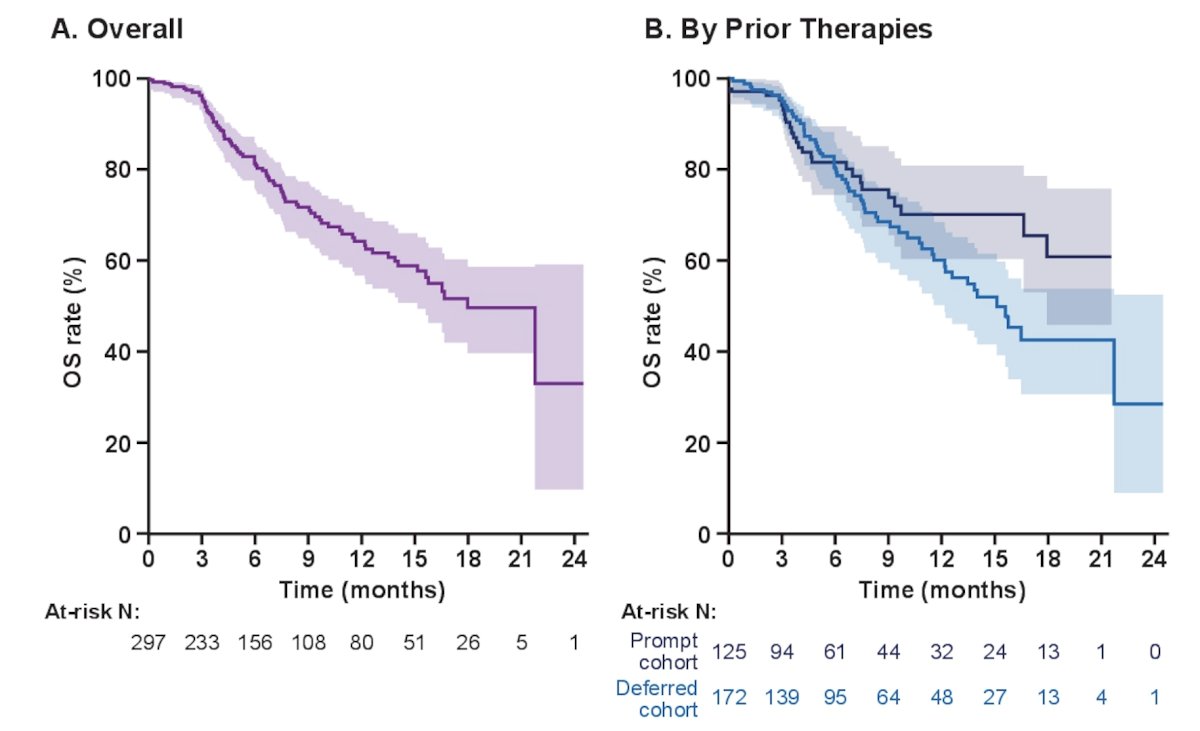
Dr. Sartor concluded his presentation by discussing the real world PRECISION data platform assessing clinical outcomes of prompt versus deferred 177Lu-PSMA-617 initiation for mCRPC based on prior androgen receptor pathway inhibitor and taxane chemotherapy exposure with the following take-home points:
- In this large real-world study, prompt initiation of 177LuPSMA617 (after only 1 androgen receptor pathway inhibitor and 1 taxane) showed superior clinical outcomes versus deferred initiation of 177LuPSMA617
- Patients were more likely to achieve a PSA reduction of ≥50% and ≥80% and had longer overall survival with prompt initiation of 177LuPSMA617
- These results may help to guide treatment sequencing in clinical practice
- Additional research is needed to elucidate the influence of patient characteristics and treatment sequence on clinical outcomes with 177LuPSMA617
Presented by: Oliver Sartor, MD, Mayo Clinic, Rochester, MN
Written by: Zachary Klaassen, MD, MSc – Urologic Oncologist, Associate Professor of Urology, Georgia Cancer Center, Wellstar MCG Health, @zklaassen_md on Twitter during the 2025 Genitourinary (GU) American Society of Clinical Oncology (ASCO) Annual Meeting, San Francisco, CA, Thurs, Feb 13 – Sat, Feb 15, 2025.
References: