

(UroToday.com) The 2025 American Society of Clinical Oncology (ASCO) Genitourinary (GU) Annual Symposium held in San Francisco, CA was host to a renal cell cancer oral abstract session. Dr. Kathryn E. Beckermann presented KEYMAKER-U03 Substudy 03B of pembrolizumab plus targeted therapy combination for advanced clear cell renal cell carcinoma (ccRCC).
Despite high response rates, approximately 70% of all patients with ccRCC will progress within 4 years of treatment with first-line PD-1 inhibitor-based combination regimens. Second- and later-line therapy for ccRCC generally consists of single-agent treatments, but combination therapies may offer benefits for these patients.
KEYMAKER-U03 is a phase 1/2 open-label, rolling arm, umbrella platform designed to evaluate combination treatments for previously treated, ccRCC that progressed on or after treatment with PD-(L)1 inhibitor and VEGF-TKI therapy. Herein, Dr. Beckermann presented results from participants treated with targeted therapy-containing regimens:
- Pembrolizumab + belzutifan (Arm B4)
- Lenvatinib + belzutifan (Arm B5)
- Pembrolizumab + lenvatinib
The study design of KEYMAKER-U03 Substudy 03B is illustrated below. This trial included patients with locally advanced/metastatic ccRCC with disease progression on or after PD-(L)-1 inhibitor + VEGF-TKI (either in combination or sequentially). There was an initial safety lead-in cohort, followed by an expansion cohort built into this trial. The primary endpoints were ORR per RECIST v1.1 by BICR and safety, with secondary endpoints of:
- Duration of response (DoR)
- Clinical benefit response (CBR): CR + PR + SD
- Progression-free survival (PFS) per RECIST v1.1 by BICR
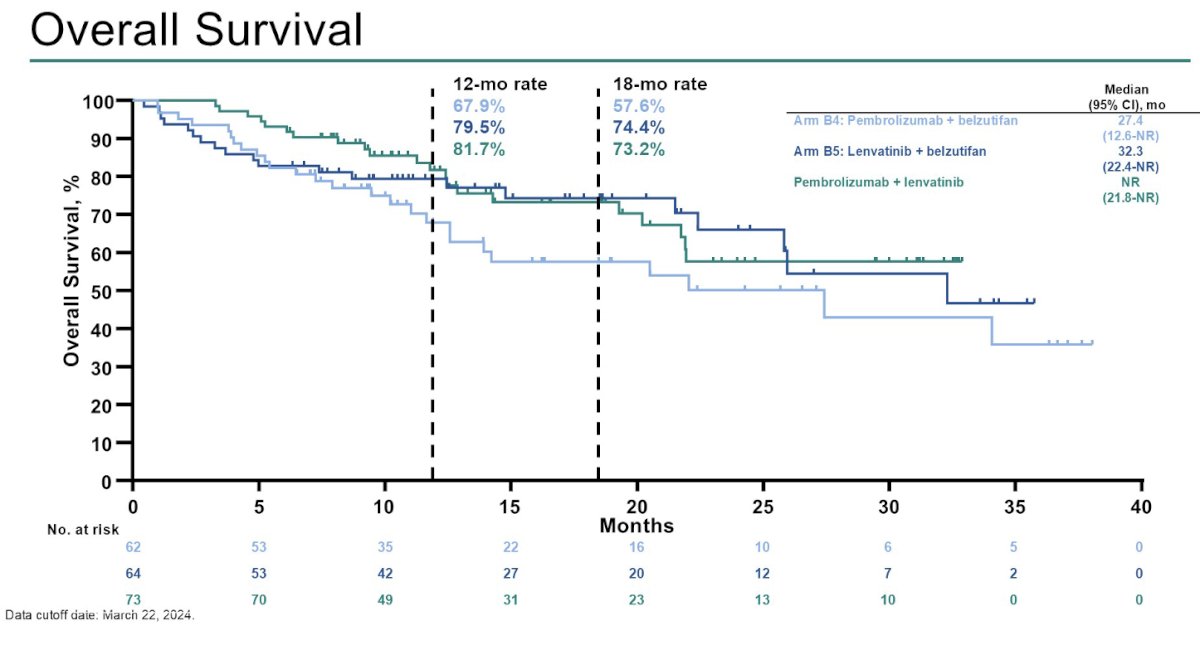
- Overall survival (OS)
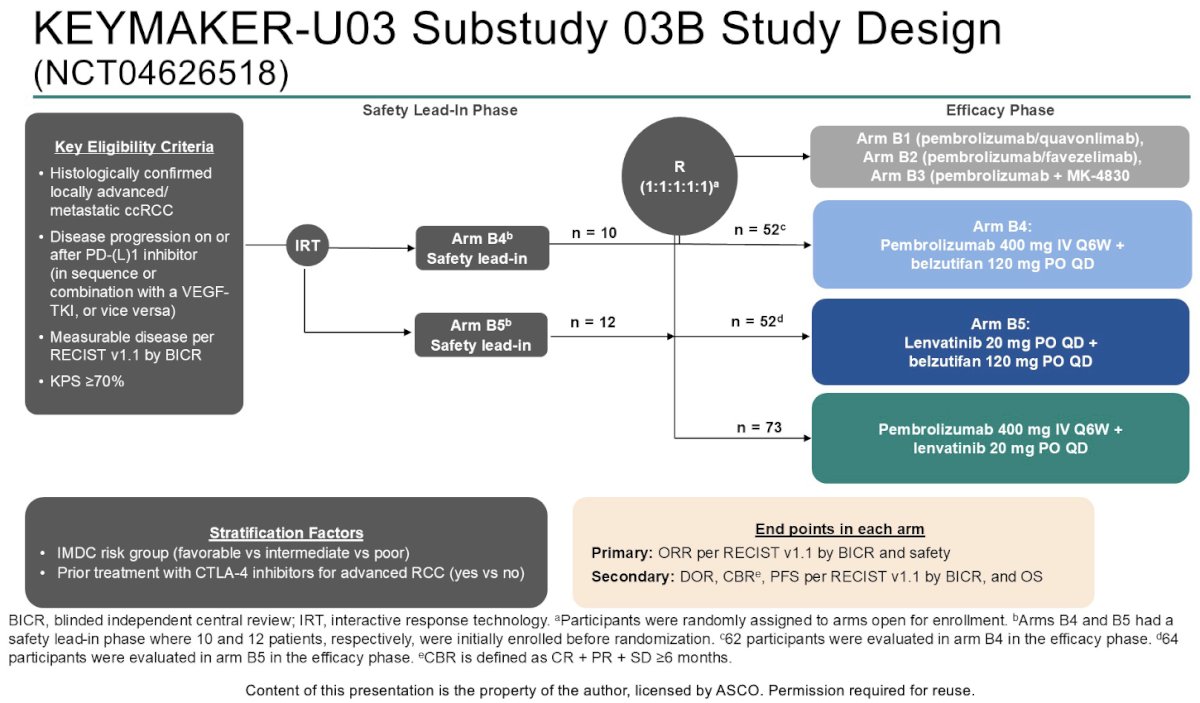
From a statistical standpoint, endpoints were evaluated in each arm separately; no formal comparisons were made across arms. Efficacy was analyzed in all randomly allocated participants Safety was analyzed in all randomly allocated participants who received ≥1 dose of study treatment. ORR and CBR 95% CIs were calculated using the Clopper-Pearson method. DoR, PFS, OS, and associated 95% Cls were estimated using the Kaplan-Meier method. AEs were graded by severity, per the NCI CTCAE v5.0
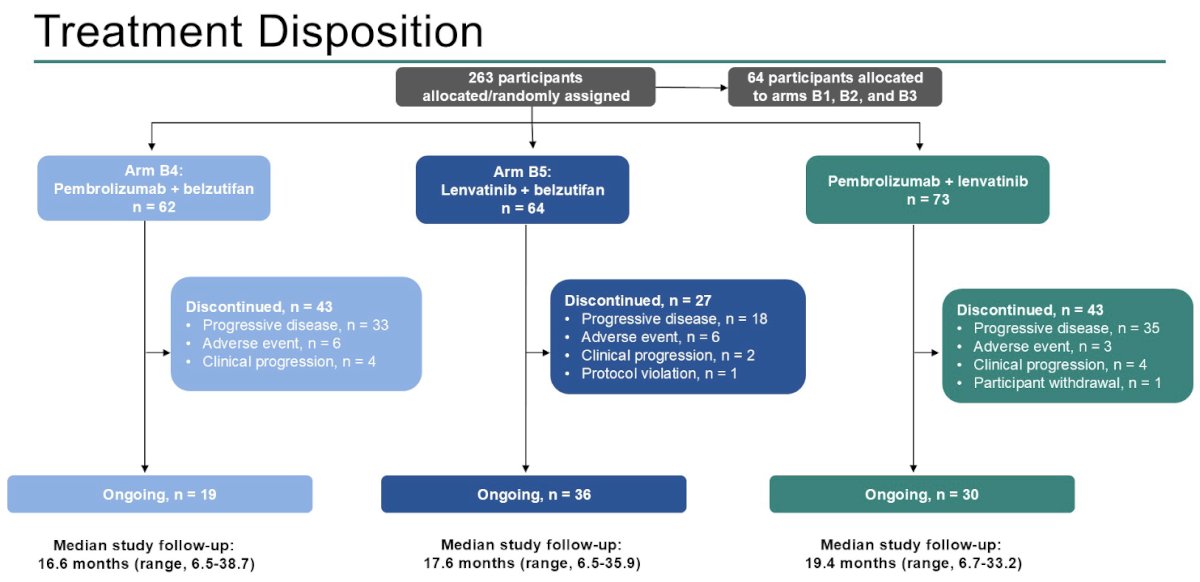
The treatment disposition is summarized below. Of the 263 patients, 199 were allocated to Arm B4 (n=62), Arm B5 (n=64), and the pembrolizumab + lenvatinib arm (n=73). The median study follow-up ranged between 16.6 and 19.4 months.
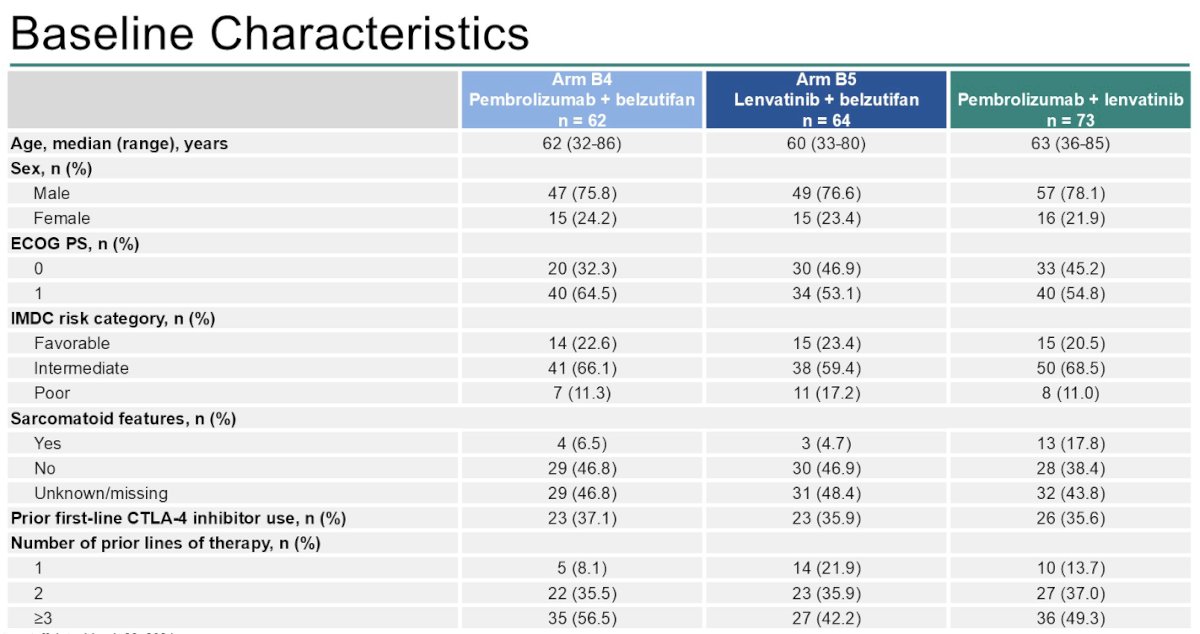
The baseline characteristics by treatment arm are summarized below. The median patient age was 60–63 years. 76-80% of patients had IMDC intermediate or poor risk disease. This was a heavily pre-treated population with 42–57% of patients having received ≥3 prior lines of systemic therapy.
The ORRs were as follows:
- Pembrolizumab + belzutifan (Arm B4): 19.4%
- Median DoR: not reached
- Reduction in target lesion size: 66%
- Lenvatinib + belzutifan (Arm B5): 47%
- Median DoR: 22.1 months
- Reduction in target lesion size: 88%
- Pembrolizumab + lenvatinib: 40%
- Median DoR: 8.3 months
- Reduction in target lesion size: 92%


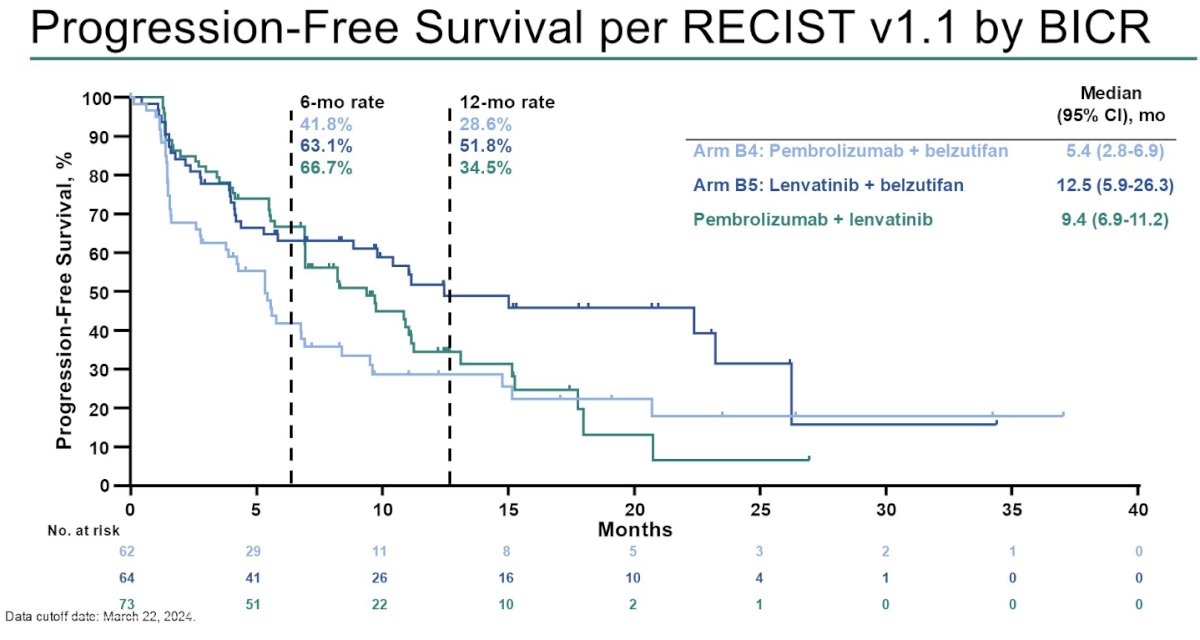
The median PFS rates were highest with the combination of lenvatinib + belzutifan (12.5 months), followed by pembrolizumab + lenvatinib (9.4 months) and pembrolizumab + belzutifan (5.4 months).
The median OS by arm were as follows:
- Pembrolizumab + belzutifan: 27.4 months
- Lenvatinib + belzutifan: 32.3 months
- Pembrolizumab + lenvatinib: Not reached
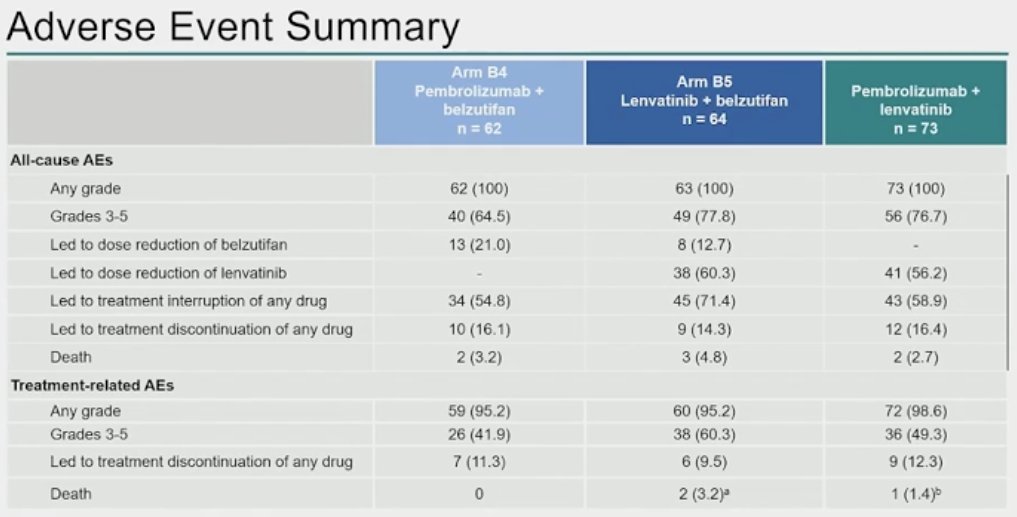
All patients had any grade adverse events. Grade 3–5 treatment-related adverse events were observed in 42% of patients in the pembrolizumab + belzutifan arm, 60% of those in the lenvatinib + belzutifan arm, and 50% of patients in the pembrolizumab + lenvatinib arm. There were similar rates of treatment discontinuations due to drug-related adverse events (10-12%).
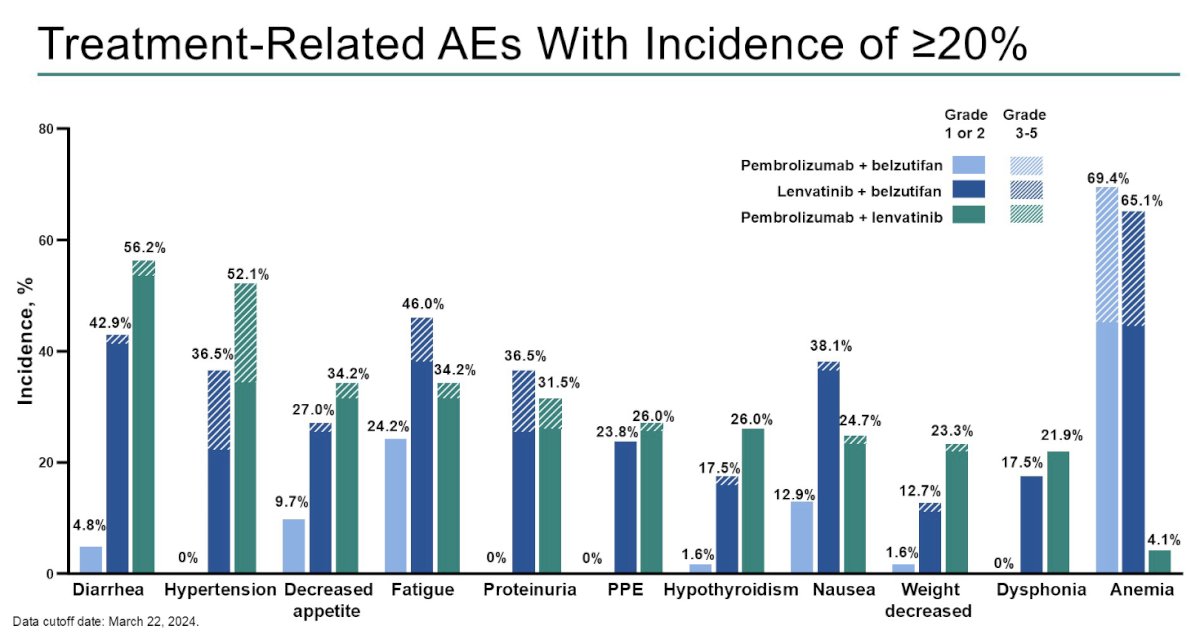
Treatment-related adverse events with incidences ≥20% are summarized below. Notably, anemia was a common adverse event in the two belzutifan arms (65-69%).
Dr. Beckermann concluded as follows:
- In the KEYMAKER-U03 Substudy 03B trial, where the vast majority of participants received 2 or more prior lines of therapy, lenvatinib plus belzutifan showed a numerically high OR of 46.9% and median PFS of 12.5 months
- Results from the pembrolizumab plus belzutifan arm were similar to those observed with belzutifan monotherapy in the phase 3 LITESPARK-005 study
- Pembrolizumab plus lenvatinib also showed antitumor activity in this patient population, with an ORR of 39.7% and median PFS of 9.4 months
- Adverse events were generally manageable, and safety profiles were consistent with the individual profiles of each agent
- Results from Substudy-03B showed promising clinical activity of lenvatinib plus belzutifan, and this combination is currently being compared with cabozantinib in the randomized, phase 3 LITESPARK-011 trial
Presented by: Dr. Kathryn E. Beckermann, MD, PhD, Department of Medicine, Vanderbilt University, Nashville, TN
Written by: Rashid K. Sayyid, MD, MSc – Robotic Urologic Oncology Fellow at The University of Southern California, @rksayyid on Twitter during the 2025 Genitourinary (GU) American Society of Clinical Oncology (ASCO) Annual Meeting, San Francisco, CA, Thurs, Feb 13 – Sat, Feb 15, 2025.