

(UroToday.com) The 2025 American Society of Clinical Oncology Genitourinary (ASCO GU) cancers symposium held in San Francisco, CA between February 13th and 15th 2025, was host to the Poster Session C: Renal Cell Cancer; Adrenal, Penile, Testicular and Urethral Cancers. Dr. Cherrishe Brown-Bickerstaff presented the Abstract 470: Real-world (treatment patterns and clinical outcomes in patients (pts) with metastatic renal cell carcinoma (mRCC) in the US community setting.
Multiple immunotherapy (IO)-based combination regimens have been approved for first-line treatment of mRCC, demonstrating significant efficacy. However, these combinations are also associated with notable toxicity, which may influence how treatment regimens are utilized in real-world community settings.
Currently, no direct prospective comparisons exist for FDA-approved IO-IO or IO-TKI combination regimens in mRCC. This study aimed to perform cross-comparisons of these regimens and evaluate first-line TKI dosing patterns and real-world outcomes in a large network of U.S. community oncology practices.
This observational cohort study included patients diagnosed with mRCC who initiated first-line treatment in the metastatic setting between January 2021 and April 2023. The study utilized structured data from iKnowMed, an electronic health record system that captures outpatient community-based encounter histories, along with additional data on patient vital status obtained from linked third-party datasets. Eligible patients were 21 years or older at initial RCC diagnosis and had at least one documented visit or recorded death during the study observation period (January 1, 2021, to October 31, 2023) following initiation of first-line treatment with one of the following IO-based regimens:
- Nivolumab + cabozantinib
- Ipilimumab + nivolumab
- Pembrolizumab + axitinib
- Pembrolizumab + lenvatinib
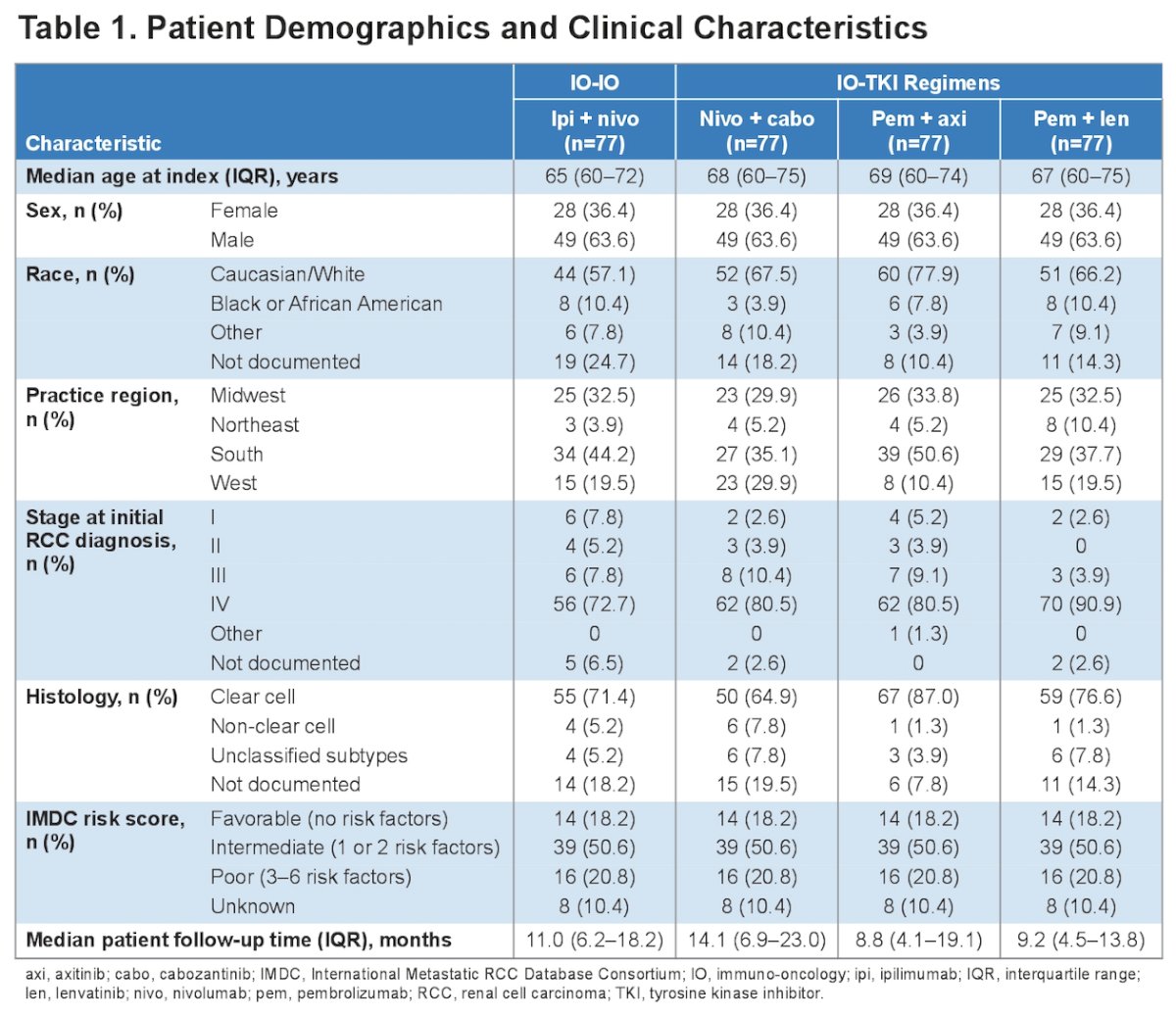
A total of 308 patients were included in the study, with 77 patients in each IO-combination cohort. The median follow-up time across cohorts ranged from 8.8 to 14.1 months. Most patients were male (63.6%), and 75% were aged ≥60 years, the majority had CS IV disease at initial RCC diagnosis, were white. and also had clear cell histology. The distribution of IMDC risk scores was 18% favorable, 51% intermediate, 21% poor, and 10% unknown across all groups. Clinical characteristics are summarized below:
When used in combination with an IO for first-line treatment of mRCC, lenvatinib was initiated at lower-than-recommended doses in 30% of patients, followed by cabozantinib (16%) and axitinib (12%).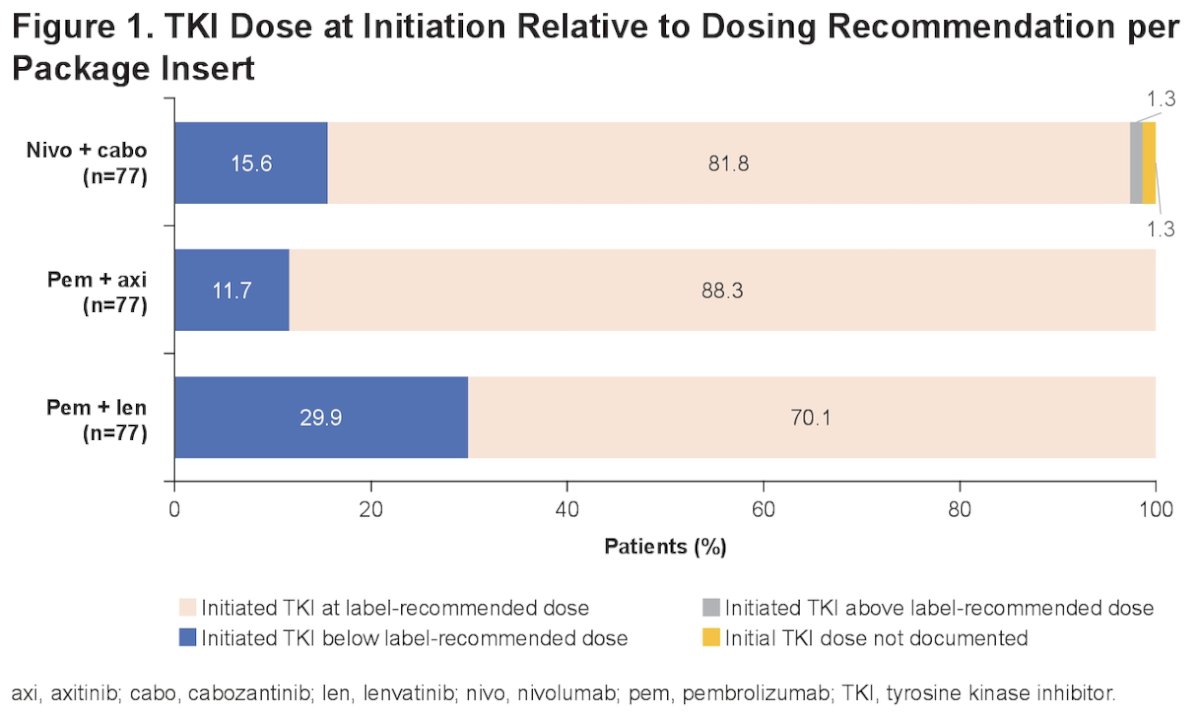
The median time to next treatment was significantly longer in the nivolumab + cabozantinib cohort compared to other cohorts and was numerically longer than in the IO-IO cohort. Notably, the likelihood of initiating a new treatment sooner was 60% higher for both pembrolizumab-based combinations, including pembrolizumab + axitinib and pembrolizumab + lenvatinib.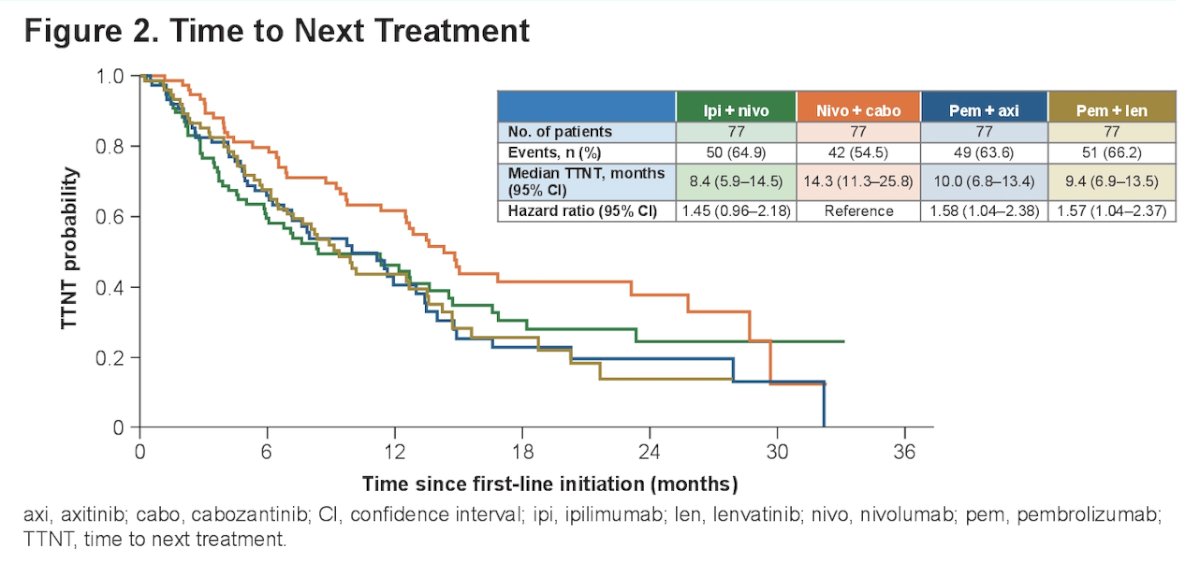
The 12-month overall survival (OS) probability following first-line treatment initiation was 76.8% in the nivolumab + cabozantinib cohort, 70.9% in the pembrolizumab + axitinib cohort, 70.5% in the IO-IO (nivolumab + ipilimumab) cohort, and 64.0% in the pembrolizumab + lenvatinib cohort. However, OS data were immature, with median OS not reached for any treatment cohort during the study follow-up period, except for the pembrolizumab + lenvatinib cohort, which had a median OS of 18.4 months.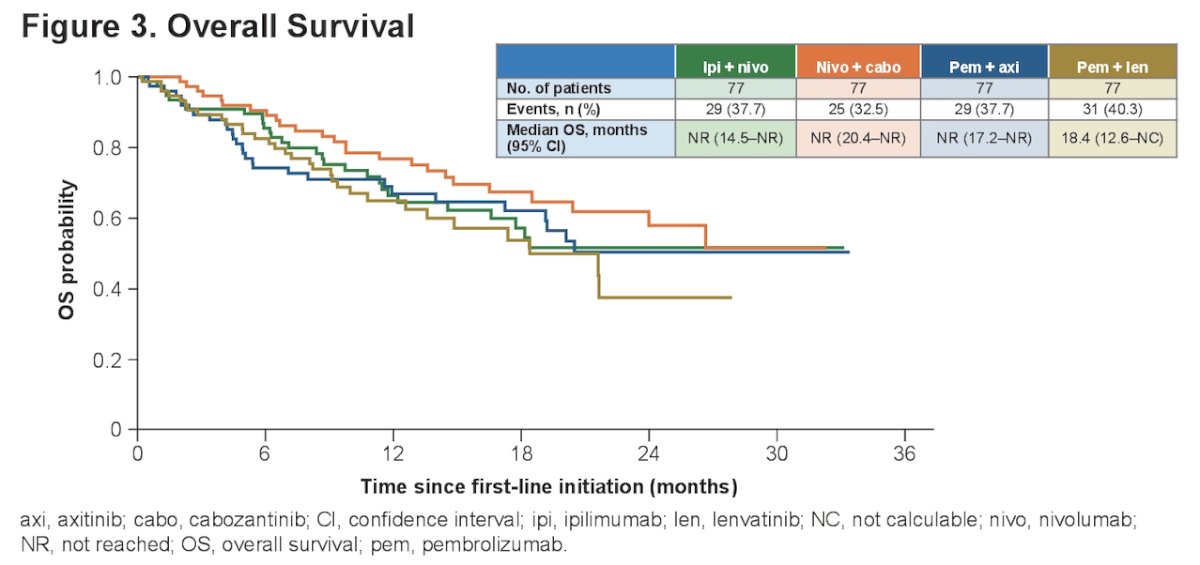
The investigators acknowledged several limitations, including immature OS data and the descriptive, unadjusted nature of all analyses, including the TTNT analysis. The potential clinical benefit in TTNT observed with nivolumab + cabozantinib compared with other IO-TKI combinations is subject to residual confounding and should be interpreted with caution.
Dr. Brown-Bickerstaff concluded her poster with the following key messages:
- In this real-world study of patients with mRCC treated with first-line IO combinations, more patients receiving lenvatinib initiated treatment below the recommended dose compared with those receiving other TKIs.
- Based on real-world time to next treatment analysis in a matched patient population, patients treated with first-line nivolumab + cabozantinib took longer to receive a subsequent anticancer treatment compared with those receiving pembrolizumab combinations.
- OS data remain immature, but there is a numerical trend suggesting superior OS with nivolumab + cabozantinib.
Presented by: Cherrishe Brown-Bickerstaff, PhD, MPH, Real-World Evidence Scientist at Ontada, Senior Observational Researcher. United States.
Written by: Julian Chavarriaga, MD – Urologic Oncologist at Cancer Treatment and Research Center (CTIC) via Society of Urologic Oncology (SUO) Fellow at The University of Toronto. @chavarriagaj on Twitter during the 2025 Genitourinary (GU) American Society of Clinical Oncology (ASCO) Annual Meeting, San Francisco, CA, Thurs, Feb 13 – Sat, Feb 15, 2025.