

(UroToday.com) The 2025 GU ASCO annual meeting featured a presentation by Dr. David Benjamin discussing the state of the genitourinary medical oncology workforce in the United States in 2024. There are approximately 13,400 oncologists engaged in patient care in the United States as of 2022, and as the field of medical oncology becomes subspecialized in not only academic but in community settings, it remains unclear how many practicing oncologists identify as genitourinary medical oncologists.
Using lists for the top 50 hospitals per state as ranked by US News & World Report, Dr. Benjamin and colleagues identified practicing medical oncologists. Next, they then identified those with a primary (100%) or predominant (50% or greater) areas of clinical focus in genitourinary oncology. Additional data collected included gender, race/ethnicity, and medical education.
There was a total of 451 genitourinary medical oncologists identified in the United States. Of these, 399 (88.5%) practice in academic settings while 52 (11.5%) practice in community-based hospitals. Overall, 327 (72.5%) genitourinary medical oncologists are male, while 124 (27.5%) are female, and 17 genitourinary oncologists (3.8%) are from underrepresented minority groups in medicine (Black, Hispanic, or Native American):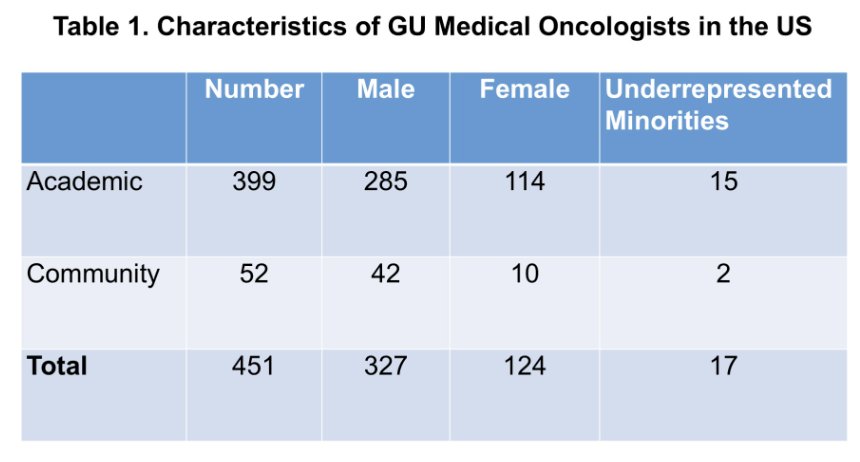
There were 321 oncologists (71.2%) that trained at US medical schools, and 76 (16.9%) identified a particular organ (prostate, bladder, kidney, or testicle) as a clinical or research area of focus. The Northeast US had the most genitourinary oncologists (n = 150), followed by the South (n = 129), West (n = 97), and Midwest (n = 75). Of note, 7 US states have no genitourinary medical oncologist: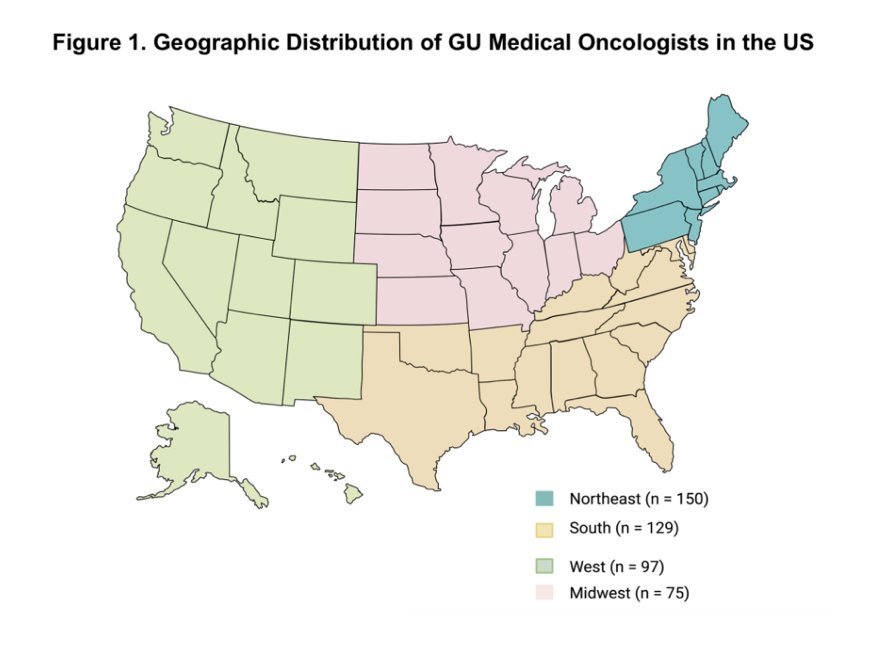
Dr. Benjamin concluded his presentation discussing the state of the genitourinary medical oncology workforce in the United States in 2024 with the following statements:
- Medical oncologists with a primary or predominant focus in genitourinary cancers make up 3.4% of the medical oncology workforce in the US
- Seven (14%) of the US states do not have a self-identified genitourinary medical oncology expert
- Gender and racial/ethnic disparities are present among the genitourinary medical oncology workforce
Presented by: David J. Benjamin, MD, Hoag Family Cancer Institute, Newport Beach, CA
Written by: Zachary Klaassen, MD, MSc – Urologic Oncologist, Associate Professor of Urology, Georgia Cancer Center, Wellstar MCG Health, @zklaassen_md on Twitter during the 2025 Genitourinary (GU) American Society of Clinical Oncology (ASCO) Annual Meeting, San Francisco, CA, Thurs, Feb 13 – Sat, Feb 15, 2025.