

(UroToday.com) The 2025 GU ASCO annual meeting featured a kidney cancer session and a presentation by Dr. Toshihiro Horii discussing a first-in-human phase 0 safety, imaging, pharmacokinetics, and dosimetry study of 64Cu-PD-32766, a carbonic anhydrase IX (CAIX)-targeting peptide, in patients with clear cell renal cell carcinoma (ccRCC). CAIX is a type of carbonic anhydrase and is expected to be a useful target for detecting tumors with poor prognosis. Particularly in clear cell renal cell carcinoma, high CAIX expression has been reported in a large proportion of patients:
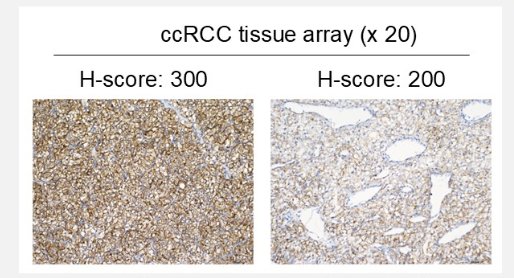
In this study, Dr. Horii and colleagues developed a novel radioligand agent PD-32766 that specifically binds to CAIX and administered it to recurrent cases of clear cell RCC patient. Safety, imaging, pharmacokinetics and dosimetry were evaluated.
Between May 14, 2024 and July 29, 2024, PD-32766 labeled by positron-emitting 64Cu (64Cu-PD-32766) was intravenously administered at a dose of 148 MBq (± 20%) to five patients with clear cell RCC who had either distant metastasis or local recurrence, and who met other eligibility criteria. PET/CT imaging was performed at 5, 60, 120, 240 minutes, 24, and 48 hours after administration, with vital signs, blood tests, and urinalysis performed as needed: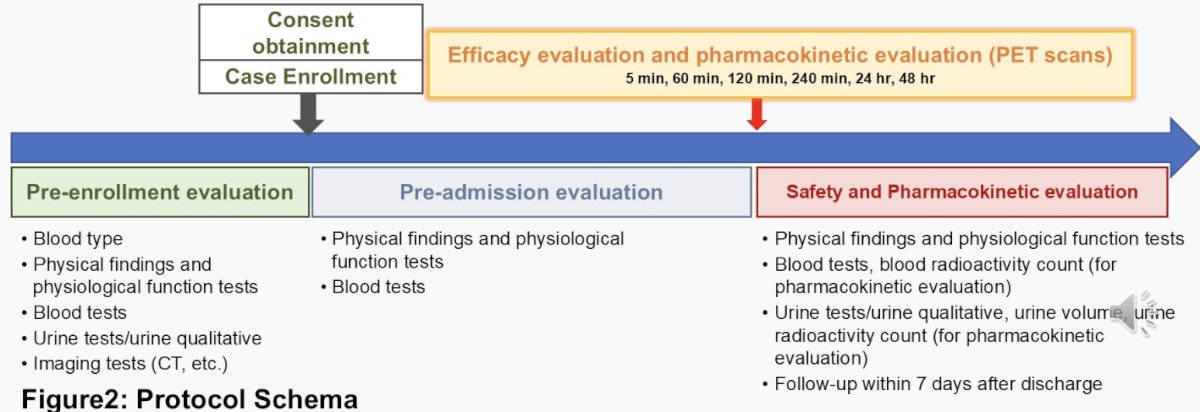
The primary endpoint was the patient-level PET uptake positivity rate of target tumor regions. Secondary endpoints included the number of positive lesions, pharmacokinetics, estimated radiation dose, and the frequency and types of adverse events.
64Cu-PD-32766 demonstrated good tolerability, with no serious complications noted. The mean patient-level PET uptake positivity rate at 120 minutes was 75%, and the mean lesion-level PET positivity rate was 96.2%: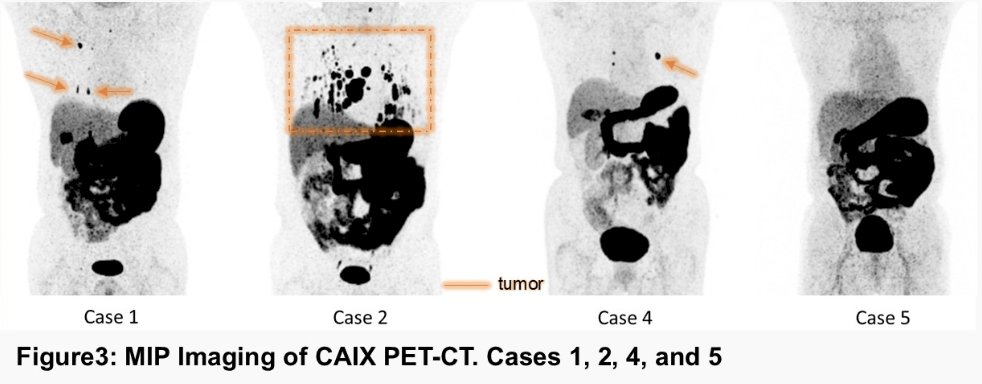
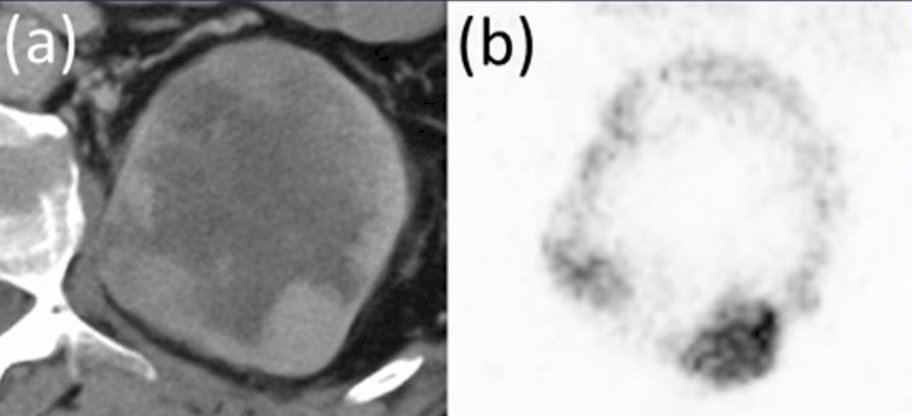
Tumor uptake was highest at 60 and 120 minutes post-administration. The effective dose for whole body was 0.102 ± 0.036 mSv/MBq. The following figure shows a typical image of ccRCC on CAIX PET CT:
The stomach and small intestine had the highest absorbed doses among all organs, with 0.712 ± 0.287 mGy/MBq and 0.304 ± 0.067 mGy/MBq, respectively. The following shows uptake in the stomach: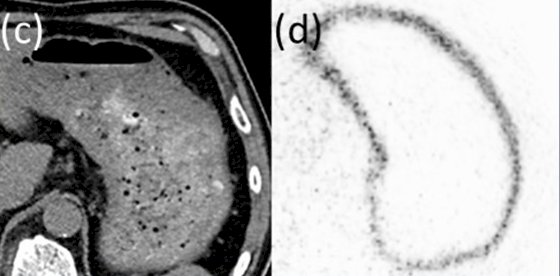
The accumulation in the tumor was confirmed to be sustained over a long period, and blood concentration dropped sharply within 5 minutes after administration, indicating good clearance: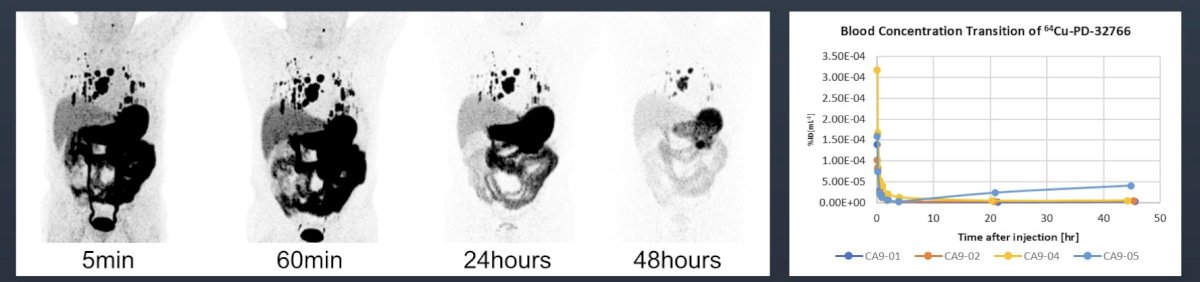
Dr. Horii concluded this presentation discussing 64Cu-PD-32766, a CAIX-targeting peptide in patients with clear cell RCC with the following take home messages:
- 64Cu-PD-32766 has sufficient diagnostic ability to clearly observe accumulation in suspected metastatic lesions
- 64Cu-PD-32766 has good clearance and rapid excretion from the body according to pharmacokinetic evaluation
- 64Cu-PD-32766 could be a useful therapeutic nuclide for diagnosis because Cu has the advantage of being evaluable for up to 48 hours
Presented by: Toshihiro Horii, PhD, Department of Diagnostic Radiology, National Cancer Center Hospital East, Kashiwa, Japan
Written by: Zachary Klaassen, MD, MSc – Urologic Oncologist, Associate Professor of Urology, Georgia Cancer Center, Wellstar MCG Health, @zklaassen_md on Twitter during the 2025 Genitourinary (GU) American Society of Clinical Oncology (ASCO) Annual Meeting, San Francisco, CA, Thurs, Feb 13 – Sat, Feb 15, 2025.