

(UroToday.com) The 2025 GU ASCO annual meeting featured a urothelial carcinoma session and a presentation by Dr. Aram Babcock discussing real-world time on treatment with first-line enfortumab vedotin + pembrolizumab after U.S. FDA approval for advanced urothelial cancer. Enfortumab vedotin + pembrolizumab received accelerated approval for cisplatin-ineligible advanced urothelial cancer patients in April 2023 (EV-103) and full approval for all previously untreated patients in December 2023 (EV-302).1
In the phase 3 KEYNOTE-A39/EV-302 trial, the median durations of treatment with enfortumab vedotin + pembrolizumab was 9.4 months (7.0 and 8.5 months for enfortumab vedotin and pembrolizumab, respectively). The investigators previously demonstrated high uptake of enfortumab vedotin + pembrolizumab post accelerated approval in the real-world. At the 2025 GU ASCO annual meeting, Dr. Babcock and colleagues examined the real world time on treatment with first line enfortumab vedotin + pembrolizumab with nearly one year of follow-up post-accelerated approval.
This descriptive, post-marketing, retrospective cohort study used the Flatiron Health longitudinal database derived from EHR records of US patients with advanced urothelial cancer initiating first line enfortumab vedotin + pembrolizumab after April 5, 2023 (accelerated approval) but before December 15, 2023 (full approval). Real world time on treatment for enfortumab vedotin + pembrolizumab was defined as length from first administration date of enfortumab vedotin + pembrolizumab regimen to first line therapy discontinuation, defined as last administration date of either component (i.e., enfortumab vedotin or pembrolizumab) if patient initiated a next line of therapy, died during therapy, or had a gap of >60 days between last recorded dose and last contact date. If no discontinuation criteria were met, the patient was censored at the data cut-off of March 31, 2024. Real world time on treatment was also estimated for each enfortumab vedotin + pembrolizumab component.
This study identified 111 patients with advanced urothelial cancer who initiated first line enfortumab vedotin + pembrolizumab after accelerated approval but before full approval with the following characteristics: mean age: 73.9 years, 75.7% male, 77.0% white, 23.7% ECOG performance status ≥2, 75.2% cisplatin-ineligible, and 84.7% from community practices: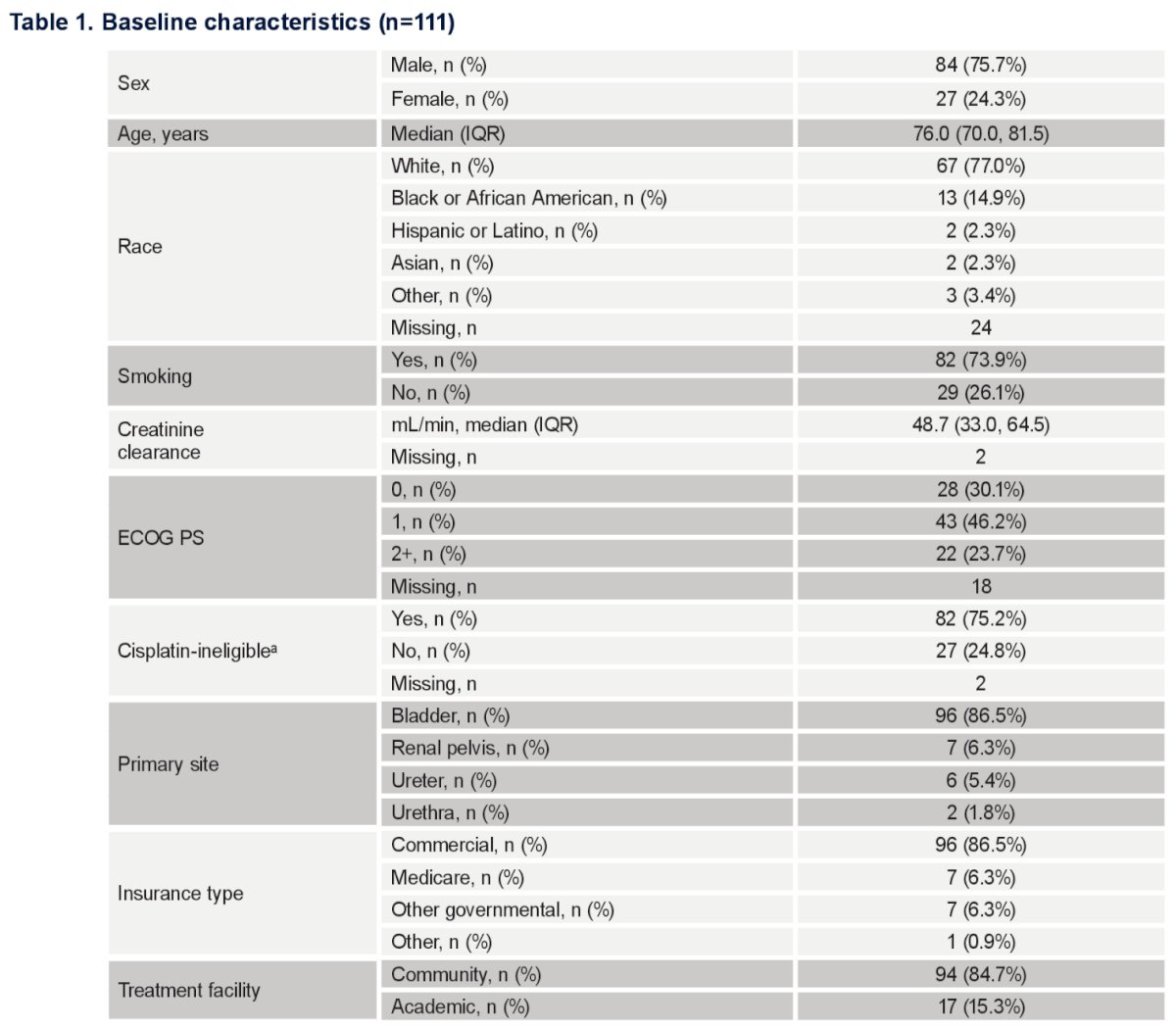
As of March 31, 2024, approximately 41.4% (n = 46) discontinued both enfortumab vedotin and pembrolizumab, 23.9% (11/46) began subsequent therapy, 65% (n = 30) died, and the remaining patients were censored at the end of follow-up (58.6%, n = 65). The median real world time on treatment for enfortumab vedotin + pembrolizumab was 8.1 months (95% CI 6.5 - not reached), which was similar to those on EV-302 (9.4 months):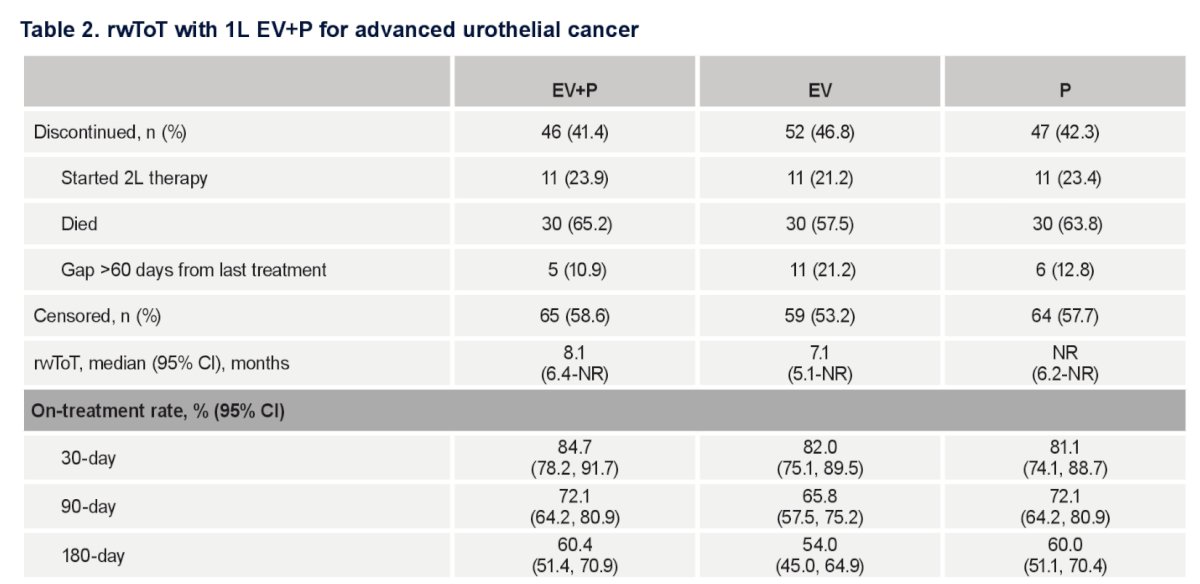
Among first line enfortumab vedotin + pembrolizumab initiators, the median starting dose of enfortumab vedotin was 1.25 mg/kg:
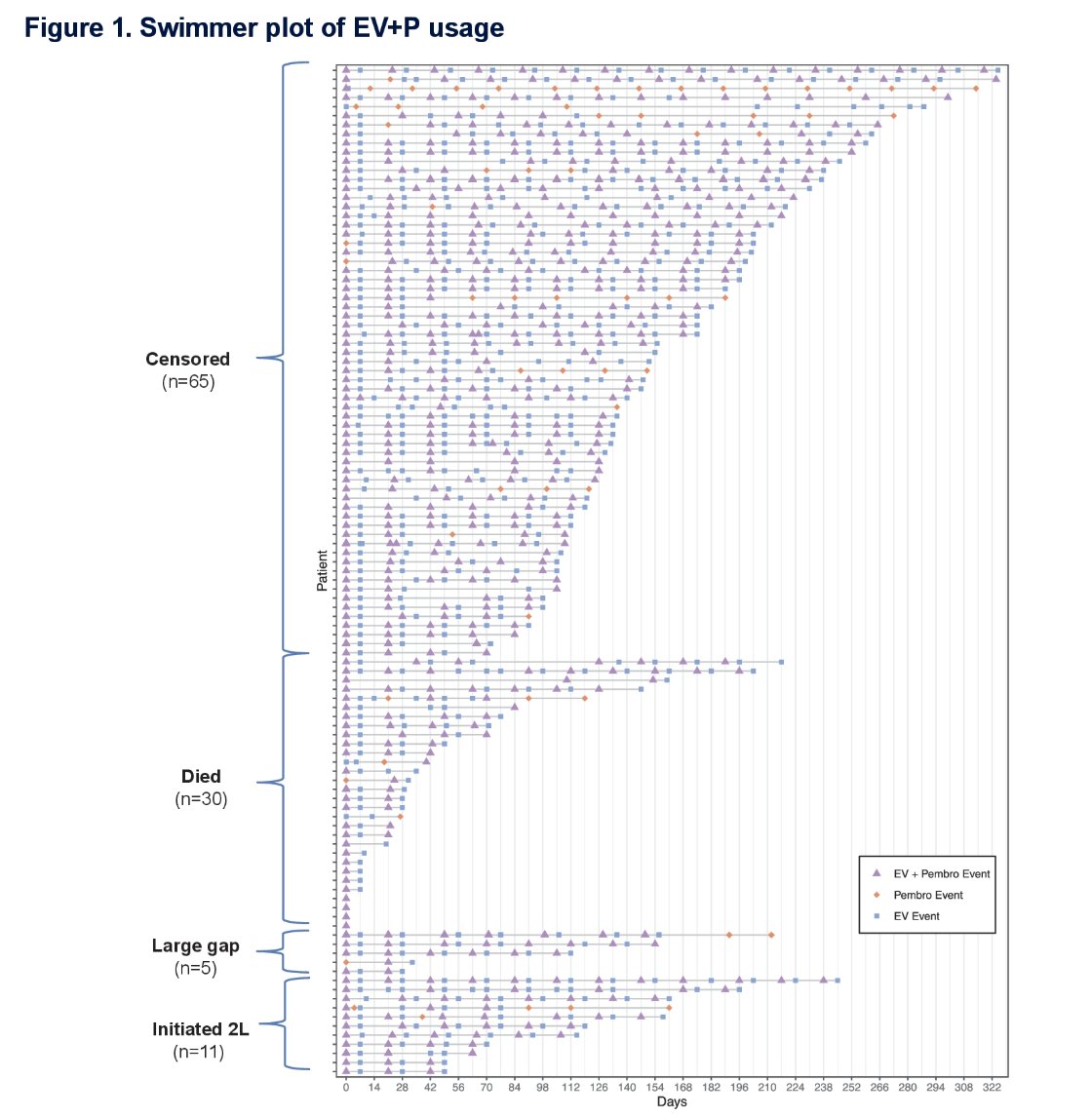
Across most patients, standard treatment frequency was maintained (enfortumab vedotin + pembrolizumab week 1 followed by enfortumab vedotin week 2), though variation in treatment episodes occurred more frequently later in treatment (after 3 cycles):
Among first line enfortumab vedotin + pembrolizumab treated patients receiving subsequent therapies, 72.7% (n= 9 of 11) received gemcitabine and carboplatin as the first subsequent therapy: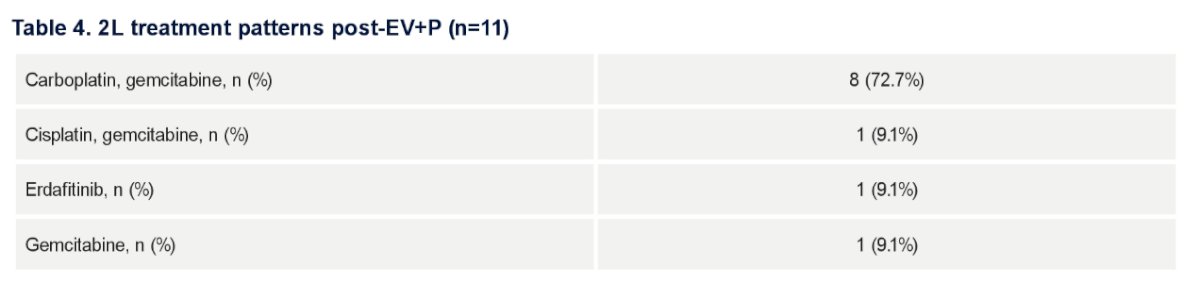
Dr. Babcock concluded his presentation discussing real-world time on treatment with first-line enfortumab vedotin and pembrolizumab after U.S. FDA approval for advanced urothelial cancer with the following take-home points:
- In this contemporary US cohort of largely cisplatin-ineligible advanced urothelial cancer, real world time on treatment of first line enfortumab vedotin + pembrolizumab approximated duration of treatment reported in the EV-302 trial
- Among enfortumab vedotin + pembrolizumab discontinuers, ~24% started second line therapy, consistent with subsequent therapy rates in EV-302
- While heterogeneity in enfortumab vedotin + pembrolizumab administration patterns was evident in routine care, across most cycles standard dosing frequency was maintained
- Additional data following enfortumab vedotin + pembrolizumab full approval are required to inform real world time on treatment among all advanced urothelial carcinoma patients
Presented by: Aram Babcock, PharmD, MS, MBA, PhD Student, Merck & Co., Inc., Rahway, NJ
Written by: Zachary Klaassen, MD, MSc – Urologic Oncologist, Associate Professor of Urology, Georgia Cancer Center, Wellstar MCG Health, @zklaassen_md on Twitter during the 2025 Genitourinary (GU) American Society of Clinical Oncology (ASCO) Annual Meeting, San Francisco, CA, Thurs, Feb 13 – Sat, Feb 15, 2025.
Reference: