

(UroToday.com) The 2025 GU ASCO annual meeting featured a urothelial carcinoma session and a presentation by Dr. Parnian Jabbari discussing a decade of mental health monitoring in clinical trials for FDA-approved genitourinary cancer treatments. The treatment landscape for genitourinary malignancies, including bladder, kidney, and prostate cancers, has evolved with several novel therapies approved in the past decade.
However, the importance of mental health in patients with cancer is being more and more recognized over the past years. This study presented at GU ASCO 2025 evaluated the monitoring of mental health and psychiatric symptoms in trials leading to FDA approvals for genitourinary cancers.
Dr. Jabbari and colleagues comprehensively reviewed trial protocols and publications for FDA-approved genitourinary cancer therapies from 2015-2024. For each approved therapy, they examined whether psychiatric side effects were monitored, the tools used, and the timing of assessments. Psychiatric symptoms reviewed included:
- Depression
- Anxiety
- Insomnia
- Delirium
- Mania or hypomania
- Psychosis
- Suicidal thoughts or behavior
- Emotional lability
- Irritability
- Obsessive-compulsive symptoms
- Cognitive symptoms
Of 42 trials for 31 approved treatments, 35 clinical trials had minimal or limited evaluation of psychiatric symptoms in trial participants. In all of these trials, psychiatric questionnaires were the only tools to monitor symptoms, with EORTC QLQ-C30, EQ-5D-5L, and BPI-SF being the most common tools used for monitoring. Depression, anxiety and insomnia were the most commonly evaluated symptoms: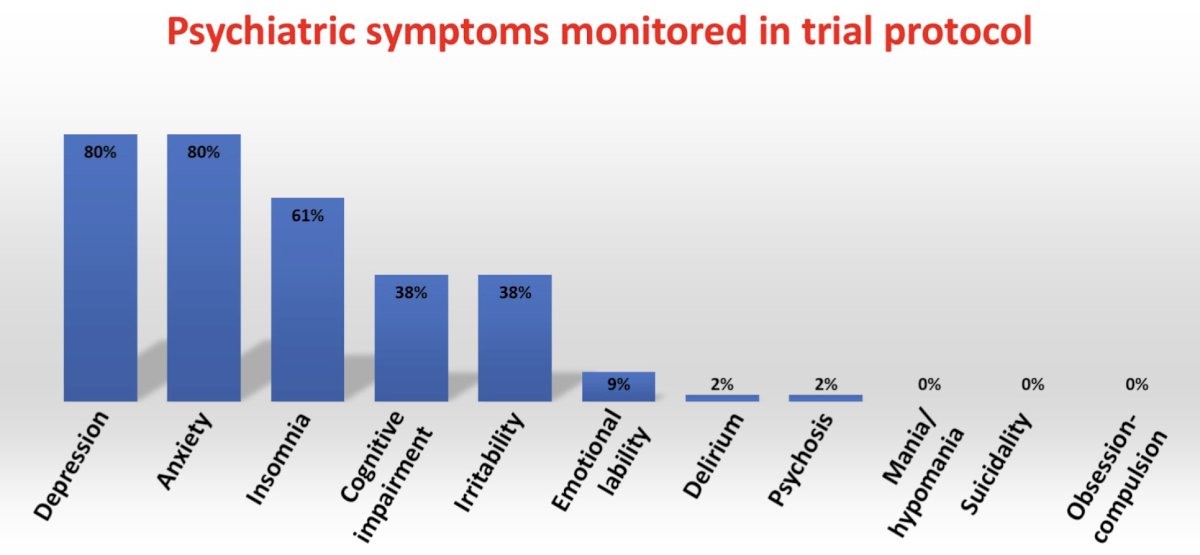
Serious psychiatric side effects, such as suicidal thoughts or behavior were not studied in any of these trials.
Dr. Jabbari concluded her presentation discussing a decade of mental health monitoring in clinical trials for FDA-approved genitourinary cancer treatments with the following future directions:
- Patients with cancer may experience psychiatric symptoms that may be related to their cancer, treatment, or other causes
- Given limited evaluation of mental health and psychiatric symptoms in genitourinary clinical trials, future clinical trial protocols should incorporate questionnaires and other methods to evaluate mental health and psychiatric symptoms
- By doing so, physicians and individuals with genitourinary cancers may be better informed on which symptoms to monitor while receiving cancer-directed therapy
Presented by: Parnian Jabbari, MD, University of California Riverside, Riverside, CA
Written by: Zachary Klaassen, MD, MSc – Urologic Oncologist, Associate Professor of Urology, Georgia Cancer Center, Wellstar MCG Health, @zklaassen_md on Twitter during the 2025 Genitourinary (GU) American Society of Clinical Oncology (ASCO) Annual Meeting, San Francisco, CA, Thurs, Feb 13 – Sat, Feb 15, 2025.