

(UroToday.com) The 2025 American Society of Clinical Oncology Genitourinary (ASCO GU) cancers symposium held in San Francisco, CA between February 13th and 15th 2025, was host to the Poster Session B: Urothelial Carcinoma. Dr. Deepro Chowdhury presented Abstract 765: Patient perceptions about their treatment for muscle-invasive bladder cancer (MIBC) over the last decade.
Dr. Chowdhury began his presentation by emphasizing that muscle-invasive bladder cancer (MIBC) is an aggressive systemic disease with a high risk of recurrence. The 5-year overall survival rates for MIBC are only about 66%, despite aggressive management. He pointed out that timely diagnosis and treatment can significantly improve outcomes for patients. However, compared to other cancers, there is less awareness about the signs and symptoms of bladder cancer, highlighting a critical unmet need in education and early detection. Dr. Chowdhury also discussed how the diagnosis of MIBC is a multistep process, with potential delays at each stage, which can impact the timeliness of care. He then introduced the aim of his project, which sought to understand patient perceptions of their diagnosis and treatment for MIBC using an online survey.
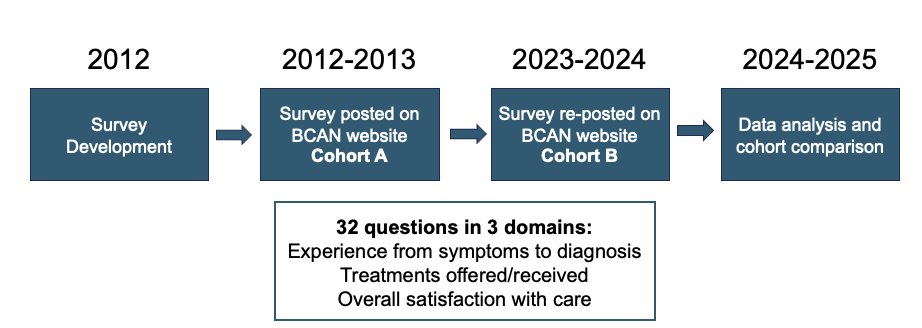
The study involved multiple stages. Initially, a patient survey was developed in 2012 at the Bladder Cancer Advocacy Network (BCAN) meeting, with input from patients and caregivers. The final survey version consisted of 32 questions across three key domains: patient experiences from symptoms to diagnosis, treatments offered and received, and overall satisfaction with care. This survey was first posted on the BCAN website in 2012-2013, assessing Cohort A. In 2023-2024, the survey was reposted to assess Cohort B, enabling comparison between the two cohorts to evaluate the impact of advocacy efforts on MIBC diagnosis and treatment.
Overall, 337 patients (Cohort A 243; Cohort B 94) completed the survey. Respondents were highly educated, with most receiving care at academic centers. Notably, only a small percentage of patients received trimodal therapy (TMT)—6% in Cohort A and 7% in Cohort B. Patient and treatment characteristics are summarized in the table below:

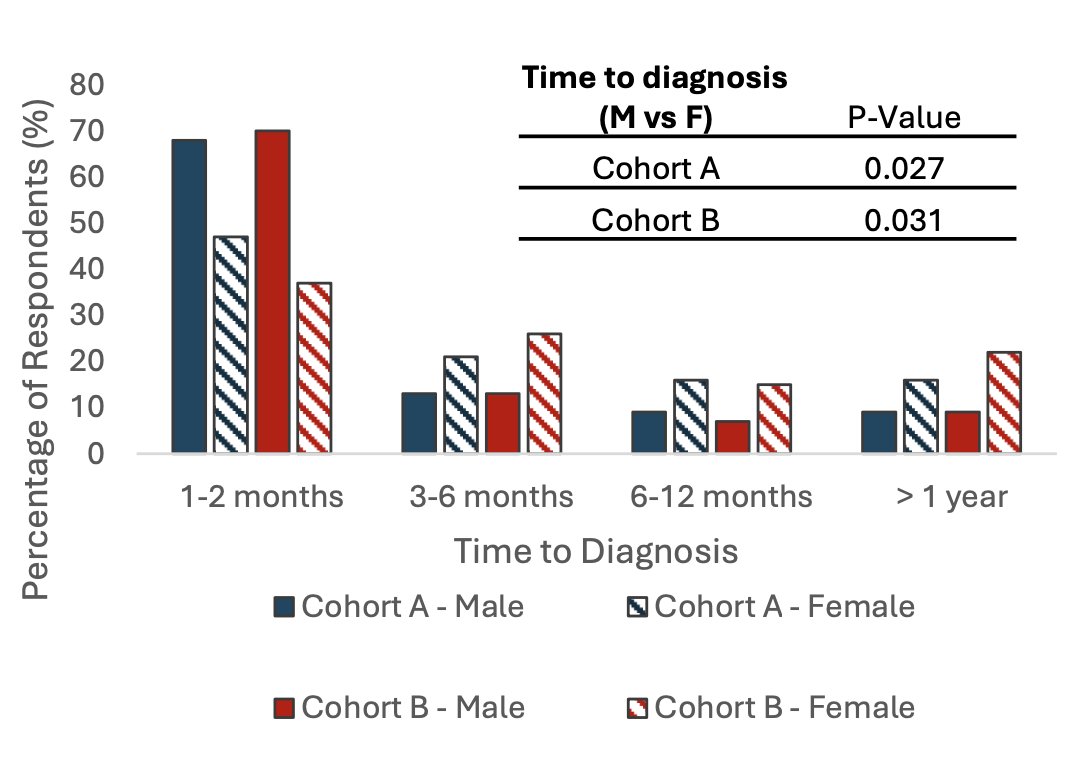
Hematuria was the most common symptom reported by patients, with 86% of patients in Cohort A and 78% in Cohort B experiencing it. Most patients sought medical attention within two months of symptom onset, with 65% in Cohort A and 70% in Cohort B doing so. Interestingly, both males and females sought medical attention within similar timeframes. However, at least 10% of patients in both cohorts waited six months or more before seeking care. When it came to obtaining a definitive diagnosis, nearly 40% of patients experienced delays of more than three months (Cohort A: 38%; Cohort B: 43%), and over 20% of patients took six months or longer to receive a diagnosis. Notably, the time to diagnosis was faster in males compared to females in both cohorts.
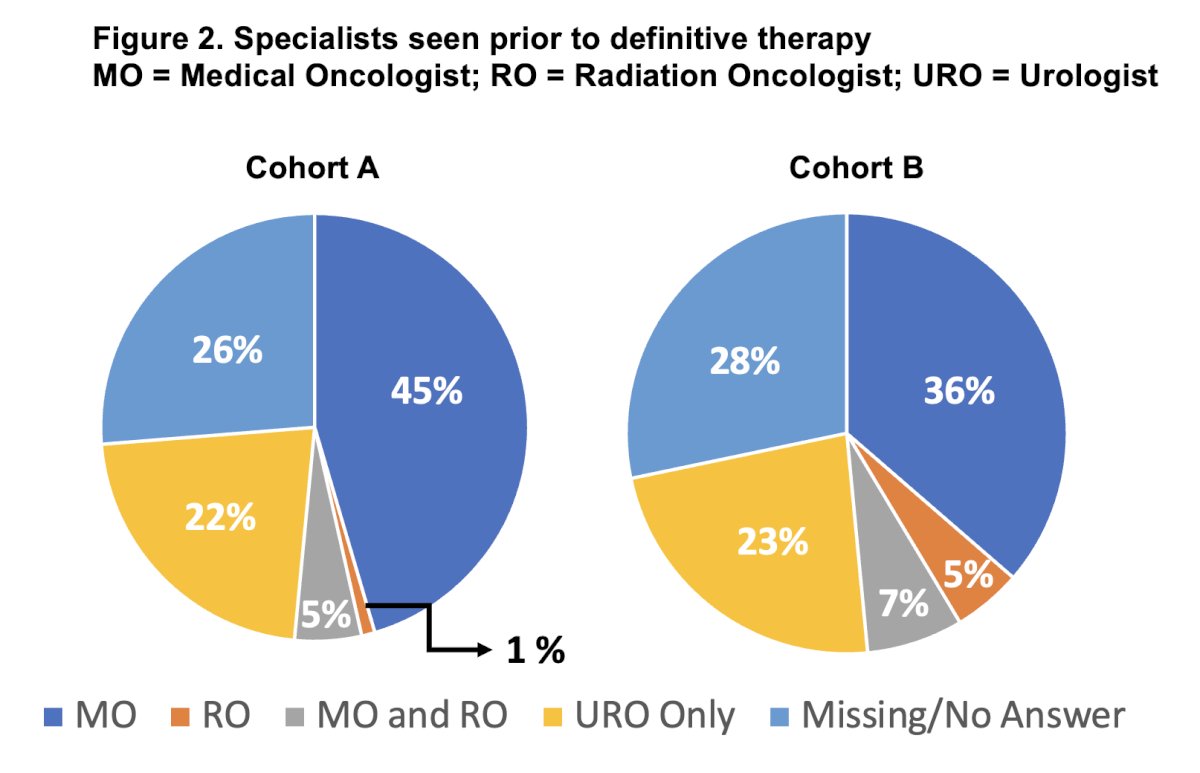
No statistically significant difference between Cohorts A and B was observed in terms of specialists seen or treatments received. However, very few patients reported seeing a radiation oncologist (Cohort A: 6% vs. Cohort B: 12%). Notably, only 1% of patients in Cohort A saw a radiation oncologist alone, as illustrated below.
There was no significant difference in treatments between Cohorts A and B. Of the patients who underwent radical cystectomy (RC) with neoadjuvant chemotherapy, 40% received this treatment (Cohort A: 53% vs. Cohort B: 41%). Around 12% of patients received adjuvant chemotherapy (Cohort A: 14% vs. Cohort B: 11%). The majority of patients received cisplatin-based regimens (Cohort A: 75% vs. Cohort B: 88%). Only 33% of patients received RC alone, and very few patients received trimodal therapy (TMT) as primary treatment, with an overall rate of less than 10% (Cohort A: 6% vs. Cohort B: 7%) as shown in the figure below. There was no notable change in treatment patterns over time.

Perceptions about care between Cohorts A and B were generally similar, with no statistically significant differences in most comparisons. About half of patients in both cohorts felt they knew the right questions to ask (49% in Cohort A vs. 50% in Cohort B), and 70% felt they had enough information to make treatment decisions (69% in Cohort A vs. 68% in Cohort B). Satisfaction with treatment choices was high in both groups, with 74% in both cohorts expressing satisfaction and 70% in Cohort A and 71% in Cohort B stating they would make the same choices again. Approximately 20% of patients in both cohorts did not feel sufficiently counseled about side effects (22% in Cohort A vs. 17% in Cohort B). However, a higher percentage of patients in Cohort A (71%) reported having enough time to make decisions compared to Cohort B (58%, p = 0.004).
Dr. Chowdhury acknowledged several potential limitations including sampling bias, as the survey was only available in English and online through the BCAN website, limiting its reach. Selection bias, with respondents being more highly educated than the North American average, which impacts the generalizability of the findings. Recall bias was another concern, as many patients completed the survey years after their MIBC diagnosis and treatment, which may have affected their responses. Lastly, nonresponse bias was noted, as many patients did not answer all of the survey questions.
Dr. Chowdhury concluded his presentation with the following key takeaways:
- In this BCAN survey, Cohort A did not differ significantly from Cohort B
- A significant number of patients delayed seeking medical attention for symptoms of MIBC
- Definitive diagnosis was delayed by 6 months or more in more than one-fifth of respondents
- Women experienced significant diagnostic delays compared to men
- Use of chemotherapy was common with more than 50% receiving either NAC or AC in both cohorts
- Radiation Oncology consultations were under-utilized, and bladder-sparing approach was rare
- Most patients felt well-informed about their disease and treatment options, and were satisfied with the choices they made
- Many (~20%) wanted more counselling regarding potential side effects of treatment
Presented by: Deepro Chowdhury, MD, MBBS, Medical Oncologist at the Princess Margaret Cancer Centre, University Health Network. Toronto, ON, Canada.
Written by: Julian Chavarriaga, MD – Urologic Oncologist at Cancer Treatment and Research Center (CTIC) via Society of Urologic Oncology (SUO) Fellow at The University of Toronto. @chavarriagaj on Twitter during the 2025 Genitourinary (GU) American Society of Clinical Oncology (ASCO) Annual Meeting, San Francisco, CA, Thurs, Feb 13 – Sat, Feb 15, 2025.