

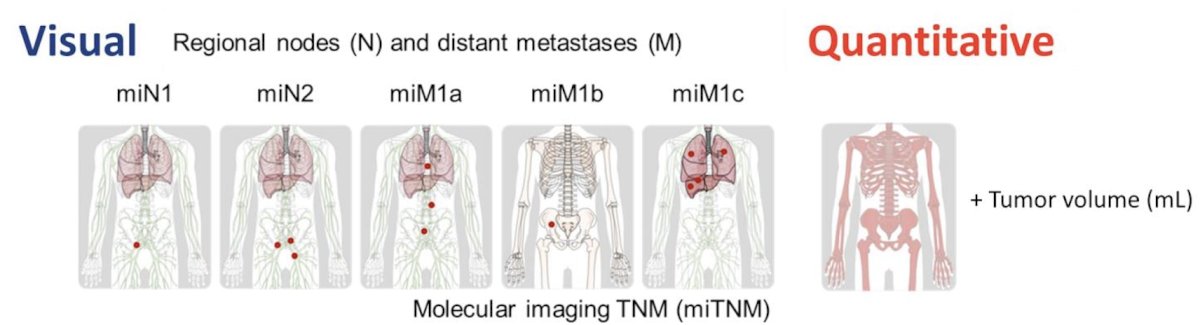
(UroToday.com) The 2026 ASCO annual meeting featured a prostate cancer session and a presentation by Dr. Wolfgang Fendler discussing external validation of new prostate cancer risk groups by PSMA-PET. PSMA PET usage in prostate cancer is growing rapidly. Previously, Dr. Fendler and colleagues proposed novel risk group definitions for prostate cancer patients based on PSMA targeted PET. PSMA-PET pan-stage nomograms (PPP3) were then developed using the international, multicenter PROMISE registry (NCT06320223) to prognosticate 3, 5, and 7 year overall survival.1 At the ASCO 2026 annual meeting, Dr. Fendler and colleagues presented an external validation of PPP3.
Eligible patients enrolled in the PROMISE registry database after the PPP3 data cap were included in this external validation study. Included patients had histologically proven prostate cancer, underwent PSMA-PET at hospitals in Turkey, Cyprus, Italy, China, South Africa, or Germany between 2015 and 2022, and had at least 36 months of overall survival follow-up. PSMA-PET was standardized by PROMISE version 2, and the total lesion count, total tumor volume, PSMA expression score, and overall survival follow-up were obtained as per local site practice. PPP3 nomograms were applied to calculate risk groups and Harrell´s C-indices for the external validation cohort. Calibration curves were measured for 5-year overall survival. Head to head comparison between the visual PPP3 nomogram and the simplified risk stratification table was examined by area under the receiver operating characteristics curve (ROC-AUC):
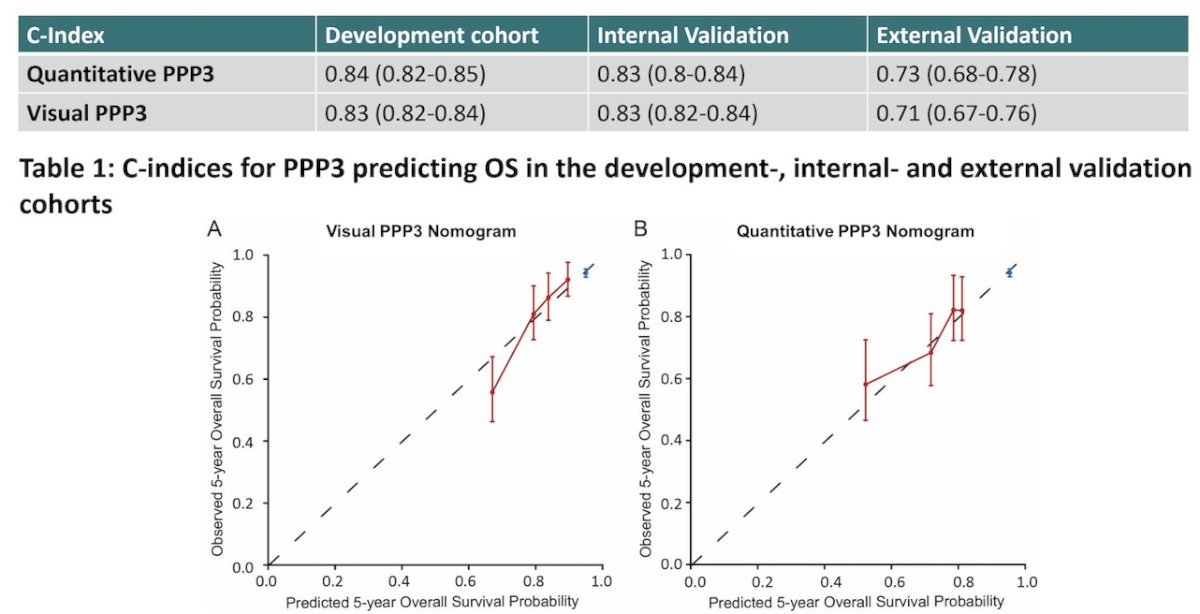
Overall, 1,855 male patients across all disease stages, with 179 (9.6%) reported deaths and median overall survival follow-up of 4.8 years (IQR 3.7-6.1), were analyzed. In the external validation cohort C-indices were 0.71 (95% CI 0.67-0.76) for the visual nomogram and 0.73 (95% CI 0.69-0.77) for the quantitative nomogram, respectively:
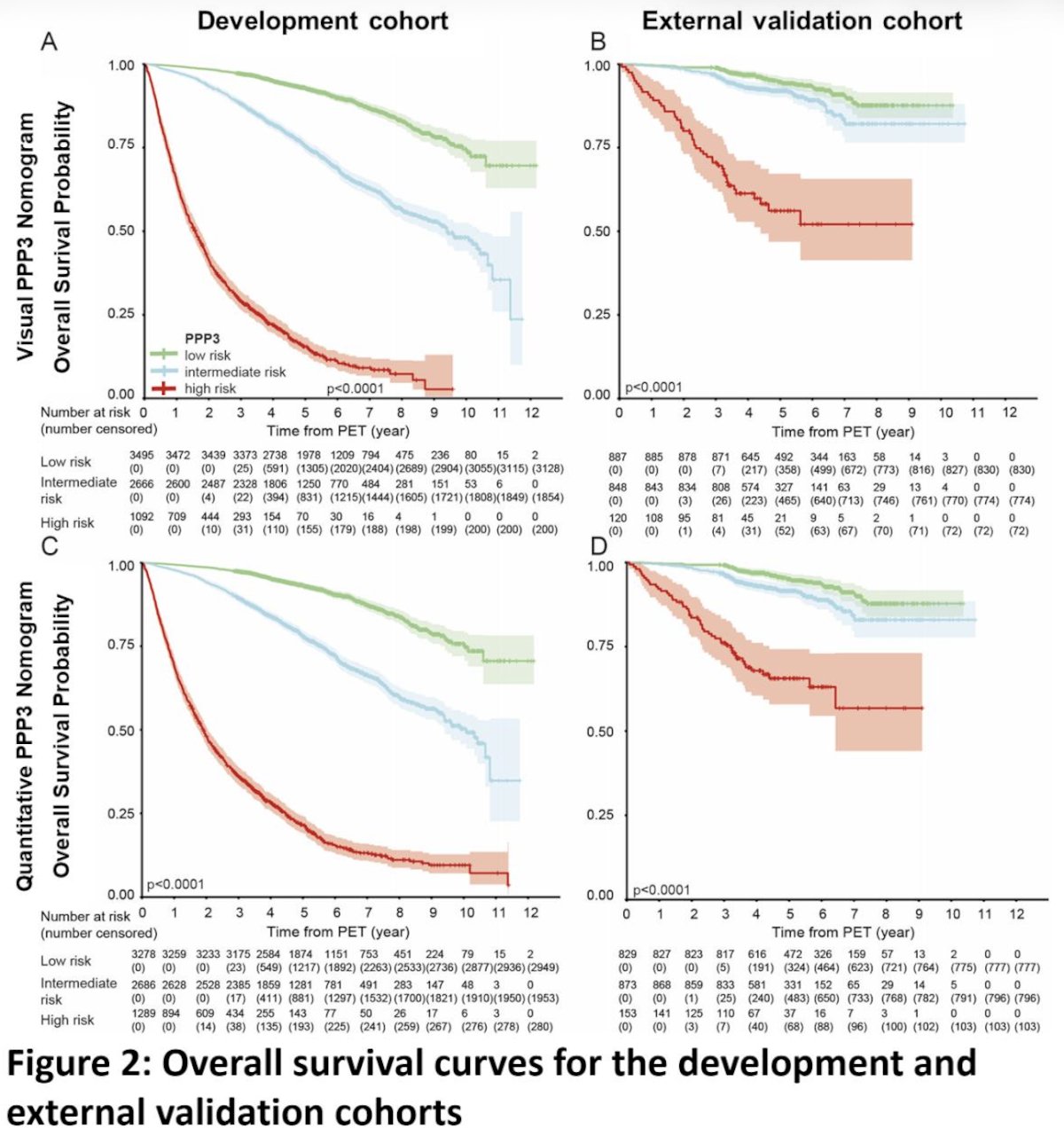
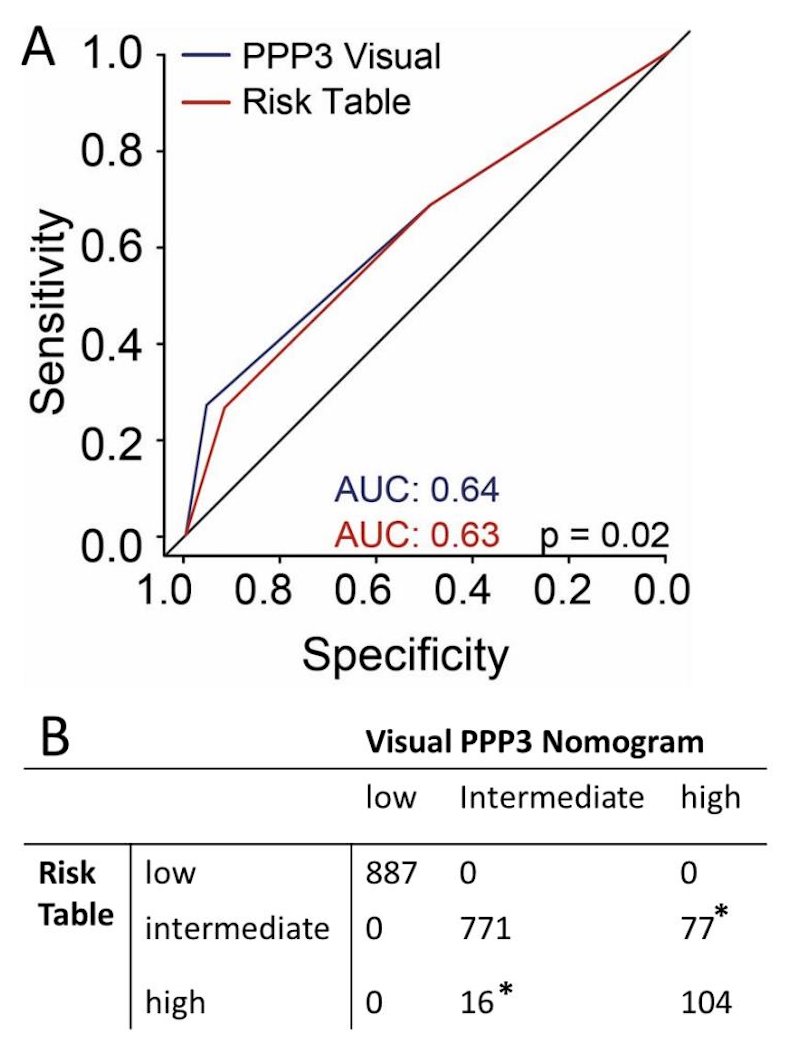
By a simplified risk stratification table, 77 of 1,855 patients (4.2%) were underestimated, and 16 (0.9%) were overestimated, when compared with visual nomograms. Prognostic accuracy was comparable using both methods (AUC nomogram: 0.64 versus AUC table: 0.63, p = 0.02):
Dr. Fendler concluded his presentation discussing external validation of new prostate cancer risk groups by PSMA-PET with the following take home points:
- PPP3 nomograms were validated in an external multi-site patient cohort
- Prognostication was accurate (C-indices > 0.70) for both PPP3 nomograms
- Follow-up continues in the PROMISE Registry (NCT06320223; www.promise-pet.org)
Presented by: Wolfgang Fendler, MD, DKTK and NCT University Hospital Essen, Essen, Germany
Written by: Zachary Klaassen, MD, MSc – Urologic Oncologist, Associate Professor of Urology, Georgia Cancer Center, Wellstar MCG Health, @zklaassen_md on Twitter during the American Society of Clinical Oncology Genitourinary (ASCO) Annual Meeting held in Chicago, IL between May 29th and June 1st, 2026
References: