

(UroToday.com) The 2026 ASCO annual meeting featured a urothelial carcinoma rapid abstract session and a presentation by Dr. Jun Guo discussing results from a phase 1b/2 study assessing bulumtatug fuvedotin + toripalimab in patients with locally advanced or metastatic urothelial carcinoma.
Nectin-4 is an adhesion molecule that is highly expressed in a variety of solid tumors, especially in urothelial cancer, cervical cancer, esophageal cancer, and breast cancer. Bulumtatug fuvedotin is a novel site-specific antibody drug conjugate targeting nectin-4, and toripalimab is a novel recombinant humanized anti-PD-1 monoclonal antibody:
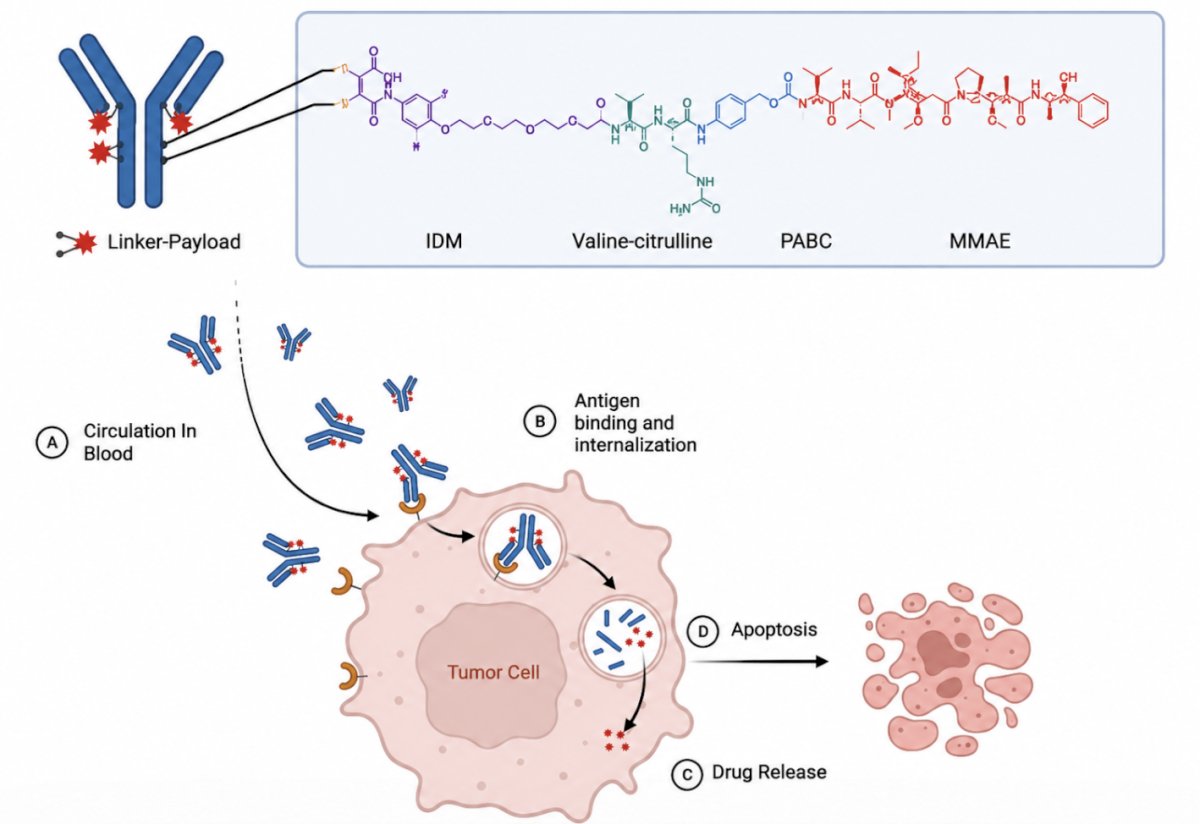
Previous results of bulumtatug fuvedotin and toripalimab in locally advanced or metastatic urothelial carcinoma patients have shown promising efficacy (objective response rate: 87.5%; disease control rate: 92.5%) and well-tolerated toxicity. At ASCO 2026, Dr. Guo and colleagues reported follow-up results of bulumtatug fuvedotin and toripalimab in locally advanced or metastatic urothelial carcinoma patients.
This is an open-label, multicenter, phase 1b/2 study to evaluate the safety and efficacy of bulumtatug fuvedotin combined + toripalimab in locally advanced or metastatic urothelial carcinoma in China. Patients received bulumtatug fuvedotin (1.0 or 1.25mg/kg) on D1/D8 and toripalimab (240 mg) on D1, 21 days per cycle. The primary objective was safety, and secondary objectives were efficacy, pharmacokinetics, and immunogenicity:
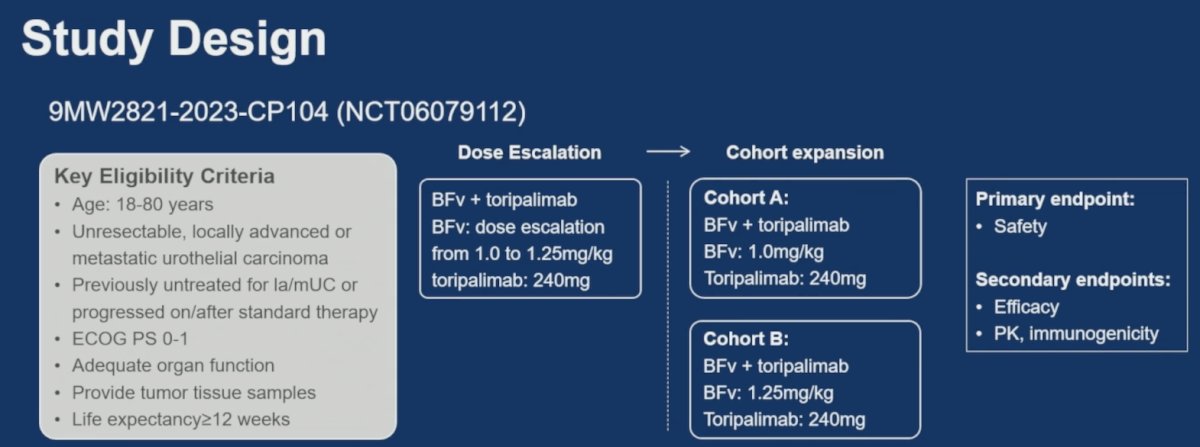
As of December 1, 2025 (median follow-up time: 16.0 months), there were 52 patients enrolled in the trial, of which 47 were assessable and received the combination therapy of bulumtatug fuvedotin + toripalimab. The baseline patient characteristics for these 52 patients are as follows: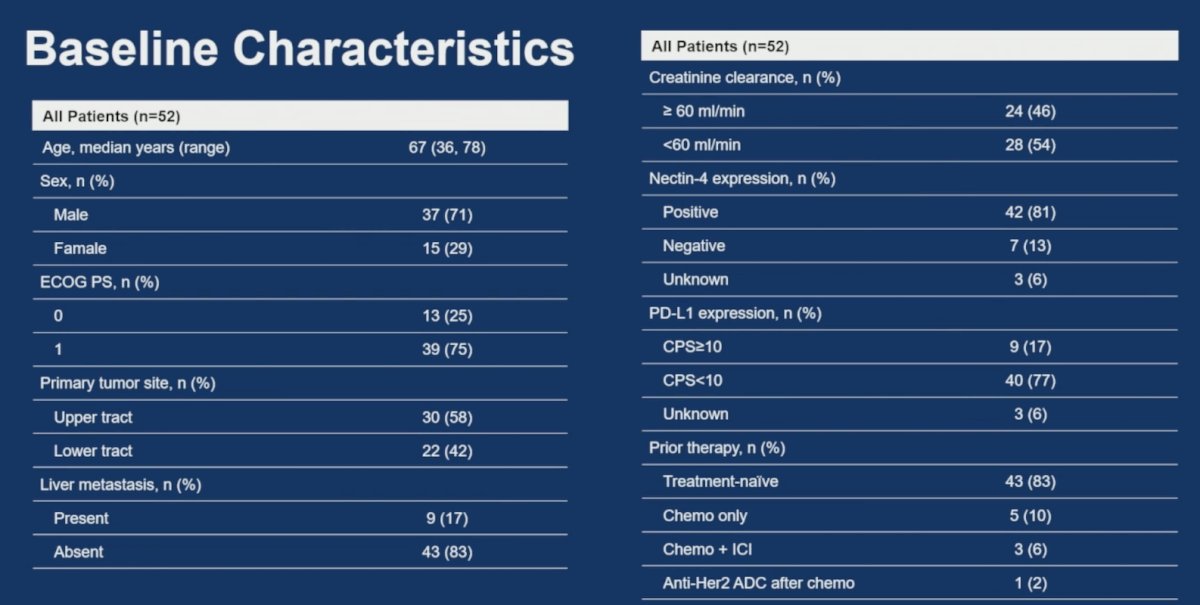
There were 9 patients previously treated for locally advanced or metastatic urothelial carcinoma, and the other 43 patients (all received bulumtatug fuvedotin 1.25 mg/kg) were treatment naïve patients. The safety profile was consistent with previous results, and there were no other new safety signals of bulumtatug fuvedotin or toripalimab observed in this study: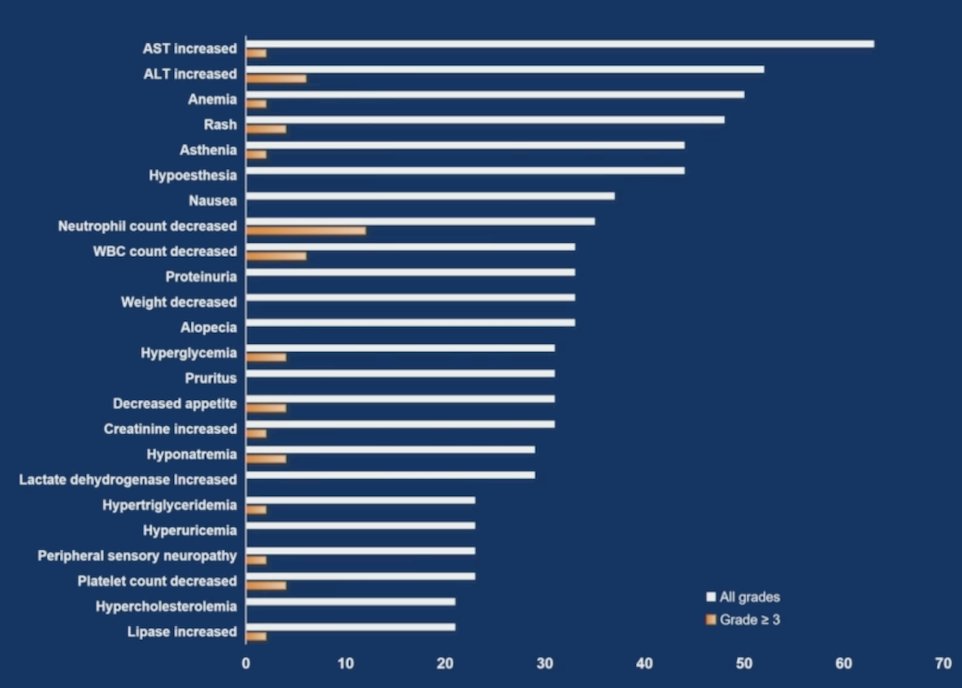
In the overall population, objective response rate was 83.0% (95% CI 69.2-92.4), and complete response rate was 12.8%. All complete response patients were still on treatment, and the longest treatment duration has already exceeded two years. Disease control rate was 89.4% (95% CI 76.9-96.5), median progression-free survival was 12.9 months (95% CI 6.5-NA), and median duration of response was not reached. Among the treatment naïve cohort, the objective response rate was 87.5%, and the disease control rate was 92.5%. Previously treated patients had an objective response rate of 57.1% and a disease control rate of 71.4%:
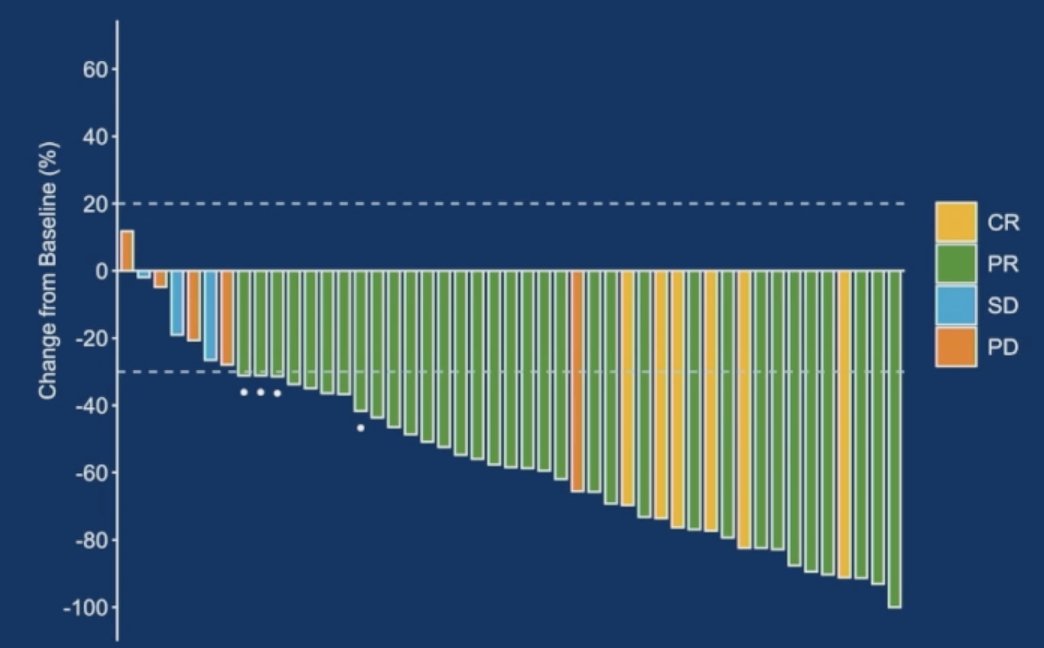
The objective response rate by selected subgroups in the treatment naïve patients is highlighted in the following figure: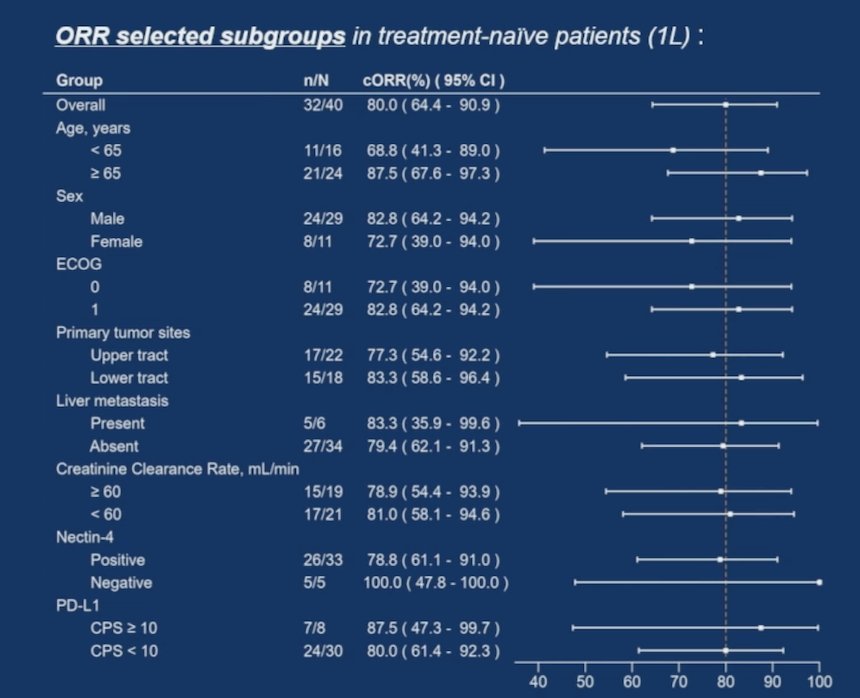
The median progression-free survival in all patients was 12.9 months (95% CI 6.5 – not reached), and in treatment naïve patients was also 12.9 months (95% CI 6.5 – not reached):
The median overall survival also was not reached among all patients and in the treatment naïve patients: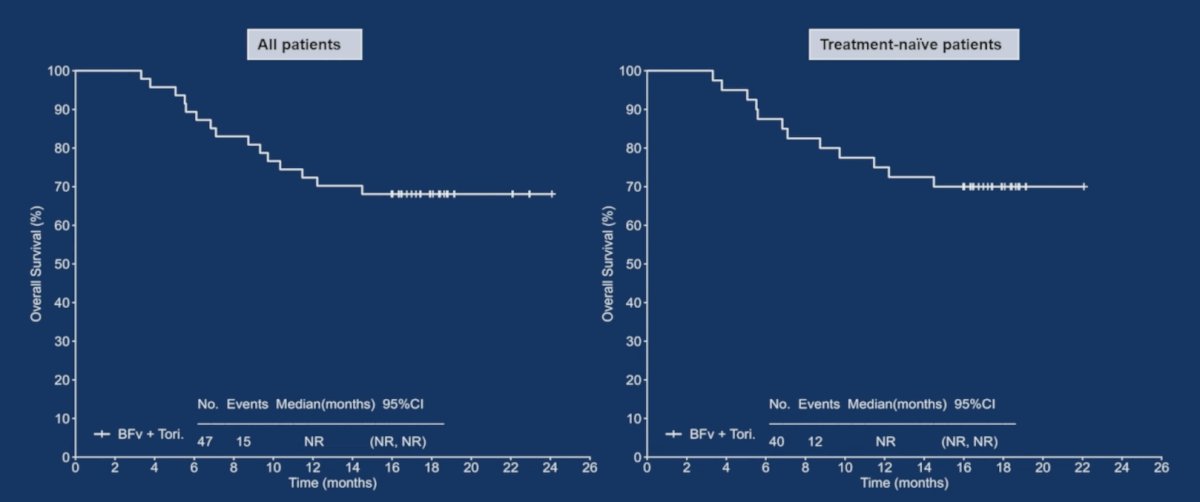
Subgroup analysis showed significant benefits to all patients, which might indicate that compared to traditional chemotherapy, bulumtatug fuvedotin + toripalimab could bring patients greater benefits and a longer survival time, especially in elderly patients and patients with impaired kidney function.
Dr. Guo concluded his presentation discussing results from a phase 1b/2 study assessing bulumtatug fuvedotin + toripalimab in patients with locally advanced or metastatic urothelial carcinoma with the following take-home points:
- Bulumtatug fuvedotin + toripalimab in patients with locally advanced or metastatic urothelial carcinoma demonstrated remarkable efficacy and a well-tolerated safety profile
- A pivotal phase 3 study of bulumtatug fuvedotin combined with toripalimab versus platinum-based chemotherapy is currently ongoing in China (NCT06592326)
Presented by: Jun Guo, PhD, Peking University Cancer Hospital & Institute, Beijing, China
Written by: Zachary Klaassen, MD, MSc – Urologic Oncologist, Associate Professor of Urology, Georgia Cancer Center, Wellstar MCG Health, @zklaassen_md on Twitter during the American Society of Clinical Oncology Genitourinary (ASCO) Annual Meeting held in Chicago, IL between May 29th and June 1st, 2026