

(UroToday.com) The 2026 ASCO annual meeting featured a urothelial carcinoma session and a presentation by Dr. Ruchika Talwar discussing patient experiences with UGN-102 for recurrent low-grade intermediate risk non-muscle invasive bladder cancer. Recurrent low-grade intermediate risk non-muscle invasive bladder cancer can be managed using various approaches, including repeat TURBT and non-surgical intravesical therapies.
One option is UGN-102, a reverse thermal hydrogel containing 75mg mitomycin. Given that low-grade intermediate risk non-muscle invasive bladder cancer tends to recur, understanding patients’ experiences/preferences across management strategies is essential to support clinical shared decision making.
The ENVISION study1 assessed patient-reported outcomes via EORTC-QLQ-NMIBC24. Patients with biopsy-confirmed low-grade intermediate risk non-muscle invasive bladder cancer and ≥1 previous non-muscle invasive bladder cancer episode at baseline had 6 once-weekly intravesical instillations of UGN-102 in an outpatient setting:
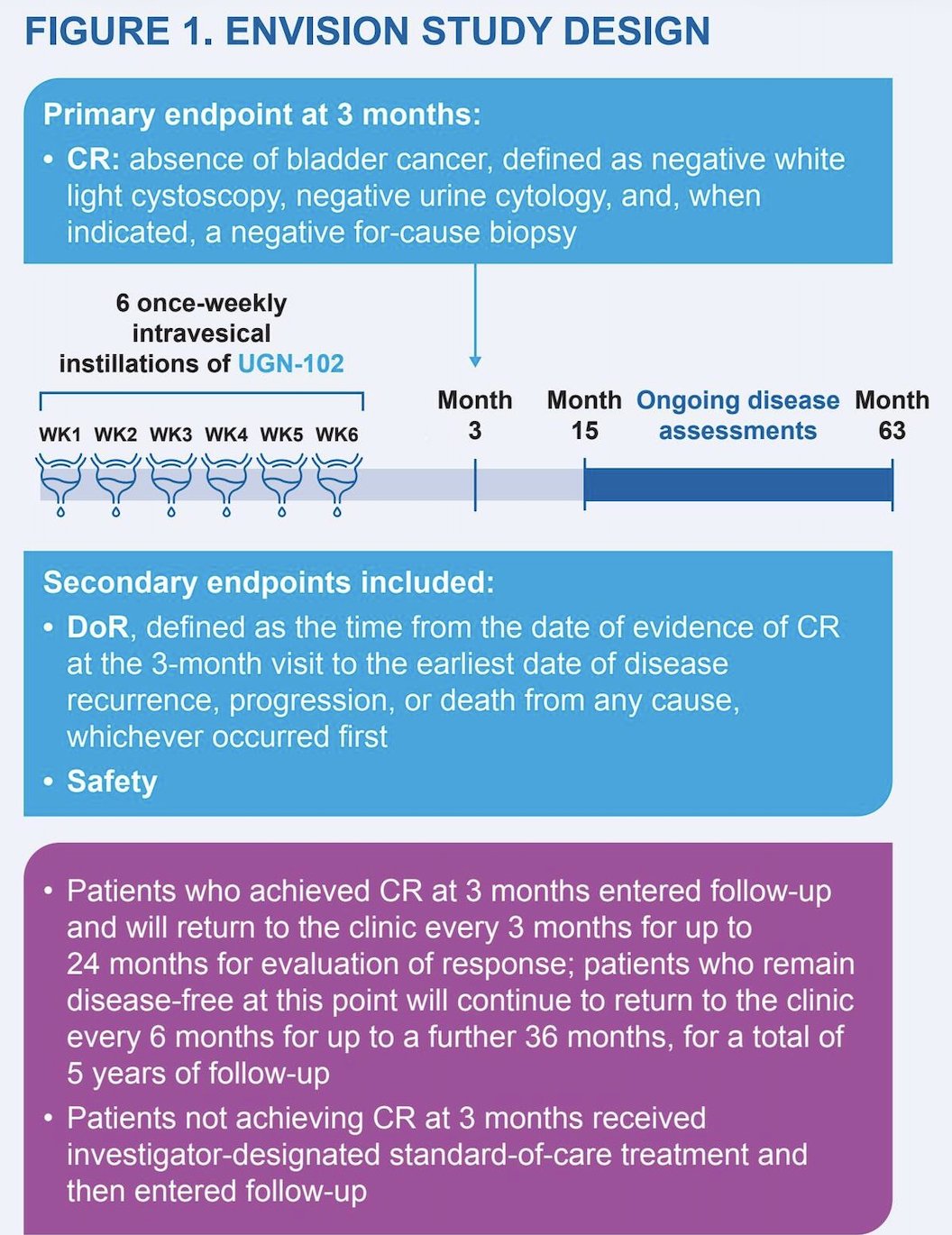
There were 29 US-based patients who had semi-structured prospective phone interviews that compared experiences of prior TURBT (at enrollment) versus UGN-102 at 3 months. Baseline demographics and clinical characteristics are reported in the following table:

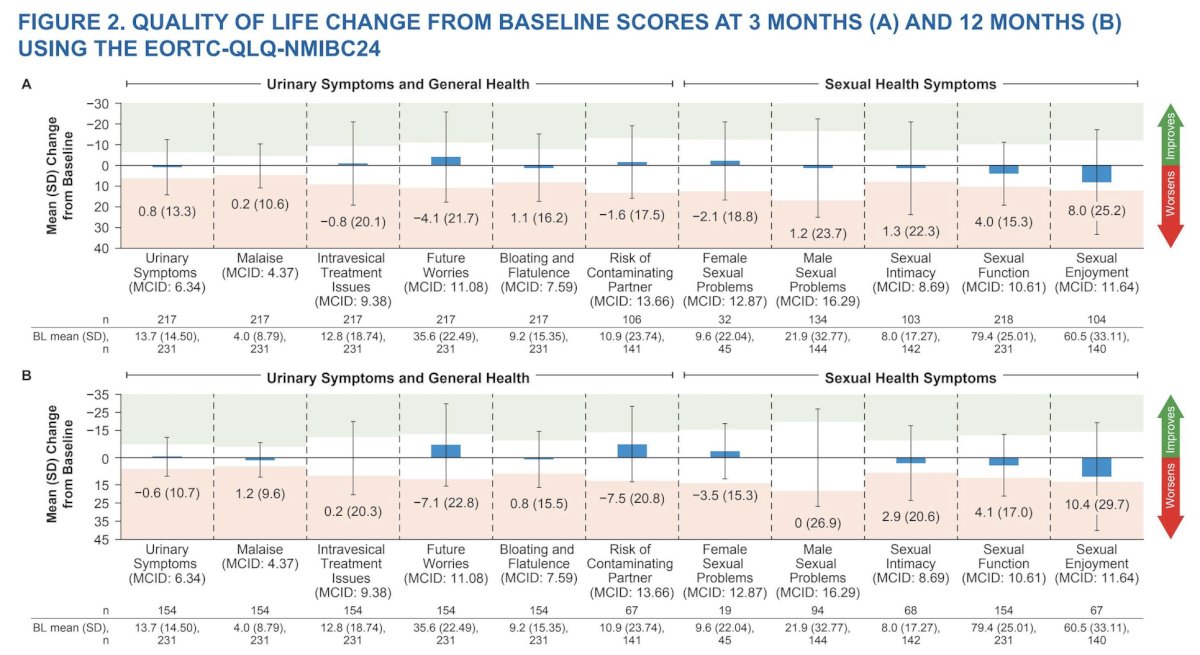
Overall, 232 patients were included: 95% received all 6 doses of UGN-102. The mean change from baseline scores at 3- and 12-month post-treatment did not reach minimal clinically important difference thresholds for any of the EORTC-QLQ-NMIBC24 domains:
Patients perceived more interference with routines/responsibilities with TURBT versus UGN-102, similar urinary symptoms, expressed concern regarding more bleeding with TURBT, and would recommend UGN-102 as a less invasive, less painful, and less time-consuming procedure than TURBT. A small number of patients preferred surgery as a 1-day procedure versus 6 weekly intravesical instillations.
Dr. Talwar concluded her presentation discussing patient experiences with UGN-102 for recurrent low-grade intermediate risk non-muscle invasive bladder cancer with the following take-home points:
- UGN-102 maintained stable quality-of-life scores across NMIBC24 domains and was generally preferred by patients over surgical resections
- These important insights support shared decision making, enabling clinicians to discuss trade-offs between procedural convenience and treatment invasiveness in recurrent low-grade intermediate risk non-muscle invasive bladder cancer management
Presented by: Ruchika Talwar, MD, Urologic Oncology Fellow, Department of Urology, Instructor, Division of Urologic Oncology, Vanderbilt University Medical Center, Nashville, TN
Written by: Zachary Klaassen, MD, MSc – Urologic Oncologist, Associate Professor of Urology, Georgia Cancer Center, Wellstar MCG Health, @zklaassen_md on Twitter during the American Society of Clinical Oncology Genitourinary (ASCO) Annual Meeting held in Chicago, IL between May 29th and June 1st, 2026
Reference: