

(UroToday.com) The 2025 American Society of Clinical Oncology (ASCO) Annual Meeting held in Chicago, IL, was host to the Oral Abstract Session: Genitourinary Cancer—Prostate, Testicular, and Penile. Dr. Alicia Morgans presented the Health-related quality of life (HRQoL) outcomes with darolutamide in the phase 3 ARANOTE trial.
Dr. Morgans opened her presentation by emphasizing what matters most to patients. While living longer is an important goal, many patients also prioritize controlling PSA levels, avoiding treatment-related side effects, minimizing pain and functional limitations, maintaining independence, supporting their families, and preserving overall quality of life.
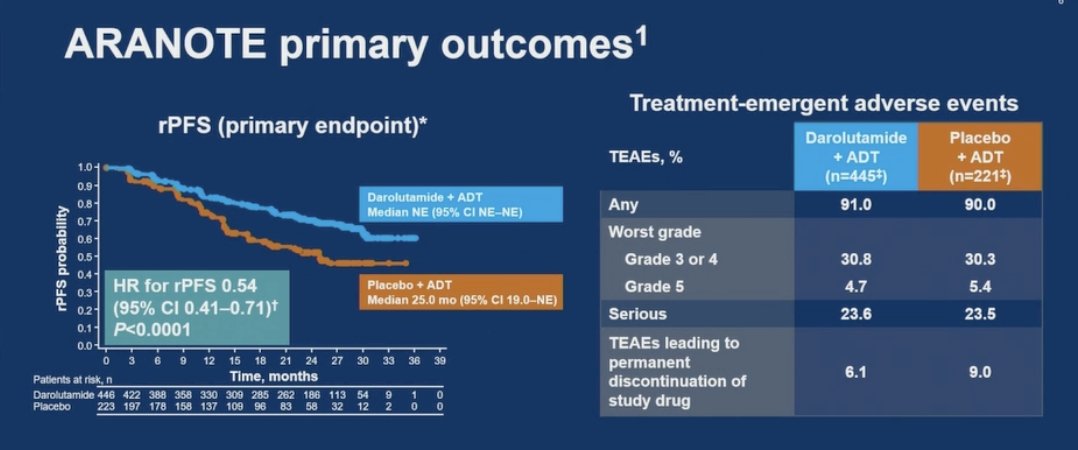
To level set, Dr. Morgans reviewed the evidence supporting darolutamide in metastatic hormone-sensitive prostate cancer (mHSPC). In ARASENS, darolutamide combined with ADT and docetaxel significantly improved overall survival, reducing the risk of death by 32.5% versus placebo (HR 0.68, 95% CI 0.57–0.80; p<0.0001). In ARANOTE, darolutamide plus ADT (without chemotherapy) significantly improved radiographic progression-free survival, reducing the risk of progression or death by 46% (HR 0.54, 95% CI 0.41–0.71; p<0.0001). Together, these studies provide clinicians with flexibility to personalize mHSPC treatment with or without docetaxel based on patient preferences and clinical needs.
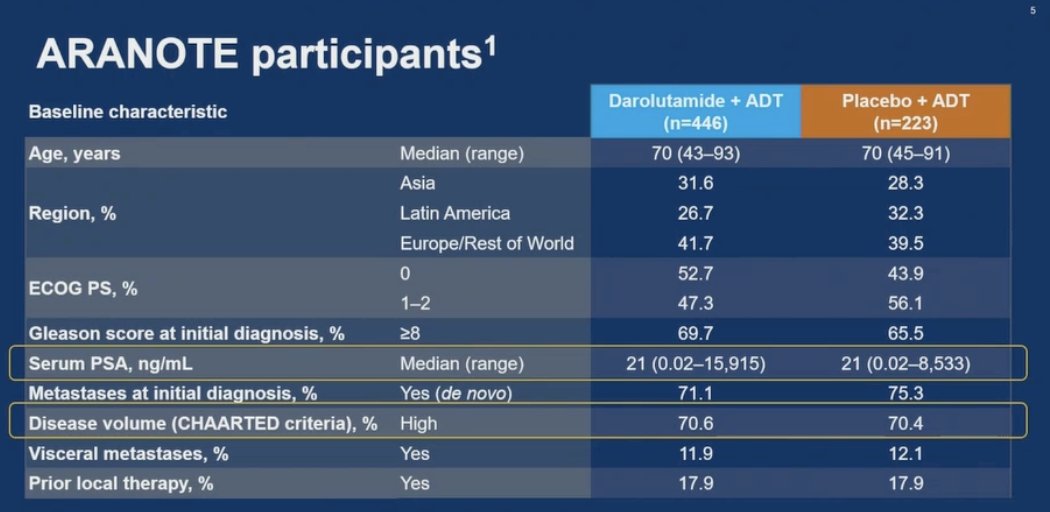
In ARANOTE, the median age of participants was 70 years. The study enrolled a globally diverse population, with 30% of patients from Latin America and 32% from Asia. Most patients had de novo metastatic disease, and 71% had high-volume disease. The median baseline PSA was approximately 21 ng/mL.
Radiographic progression-free survival (rPFS) was significantly improved in patients treated with darolutamide, with a hazard ratio of 0.54, indicating a clear benefit in the darolutamide arm and a highly statistically significant result. Most patients did not experience grade 3 or 4 treatment-emergent adverse events (TEAEs). Notably, an interesting signal from this trial was a lower reported rate of fatigue in the ADT plus darolutamide group compared to placebo.1
In ARANOTE, investigators assessed pain and health-related quality of life (HRQoL) using:
Pain Assessment:
- Used the Brief Pain Inventory–Short Form (BPI-SF)
- Focused on “worst pain in the past 24 hours”
HRQoL Assessment:
- Used the Functional Assessment of Cancer Therapy–Prostate (FACT-P) total score
- FACT-P includes:
- Physical well-being: energy, treatment side effects, symptoms
- Social/family well-being: support and closeness with loved ones
- Emotional well-being: sadness, anxiety, hopefulness
- Functional well-being: ability to sleep, work, enjoy life
- Prostate cancer subscale: urinary, bowel, and sexual symptoms
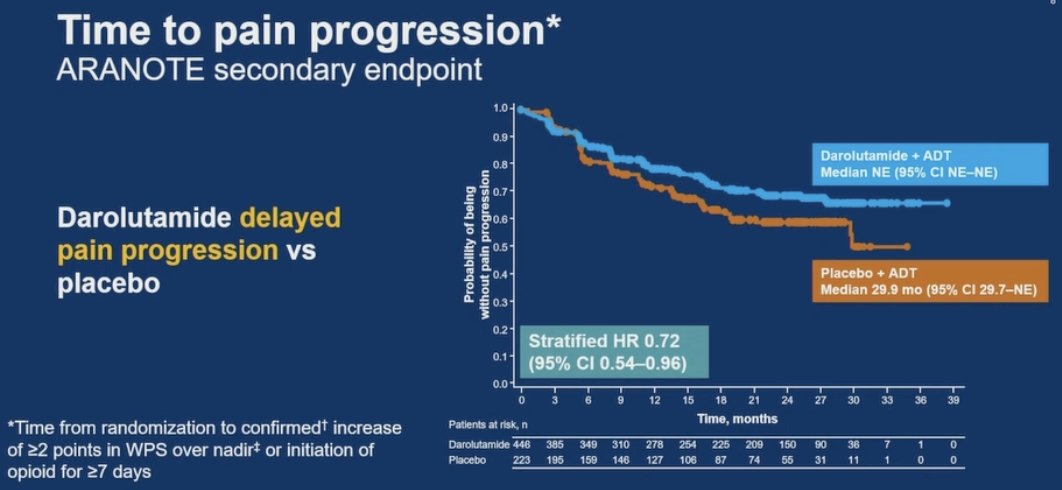
In the ARANOTE trial, the secondary endpoint of time to pain progression was defined as the time from randomization to either a confirmed increase of ≥2 points in worst pain score (WPS) over nadir or the initiation of opioid use for at least seven consecutive days, a definition that differs from previous trials. Results demonstrated a significant benefit in favor of darolutamide, with a stratified hazard ratio of 0.72 (95% CI: 0.54–0.96), indicating a delayed onset of pain progression compared to placebo.
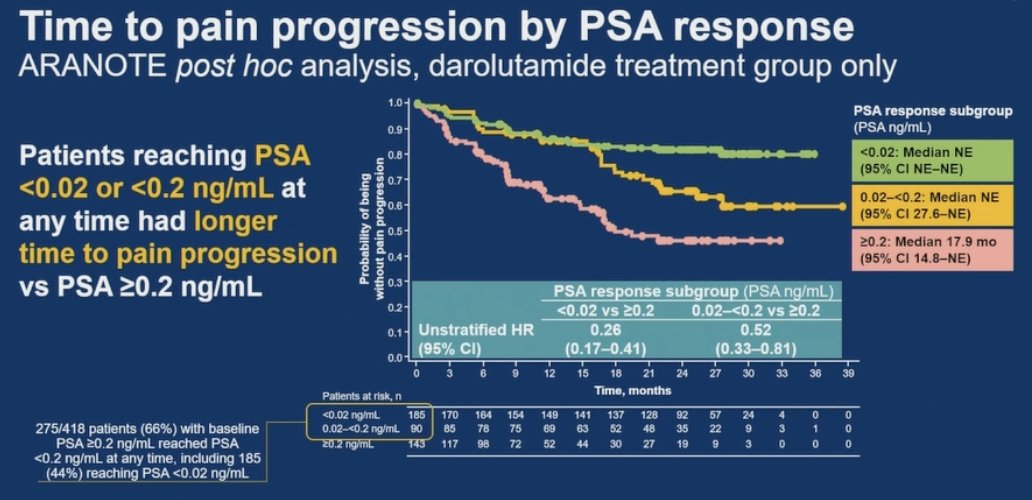
In the ARANOTE trial, patients who achieved PSA levels <0.02 or <0.2 ng/mL at any time experienced a longer time to pain progression compared to those who remained ≥0.2 ng/mL, reinforcing the association between disease control and quality of life. Among 418 patients with a baseline PSA ≥0.2 ng/mL, 275 (66%) achieved a PSA drop below 0.2 ng/mL at some point during treatment, including 185 who also reached <0.02 ng/mL. These findings underscore that deeper PSA responses are not only prognostic but may translate into tangible symptomatic benefits.
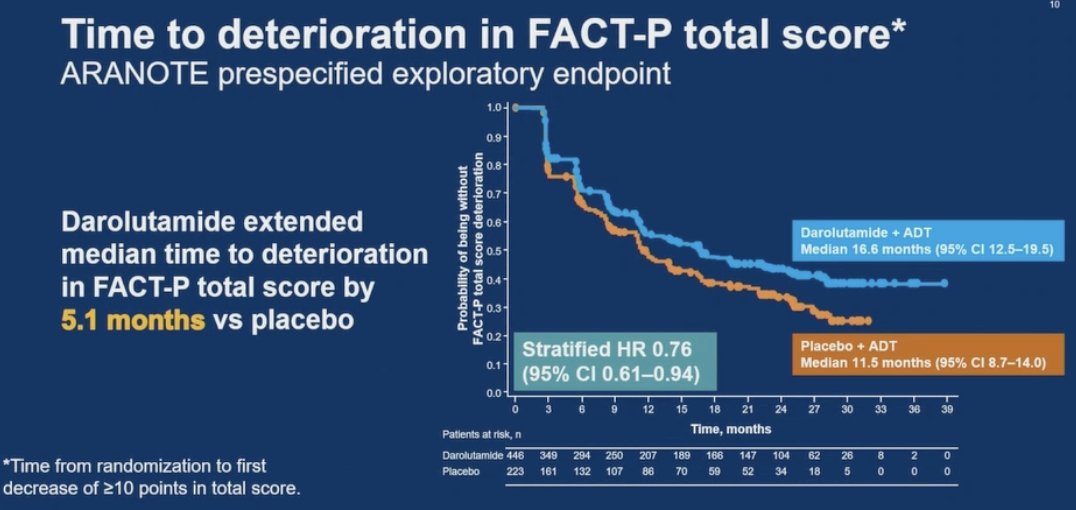
Treatment with darolutamide significantly extended the median time to deterioration in FACT-P total score by 5.1 months versus placebo (16.6 vs 11.5 months; HR 0.76, 95% CI 0.61–0.94). This exploratory endpoint, defined as time from randomization to the first ≥10-point decline in total FACT-P score, reflects a clinically meaningful change in patient-reported quality of life.
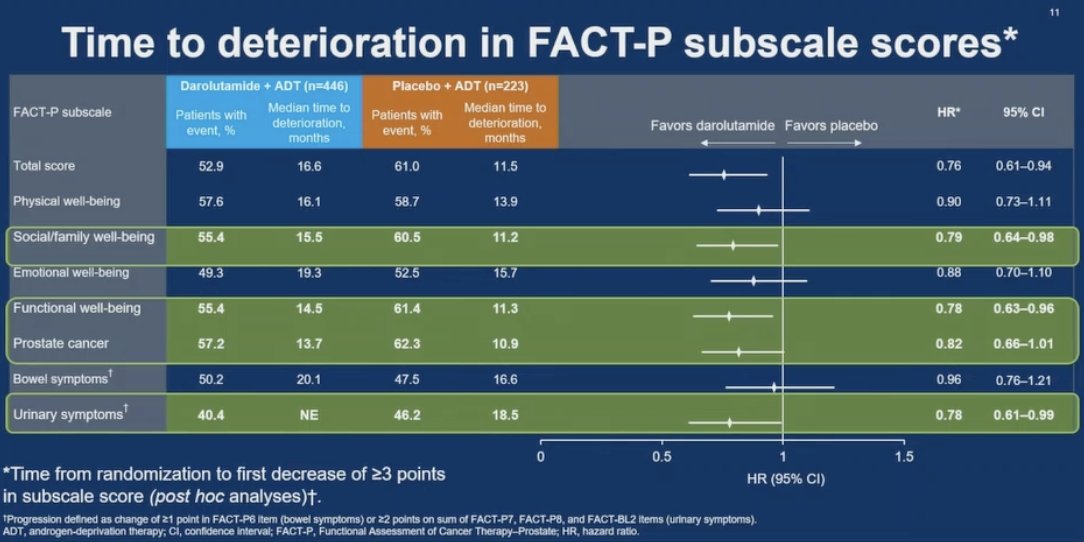
In the FACT-P subscale analysis, treatment with darolutamide was associated with significant improvements in several domains compared to placebo. Patients receiving darolutamide reported better outcomes in social/family well-being, functional well-being, prostate cancer–specific concerns, and urinary symptoms.
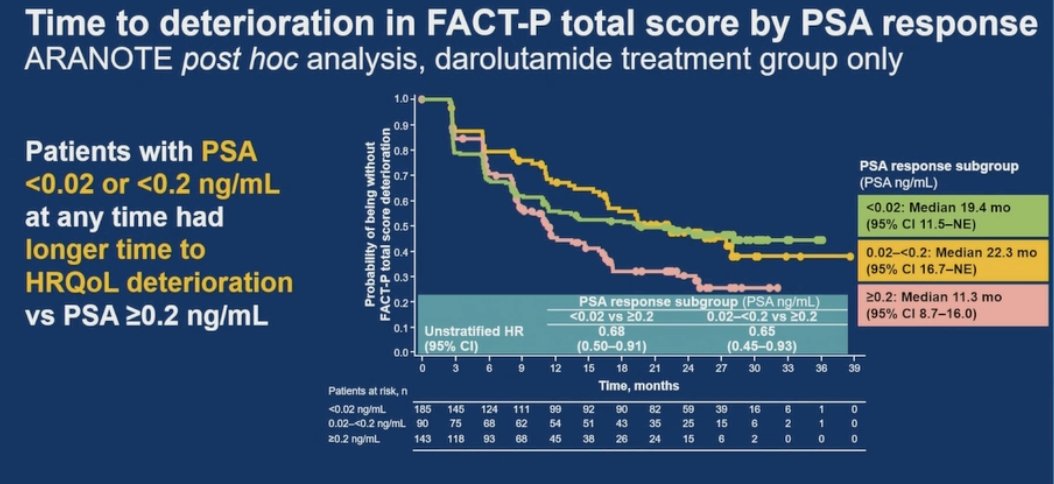
Lastly, in a post hoc analysis evaluating only patients in the darolutamide treatment group, those who achieved a PSA response PSA <0.02 or <0.2 ng/mL at any time experienced a longer time to deterioration in FACT-P total score compared to patients with PSA ≥0.2 ng/mL. These findings suggest that deeper PSA responses are associated with better preservation of health-related quality of life in patients receiving darolutamide.
Dr. Morgans' concluding remarks were:
- In ARANOTE, darolutamide significantly delayed both pain progression and deterioration in key HRQoL metrics compared to placebo in men with mHSPC.
- Darolutamide was associated with a favorable impact on multiple aspects of HRQoL.
- It is the first AR inhibitor to show clinically meaningful benefits in:
- Time to pain progression
- Social/family well-being
- Functional well-being
- Urinary symptom control
- These HRQoL benefits were most pronounced among patients achieving deep PSA responses (PSA <0.02 to <0.2 ng/mL).
Written by: Julian Chavarriaga, MD – Urologic Oncologist at Cancer Treatment and Research Center (CTIC) via Society of Urologic Oncology (SUO) Fellow at The University of Toronto. @chavarriagaj on Twitter during the American Society of Clinical Oncology (ASCO) 2025 Annual Meeting, Chicago, IL, Fri, May 30 – Tues, Jun 3, 2025.
Related content: Darolutamide Improves Outcomes in Metastatic Hormone-Sensitive Prostate Cancer Without Chemotherapy - Fred Saad
Reference: