

(UroToday.com) The 2025 American Society of Clinical Oncology (ASCO) Annual Meeting held in Chicago, IL, was host to the Oral Abstract Session: Genitourinary Cancer—Prostate, Testicular, and Penile. Dr. Emily Grist presented an ancillary study of the STAMPEDE trials evaluating if Transcriptome classification of PTEN inactivation predicts survival benefit from docetaxel at the start of androgen deprivation therapy (ADT) for metastatic prostate cancer.
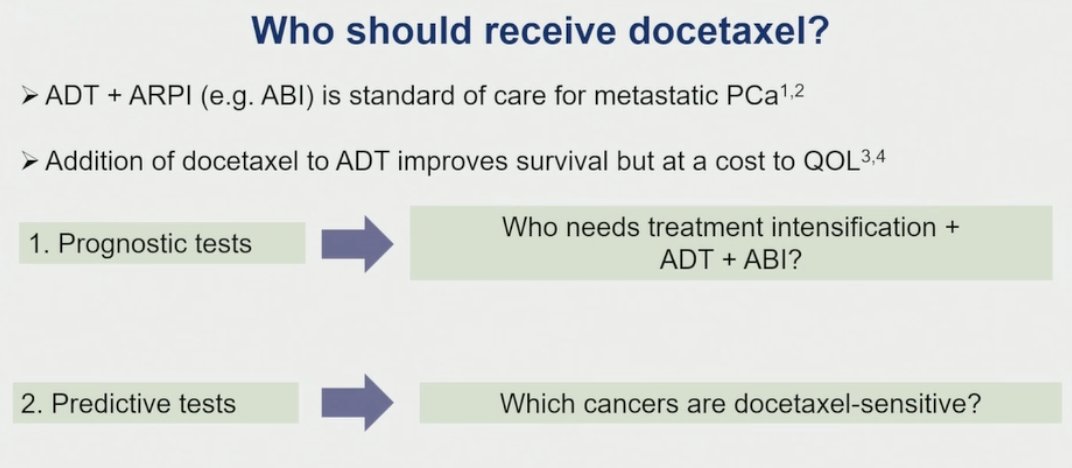
Dr. Grist began by highlighting the development of a research pipeline within the STAMPEDE trial over the past seven years. She emphasized that while ADT + androgen receptor pathway inhibitors (ARPI) have become the standard of care for metastatic prostate cancer, and docetaxel adds survival benefit, it often comes at the expense of quality of life. Her research focus is on identifying prognostic and predictive biomarkers to refine treatment strategies.
She discussed the need for prognostic biomarkers to identify patients who may benefit from treatment intensification beyond ADT + abiraterone, and predictive biomarkers to determine which cancers are docetaxel sensitive.
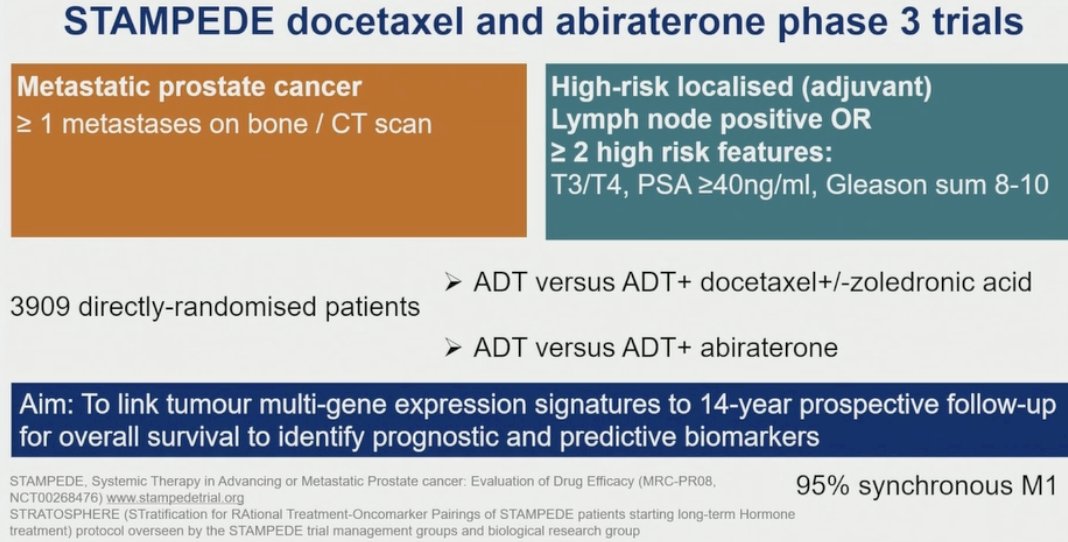
They leveraged the multi-arm multi-stage (MAMS) STAMPEDE platform, which included 3,909 patients randomized to ADT, ADT + docetaxel, or ADT + abiraterone. The aim was to link tumor multi-gene expression signatures to 14-year prospective overall survival data, in order to identify biomarkers with prognostic and predictive value.1,2
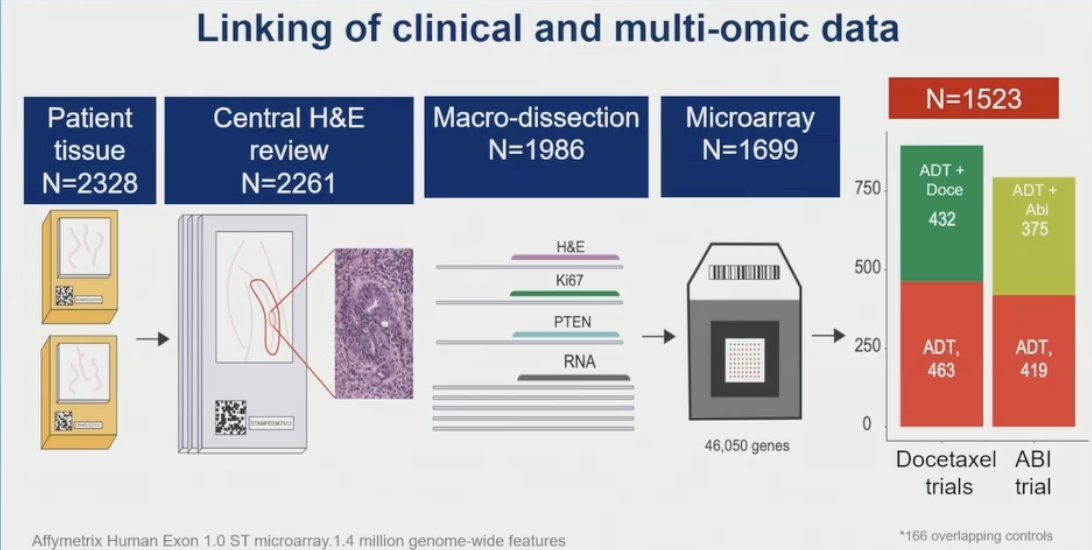
In STAMPEDE, 95% of patients consented to donate tumor tissue for research. Of these, 2,261 samples were centrally reviewed on H&E, and 1,986 underwent macrodissection. Transcriptomic profiling was successfully completed in 1,699 samples using microarrays within a clinically accredited lab. Ultimately, 1,523 patients had been randomized and had available transcriptomic data, with no differences observed in baseline characteristics. Among them, 55% had metastatic disease, predominantly synchronous.
Dr. Grist highlighted their analytical approach, which involved calculating Decipher mRNA scores and evaluating 59 transcriptome-derived signatures hypothesized to be relevant in prostate cancer. Their multivariable-adjusted models demonstrated that a high Decipher score identified patients more likely to benefit from docetaxel, with a significant biomarker-treatment interaction (p = 0.038), suggesting potential predictive utility for guiding treatment intensification.
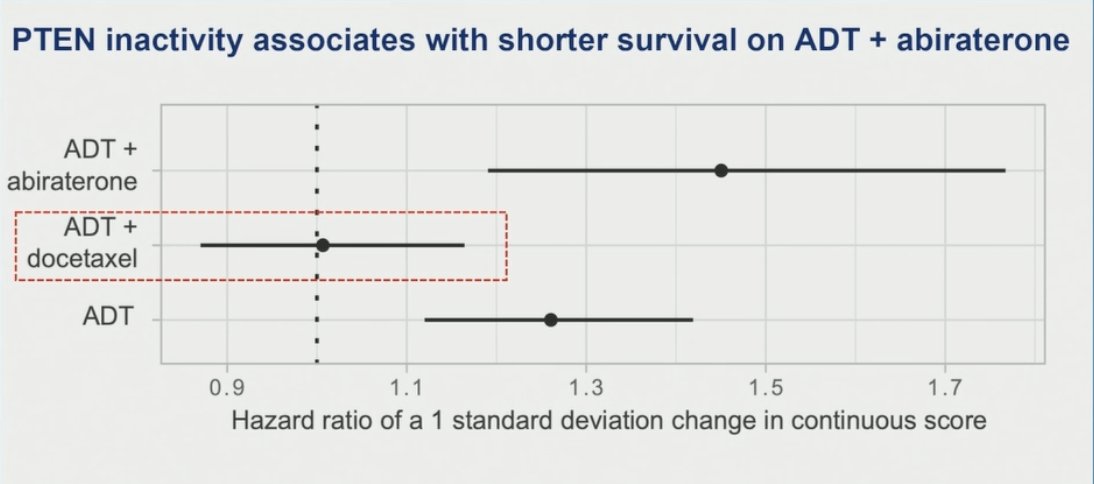
However, one of the most intriguing findings was the role of PTEN inactivity. The investigators observed that PTEN inactivity was associated with shorter overall survival in patients treated with ADT + abiraterone, suggesting resistance in this setting. In contrast, this association was not seen in the ADT + docetaxel group, where the hazard ratio was <1, indicating that PTEN-inactive tumors may remain sensitive to docetaxel-based therapy.
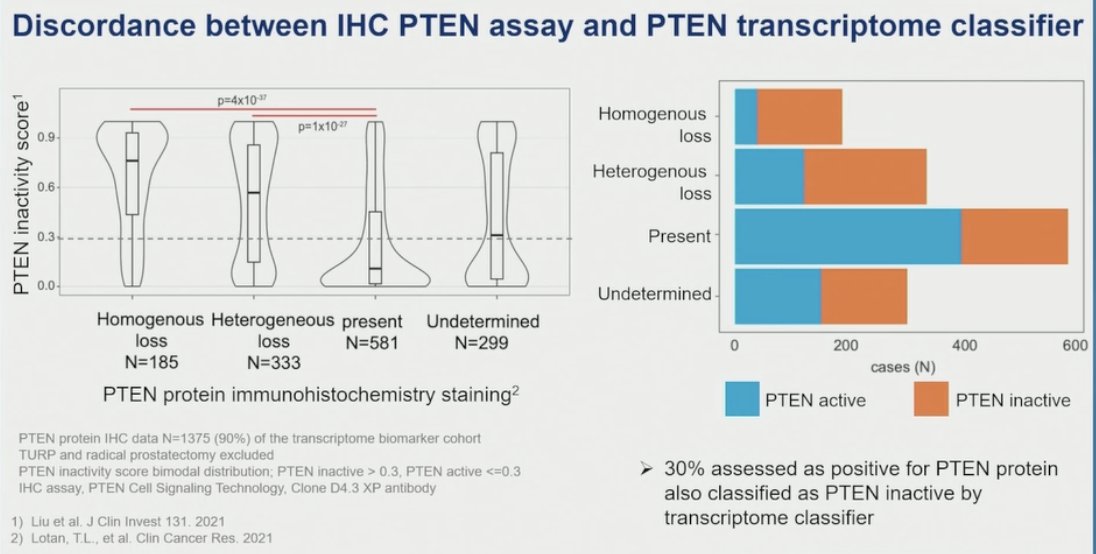
Dr. Grist highlighted the notable discordance between PTEN status assessed by immunohistochemistry (IHC) and transcriptome-based classification. Among the 1,375 patients with available PTEN protein data (90% of the transcriptomic biomarker cohort), approximately 30% of tumors that were IHC-positive for PTEN were still classified as PTEN-inactive by the transcriptome classifier.
Moreover, tumors with homogeneous PTEN loss by IHC exhibited high transcriptomic PTEN inactivity scores, reflecting strong agreement between the two methods. In contrast, heterogeneous PTEN loss showed variable transcriptomic profiles, while a substantial proportion of tumors with preserved PTEN expression by IHC were still classified as PTEN-inactive at the transcriptomic level.
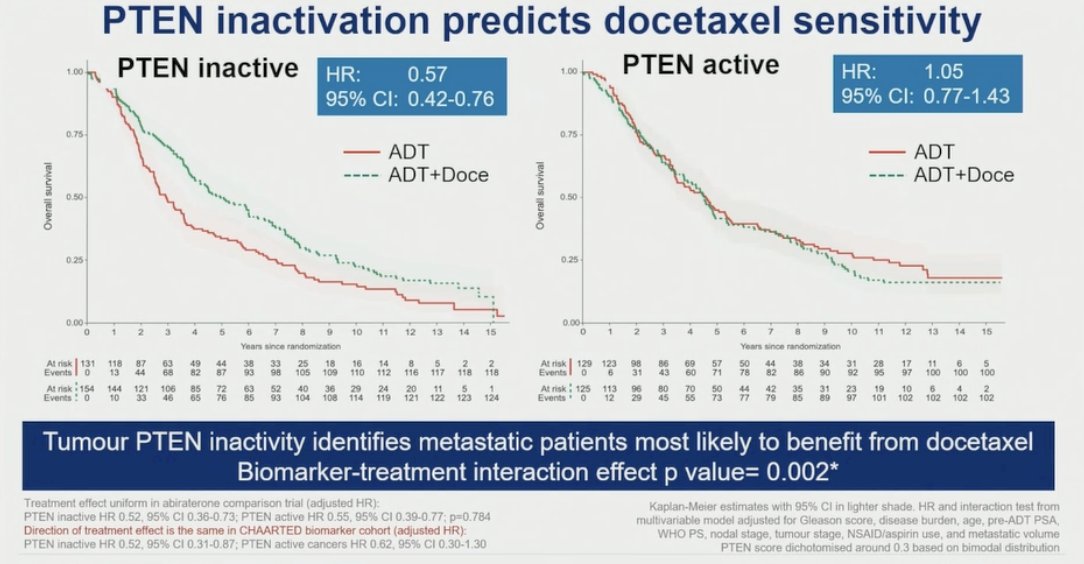
Among patients with PTEN-inactive tumors, the addition of docetaxel to ADT was associated with a 43% improvement in overall survival compared to ADT alone, indicating a clinically meaningful benefit. Conversely, in patients with PTEN-active tumors, there was no survival advantage with docetaxel (HR 1.05; 95% CI 0.77–1.43). These findings provide strong evidence that PTEN transcriptomic inactivity may serve as a predictive biomarker for identifying metastatic prostate cancer patients most likely to benefit from treatment intensification with docetaxel (biomarker-treatment interaction p=0.002).
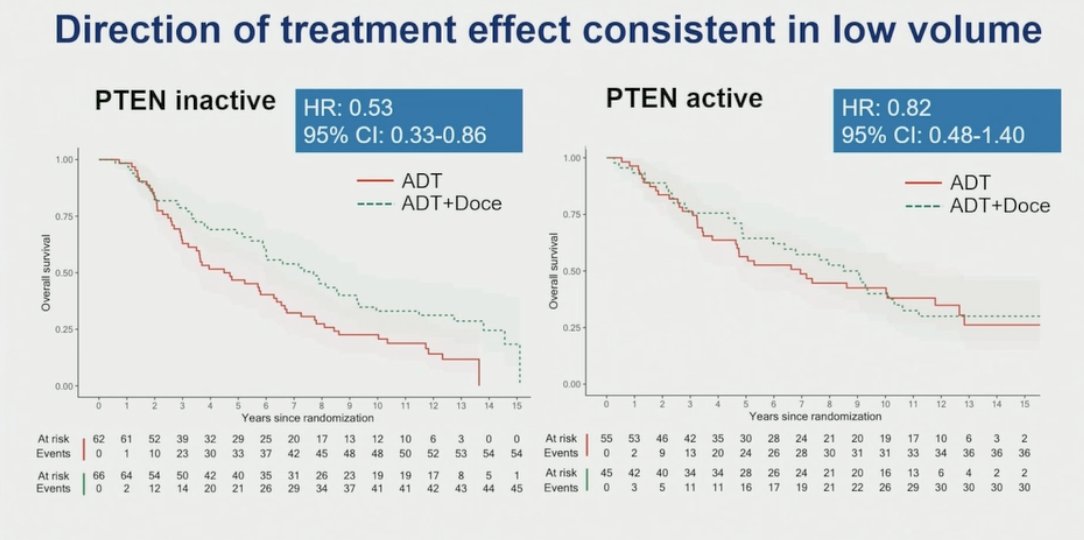
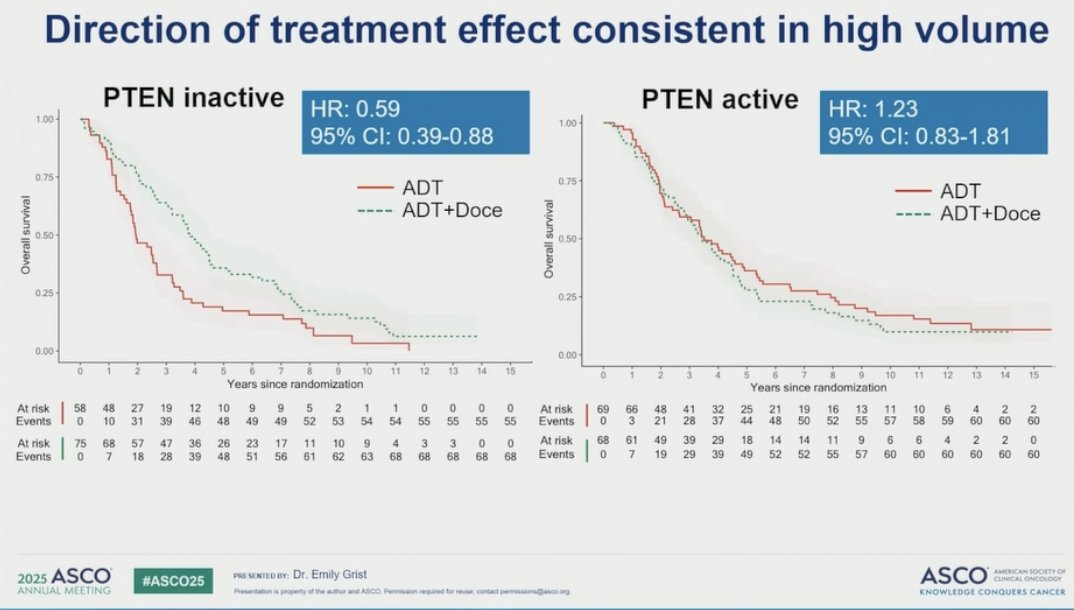
Notably, the direction of treatment effect favoring docetaxel in PTEN-inactive tumors was consistent across both low-volume and high-volume disease subgroups. Regardless of disease burden, PTEN transcriptomic inactivation was consistently predictive of survival benefit with the addition of docetaxel, as illustrated below.
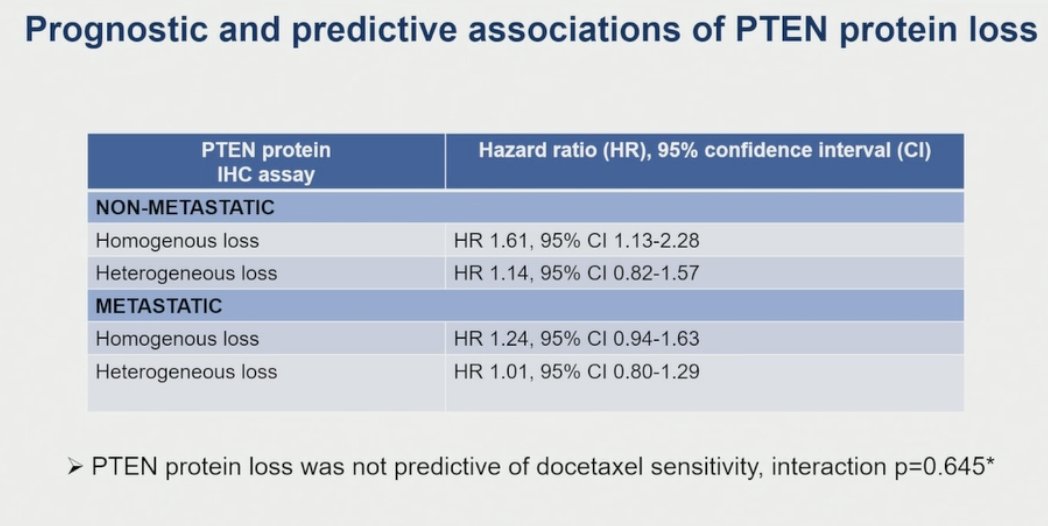
This analysis confirmed that PTEN protein loss assessed by IHC was prognostic but not predictive of docetaxel benefit. In the non-metastatic cohort, homogeneous PTEN loss was significantly associated with worse outcomes (HR 1.61, 95% CI 1.13–2.28), whereas heterogeneous loss was not (HR 1.14, 95% CI 0.82–1.57). In metastatic patients, neither homogeneous (HR 1.24, 95% CI 0.94–1.63) nor heterogeneous (HR 1.01, 95% CI 0.80–1.29) PTEN loss was significantly associated with survival, and crucially, PTEN protein loss was not predictive of sensitivity to docetaxel (interaction p=0.645).
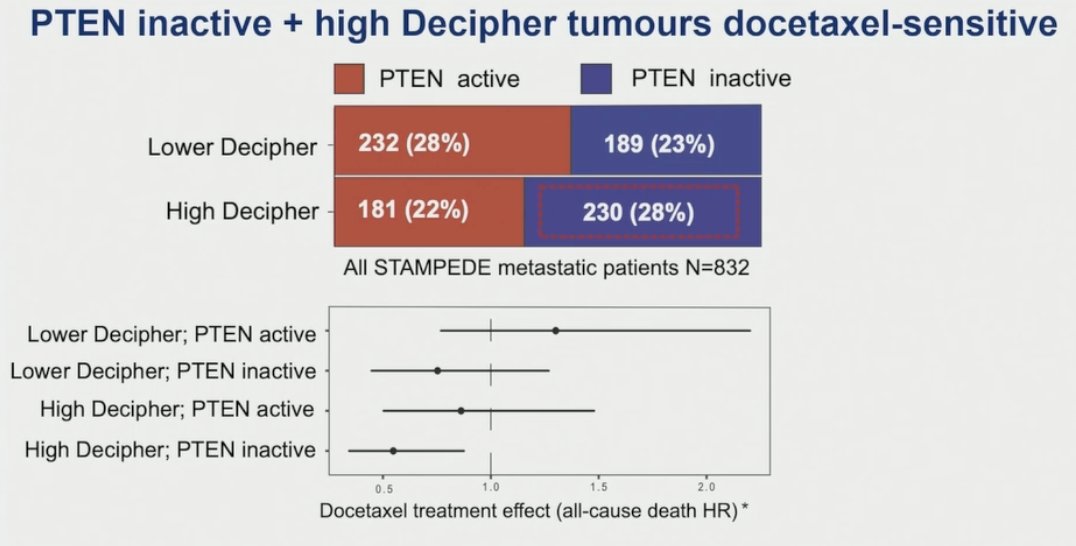
In a subsequent exploratory analysis, tumors were stratified into four groups based on Decipher and PTEN status. The subgroup with high Decipher scores and PTEN inactivity emerged as the most docetaxel-sensitive, despite the lack of overlapping genes between the two classifiers. Within this group, the addition of docetaxel to ADT significantly reduced the hazard of death by 45%, suggesting that this biomarker combination may help identify patients most likely to benefit from treatment intensification.
Dr. Grist concluded her presentation with the following key takeaways:
- Transcriptome-based PTEN inactivity identifies a distinct group of patients compared to IHC-determined PTEN protein loss.
- PTEN inactivity is associated with shorter survival in patients treated with ADT + abiraterone.
- PTEN inactivity predicts greater benefit from docetaxel in metastatic prostate cancer.
- Tumors that are both PTEN inactive and have high Decipher scores may represent the most docetaxel-sensitive subset.
- Composite biomarker strategies, such as combining PTEN and Decipher profiling, warrant evaluation in future clinical trials.
Presented by: Emily Grist, PhD, BSc, MBBS, MRCP, University College London Cancer Institute, London, U.K.
Written by: Julian Chavarriaga, MD – Urologic Oncologist at Cancer Treatment and Research Center (CTIC) via Society of Urologic Oncology (SUO) Fellow at The University of Toronto. @chavarriagaj on Twitter during the American Society of Clinical Oncology (ASCO) 2025 Annual Meeting, Chicago, IL, Fri, May 30 – Tues, Jun 3, 2025.
Related content: PTEN Inactivity Signature Predicts Docetaxel Benefit in Advanced Prostate Cancer - Emily Grist
Reference:
- Attard G, Murphy L, Clarke NW, Cross W, Jones RJ, Parker CC, Gillessen S, Cook A, Brawley C, Amos CL, Atako N, Pugh C, Buckner M, Chowdhury S, Malik Z, Russell JM, Gilson C, Rush H, Bowen J, Lydon A, Pedley I, O'Sullivan JM, Birtle A, Gale J, Srihari N, Thomas C, Tanguay J, Wagstaff J, Das P, Gray E, Alzoueb M, Parikh O, Robinson A, Syndikus I, Wylie J, Zarkar A, Thalmann G, de Bono JS, Dearnaley DP, Mason MD, Gilbert D, Langley RE, Millman R, Matheson D, Sydes MR, Brown LC, Parmar MKB, James ND; Systemic Therapy in Advancing or Metastatic Prostate cancer: Evaluation of Drug Efficacy (STAMPEDE) investigators. Abiraterone acetate and prednisolone with or without enzalutamide for high-risk non-metastatic prostate cancer: a meta-analysis of primary results from two randomised controlled phase 3 trials of the STAMPEDE platform protocol. Lancet. 2022 Jan 29;399(10323):447-460. doi: 10.1016/S0140-6736(21)02437-5. Epub 2021 Dec 23. PMID: 34953525; PMCID: PMC8811484.
- Clarke NW, Ali A, Ingleby FC, Hoyle A, Amos CL, Attard G, Brawley CD, Calvert J, Chowdhury S, Cook A, Cross W, Dearnaley DP, Douis H, Gilbert D, Gillessen S, Jones RJ, Langley RE, MacNair A, Malik Z, Mason MD, Matheson D, Millman R, Parker CC, Ritchie AWS, Rush H, Russell JM, Brown J, Beesley S, Birtle A, Capaldi L, Gale J, Gibbs S, Lydon A, Nikapota A, Omlin A, O'Sullivan JM, Parikh O, Protheroe A, Rudman S, Srihari NN, Simms M, Tanguay JS, Tolan S, Wagstaff J, Wallace J, Wylie J, Zarkar A, Sydes MR, Parmar MKB, James ND. Addition of docetaxel to hormonal therapy in low- and high-burden metastatic hormone sensitive prostate cancer: long-term survival results from the STAMPEDE trial. Ann Oncol. 2019 Dec 1;30(12):1992-2003. doi: 10.1093/annonc/mdz396. Erratum in: Ann Oncol. 2020 Mar;31(3):442. doi: 10.1016/j.annonc.2020.01.002. PMID: 31560068; PMCID: PMC6938598.