

(UroToday.com) The 2025 ASCO annual meeting featured a prostate cancer session and a presentation by Dr. Kevin Zarrabi discussing the molecular characterization of STEAP1 and STEAP2 in advanced prostate cancer. STEAP1 and 2 are metalloreductase proteins involved in a variety of biological processes. Additionally, STEAP1/2 are tumor-associated cell surface antigens highly expressed in prostate cancer, although their role in cancer is poorly understood. However, STEAP1/2 have emerged as successful targets for adoptive T-cell therapy trials for prostate cancer. Ultimately, the involvement of STEAP proteins in prostate cancer pathogenesis is apparent, however, it’s regulation and specific role in driving cancer progression remain largely undefined. The investigators employed a multi-omics approach to investigate the molecular features associated with STEAP1 and STEAP2 expression in prostate cancer.
NextGen Sequencing of DNA (592 genes or whole exome) and RNA (whole transcriptome) was performed for prostate cancer tumors (n = 7089). Prostate cancer samples were stratified by STEAP1/2 mRNA levels into the top (high) and bottom quartile (low). Immune cell infiltration in the tumor microenvironment was inferred by quanTIseq. Transcriptomic signatures of androgen receptor signaling, neuroendocrine prostate cancer, and interferon gamma signaling were calculated.
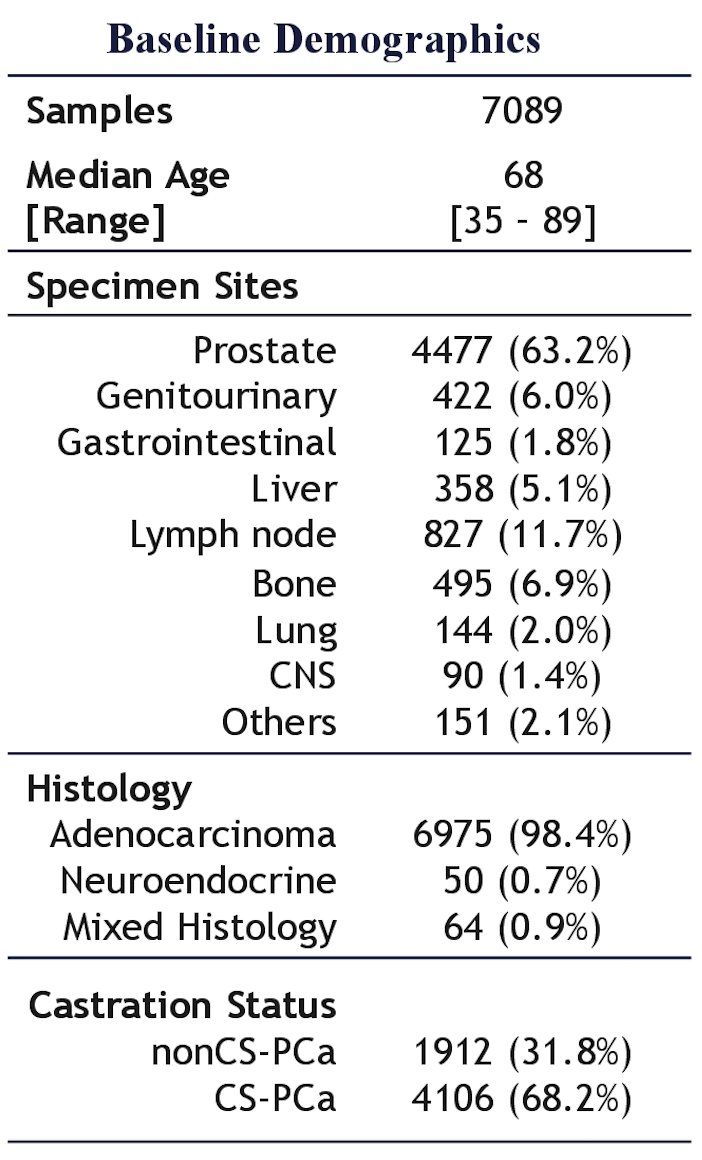
Of 7,089 samples, 63.2% were from the prostate, 11.7% from lymph node metastases, 6.9% from bone, and 17.8% from visceral/soft tissue metastases:
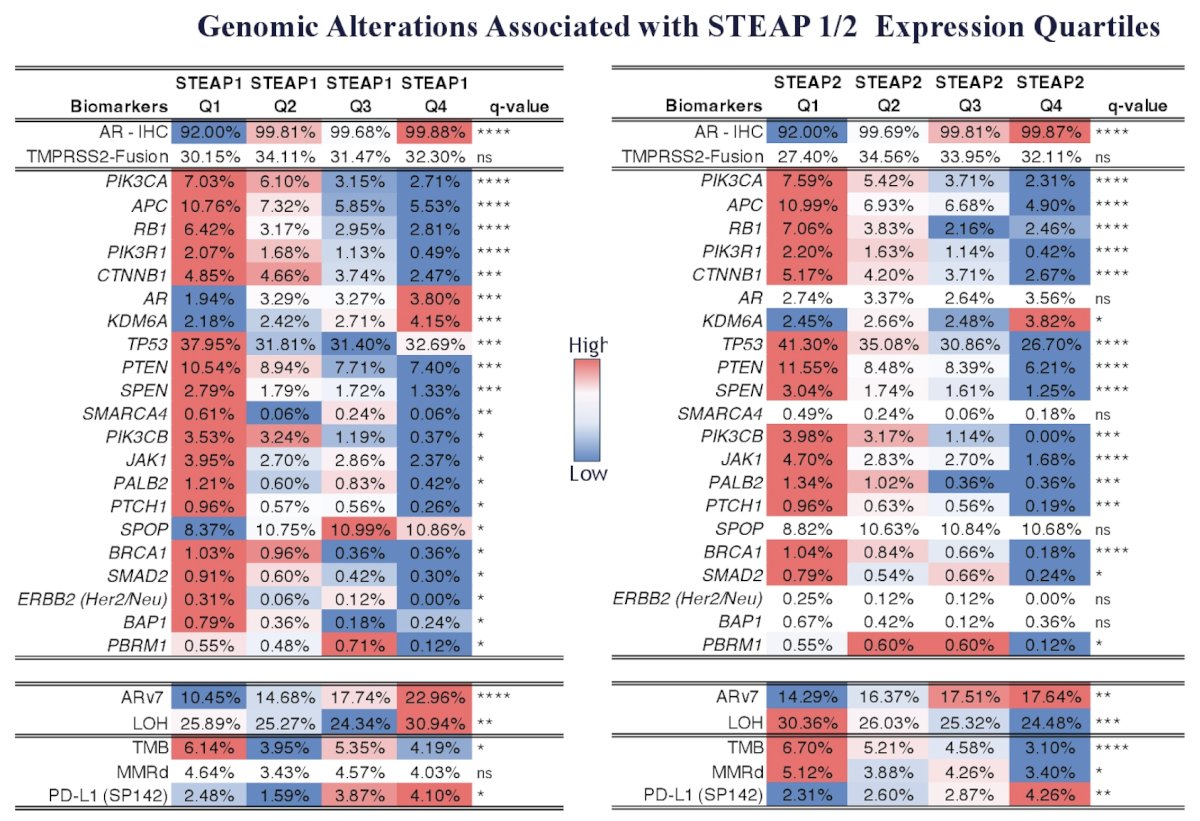
STEAP-1 and -2 were significantly correlated to each other (R = 0.90, p < .001), with significantly higher expression of STEAP1 observed in primary prostate and lymph node metastases, compared with reduced expression in visceral/soft tissue metastases (STEAP1 TPM: 105.2 versus 140.6 versus 91.9, p < 0.001).
AR-IHC/splice variant correlated positively with STEAP1/2 expression, and AR mutations were significantly higher in STEAP1 Q4. Similarly, loss of heterozygosity and PD-L1 showed a positive correlation. Tumor mutational burden, on the other hand, negatively correlated with STEAP1/2 expression:
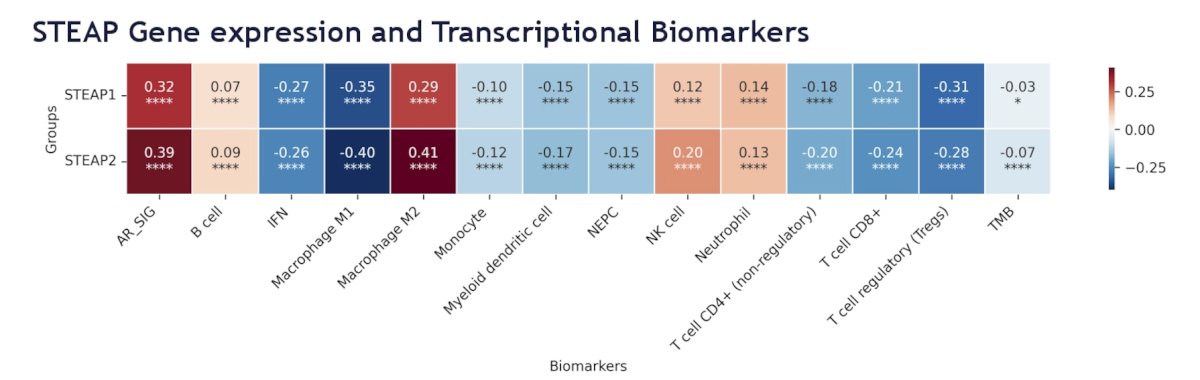
STEAP1/2 correlated negatively with tumor mutational burden/interferon and immune cell fractions; however, it correlated positively with AR signaling:
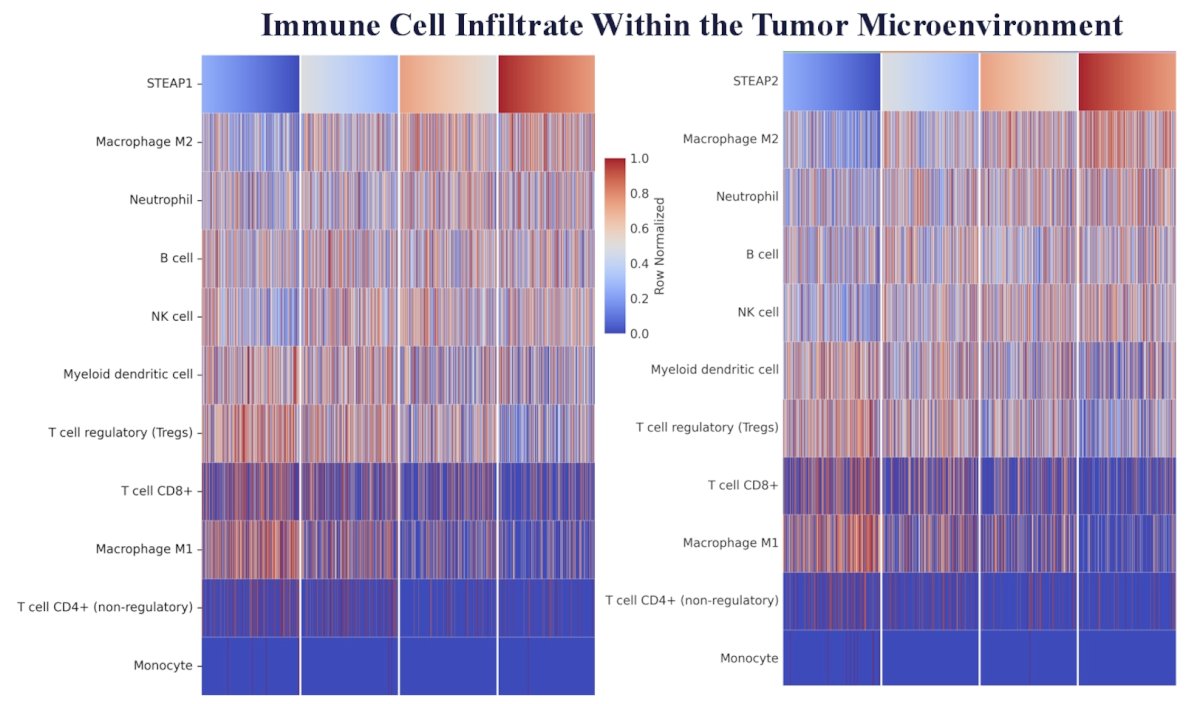
B cells, NK cells, M2 macrophages, and neutrophils were higher in STEAP1/2 Q4 compared to Q1. Finally, regulatory T cells and dendritic cells had higher STEAP1/2 Q1 compared to Q4:
Dr. Zarrabi concluded his presentation discussing the molecular characterization of STEAP1 and -2 in advanced prostate cancer with the following take home points:
- Prostate cancer tumors expressing high STEAP1/2 display distinct genomic and transcriptomic profiles compared to STEAP1/2-low prostate cancer, and STEAP 1/2 expression varies across sites of metastases
- Immune biomarkers and immune cell infiltration data suggest that STEAP1/2 may be associated with a cold tumor microenvironment
- The recent success of STEAP1-targeting T-cell redirecting therapies, mechanisms by which adoptive T-cell strategies may overcome immunosuppressive factors within the tumor microenvironment
- Ongoing development of T-cell immunotherapeutics targeting STEAP1 may account for the differential expression profiles in guiding patient selection and combination strategies
Presented by: Kevin Zarrabi, MD, MS, FACP, Sidney Kimmel Cancer Center, Thomas Jefferson University Hospital, Philadelphia, PA
Written by: Zachary Klaassen, MD, MSc – Urologic Oncologist, Associate Professor of Urology, Georgia Cancer Center, Wellstar MCG Health, @zklaassen_md on Twitter during the American Society of Clinical Oncology (ASCO) 2025 Annual Meeting, Chicago, IL, Fri, May 30 – Tues, Jun 3, 2025.