

(UroToday.com) The 2025 American Society of Clinical Oncology (ASCO) Annual Meeting held in Chicago, IL, was host to the Poster Session: Genitourinary Cancer - Prostate, Testicular, and Penile Cancer. Dr. Marc Dall’Era presented Poster 5104: Neoadjuvant niraparib in men with DNA repair gene deficient clinically localized prostate cancer: Clinical and molecular results from a phase 2 investigator-initiated trial.
Dr. Dall’Era began by highlighting that men with clinically localized prostate cancer harboring DNA damage repair gene deficiencies (DDR) may benefit from personalized therapeutic strategies aimed at exploiting tumor-specific vulnerabilities. Niraparib, a potent oral PARP inhibitor, has demonstrated efficacy in advanced prostate cancer with homologous recombination repair defects.1
This Phase 2 investigator-initiated trial evaluates the feasibility, safety, and biological activity of neoadjuvant niraparib in men with DDR and localized disease prior to radical prostatectomy, aiming to inform the development of biomarker-driven perioperative approaches in prostate cancer.
Men with high-risk localized prostate cancer were screened for DNA damage repair (DDR) gene mutations. Those found to have DDR alterations received neoadjuvant niraparib (300 mg daily for 12 weeks) prior to undergoing radical prostatectomy. The trial design is shown below.

The endpoints of the study were:
- Primary Pathologic Endpoints:
- Complete response (CR)
- Minimal residual disease (MRD)
- Secondary Endpoints:
- Biochemical progression-free survival (bPFS)
- Molecular endpoints
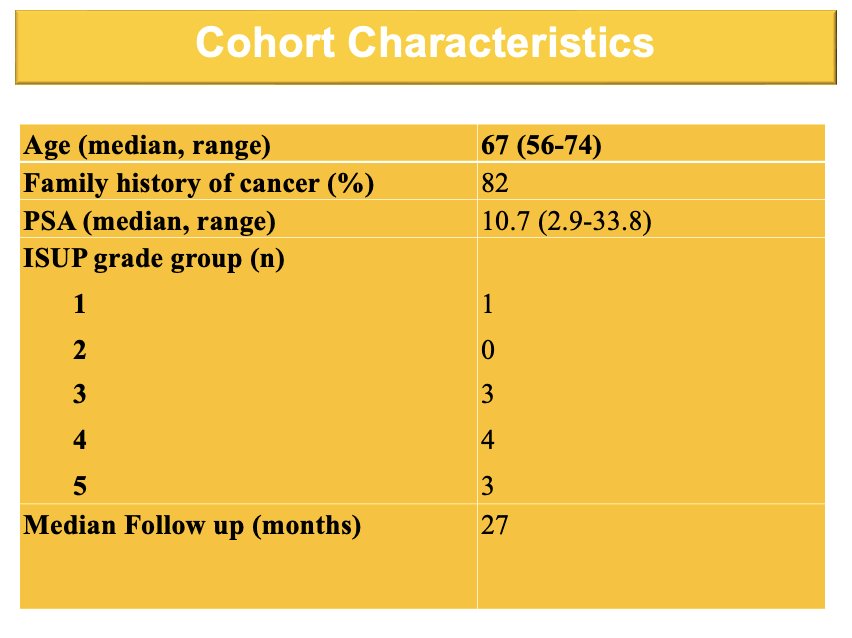
A total of 11 patients were included in the analysis. Baseline characteristics are summarized in the table below. The median age was 67 years, with a median PSA of 10.7 ng/mL. The median follow-up for the cohort was 27 months.
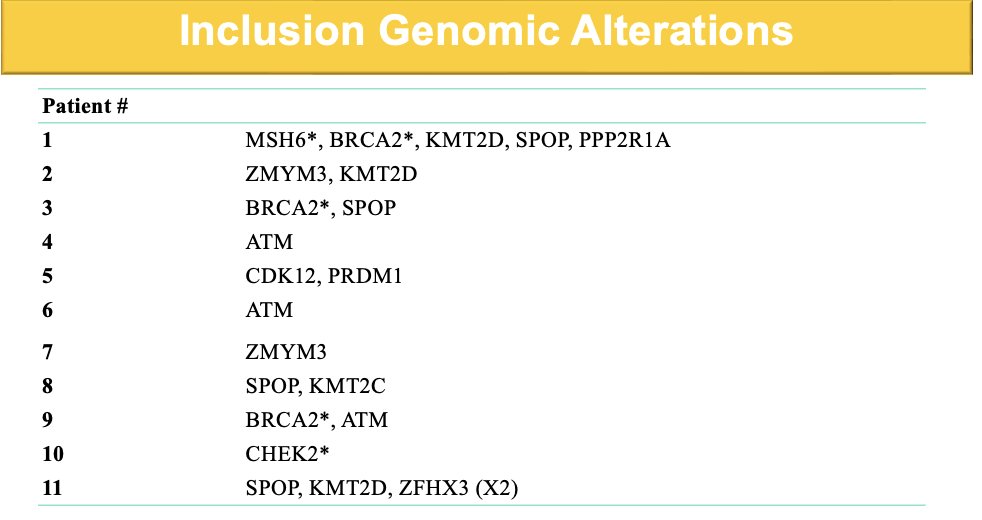
The genomic alterations of the 11 patients included in the analysis are shown below. Notably, four patients harbored SPOP mutations and three had BRCA2 mutations.
Dr. Dall’Era noted that no complete or partial pathologic responses were observed. The biochemical progression-free survival rate was 56% at 27 months. One grade ≥3 adverse event (thrombocytopenia) was reported.
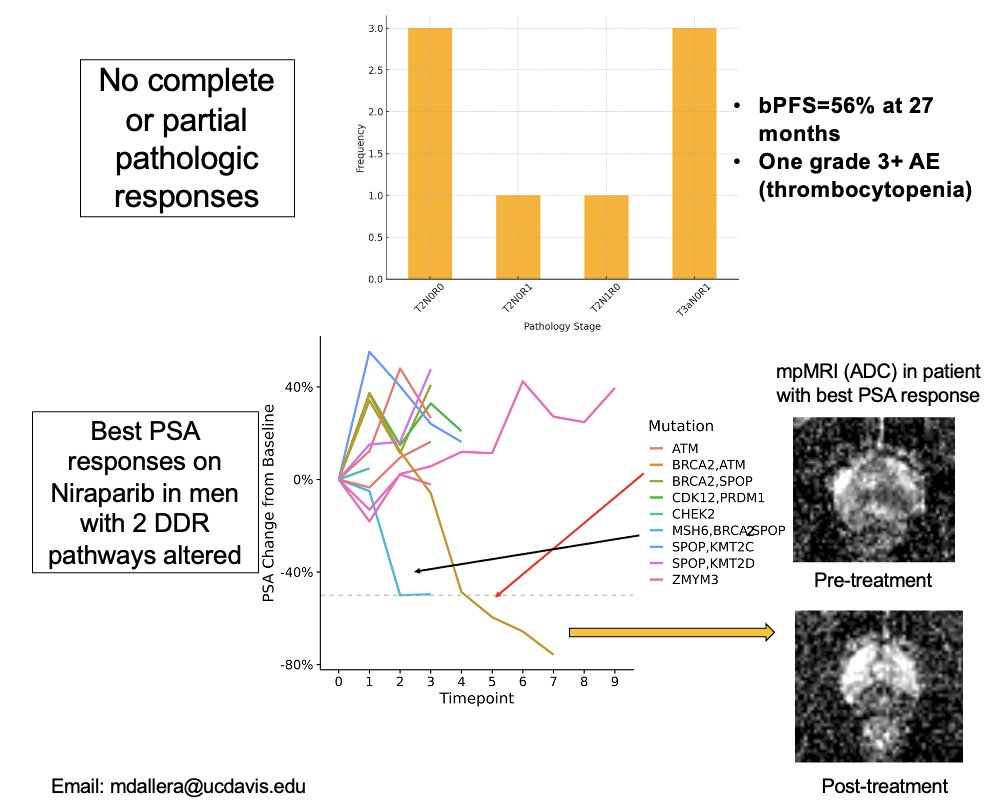
The best PSA responses occurred in patients with alterations in two DNA repair pathways. PSA changes from baseline were analyzed according to specific genomic alterations. Notably, a patient with both BRCA2 and ATM mutations exhibited the most pronounced PSA decline and marked changes on multiparametric MRI, as demonstrated by a decrease in ADC values on the ADC map below.
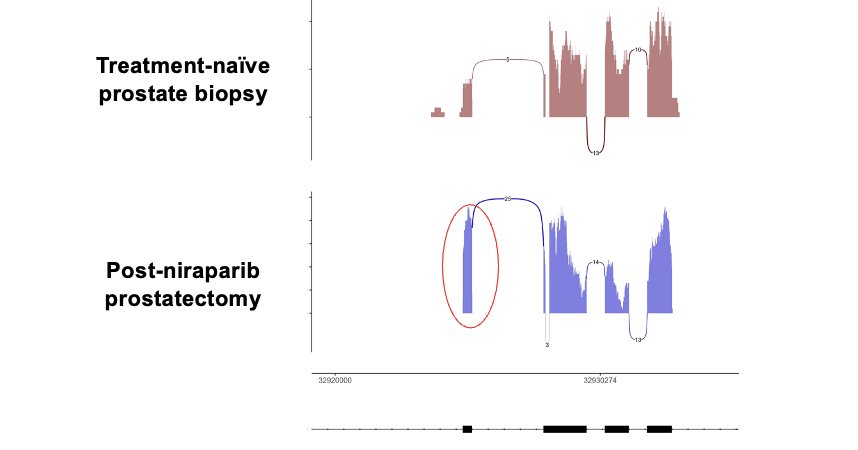
Moreover, the investigators reported a decrease in tissue levels of somatic alterations following niraparib treatment. A rising BRCA2 reversion mutation was detected, as demonstrated by a comparison between pre-treatment biopsy tissue and post-treatment prostatectomy specimens.
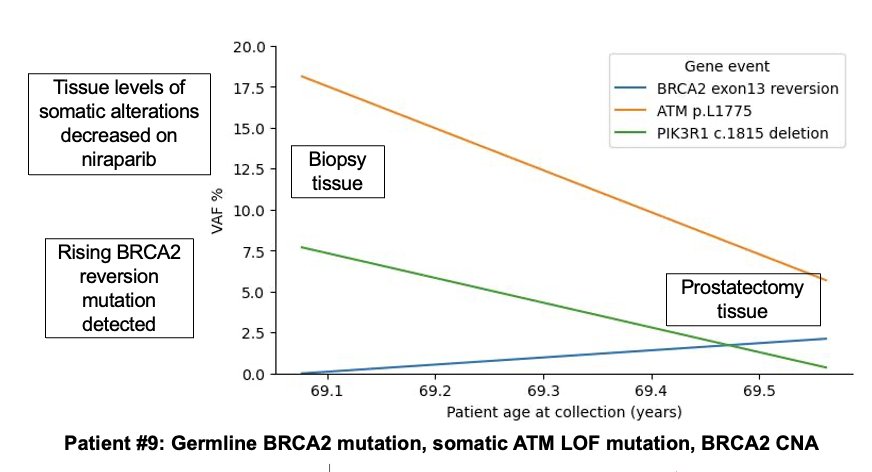
Sashimi plots of BRCA2 exons 13–16 revealed alternative splicing at the start of exon 14, the site of the germline mutation. Notably, there was increased incorporation of exon 13, suggesting a compensatory mechanism to restore the correct reading frame in response to niraparib treatment, as illustrated below.
Dr. Dall’Era concluded the presentation with the following key takeaways:
- No substantial pathologic responses were observed with neoadjuvant niraparib.
- Niraparib was well tolerated in previously untreated men.
- The best PSA responses occurred in patients with alterations in two DNA repair pathways.
- An early BRCA2 reversion mutation may indicate emerging resistance to PARP inhibition.
Presented by: Marc Dall'Era, MD, Chair Department of Urology, University of California, Davis, Sacramento, CA.
Written by: Julian Chavarriaga, MD – Urologic Oncologist at Cancer Treatment and Research Center (CTIC) via Society of Urologic Oncology (SUO) Fellow at The University of Toronto. @chavarriagaj on Twitter during the American Society of Clinical Oncology (ASCO) 2025 Annual Meeting, Chicago, IL, Fri, May 30 – Tues, Jun 3, 2025.
Related content: Neoadjuvant Niraparib in High-Risk Localized Prostate Cancer with DNA Repair Gene Alterations - Marc Dall'Era