

(UroToday.com) The 2025 ASCO annual meeting featured a prostate cancer rapid oral abstract session and a presentation by Asli Munzur discussing an exploratory post-hoc analysis of TheraP assessing clonal hematopoiesis in participants with metastatic castration-resistant prostate cancer (mCRPC) receiving 177Lu-PSMA-617 or cabazitaxel. Clonal hematopoiesis is defined by somatic expansions in blood in the absence of hematologic malignancy, which may be a precursor for hematological malignancy in patients receiving treatment in solid tumors:
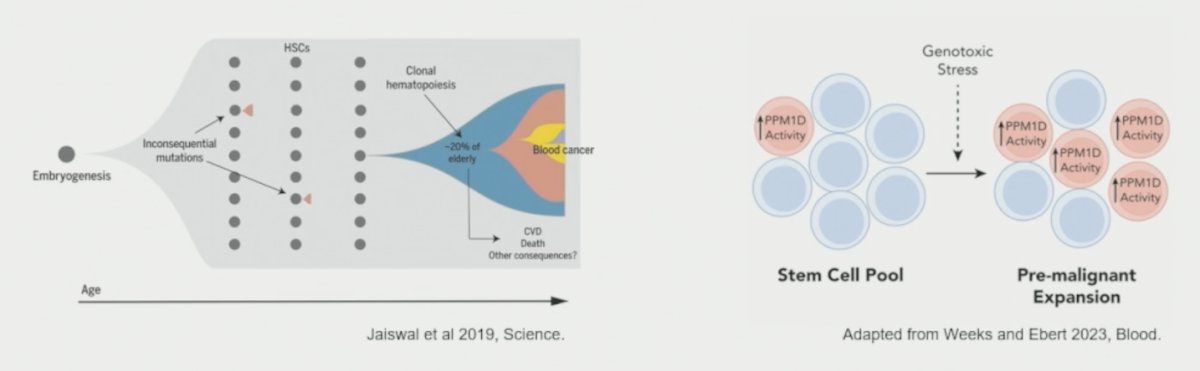
Treatment-mediated clonal outgrowth of mutations in DNA damage response genes, especially PPM1D, may increase risk of hematologic malignancy.
The PSMA-targeted radioligand 177Lu-PSMA-617 is an effective new standard-of-care for mCRPC. Since radiation may cause clonal hematopoiesis, the investigators hypothesized that 177Lu-PSMA-617 drives an increase in clonal hematopoiesis compared to other mCRPC treatments. At the 2025 ASCO annual meeting, Asli Munzur and colleagues explored clonal hematopoiesis in the TheraP trial [1] randomizing participants with docetaxel-refractory mCRPC to cabazitaxel or 177Lu-PSMA-617.
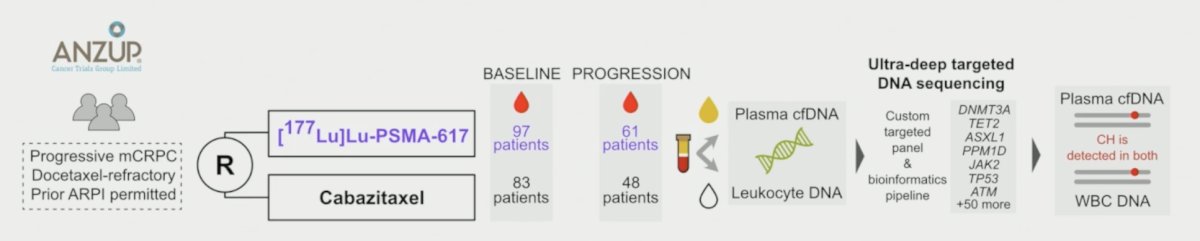
This analysis included targeted DNA sequencing with a clonal hematopoiesis gene panel on blood samples from trial baseline (n = 176) and disease progression (n = 103; 56 post-177Lu-PSMA-617, 47 post-cabazitaxel). Baseline clonal hematopoiesis mutations were detected in both cell-free DNA (cfDNA) and leukocyte DNA with variant allele frequency ≥0.25%. Progression leukocyte DNA was unavailable at analysis, so progression clonal hematopoiesis mutations were identified via cfDNA only:
Clonal hematopoiesis was detected in 76% of participants at baseline (median age: 72 years), with no significant difference in clonal hematopoiesis frequency between treatment groups: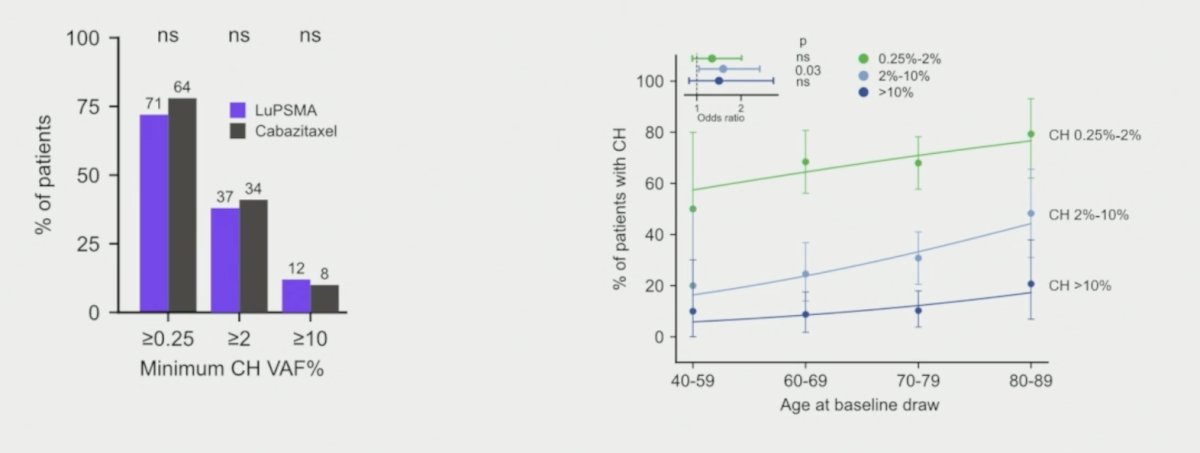
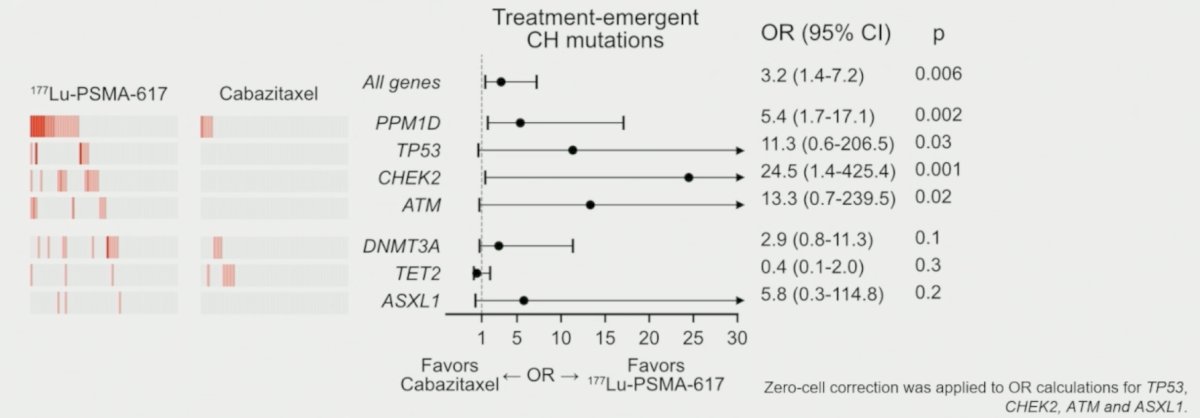
The most commonly mutated genes at baseline were DNMT3A (39%), TET2 (25%), PPM1D (15%) and TP53 (6%), with no difference in gene mutation frequency between arms. At progression, new mutations of presumed clonal hematopoiesis origin were detected in 62% and 40% of 177Lu-PSMA-617 and cabazitaxel participants, respectively (p = 0.01):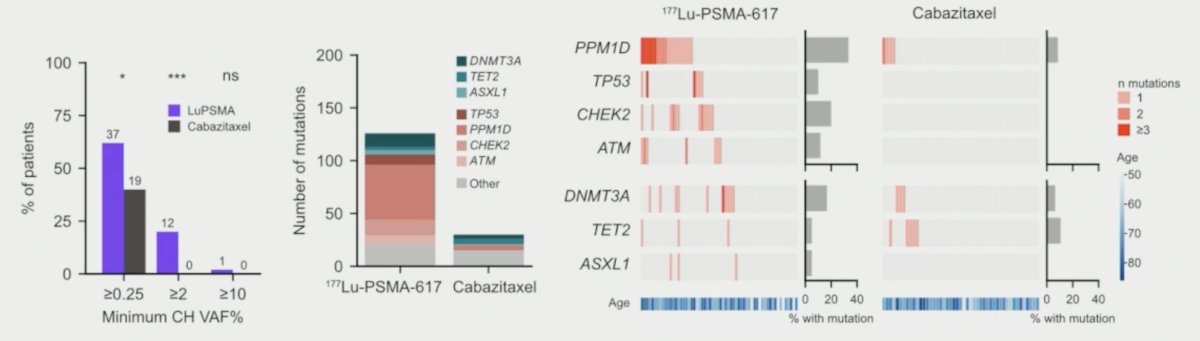
The most frequently mutated gene at 177Lu-PSMA-617 progression was the DNA damage repair gene PPM1D (34% vs 8% cabazitaxel; p = 0.0008), and new PPM1D clonal hematopoiesis mutations were 5.4 times more common after 177Lu-PSMA-617 than cabazitaxel:
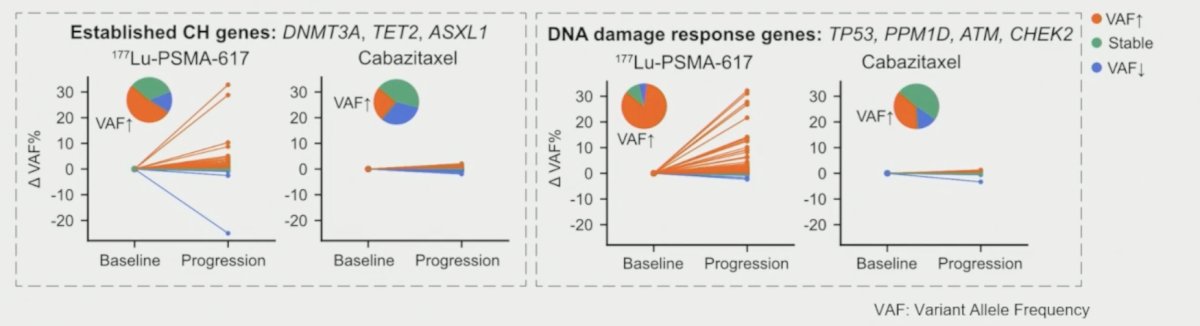
Clonal hematopoiesis mutations also expand more frequently after 177Lu-PSMA-617 than cabazitaxel. Variant allele frequency expansions for established clonal hematopoiesis genes was 58% versus 22% (p < 0.001), and for DNA damage response genes was 87% versus 33% (p < 0.001):
Asli Munzur concluded her presentation discussing an exploratory post-hoc analysis of TheraP assessing clonal hematopoiesis in participants with mCRPC receiving 177Lu-PSMA-617 or cabazitaxel with the following take-home points:
- 177Lu-PSMA-617 was associated with a greater number of new clonal hematopoiesis mutations, especially in DNA damage repair genes, compared to cabazitaxel
- While the clinical relevance of this finding in a population of patients with heavily-treated mCRPC is unclear, clonal hematopoiesis emergence and expansion may have implications as radioligand therapy is used as an earlier line of therapy
Presented by: Asli D. Munzur, Vancouver Prostate Centre, Vancouver, British Columbia, Canada
Written by: Zachary Klaassen, MD, MSc – Urologic Oncologist, Associate Professor of Urology, Georgia Cancer Center, Wellstar MCG Health, @zklaassen_md on Twitter during the American Society of Clinical Oncology (ASCO) 2025 Annual Meeting, Chicago, IL, Fri, May 30 – Tues, Jun 3, 2025.
Related content: Uncovering Blood Mutation Risks in Advanced Prostate Cancer Therapies - Asli Munzur
References:
- Hofman MS, Emmett L, Sandhu S, et al. [(177)Lu]Lu-PSMA-617 versus cabazitaxel in patients with metastatic castration-resistant prostate cancer (TheraP): A randomized, open-label, phase 2 trial. Lancet. 2021 Feb 27;397(10276):797-804.