

(UroToday.com) The 2025 ASCO annual meeting featured a prostate cancer session and a presentation by Dr. Michael Ong discussing a phase II study of darolutamide selected by androgen-receptor ctDNA in patients with metastatic castration-resistant prostate cancer (mCRPC) after prior androgen receptor pathway inhibitors. Darolutamide is a unique androgen receptor antagonist, with preclinical studies suggesting activity in mCRPC models resistant to abiraterone or enzalutamide due to androgen receptor amplification or ligand binding domain mutations. In this substudy of the PC-BETS master protocol, Dr. Ong and colleagues explored darolutamide in androgen receptor pathway inhibitor-resistant mCRPC stratified by ctDNA androgen receptor status.
Patients in this study had mCRPC, ECOG PS 0–1, evaluable disease, biochemical or radiographic progression, prior androgen receptor pathway inhibitor, and no cytotoxic chemotherapy in mCRPC. Genomic screening tested plasma cell-free DNA and matched leukocyte DNA via targeted sequencing with a prostate cancer panel including the androgen receptor exons, introns, and flank. Only patients with evidence of ctDNA ≥1% were eligible. Patients were assigned to substudy by a molecular tumor board if biomarker positive; otherwise, biomarker negative patients were randomized to the biomarker negative substudy. Substudy-C tested darolutamide 600mg OD in three cohorts in a 2-stage design—
- C1: Androgen receptor amplification
- C2: Androgen receptor mutation
- C3: Biomarker negative
The primary endpoint was clinical benefit rate, defined by PSA50 response, RECIST complete response/partial response, or stable disease ≥12 weeks.
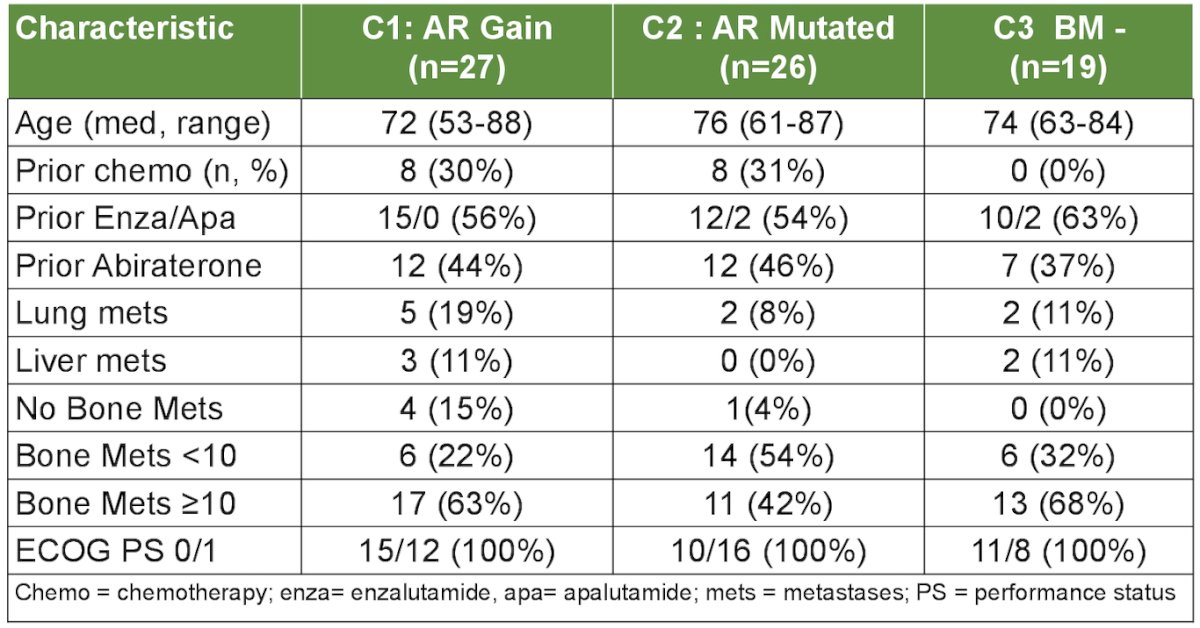
PC-BETS Arm C opened in January 2018 and closed February 2024. There were 72 patients enrolled: 27 in C1, 26 in C2, and 19 in C3. The median age was 74 years (range: 53–88) and 100% of patients had an ECOG performance status 0 or 1. Sixteen patients (22%) had docetaxel for hormone-sensitive disease and none for mCRPC. Prior androgen receptor pathway inhibitors were abiraterone (31/72, 43%), enzalutamide (37/72, 51%), or apalutamide (4/72, 6%). Patients had bone (67/72, 93%), lung (9/72, 13%), and/or liver (5/72, 7%) metastases:
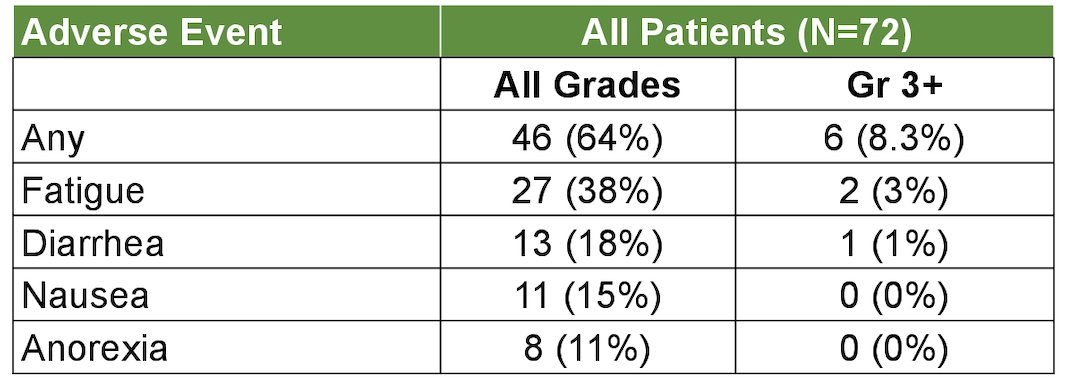
The baseline PSA was 2–20 ng/mL in 13/72 (18%), 20–100 ng/mL in 32/72 (44%) or >100 ng/mL in 27/72 (38%). Darolutamide median exposure was 4 months (range 1–29). Common related adverse events were fatigue (38%), diarrhea (18%), nausea (15%), and anorexia (11%). There were only 8.3% grade 3+ adverse events:
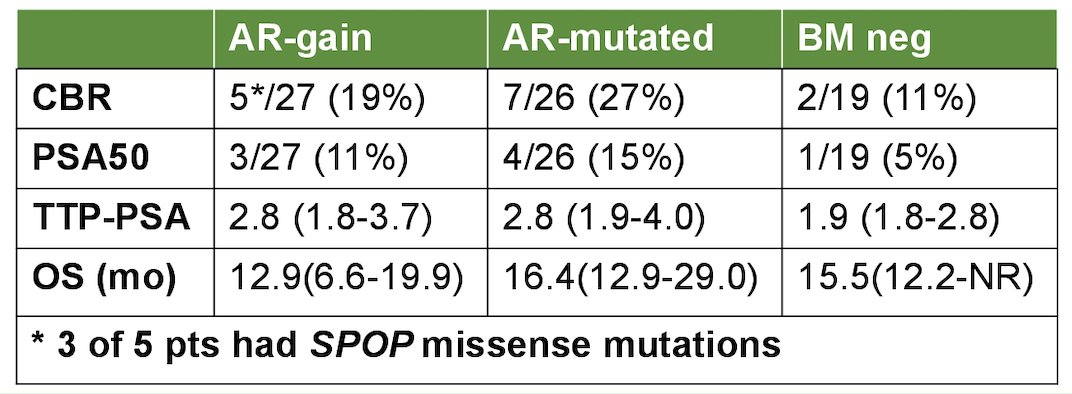
Clinical benefit rate was more frequent in androgen receptor amplification or mutated cohorts than biomarker negative. The median ctDNA fraction of clinical benefit rate versus no clinical benefit rate was: C1: 5 versus 16%, p = 0.059; C2: 5 versus 19%, p = 0.042; C3: 13 versus 13%, p = 0.944. C1 clinical benefit rate was higher with SPOP mutations (3/5, 60%) and all clinical benefit rate patients had >10 androgen receptor copies. C2 clinical benefit rate was seen with L702H (3/7, 43%) and T878A (4/7, 57%) but not F877L, W724C/L, or V716M:

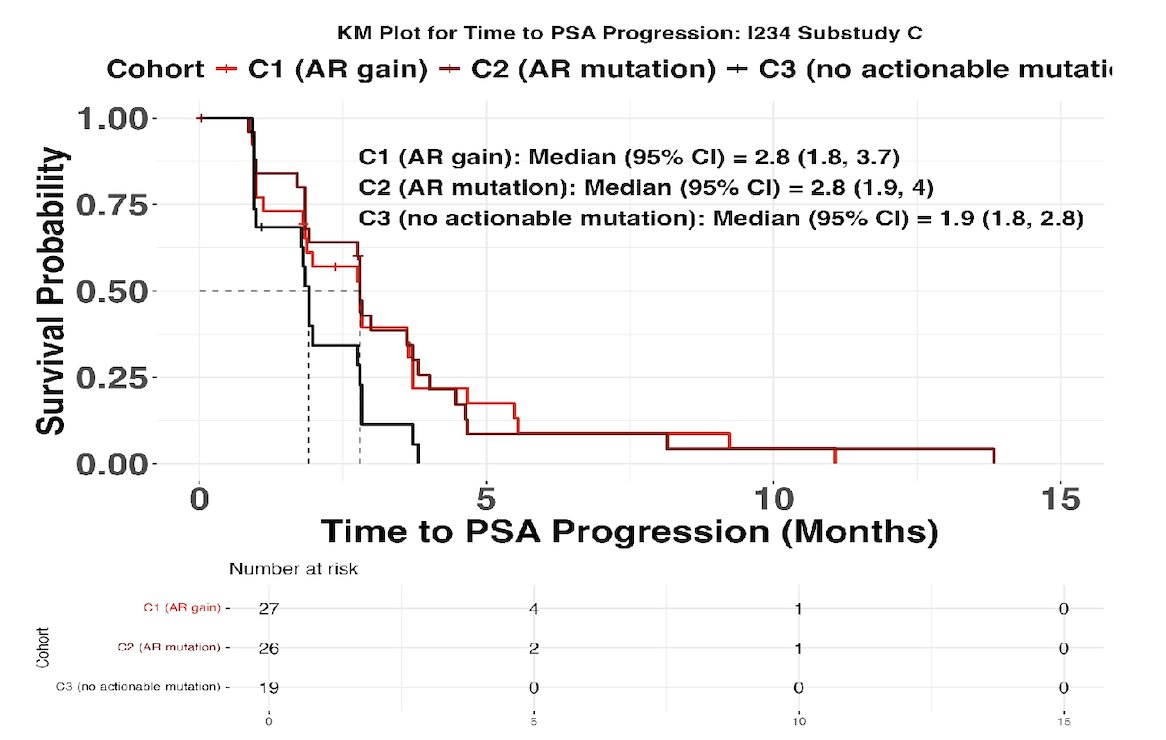
Time to PSA progression was a median 2.8 months in C1, 2.8 months in C2, and 1.9 months in C3:
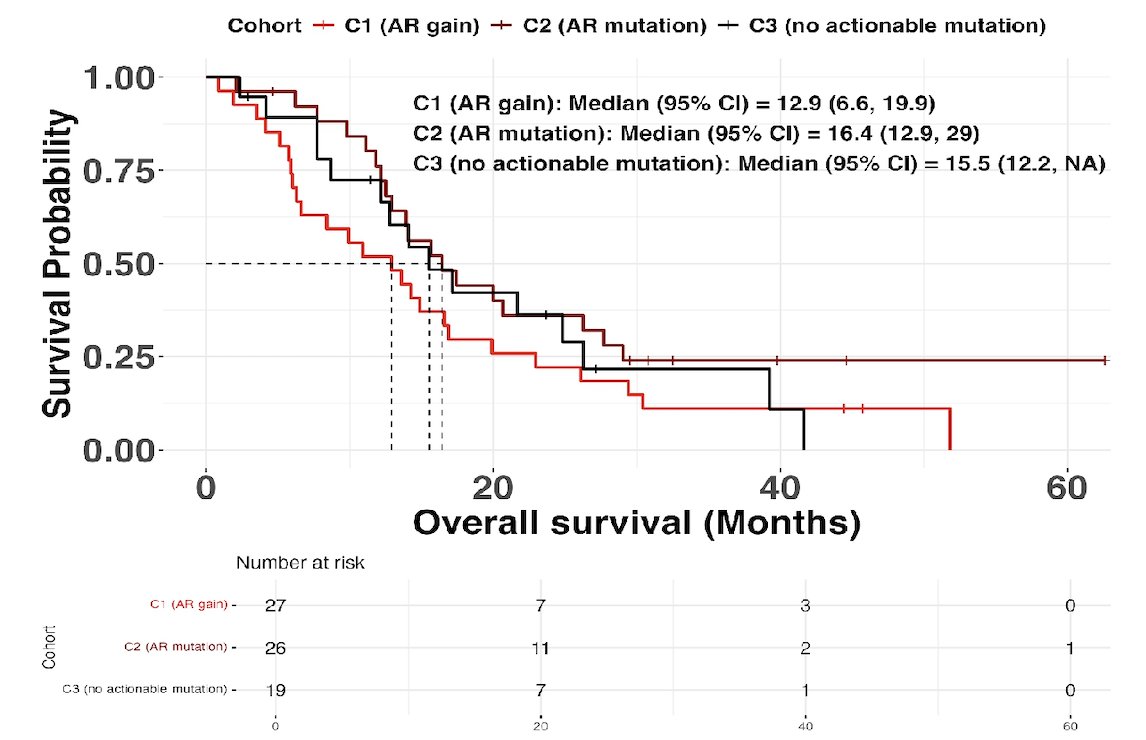
Median overall survival was 12.9 months in C1, 16.4 months in C2, and 15.5 months in C3:
A summary of key endpoints is highlighted in the following table:
By data cutoff, all had discontinued therapy (radiographic ± biochemical 61%, biochemical only 22%, symptomatic 7%). Darolutamide was well tolerated, with only 6% discontinuing for adverse events.
Dr. Ong concluded his presentation discussing a phase II study of darolutamide selected by androgen-receptor ctDNA in patients with mCRPC after prior androgen receptor pathway inhibitors with the following take home points:
- Darolutamide demonstrates modest activity for unselected mCRPC following androgen receptor pathway inhibitors
- ctDNA analysis enriched for patients more likely to benefit from darolutamide, including SPOP alterations, androgen receptor amplification, and androgen receptor mutations L702H and T878A
Presented by: Michael Ong, MD, FRCPC, The Ottawa Hospital Cancer Centre, Ottawa, Ontario, Canada
Written by: Zachary Klaassen, MD, MSc – Urologic Oncologist, Associate Professor of Urology, Georgia Cancer Center, Wellstar MCG Health, @zklaassen_md on Twitter during the American Society of Clinical Oncology (ASCO) 2025 Annual Meeting, Chicago, IL, Fri, May 30 – Tues, Jun 3, 2025.