

(UroToday.com) The 2025 American Society of Clinical Oncology (ASCO) Annual Meeting held in Chicago, IL between May 30 and June 3 was host to the Poster Session: Genitourinary Cancer - Kidney and Bladder. Dr. Eric Jonasch presented the trial in progress Poster TPS4611: STARLITE-1: Phase 1b/2 study of combination 177Lu girentuximab plus cabozantinib and nivolumab in treatment naive patients with advanced clear cell RCC.
Dr. Jonasch began by emphasizing that complete response (CR) remains a rare outcome in patients with advanced clear cell renal cell carcinoma (ccRCC). The combination of nivolumab and cabozantinib is currently approved as a first-line treatment for ccRCC based on the phase 3 CheckMate 9ER trial, which demonstrated improved progression-free survival (PFS) and objective response rate (ORR) compared to sunitinib. However, the CR rate with this combination remains low at just 9%.1
To improve CR rates, novel agents that synergize with T-cell–mediated anti-tumor activity are needed. One promising mechanism involves radiation-induced DNA damage activating the cGAS-STING pathway, enhancing immune cell infiltration as illustrated below.
177Lu-girentuximab is a CAIX-targeted radioimmunoconjugate that delivers targeted radiation to tumors expressing carbonic anhydrase IX (CAIX), a cell surface glycoprotein found in over 95% of ccRCC tumors. As a single agent in metastatic ccRCC, 177Lu-girentuximab has been shown to be safe and achieve disease stabilization in 57% of patients.
Based on this rationale, the investigators hypothesize that 177Lu-girentuximab–induced DNA damage may activate the STING pathway and synergize with nivolumab and cabozantinib to enhance trafficking and infiltration of activated T cells, ultimately increasing complete response rates in advanced ccRCC.
STARLITE 1 (NCT05663710) is a phase 1b/2, single-arm clinical trial evaluating the safety and efficacy of the combination of ^177Lu-girentuximab, cabozantinib, and nivolumab in patients with advanced clear cell renal cell carcinoma (ccRCC). Key study design elements include:
- 177Lu-girentuximab will be administered at 1480 MBq/m² (61% of the single-agent maximum tolerated dose) every 12 weeks for up to three treatment cycles.
- Subsequent doses (cycles 2 and 3) may be reduced to 1110 MBq/m² or 740 MBq/m² based on observed adverse events.
- Beginning on Day 1 of Cycle 2 (Week 5), patients will receive nivolumab (480 mg IV every 4 weeks) and cabozantinib (40 mg orally, daily) at standard dosing.
- All treatment cycles are 28 days in length.
To assess the immunologic impact of the combination regimen, patients will undergo [18F]F-AraG PET imaging to evaluate activated T cell infiltration before and after treatment. Additionally, peripheral blood samples and tumor tissue biopsies will be collected for single-cell analyses, spatial transcriptomics, and proteomics studies. The study design is shown below.
![To assess the immunologic impact of the combination regimen, patients will undergo [18F]F-AraG PET imaging to evaluate activated T cell infiltration before and after treatment. Additionally, peripheral blood samples and tumor tissue biopsies will be collected for single-cell analyses, spatial transcriptomics, and proteomics studies. The study design is shown below.](/images/com-doc-importer/217-asco-2025/asco-2025-starlite-1-phase-1b-2-study-of-combination-177lu-girentuximab-plus-cabozantinib-and-nivolumab-in-treatment-naive-patients-with-advanced-clear-cell-rcc/image-1.jpg)
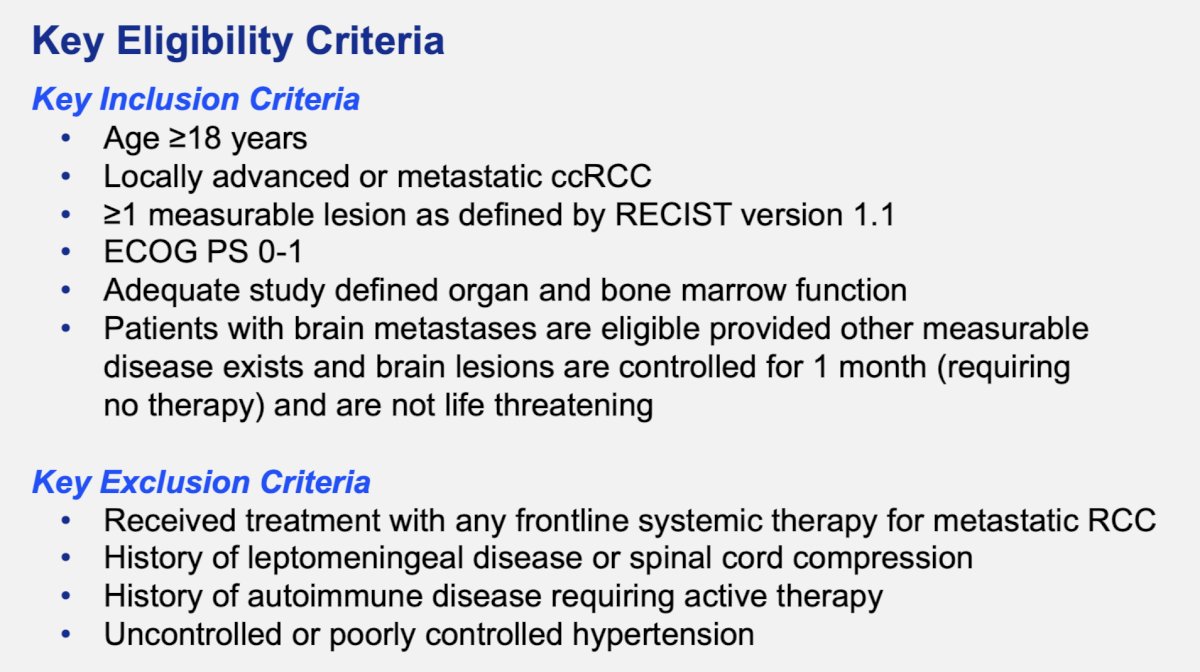
Dr. Jonasch highlighted the key inclusion criteria for STARLITE 1, which are outlined below:
Co-primary Endpoints
- Safety defined by CTCAE v5.0
- CR rate by RECIST 1.1 by investigator
Secondary endpoints
- Overall response rate (ORR), progression-free survival (PFS), duration of response, durable stable disease (SD), clinical benefit (CR, PR + durable SD) rate by RECIST 1.1 by investigator
- Tumor response (PR, CR, SD, PD) based on iRECIST 1.1 by investigator
- OS
Exploratory endpoints
- Measures of pre-treatment and post-treatment tumor [18F] F-AraG PET SUV parameters and antitumor efficacy measures per RECIST 1.1, iRECIST 1.1
- Measures of pre-treatment and post-treatment tumor 177Lu SPECT uptake and antitumor efficacy measures per RECIST 1.1, iRECIST 1.1
The STARLITE 1 trial plans to enroll up to 100 patients to ensure sufficient power to detect a complete response CR rate of 18%, which would represent a meaningful improvement over the historical CR rate of 9% observed with current standard therapies. The study incorporates predefined stopping rules for both futility and safety to ensure patient protection and trial integrity as it progresses
Dr. Jonasch noted that the first five patients enrolled in STARLITE 1 will be evaluated in a safety lead-in phase focused on myelosuppression. Each of these patients will be assessed either after completing at least 28 days of treatment or upon the development of myelosuppression, whichever occurs first.
Presented by: Eric Jonasch, MD, Department of Genitourinary Medical Oncology, The University of Texas MD Anderson Cancer Center, Houston, TX.
Written by: Julian Chavarriaga, MD – Urologic Oncologist at Cancer Treatment and Research Center (CTIC) via Society of Urologic Oncology (SUO) Fellow at The University of Toronto. @chavarriagaj on Twitter during the American Society of Clinical Oncology (ASCO) 2025 Annual Meeting, Chicago, IL, Fri, May 30 – Tues, Jun 3, 2025.
Reference: