

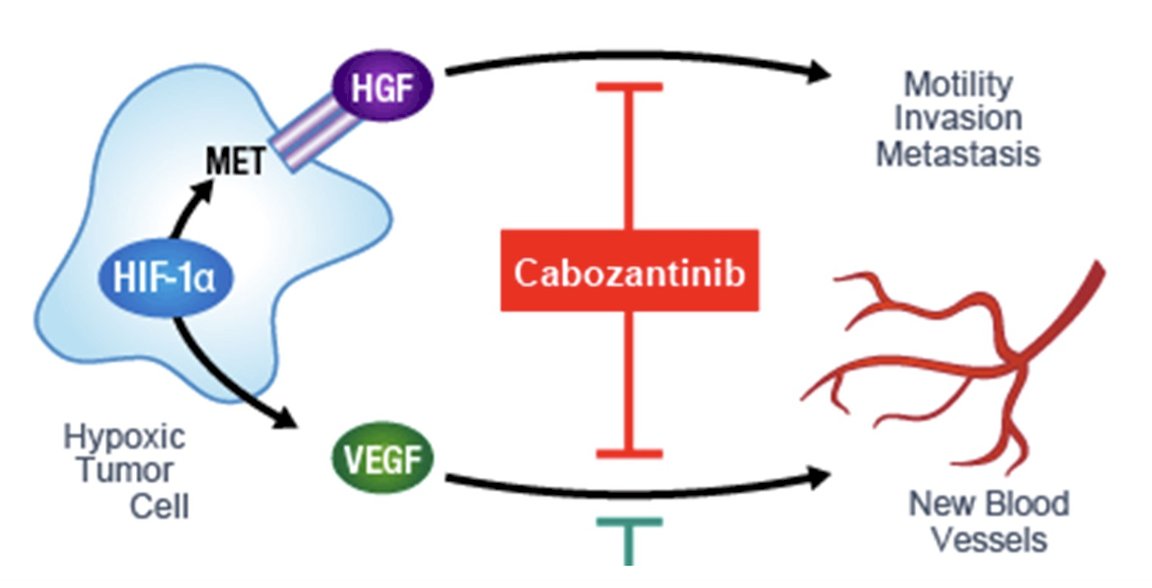
(UroToday.com) The 2025 ASCO annual meeting featured a kidney cancer trials in progress session and a presentation by Dr. Chinmay Jani discussing RADICAL/Alliance A031801, a randomized trial of radium-223 and cabozantinib in patients with advanced RCC with osseous metastases. Osseous metastases occur in approximately 30% of patients with advanced RCC. Despite therapeutic advances, osseous metastases are associated with poor survival and risk of symptomatic skeletal events. Cabozantinib targets multiple tyrosine kinases, including VEGF receptors and MET, which are overexpressed in osseous metastases, contributing to cabozantinib’s enhanced bone activity:
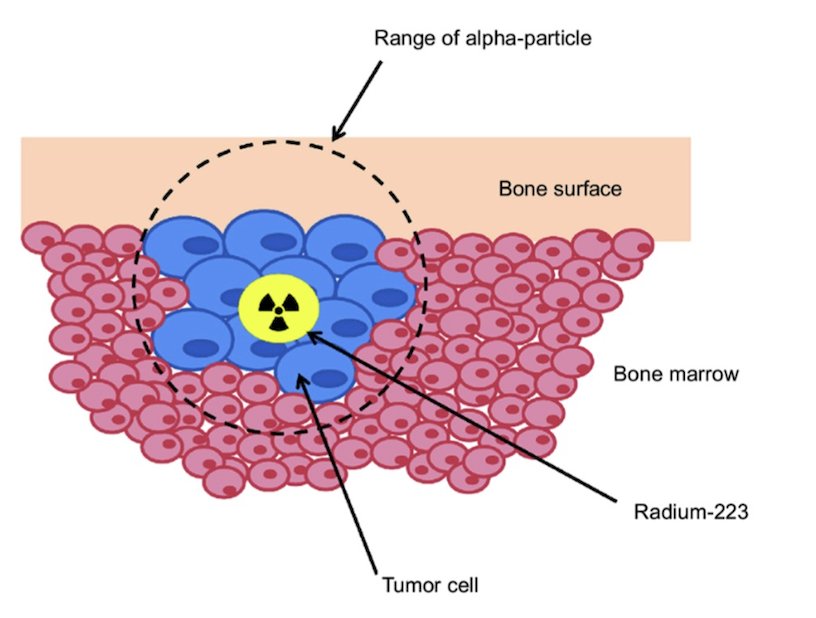
Radium-223, an alpha-emitting bone-seeking radioisotope, prolongs survival in men with mCRPC to the bone:
Building on this therapeutic approach targeting osseous metastases, this pilot study of radium-223 with VEGF inhibition in RCC with osseous metastases has also shown safety, improvement in circulating bone turnover markers, and early efficacy [1]. To address the unmet need to improve symptomatic skeletal event rates and outcomes in RCC and osseous metastases, this study was designed to investigate cabozantinib with or without radium-223 in patients with RCC with osseous metastases (NCT04071223).
This is an open-label, multicenter randomized phase-2 study. Key inclusion criteria include:
- Metastatic RCC of any histology with ≥1 osseous metastases
- At least 1 osseous metastases without prior radiation
- Any number of prior therapies
- Karnofsky performance status ≥ 60%
- Bone protecting agent required unless contraindicated
Patients are randomized 1:1 to cabozantinib with (Arm A) or without (Arm B) radium-223. The starting dose of cabozantinib for Arm A is 40 mg by mouth daily to be escalated to 60 mg daily after cycle 1 (1 cycle = 28 days) if no persistent grade 2 or grade ≥3 toxicity. Radium-223 is administered at a fixed dose of 1.49 microcurie/kg IV every 28 days x 6 doses. The starting dose for cabozantinib in Arm B is 60 mg daily:
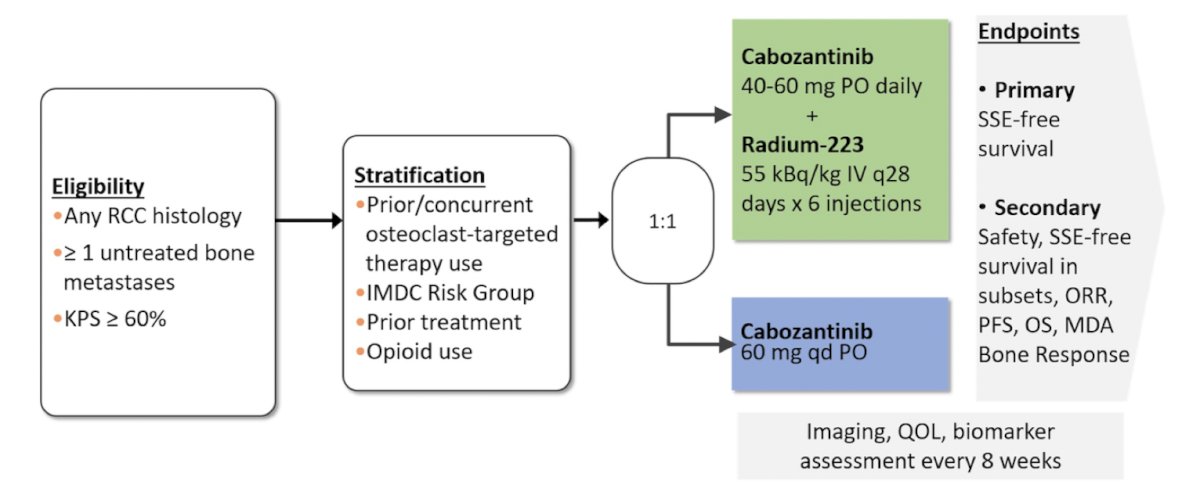
The primary endpoint is symptomatic skeletal event-free survival. Secondary endpoints include (i) safety, (ii) progression-free survival, (iii) overall survival, (iv) time to first symptomatic skeletal event, (v) objective response rate, (vi) time to subsequent anti-cancer therapies, (vii) quality of life measures, and (viii) correlative analyses including liquid biopsy and tumor tissue analysis.
The study is designed to have 85% power to detect an improvement in 6-month symptomatic skeletal event-free survival rate from 65% to 78% with one-sided α = 0.05 significance. To ensure 124 evaluable patients, target accrual is 134 (67 per arm). The group-sequential design includes a safety run-in and an interim analysis for futility when 50% of the expected number of events have been observed. The safety run-in, performed in the first 12 patients randomized to combination therapy, did not demonstrate dose limiting toxicities. Final data analysis will occur when 99 events have been observed. The study was activated in July 2020, and accrual is ongoing throughout the National Clinical Trials Network.
Presented by: Chinmay Jani, MD, University of Miami Sylvester Comprehensive Cancer Center, Miami, FL
Written by: Zachary Klaassen, MD, MSc – Urologic Oncologist, Associate Professor of Urology, Georgia Cancer Center, Wellstar MCG Health, @zklaassen_md on Twitter during the American Society of Clinical Oncology (ASCO) 2025 Annual Meeting, Chicago, IL, Fri, May 30 – Tues, Jun 3, 2025.
References:
- McKay RR, Bossé D, Gray KP, et al. Radium-223 Dichloride in Combination with Vascular Endothelial Growth Factor-Targeting Therapy in Advanced Renal Cell Carcinoma with Bone Metastases. Clin Cancer Res. 2018 Sep 1;24(17):4081-4088.