

(UroToday.com) The 2025 American Society of Clinical Oncology (ASCO) Annual Meeting held in Chicago, IL between May 30 and June 3 was host to the Poster Session: Genitourinary Cancer - Kidney and Bladder. Dr. Michal Sternschuss presented Poster 4573: Treatment patterns and clinical outcomes with platinum-based chemotherapy after enfortumab vedotin and pembrolizumab in patients with metastatic urothelial carcinoma.
Dr. Sternschuss emphasized that enfortumab vedotin plus pembrolizumab has become the new standard of care for previously untreated metastatic urothelial carcinoma (mUC), representing a major shift in the treatment landscape. (1) While primary resistance to this regimen is uncommon, approximately 63% of patients experience disease progression within 24 months. Importantly, there are currently no established guidelines for managing patients after progression on enfortumab vedotin plus pembrolizumab (EV+P), and the efficacy of subsequent systemic therapies particularly platinum-based chemotherapy remains largely unknown.
The investigators conducted a retrospective cohort study of patients with metastatic urothelial carcinoma treated with EV+P at Memorial Sloan Kettering Cancer Center. The objective was to identify patients who went on to receive subsequent systemic therapies. Clinical data were collected through manual chart review. Treatment response to both EV/P and subsequent platinum-based chemotherapy was assessed by physician evaluation according to RECIST v1.1 criteria. Progression-free survival (PFS) and overall survival (OS) were estimated using the Kaplan-Meier method.
A total of 236 patients treated with EV+P at Memorial Sloan Kettering Cancer Center between October 2018 and December 2024 were identified. Of these, 62 patients (25%) received subsequent systemic therapies following EV/P. Baseline characteristics are shown in the table below.
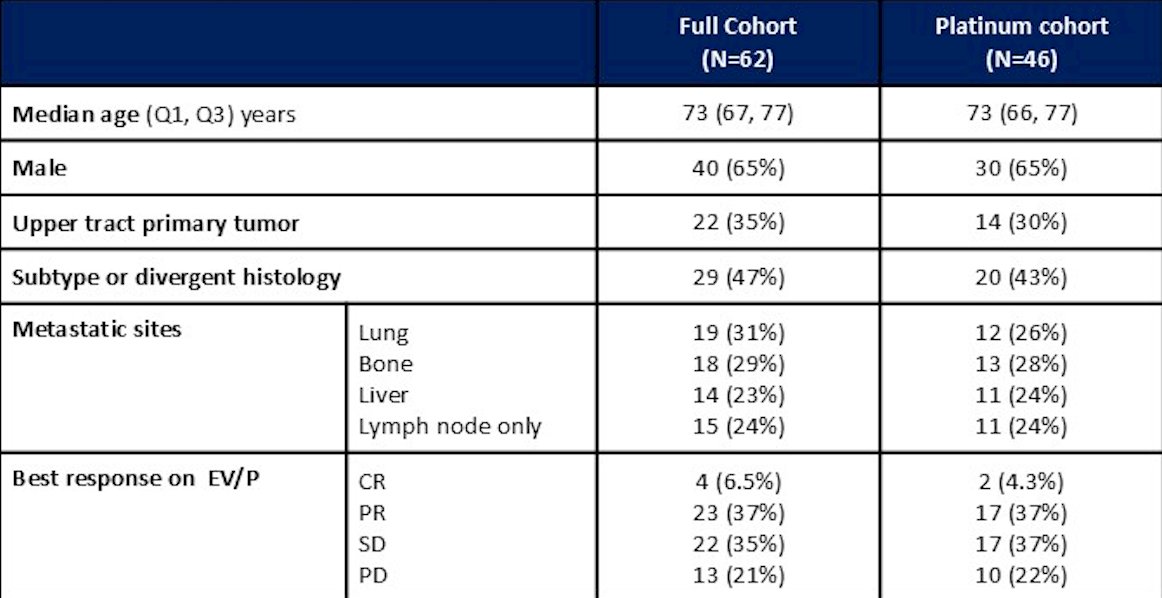
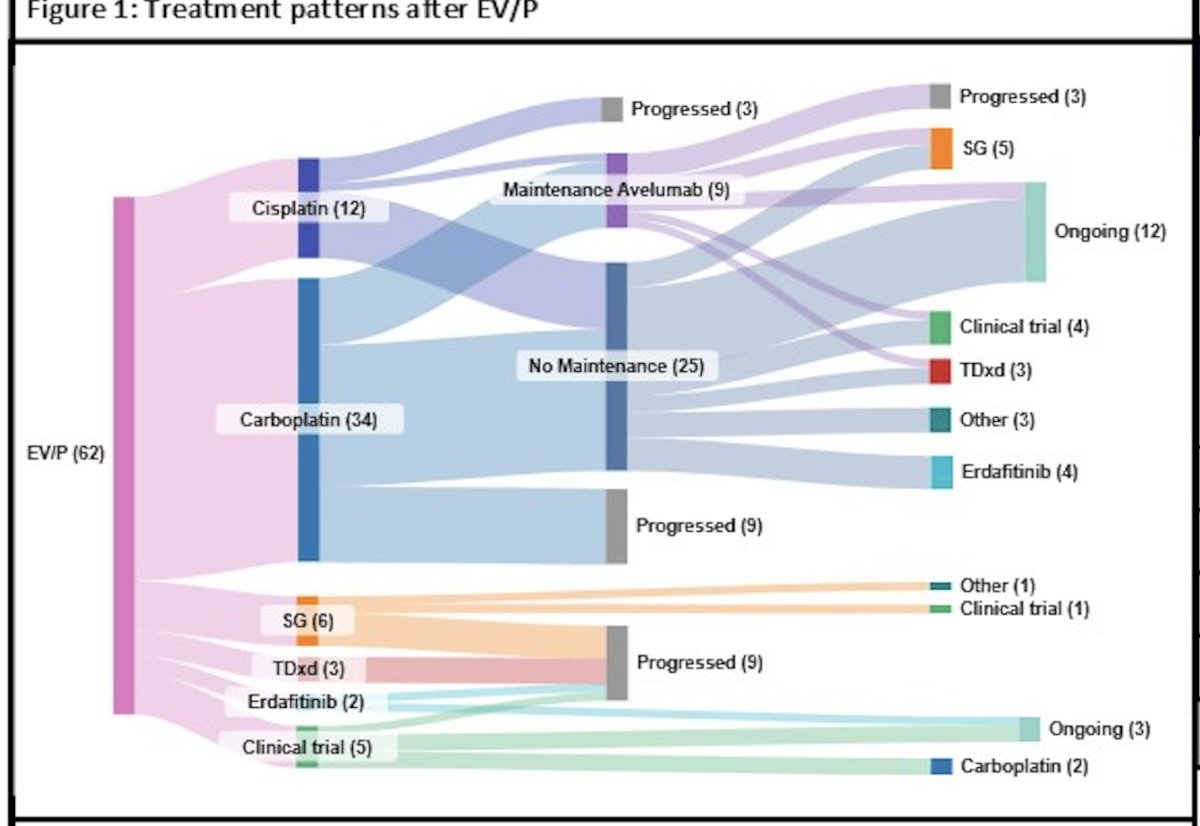
Median follow up was 9.5 months. At the time of the analysis, 15 patients did not progress on second line treatment. In 74% of these cases (n=46), the initial post-EV+P regimen was platinum-based chemotherapy. Other post-EV/P therapies included sacituzumab govitecan (n=6), enrollment in clinical trials (n=5), trastuzumab deruxtecan (n=3), erdafitinib (n=2). Post-EV+P treatment patterns are shown below.
Among the 46 patients who received platinum-based chemotherapy following progression on EV+P, the overall response rate (ORR) was 49%. Response rates were 47% in the carboplatin group and 55% in the cisplatin group. However, complete responses were infrequent 0% in the cisplatin group and 5.9% in the carboplatin group.
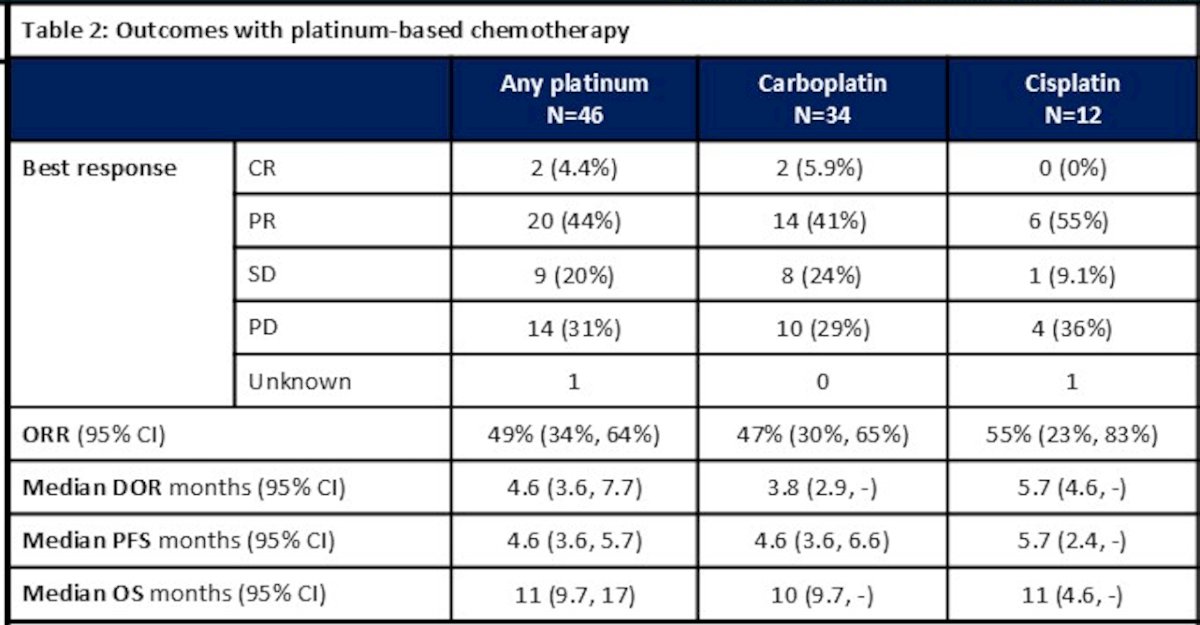
No significant differences between cisplatin and carboplatin-based regimens were detected for ORR (p=0.7), PFS (p=0.7) or OS (p=0.8). The median duration of response was 4.6 months (IQR: 3.6–7.7). Median progression-free survival (PFS) was 4.6 months (95% CI: 3.6–5.7), and median OS was 11 months (95% CI: 9.7–17.0). The Kaplan Meier graphics are shown below.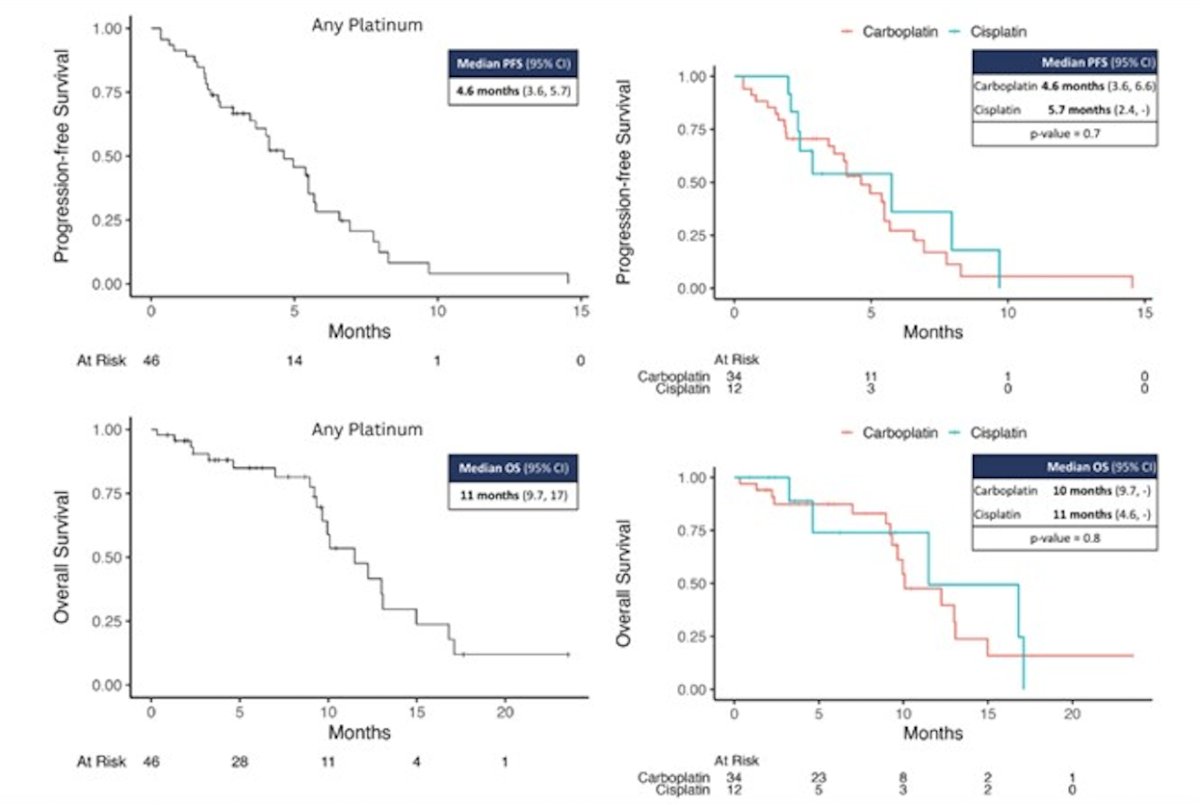
Dr. Sternschuss acknowledged several limitations of the analysis. Patients included in this cohort likely experienced earlier progression on EV+P, which may not reflect the broader first-line population. Notably, the observed complete and partial response rates were lower than those reported in the EV-302 trial, likely due to enrichment for patients who progressed to second-line therapy.
- Platinum-based chemotherapy demonstrated meaningful antitumor activity in a real-world cohort of patients with mUC following EV+P treatment
- Despite encouraging response rates, both progression-free survival (median 4.6 months) and duration of response (median 4.6 months) were modest.
- These real-world data provide valuable insights to guide the design of future clinical trials in the post–EV+P setting.
Presented by: Michal Sternschuss, MD, Division of Genitourinary Medical Oncology at Memorial Sloan Kettering Cancer Center, New York, NY.
Written by: Julian Chavarriaga, MD – Urologic Oncologist at Cancer Treatment and Research Center (CTIC) via Society of Urologic Oncology (SUO) Fellow at The University of Toronto. @chavarriagaj on Twitter during the American Society of Clinical Oncology (ASCO) 2025 Annual Meeting, Chicago, IL, Fri, May 30 – Tues, Jun 3, 2025.
Reference: