

(UroToday.com) The 2025 American Society of Clinical Oncology (ASCO) Annual Meeting held in Chicago, IL between May 30th and June 3rd, 2025, was host to a kidney and bladder cancers poster session. Dr. Lawrence Schwartz presented the results of a study of MRI radiomics to predict outcomes of neoadjuvant chemotherapy (NAC) in patients with muscle invasive bladder cancer (MIBC) undergoing radical cystectomy.
Cisplatin-based NAC prior to radical cystectomy remains a standard of care option for MIBC patients. Radiomics has emerged as a promising tool for the assessment/prediction of MIBC treatment outcomes. The objective of this study was to assess the utility of radiomic features extracted from a robust magnetic resonance imaging (MRI) processing pipeline for predicting the outcomes with NAC prior to radical cystectomy for MIBC patients.
All patients in this study underwent pre-NAC MRls using the standard acquisition protocol. Tumors were segmented on T2w, T1w, and post contrast-T1Cw phase imaging by experienced genitourinary (GU) radiologists. The MRI signal intensities were standardized using N4-bias field correction and robust z-scores. Radiomic features were extracted using the image biomarker standardization initiative (IBSI) compatible pyCERR software.
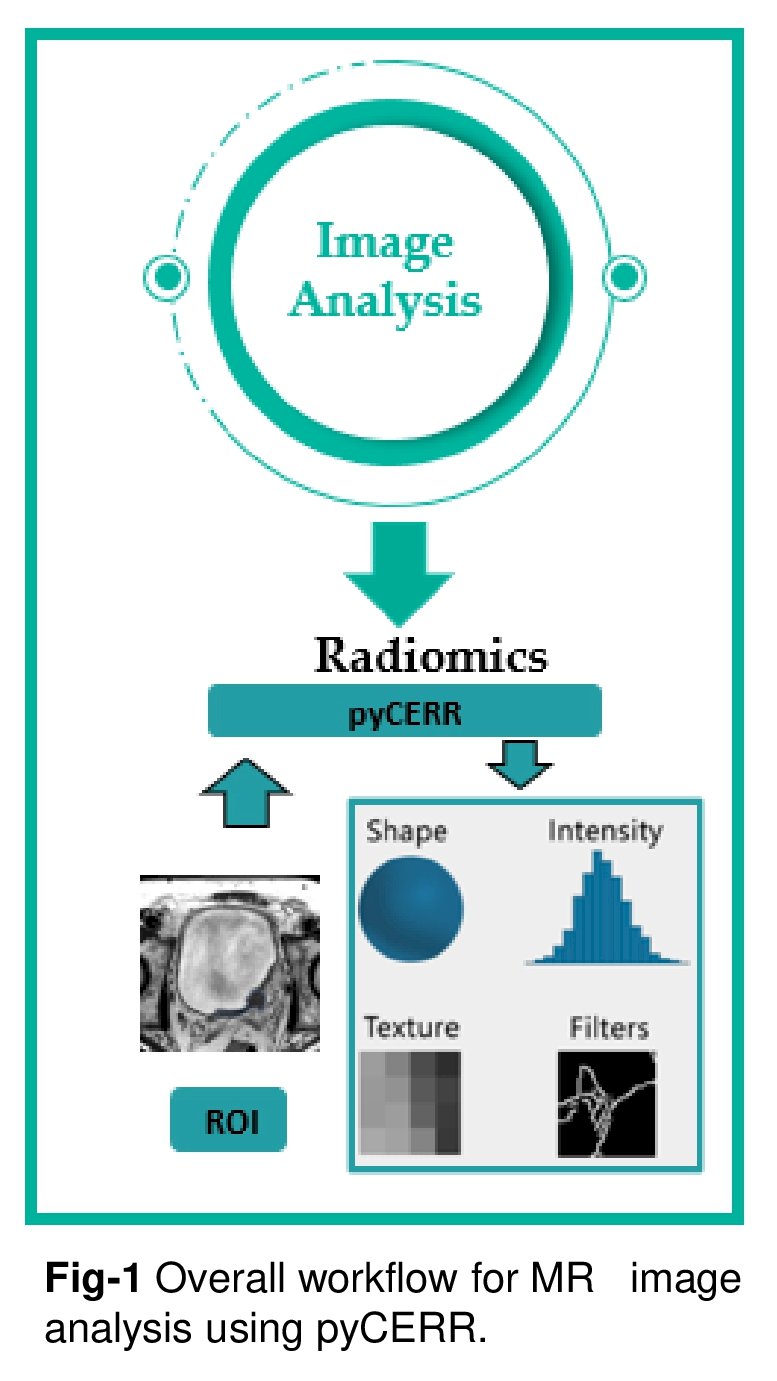
A total of 289 radiomic features, including shape, first-order statistics, and higher-order textures, were analyzed for their associations with event-free (EFS) and overall survivals (OS), defined from the time of radical cystectomy. To identify a robust set of prognostic MRI features associated with EFS and OS, 100 logistic regression models with elastic net regularization were trained using 5-fold cross-validation. The final model coefficients were calculated by refitting a model on the full training set using the most consistently selected feature set. The performance of the model was evaluated using the concordance index (c-index) on a 30% held-out test set. The Kaplan-Meier method was used to confirm the significance of shape-based features (p<0.05) for EFS and OS risk stratification, using the median feature value as the cutoff point.
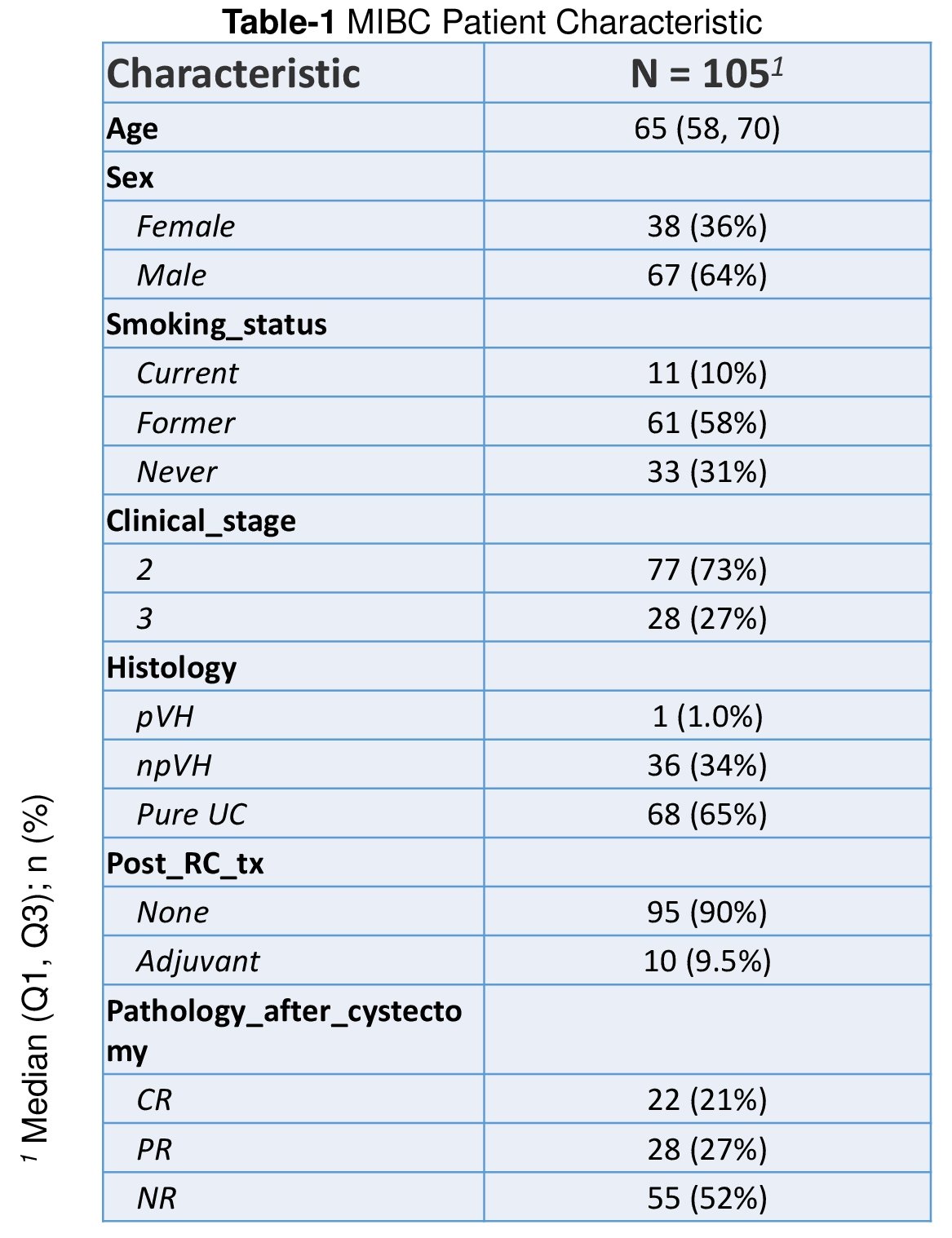
This study included a total of 105 MIBC patients. 64% of patients were male. The median age was 65 years. 73% had cT2 disease, and 27% had cT3 disease. There was evidence of a complete or partial response in 21% and 27% of patients, respectively.
For the outcomes of EFS and OS, the best performing models included shape features:
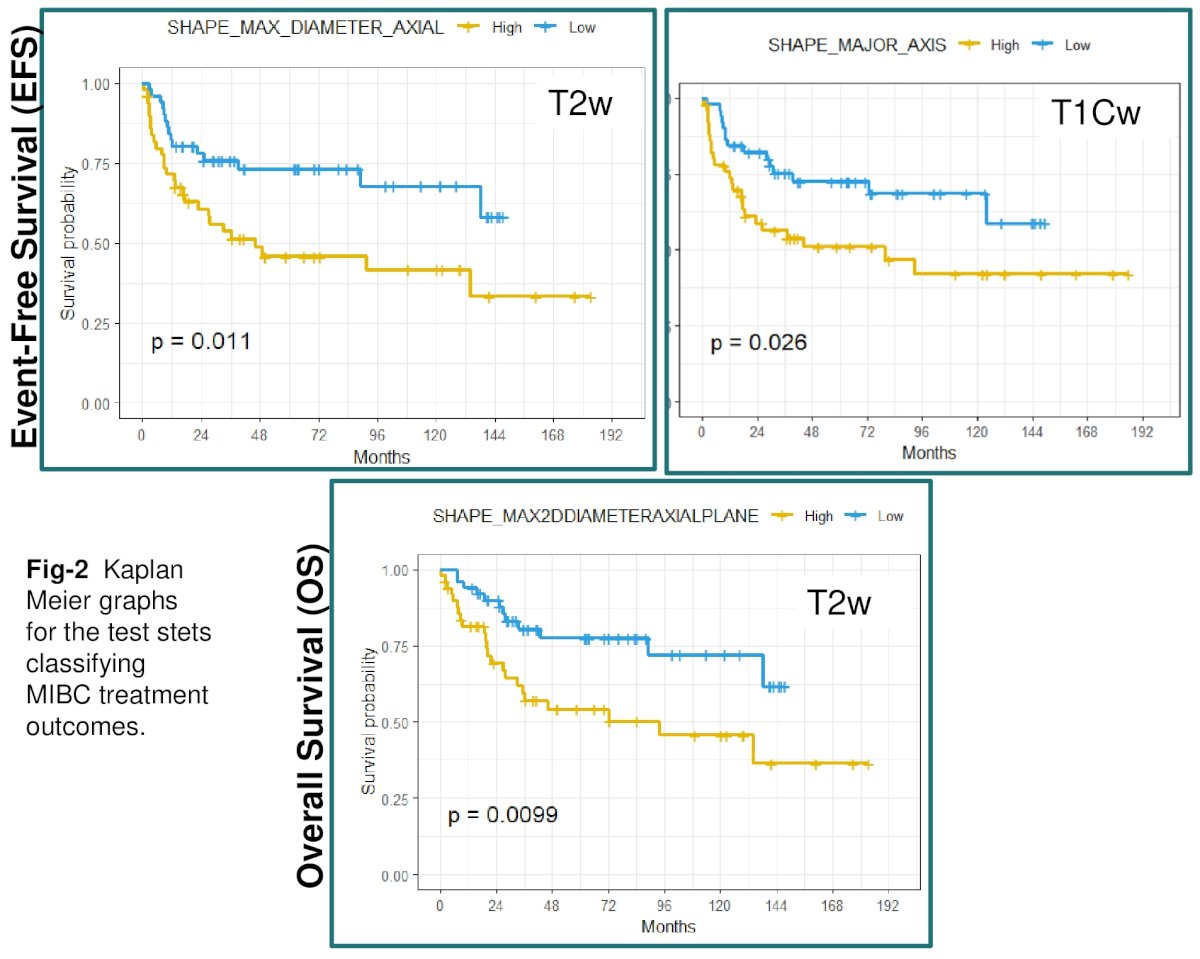
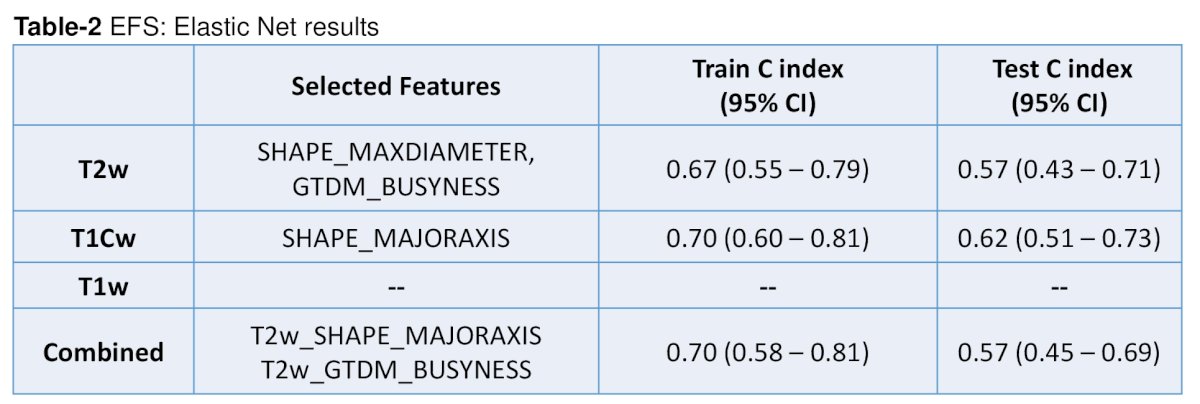
For EFS with features derived from T2w imaging, the final model fits selected shape maximum diameter and grey tone difference matrix (GTDM) busyness (measuring changes in the intensity between neighboring pixels), with resultant p-values <0.01. The C-indices were as follows:
- Training set: 0.67 (0.55–0.79)
- Test set: 0.57 (0.43–0.71)
For the shape feature derived from T1Cw images, the p-value was <0.02 ,and the C-indices were as follows:
- Training set: 0.70 (0.60–0.81)
- Test set: 0.62 (0.51–0.73)
None of the features derived from T1w showed significance for classifying EFS.
For OS with features derived from T2w, the final best model also selected the shape maximum diameter, with a p-value <0.009, and the C-indices were as follows:
- Training set: 0.69 (0.57–0.81)
- Test set: 0.52 (0.36–0.69)
Dr. Schwartz concluded as follow:
- This study demonstrated the potential value of radiomics for predicting survival outcomes with NAC in patients with MIBC undergoing a radical cystectomy. These results should be further validated with a larger independent patient cohort.
- MRI radiomics may be an additional tool for predicting survival outcomes in this patient cohort.
Presented by: Lawrence Howard Schwartz, MD, Chair, Department of Radiology, Memorial Sloan Kettering Cancer Center, New York, NY
Written by: Rashid K. Sayyid, MD, MSc – Robotic Urologic Oncology Fellow at The University of Southern California, @rksayyid on Twitter during the American Society of Clinical Oncology (ASCO) 2025 Annual Meeting, Chicago, IL, Fri, May 30 – Tues, Jun 3, 2025.