

(UroToday.com) The 2025 American Society of Clinical Oncology (ASCO) Annual Meeting held in Chicago, IL, was host to the Poster Session: Genitourinary Cancer - Kidney and Bladder. Dr. Patrizia Giannatempo presented Poster 4567: Phase 1/2 Duravelo-1 study: Preliminary results of nectin-4–targeting zelenectide pevedotin (BT8009) plus pembrolizumab in previously untreated, cisplatin-ineligible patients with locally advanced or metastatic urothelial cancer.
There remains a need for effective and tolerable first-line treatment options for patients with locally advanced or metastatic urothelial cancer (la/mUC), particularly those who are cisplatin-ineligible.
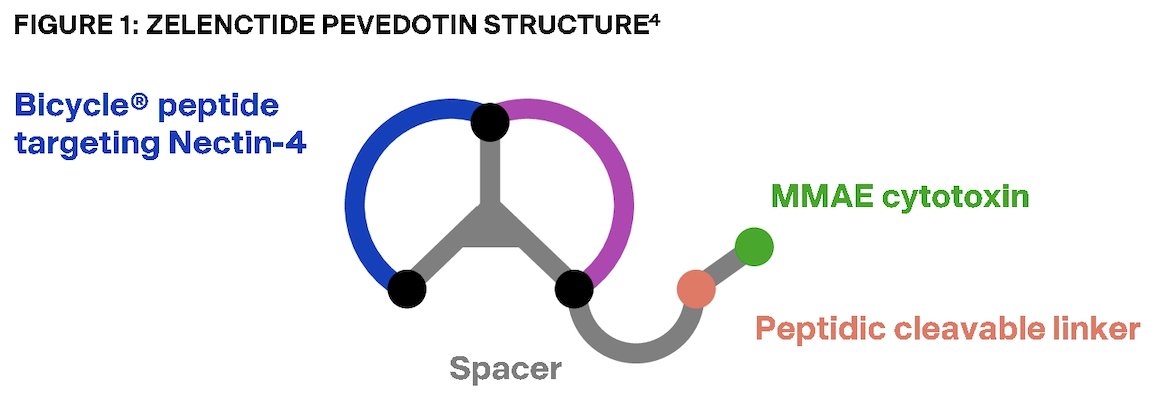
Bicycle® molecules represent an innovative therapeutic class that combines the favorable manufacturing and pharmacokinetic characteristics of small molecules with the high binding specificity typically associated with biologics. This unique profile makes them well-suited for the targeted delivery of payloads, including cytotoxins to solid tumors. Zelenectide pevedotin (formerly BT8009) is a highly selective Bicycle Toxin Conjugate (BTC) that targets Nectin-4, a surface protein commonly overexpressed in urothelial carcinoma. It is conjugated to the cytotoxic agent monomethyl auristatin E (MMAE), enabling precise delivery of the payload to tumor cells, as illustrated below.
In the ongoing phase 1/2 DURAVELO-1 trial (NCT04561362), zelenectide monotherapy has demonstrated an objective response rate (ORR) of 45% and a generally manageable safety profile in previously treated metastatic UC patients who were enfortumab vedotin–naïve.1,2 Dr. Giannatempo presented preliminary results from expansion Cohort B7 of the DURAVELO-1 study, evaluating the combination of zelenectide pevedotin and pembrolizumab in previously untreated, cisplatin-ineligible patients with la/mUC.
The DURAVELO-1 trial enrolled adults with locally advanced or metastatic urothelial carcinoma (la/mUC) who were cisplatin-ineligible based on the Galsky criteria3 and had not received prior systemic therapy for la/mUC. Patients were considered cisplatin-ineligible if they met at least one of the following criteria: creatinine clearance (CrCl) of 30–59 mL/min, grade ≥2 hearing loss or peripheral neuropathy, or New York Heart Association (NYHA) Class III or higher heart failure. Patients with an Eastern Cooperative Oncology Group (ECOG) performance status (PS) of 2 were also eligible, provided they had a CrCl ≥30 mL/min and no NYHA Class III heart failure.
Eligible patients received intravenous zelenectide pevedotin 5 mg/m² on Days 1, 8, and 15, in combination with pembrolizumab 200 mg on Day 1 of each 21-day treatment cycle.
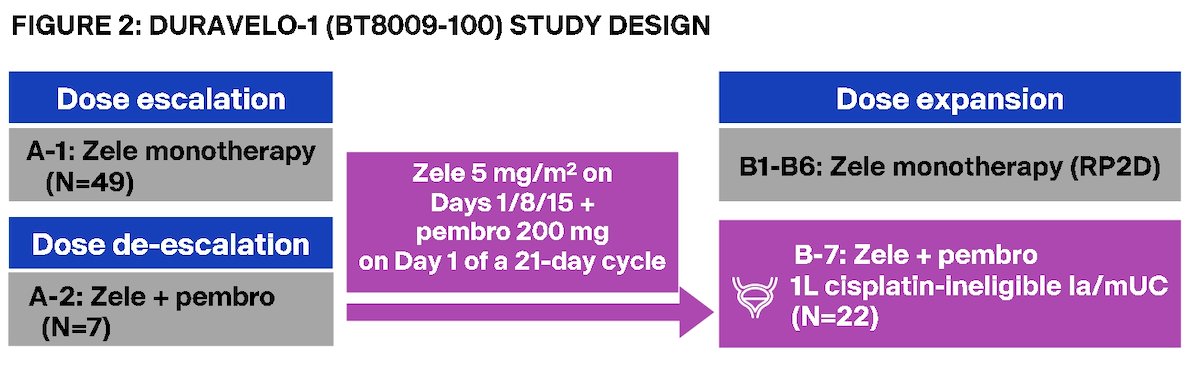
The primary endpoint was investigator-assessed ORR per RECIST v1.1. The efficacy-evaluable population included patients who received at least one dose of study treatment and had at least one adequate post-baseline response assessment. Secondary endpoints included safety, assessed by treatment-related adverse events (TRAEs) per CTCAE v5.0, as well as duration of response (DoR) and disease control rate (DCR).
As of January 3, 2025, a total of 22 patients were enrolled in Cohort B7 of the DURAVELO-1 study between November 2023 and July 2024. The median time on treatment was 22.9 weeks, with 12 patients remaining on study therapy at the time of data cutoff. The median age was 77 years; 45.5% of patients had an ECOG performance status (PS) of 2, and 54.5% had a creatinine clearance (CrCl) <60 mL/min. Patient characteristics are shown below.

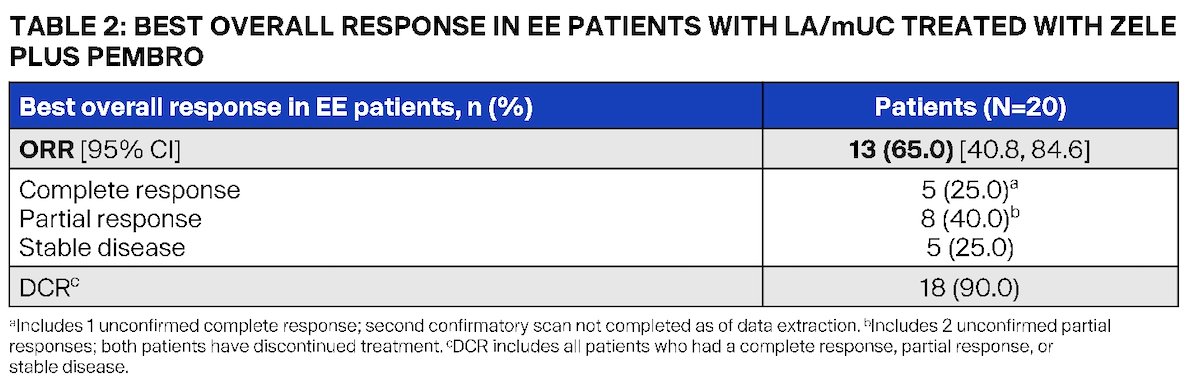
Dr Giannatempo highlighted that among 20 efficacy-evaluable patients, the ORR was 65% (95% CI: 40.8–84.6), including five complete responses (25%) and eight partial responses (40%). Stable disease (SD) was observed in five patients (25%), resulting in a disease control rate of 90%. Median follow-up was 7.1 months (range: 1.0–13.2).
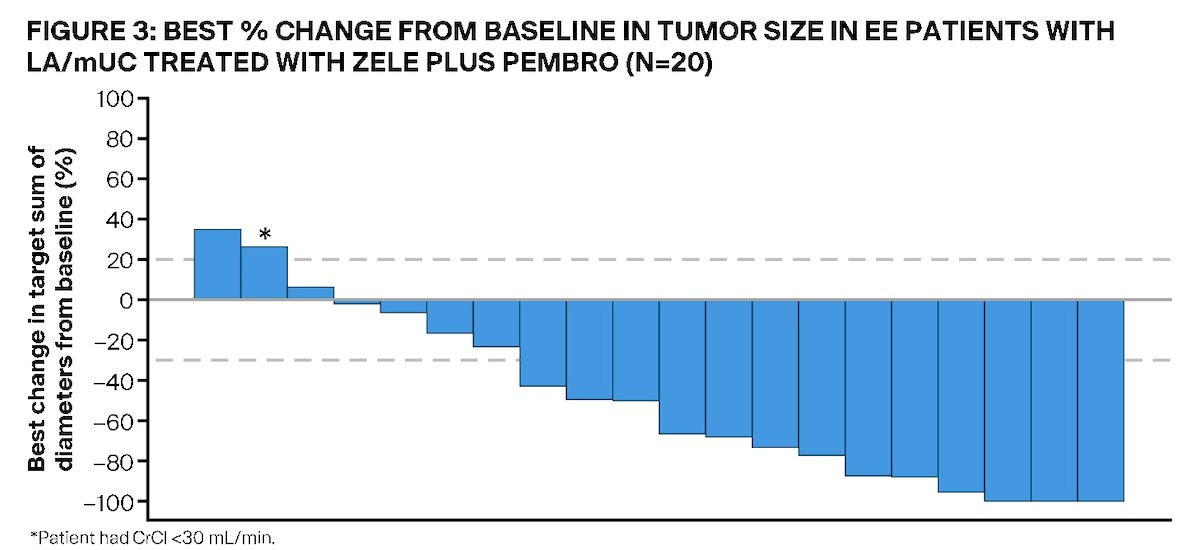
The figure below illustrates the best percentage change from baseline in tumor size among efficacy-evaluable patients with la/mUC treated with zelenectide pevedotin plus pembrolizumab.
Moreover, the median duration of response had not yet been reached at the time of analysis, indicating the potential durability of benefit. As shown in the figure below, changes from baseline in tumor size among efficacy-evaluable patients with la/mUC treated with zelenectide pevedotin plus pembrolizumab varied by response category. Notably, patients who achieved a complete response demonstrated the most pronounced reductions in the sum of diameters of target lesions.

TRAEs occurred in all patients. However, serious TRAEs related to zelenectide pevedotin alone or in combination with pembrolizumab occurred in 9.1% of patients.
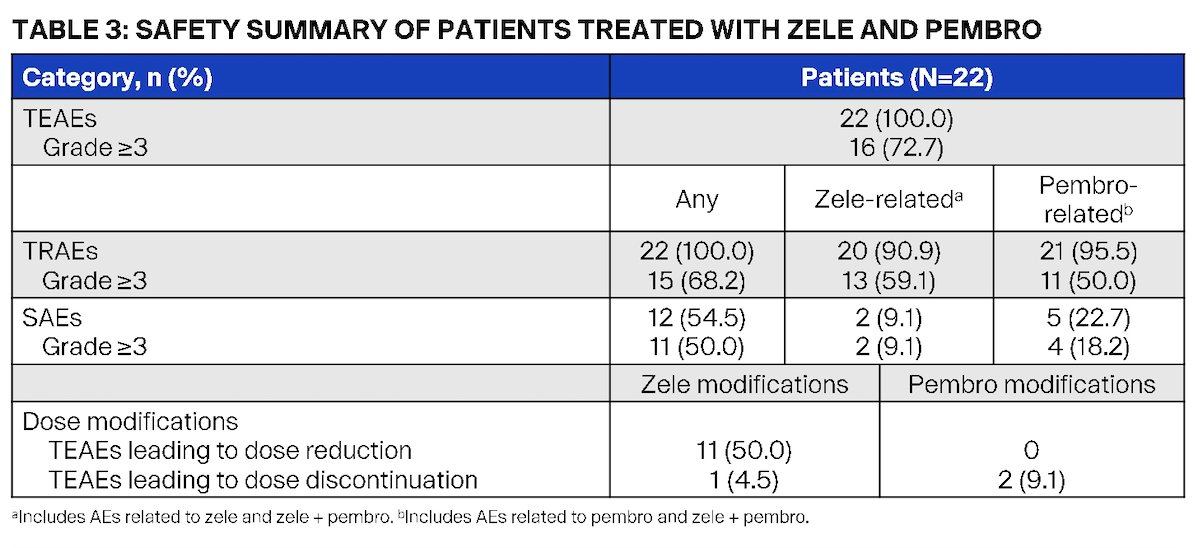
The most common grade ≥3 TRAEs were elevated ALT and neutropenia (13.6% each), followed by diarrhea, asthenia, hypomagnesemia, and pneumonia (9.1% each).

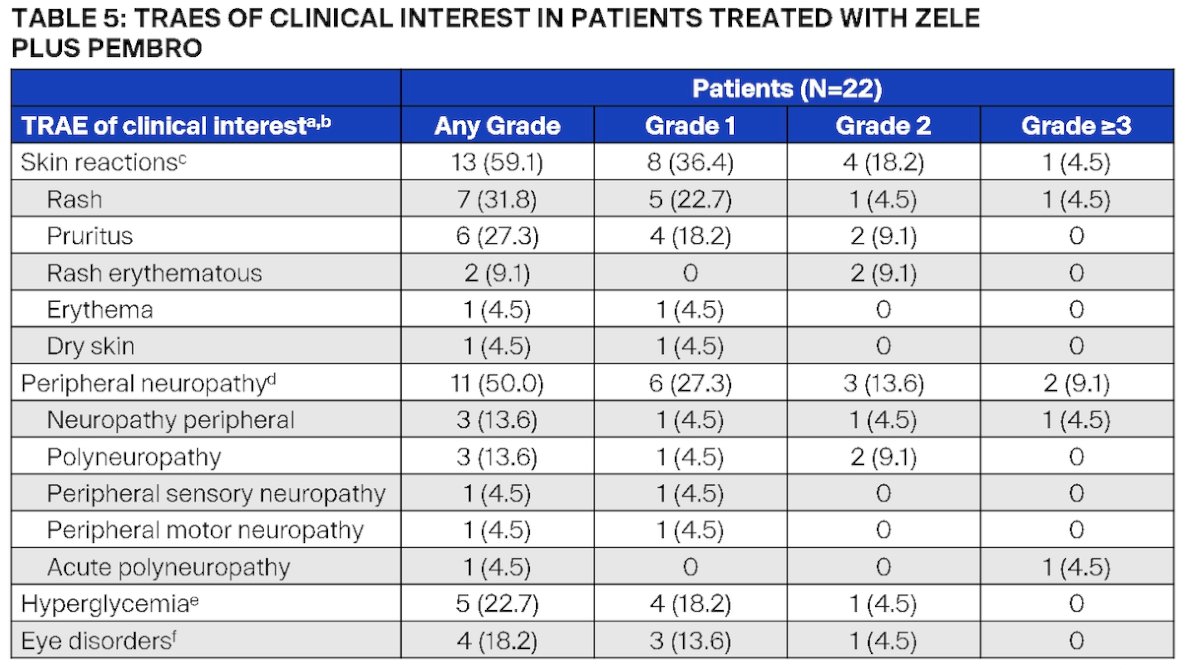
Treatment-related peripheral neuropathy was reported in 50% of patients (27.3% grade 1, 13.6% grade 2, and 9.1% grade 3). Other TRAEs of clinical interest included skin reactions (4.5% grade ≥3), with no grade ≥3 events reported for hyperglycemia or eye disorders. Notably, TRAES of Grade 4 hypomagnesemia and neutropenia were reported in one patient each, and there were no grade 5 TRAEs.
Dr. Giannatempo concluded the presentation with the following key messages:
- The combination of zelenectide pevedotin and pembrolizumab demonstrated promising preliminary anti-tumor activity in a challenging patient population, with nearly 50% of enrolled patients having an ECOG performance status of 2, historically associated with poor outcomes in the first-line setting.
- The safety profile was generally manageable and consistent with the known profiles of each individual agent. No new safety signals were observed with the combination.
- These findings support the rationale for a randomized, multicenter, open-label Phase 2/3 trial (Duravelo-2; NCT06225596), which is currently enrolling. This study will evaluate zelenectide pevedotin as monotherapy and in combination with pembrolizumab versus chemotherapy in patients with locally advanced or metastatic urothelial carcinoma (la/mUC).
Presented by: Patrizia Giannatempo, MD, Genitourinary Medical Oncology, Fondazione IRCCS - Istituto Nazionale dei Tumori. Milan, Italy.
Written by: Julian Chavarriaga, MD – Urologic Oncologist at Cancer Treatment and Research Center (CTIC) via Society of Urologic Oncology (SUO) Fellow at The University of Toronto. @chavarriagaj on Twitter during the American Society of Clinical Oncology (ASCO) 2025 Annual Meeting, Chicago, IL, Fri, May 30 – Tues, Jun 3, 2025.
Reference:
- Cigliola A, Tateo V, Michela R, Di Maria G, Manzo S, Mercinelli BA, Maiorano C, Necchi A. Zelenectide pevedotin (BT-8009): a bicyclic peptide toxin conjugate targeting nectin-4 for the treatment of bladder cancer. Expert Opin Investig Drugs. 2025 May 22. doi: 10.1080/13543784.2025.2510669. Epub ahead of print. PMID: 40401457.
- Reig O, et al,. Zelenectide pevedotin (BT8009) monotherapy in enfortumab vedotin–naïve patients with metastatic urothelial carcinoma: Updated results of Duravelo-1. 652-P. Presented at the European Society for Medical Oncology (ESMO) Annual Meeting, Barcelona, Spain, 13–17 September 2024
- Galsky MD, Hahn NM, Rosenberg J, Sonpavde G, Hutson T, Oh WK, Dreicer R, Vogelzang N, Sternberg C, Bajorin DF, Bellmunt J. A consensus definition of patients with metastatic urothelial carcinoma who are unfit for cisplatin-based chemotherapy. Lancet Oncol. 2011 Mar;12(3):211-4. doi: 10.1016/S1470-2045(10)70275-8. PMID: 21376284.