

(UroToday.com) The 2025 American Society of Clinical Oncology (ASCO) Annual Meeting held in Chicago, IL, was host to the Poster Session: Genitourinary Cancer - Kidney and Bladder. Dr. Aya Abdelnaser presented Poster 4575: Impact of histological subtypes in patients receiving first-line treatment with enfortumab vedotin/pembrolizumab in advanced metastatic urothelial cancer.
Metastatic urothelial carcinoma (mUC) is a clinically aggressive disease associated with significant morbidity and mortality. Enfortumab vedotin combined with pembrolizumab (EV+P) has become an established first line treatment option for patients with mUC.1 However, the impact of variant histologic subtypes on treatment outcomes with EV+P remains poorly characterized and understood. Dr Abdelnaser and colleagues evaluated the influence of histologic variants on clinical outcomes in patients with mUC treated with first-line EV+P.
This was a single-center retrospective cohort study of patients with mUC who received first-line treatment with EV+P between June 1, 2023, and August 8, 2024. Clinical and pathological data were collected via chart review, with a particular focus on histologic subtype and its association with key clinical outcomes, including objective response rate, progression-free survival, and overall survival.
Patients were categorized into four histologic groups based on pathology reports:
- Transitional UC Predominant: Tumors with predominantly transitional urothelial carcinoma.
- Transitional UC with <50% Variant Histology: Tumors with <50% squamous or glandular differentiation.
- Transitional UC with ≥50% Variant Histology: Tumors with ≥50% squamous or glandular features, including pure squamous or adenocarcinoma.
- Other Variant Histologies: Tumors with non-squamous/glandular variants, including micropapillary, plasmacytoid, sarcomatoid, nested, or lipid-rich subtypes.
A total of 71 patients with metastatic urothelial carcinoma treated with first-line EV+P were included in this analysis. The median age was 73 years, most patients were white (86%) the majority of tumors were located in the lower tract (83%), and the median follow-up duration was 8 months.
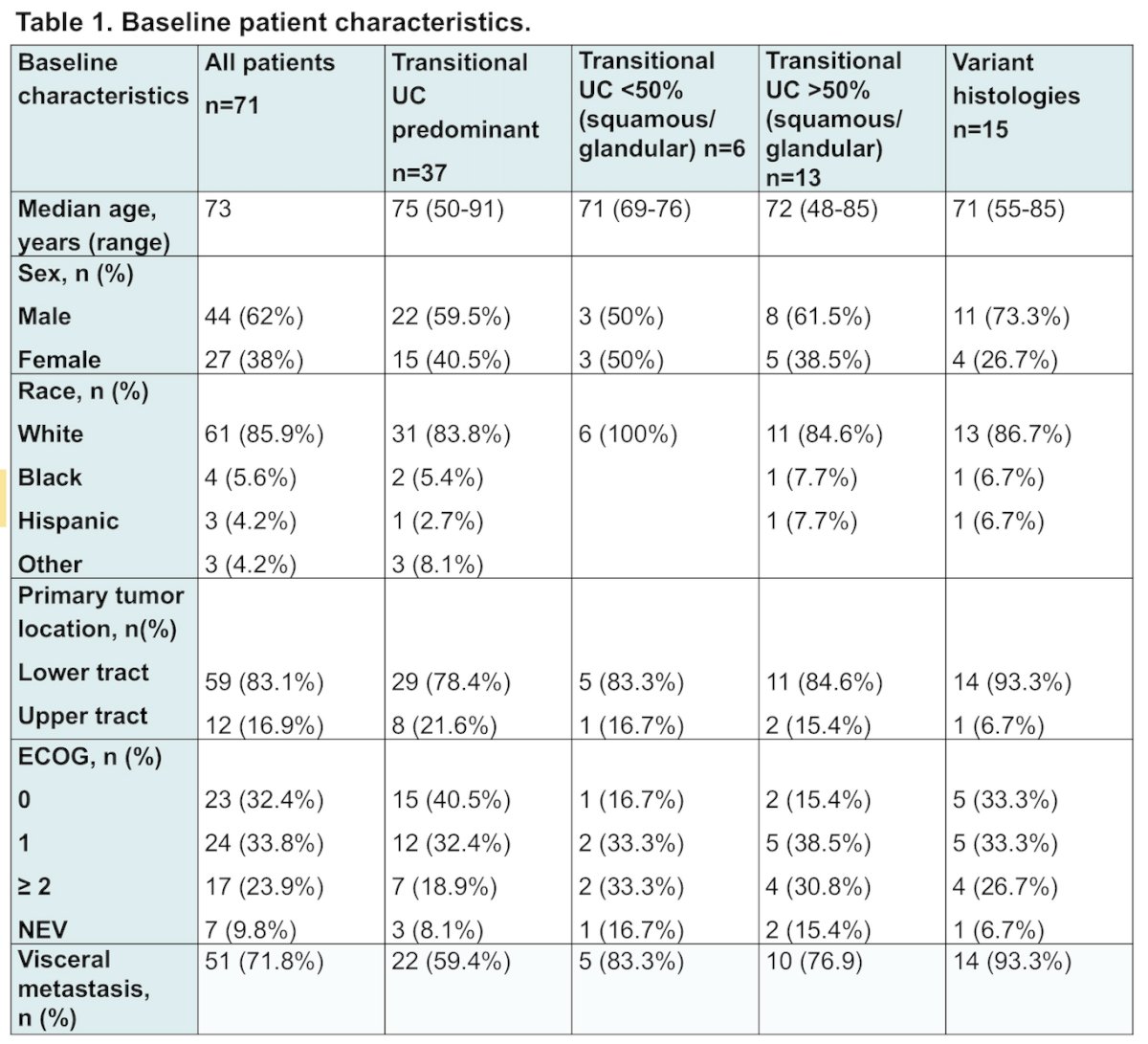
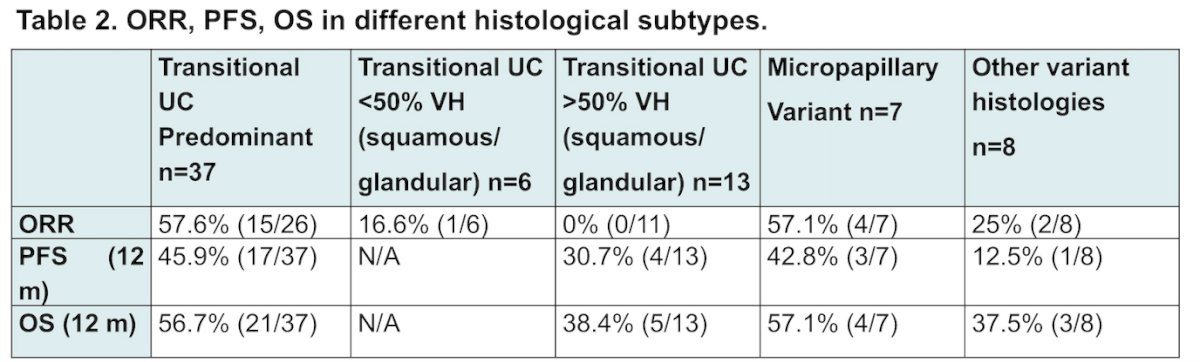
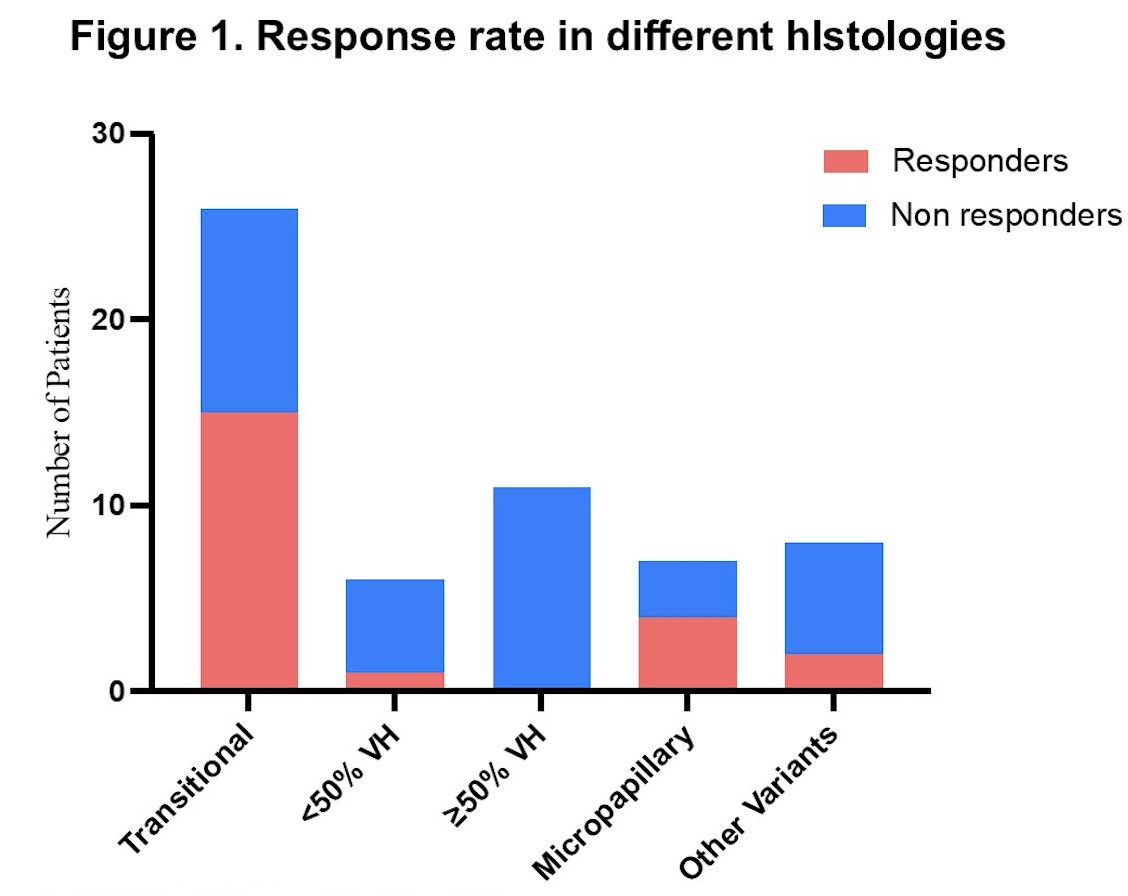
At 12 months, the progression-free survival (PFS) rate was 43.3%, and overall survival (OS) was 70%. Patients with predominant transitional urothelial carcinoma (n=37) experienced the most favorable outcomes, with an objective response rate (ORR) of 57.6%. In contrast, outcomes were significantly poorer among patients with histologic variants. Those with <50% squamous or glandular differentiation (n=6) had an ORR of 16.6% (1/6), while No objective responses were observed in patients with tumors containing ≥50% squamous or glandular differentiation, highlighting the urgent need for alternative strategies in this subgroup.
Notably, patients with micropapillary variant histology (n=7) had a promising ORR of 57%, whereas those with other variant subtypes demonstrated a modest ORR of 25%.
Patients with transitional urothelial carcinoma or other non-squamous/glandular histologies were significantly more likely to respond to treatment compared to those with any degree of squamous or glandular differentiation (p = 0.001).
Dr. Abdelnaser concluded with the following key takeaways:
- Histological subtypes significantly influence treatment outcomes with enfortumab vedotin plus pembrolizumab.
- Favorable responses were observed in patients with predominant transitional urothelial histology.
- Poor responses were seen in patients with mixed squamous or glandular differentiation, regardless of whether the variant component was above or below the 50% cutoff raising questions about the validity of this threshold.
- Among variant histologies, only the micropapillary subtype demonstrated a meaningful response to EV+P.
- These findings highlight the need for prospective validation and histology-based patient stratification in future EV+P trials.
- Alternative treatment strategies should be considered for patients with squamous or glandular histologic subtypes.
Presented by: Aya Abdelnaser, MD, MSc, Dana-Farber Cancer Institute, Harvard Medical School, Boston, MA.
Written by: Julian Chavarriaga, MD – Urologic Oncologist at Cancer Treatment and Research Center (CTIC) via Society of Urologic Oncology (SUO) Fellow at The University of Toronto. @chavarriagaj on Twitter during the American Society of Clinical Oncology (ASCO) 2025 Annual Meeting, Chicago, IL, Fri, May 30 – Tues, Jun 3, 2025.
Reference: