

(UroToday.com) The 2025 American Society of Clinical Oncology (ASCO) Annual Meeting, held in Chicago, IL, was host to the Poster Session: Genitourinary Cancer - Kidney and Bladder. Jens Bedke, MD, presented Poster 4571: EV-302: Long-term subgroup analysis from the phase 3 global study of enfortumab vedotin in combination with pembrolizumab (EV+P) vs chemotherapy (chemo) in previously untreated locally advanced or metastatic urothelial carcinoma (la/mUC).
Enfortumab vedotin, a Nectin-4–directed antibody-drug conjugate, and pembrolizumab, a PD-1 inhibitor, have each demonstrated survival benefits in patients with previously treated locally advanced or metastatic urothelial carcinoma (la/mUC). Based on early evidence of synergistic activity, the combination received accelerated approval from the U.S. FDA for cisplatin-ineligible patients with la/mUC.1
The phase 3 EV-302/KEYNOTE-A39 trial (NCT04223856) compared enfortumab vedotin plus pembrolizumab (EV+P) versus platinum-based chemotherapy in previously untreated patients with la/mUC, regardless of cisplatin eligibility or PD-L1 expression status. Patients were randomized 1:1 and stratified by cisplatin eligibility, PD-L1 status, and the presence or absence of liver metastases. In the EV+P arm, treatment continued until radiographic progression per blinded independent central review (BICR), clinical progression, unacceptable toxicity, or completion of maximum protocol-defined cycles (35 for pembrolizumab). The control arm received gemcitabine plus either cisplatin or carboplatin for up to six cycles.1

The results of EV-302/KEYNOTE-A39 demonstrated superior overall survival (OS) and progression-free survival (PFS) with EV+P. With a median follow-up of approximately 2.5 years, the survival benefit of EV+P has been sustained, with median OS exceeding 34 months. Establishing the combination as the new standard of care for first-line treatment of patients with la/mUC. These findings have been incorporated into global treatment guidelines.
Dr. Bedke presented updated long-term efficacy and safety results in prespecified subgroups, including primary tumor site (upper vs. lower urinary tract), patients with lymph node–only disease, and those with or without liver metastases.
A total of 886 patients were randomized to receive enfortumab vedotin plus pembrolizumab (EV+P; n=442) or platinum-based chemotherapy (n=444) and were analyzed across prespecified subgroups. As of the data cutoff on August 8, 2024, the median follow-up was 29.1 months (95% CI, 28.5–29.9). At that time, 54 patients (12%) remained on EV+P treatment, while no patients remained on chemotherapy. Additionally, 218 patients (49%) in the EV+P arm and 131 patients (30%) in the chemotherapy arm continued on study follow-up.
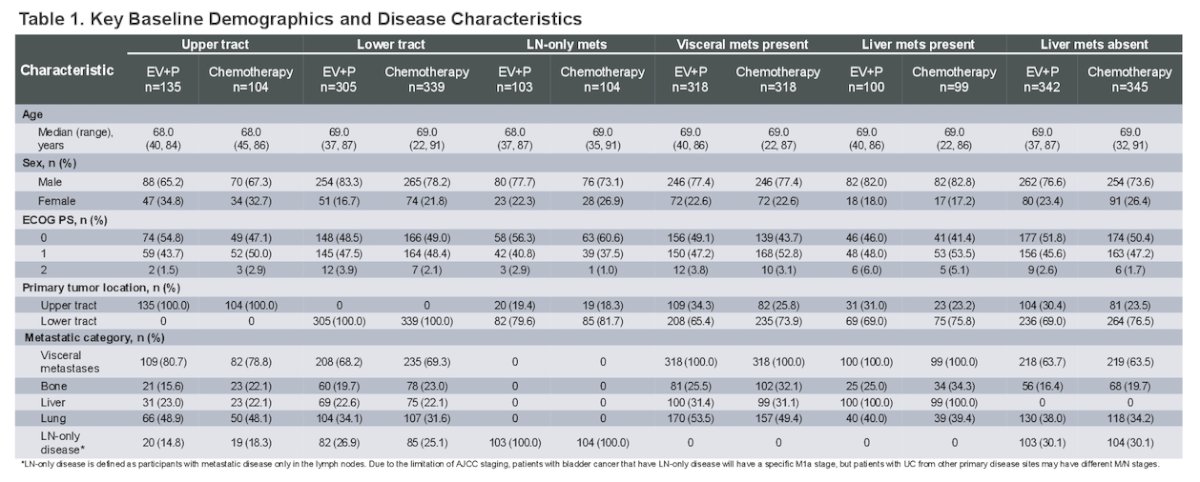
Baseline characteristics are summarized in the table below. Demographics and clinical features are reported across prespecified subgroups, including tumor location (upper vs. lower tract urothelial carcinoma), lymph node involvement, presence of visceral metastases, and liver metastasis status.
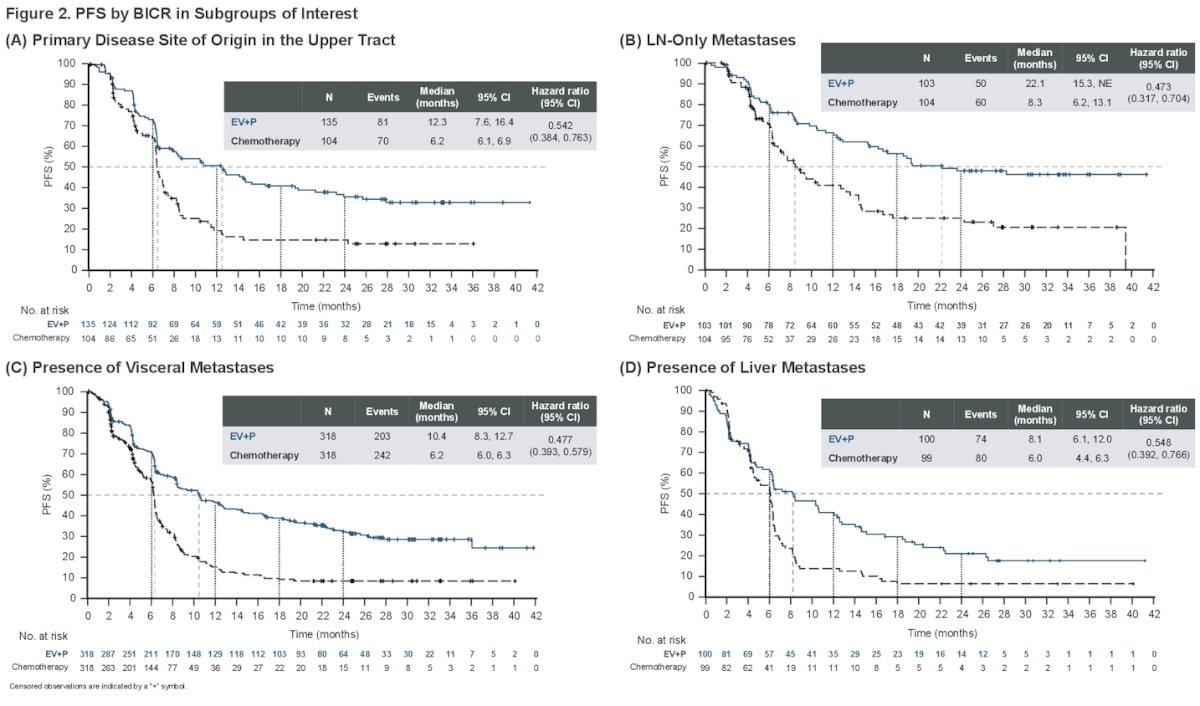
Long-term follow-up continued to demonstrate sustained clinical benefit with EV+P compared to chemotherapy across subgroups. This included improvements in progression-free survival (PFS) by blinded independent central review (BICR) as illustrated below.
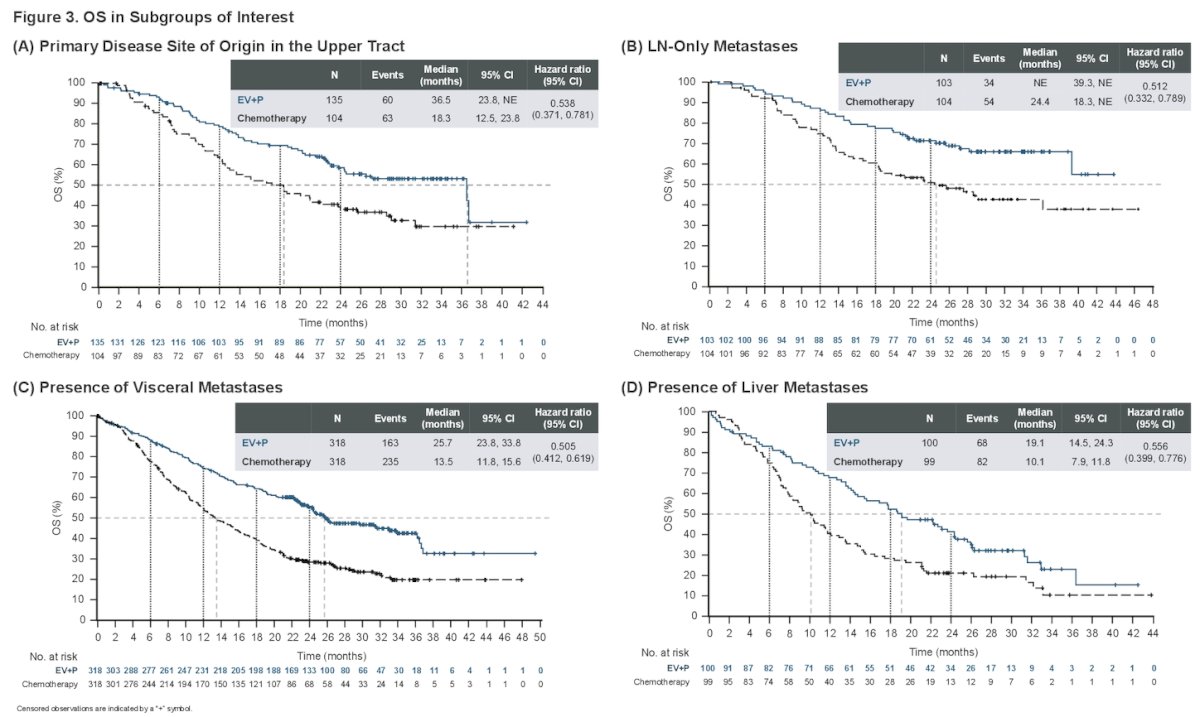
Moreover, the sustained clinical benefit in OS with EV+P was also observed across all clinical subgroups, including upper tract, lymph node metastasis, and presence of visceral or liver metastasis, as shown below.
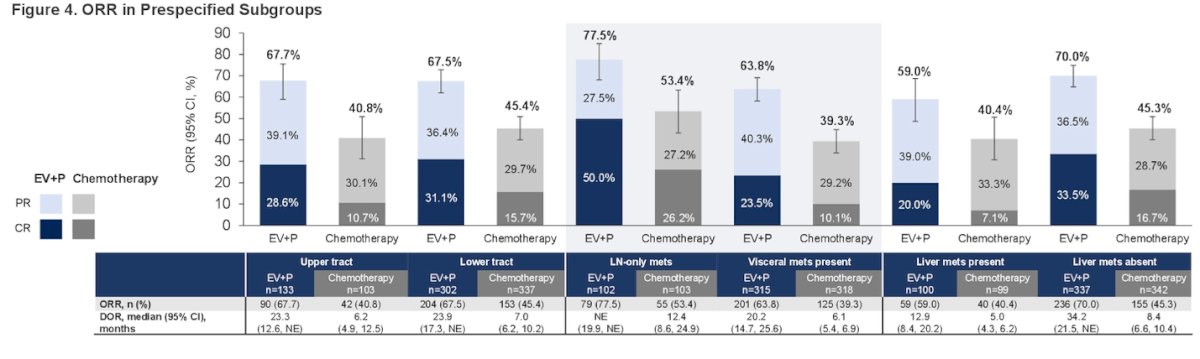
Notably, complete responses were achieved in 28.6% of patients with upper tract urothelial carcinoma and 31.0% with lower tract disease. Among those with lymph node–only metastases, the complete response rate was 50%, while it was 23.5% in patients with visceral metastases. A more modest, though still clinically meaningful, benefit was observed in patients with liver metastases, with a complete response rate of 20%.
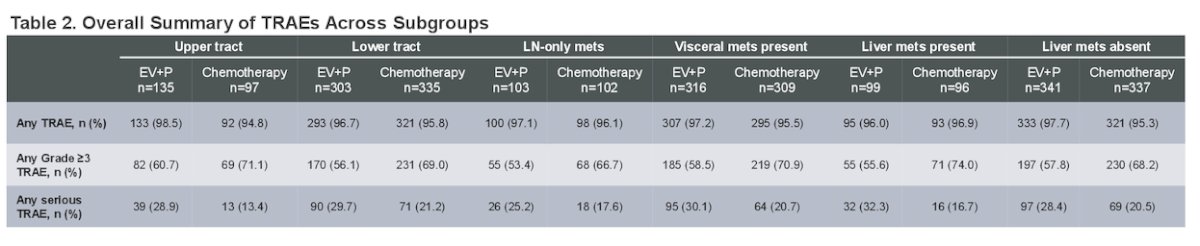
The safety profile of EV+P remained consistent with earlier reports. Treatment-related adverse events (TRAEs) occurred in 96–98.5% of patients across subgroups, with grade ≥3 TRAEs reported in 53.4–60.7% of patients.
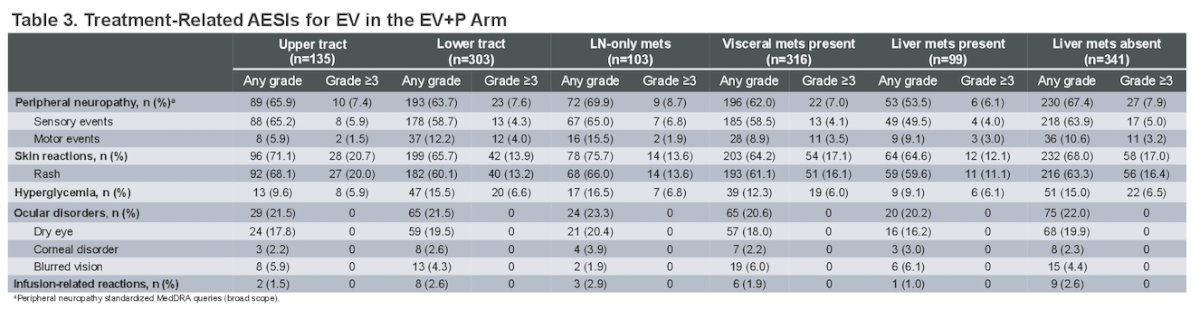
Regarding adverse events of special interest (AESIs) for EV, including peripheral neuropathy, skin reactions, and hyperglycemia, treatment-related events associated with enfortumab vedotin (EV) in the EV+P arm were primarily low grade and consistent with findings from the intent-to-treat (ITT) population analysis.
Dr. Bedke concluded the presentation with the following key takeaways:
- Enfortumab vedotin plus pembrolizumab continues to demonstrate superior long-term efficacy after a median of 2.5 years of follow-up compared to chemotherapy across key subgroups, including those with both favorable and poor prognostic features.
- No new safety signals emerged, and the rate of adverse events in prespecified subgroups remained consistent with the overall study population, even after an additional year of follow-up.
- These findings further reinforce EV+P as the standard of care for first-line treatment of patients with locally advanced or metastatic urothelial carcinoma.
Presented by: Jens Bedke, MD, Senior Consultant at the Department of Urology & Transplantation Surgery and Eva Mayr-Stihl Cancer Center Stuttgart at the Klinikum Stuttgart, Germany
Written by: Julian Chavarriaga, MD – Urologic Oncologist at Cancer Treatment and Research Center (CTIC) via Society of Urologic Oncology (SUO) Fellow at The University of Toronto. @chavarriagaj on Twitter during the American Society of Clinical Oncology (ASCO) 2025 Annual Meeting, Chicago, IL, Fri, May 30 – Tues, Jun 3, 2025.
Reference:
- Rosenberg JE, Powles T, Sonpavde GP, Loriot Y, Duran I, Lee JL, Matsubara N, Vulsteke C, Castellano D, Mamtani R, Wu C, Matsangou M, Campbell M, Petrylak DP. EV-301 long-term outcomes: 24-month findings from the phase III trial of enfortumab vedotin versus chemotherapy in patients with previously treated advanced urothelial carcinoma. Ann Oncol. 2023 Nov;34(11):1047-1054. doi: 10.1016/j.annonc.2023.08.016. Epub 2023 Sep 9. PMID: 37678672.
- Powles T, Valderrama BP, Gupta S, Bedke J, Kikuchi E, Hoffman-Censits J, Iyer G, Vulsteke C, Park SH, Shin SJ, Castellano D, Fornarini G, Li JR, Gümüş M, Mar N, Loriot Y, Fléchon A, Duran I, Drakaki A, Narayanan S, Yu X, Gorla S, Homet Moreno B, van der Heijden MS; EV-302 Trial Investigators. Enfortumab Vedotin and Pembrolizumab in Untreated Advanced Urothelial Cancer. N Engl J Med. 2024 Mar 7;390(10):875-888. doi: 10.1056/NEJMoa2312117. PMID: 38446675.