

(UroToday.com) The 2026 Advanced Prostate Cancer Consensus Conference (APCCC) meeting featured a poster session and a presentation by Dr. Pablo Alvarez-Ballesteros discussing Spanish real world radium-223 outcomes in metastatic castration resistant prostate cancer (mCRPC) from a tertiary center cohort. Radium-223 is recommended as a life-prolonging option for symptomatic, bone-predominant mCRPC based on data from the ALSYMPCA trial.1 Dr. Alvarez-Ballesteros and colleagues previously reported real world outcomes of radium-223 in routine practice, and at the 2026 APCCC meeting, they presented an updated analysis of this cohort, incorporating additional patients who initiated radium-223 up to January 1, 2024. This presentation had a specific focus on survival analyses, treatment completion, and subsequent systemic therapies.
The investigators conducted a retrospective single center cohort study including all patients with mCRPC treated with radium-223 at one institution, provided treatment started before January 1, 2024. Patients treated within a clinical trial or for a different malignancy were excluded. Baseline clinical characteristics, extent of bone disease, prior systemic therapies, number of radium-223 injections, biochemical response, treatment discontinuation, and subsequent systemic therapies were collected. Overall survival and progression-based outcomes from radium-223 initiation were estimated using Kaplan–Meier methods with Brookmeyer–Crowley confidence intervals. To reduce immortal-time bias, they prespecified a 12-week landmark including patients alive and in follow-up at day 84. Univariable Cox models for the main baseline covariates were summarized in a forest plot, and additional bar charts described subsequent systemic therapies and biochemical response.
Among 107 patients in the database, 82 met inclusion criteria and were included in the updated analysis, as shown in the cohort flow diagram:
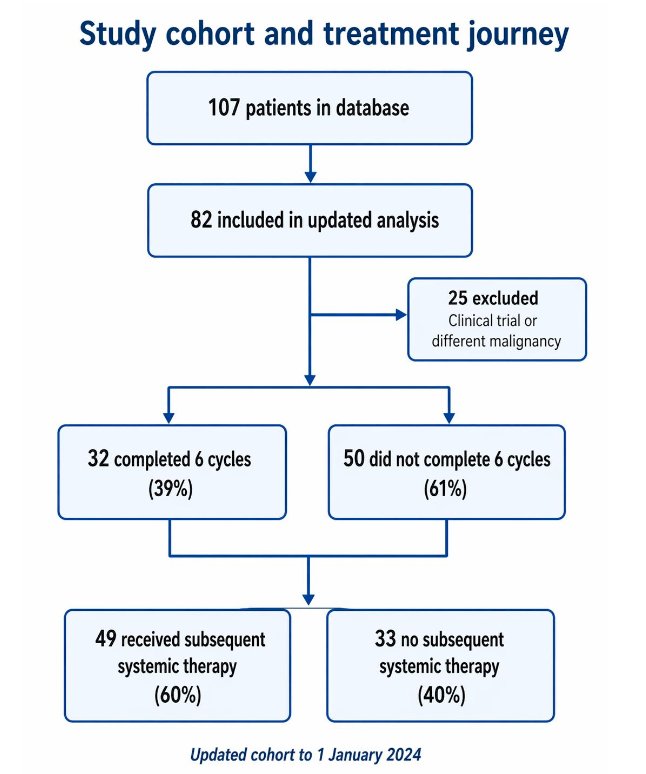
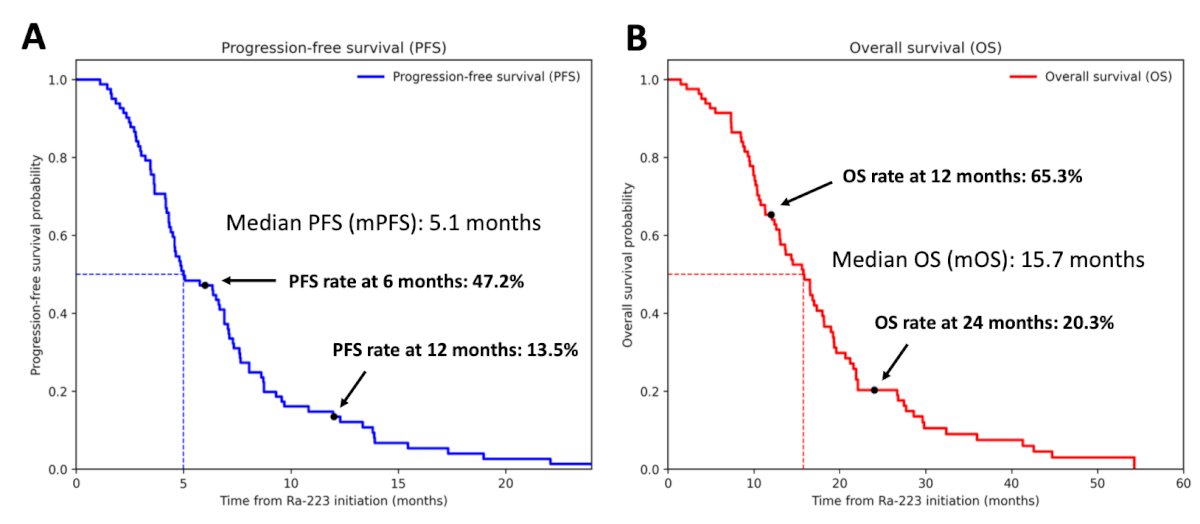
The median age at radium-223 initiation was 78 years, 74% had an ECOG performance status of 0–1, 44% had high volume bone disease, 59% had received prior docetaxel, and 87% at least one androgen receptor pathway inhibitor. Overall, 39% of patients completed all six radium-223 injections. The overall survival curve showed a median overall survival of 15.7 months, while the progression-based curve confirmed shorter disease control, with a median of 5.1 months:
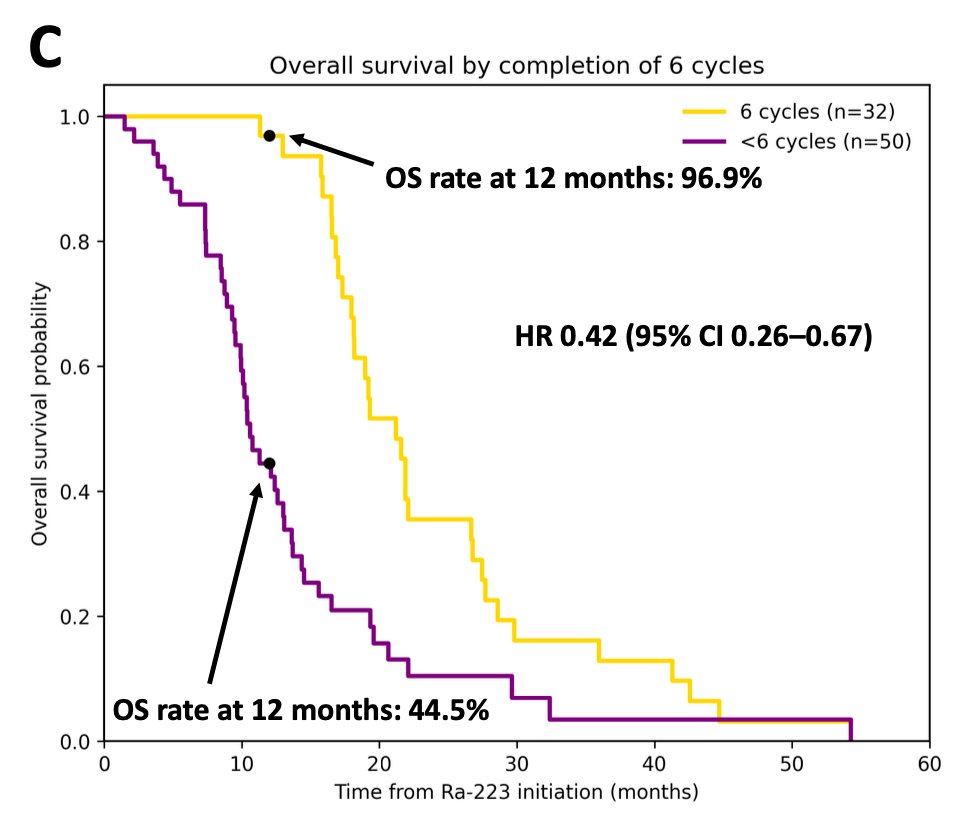
The landmark comparison showed the clearest separation, with markedly longer overall survival among patients completing six cycles versus those who did not (16.5 versus 7.8 months; HR 0.42, 95% CI 0.26–0.67), identifying non-completion as a strong poor-risk feature:
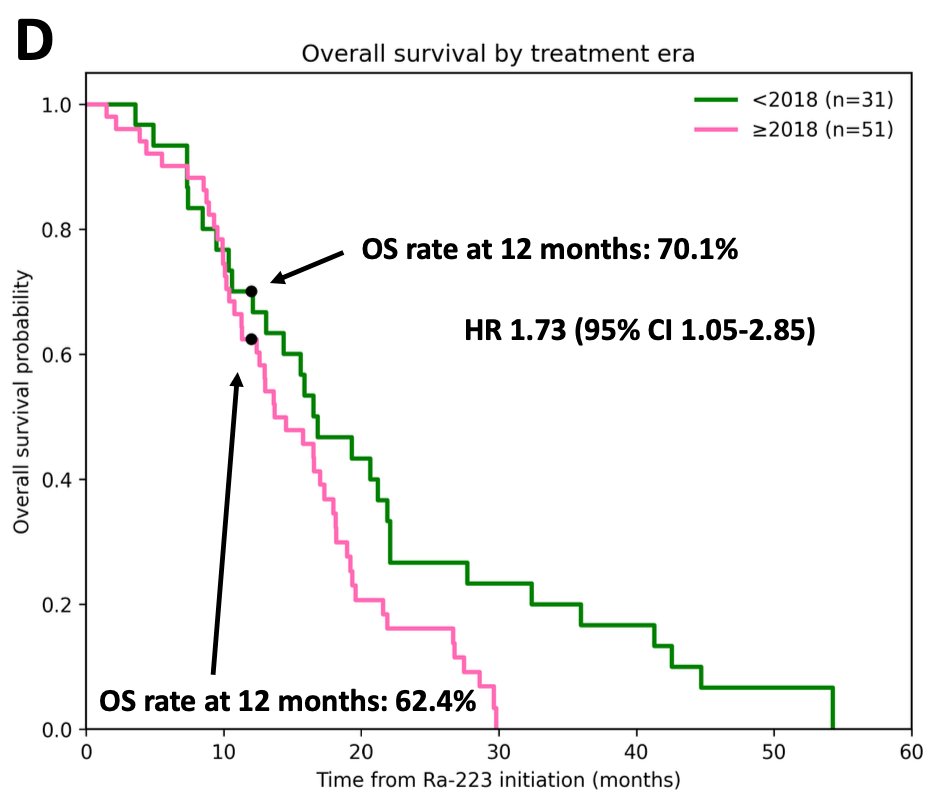
The era-specific curve showed shorter overall survival for patients treated in the ≥2018 era (HR 1.73, 95% CI 1.05–2.85):
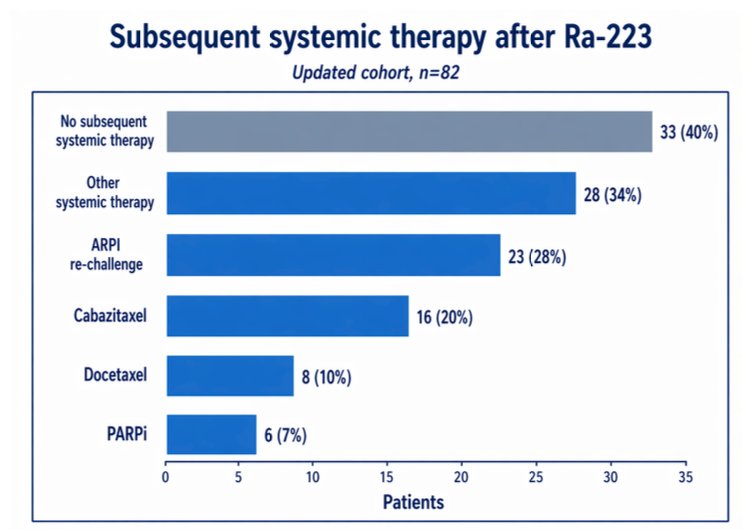
Subsequent systemic therapy was delivered in 60% of patients, most commonly androgen receptor pathway inhibitor re-challenge and cabazitaxel, whereas 40% received no further systemic treatment:
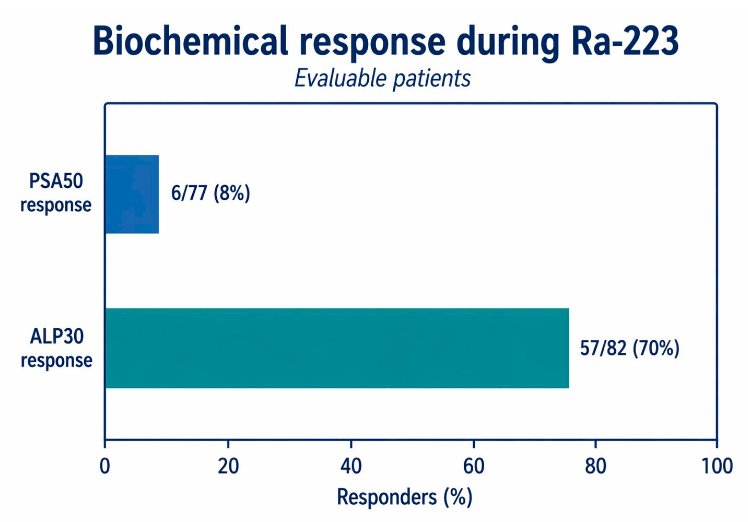
Biochemical responses showed a marked difference between markers, with PSA50 in 8% and ALP30 in 70% of evaluable patients:
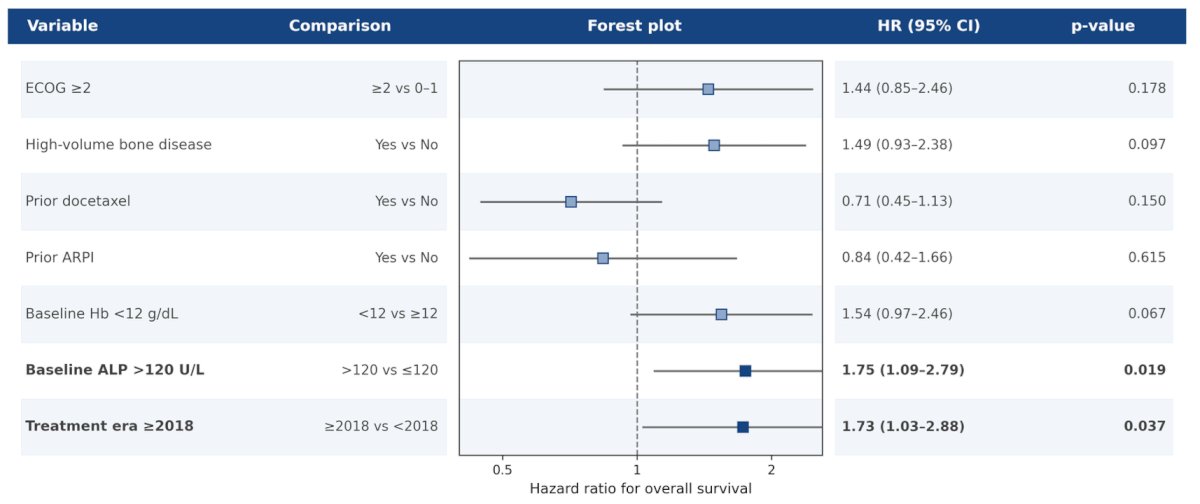
In the forest plot, baseline ALP >120 U/L and treatment in the ≥2018 era emerged as the most adverse baseline factors, while low hemoglobin showed a borderline adverse trend and prior docetaxel a favorable trend:
Dr. Alvarez-Ballesteros concluded his presentation discussing Spanish real world radium-223 outcomes in mCRPC from a tertiary center cohort with the following take-home points:
- In this updated real world cohort, including patients who initiated radium-223 up to January 1, 2024, radium-223 provides survival outcomes comparable to pivotal and large real world studies in pretreated, androgen receptor pathway inhibitor exposed mCRPC
- After accounting for early events using a 12-week landmark, completing all six cycles remains strongly associated with improved overall survival, underscoring the importance of careful patient selection, proactive toxicity management, and rational integration of radium-223 with subsequent systemic therapies in the modern treatment landscape
Presented by: Pablo Alvarez-Ballesteros, MBBS, Ramon y Cajal University Hospital (Madrid), Instituto Ramón y Cajal de Investigación Sanitaria, Madrid, Spain
Written by: Zachary Klaassen, MD, MSc – Urologic Oncologist, Associate Professor of Urology, Georgia Cancer Center, Wellstar MCG Health, @zklaassen_md on Twitter during the 2026 Advanced Prostate Cancer Consensus Conference (APCCC), Lugano, Switzerland, Thurs, April 30 – Sat, May 2, 2026.
- Parker C, Nilsson S, Heinrich D, et al. Alpha emitter radium-223 and survival in metastatic prostate cancer. N Engl J Med 2013;369(3):213-223.