

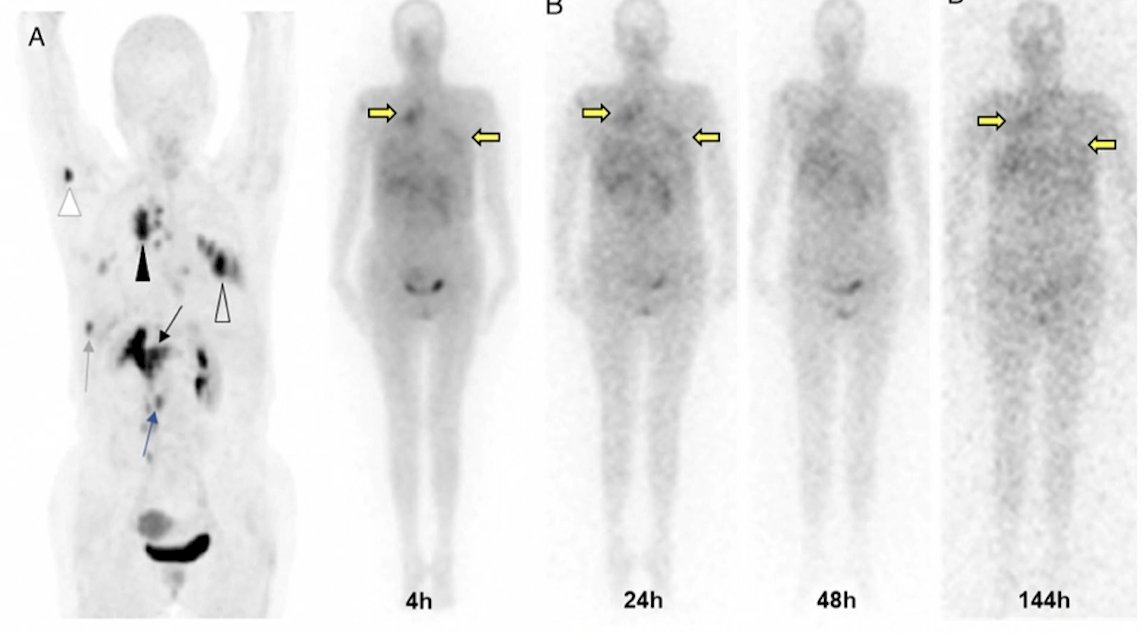
(UroToday.com) The 2026 PSMA & Beyond conference featured a developing novel radioligands session and presentation by Dr. Lena Unterrainer discussing the con stance for the future of FAP. The primary challenge with FAP radioligand therapy is tumor retention, with often no relevant tumor retention even at only 48 hours post-injection:
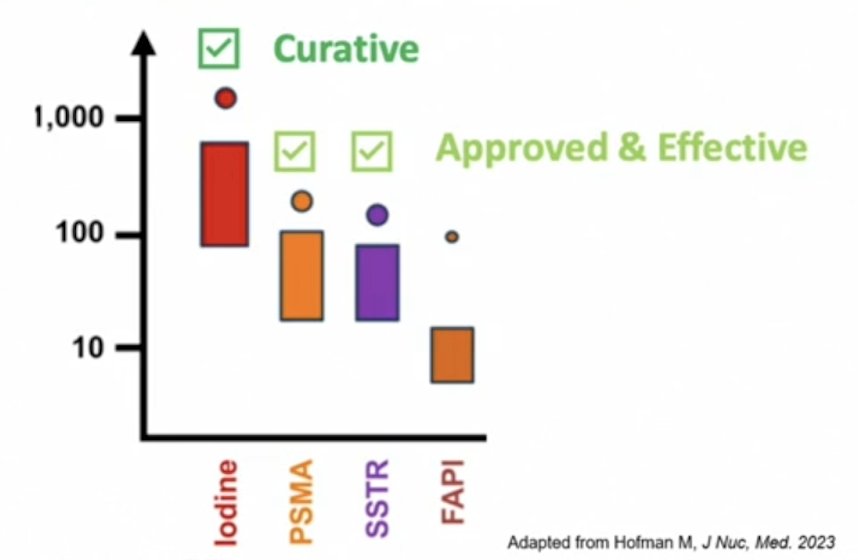
The tumor absorbed doses in FAP therapy are often lower than in approved radioligand therapies. This is relevant because the curative potential in theranostics is based on an achievable tumor dose:
One of the main differences between FAPI compared to radioiodine, PSMA, and DOTATATE is that the majority of FAPI trials are basket studies including multiple FAP expressing tumor entities and not one tumor type. Moreover, the current trials are early stage, with multiple FAPI radiopharmaceuticals being tested in combination with different isotopes, leading to vast heterogeneity:
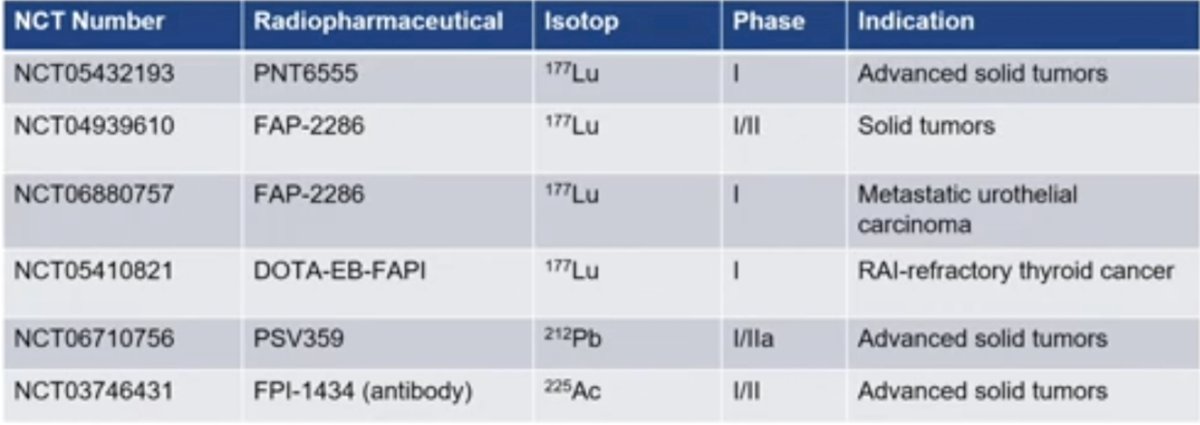
As such, according to Dr. Unterrainer, it is unclear if FAPI radioligand therapy will ever be treated as equal to other radioligand therapies in the future.
Dr. Unterrainer notes that FAP expression depends on the tumor entity, with high FAP expression in specific tumors such as sarcomas. Additionally, there is often heterogeneous FAP expression (also within one tumor entity), leading to even more difficulty generating evidence. There is also heterogeneous tumor uptake, with mean absorbed doses varying across patients, ranging from 0.346 – 2.70 Gy/GBq:
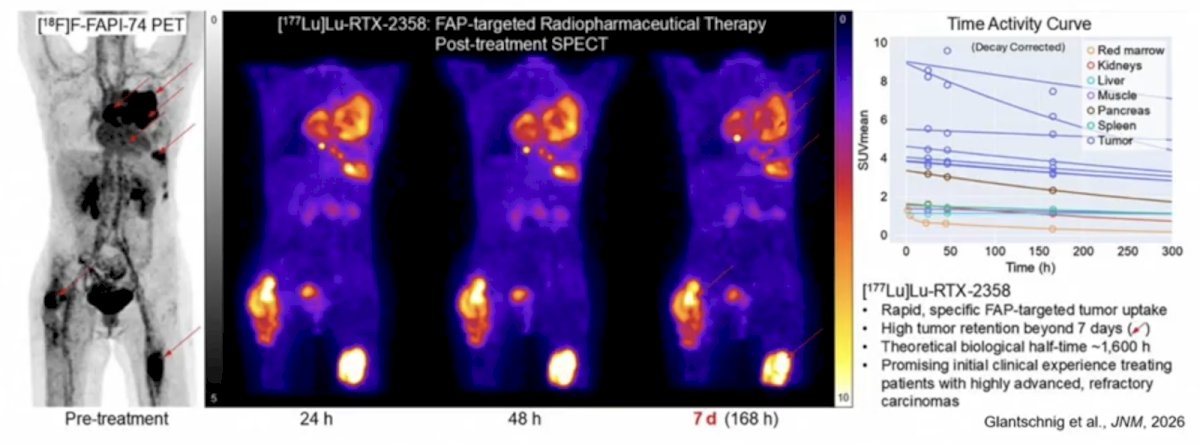
To date, there are too many variables with a pan-cancer target. Dr. Unterrainer also cautions that we cannot forget about the safety profile. Bone marrow toxicity can be significant, with treatment related grade 3 or 4 adverse events ~38%:
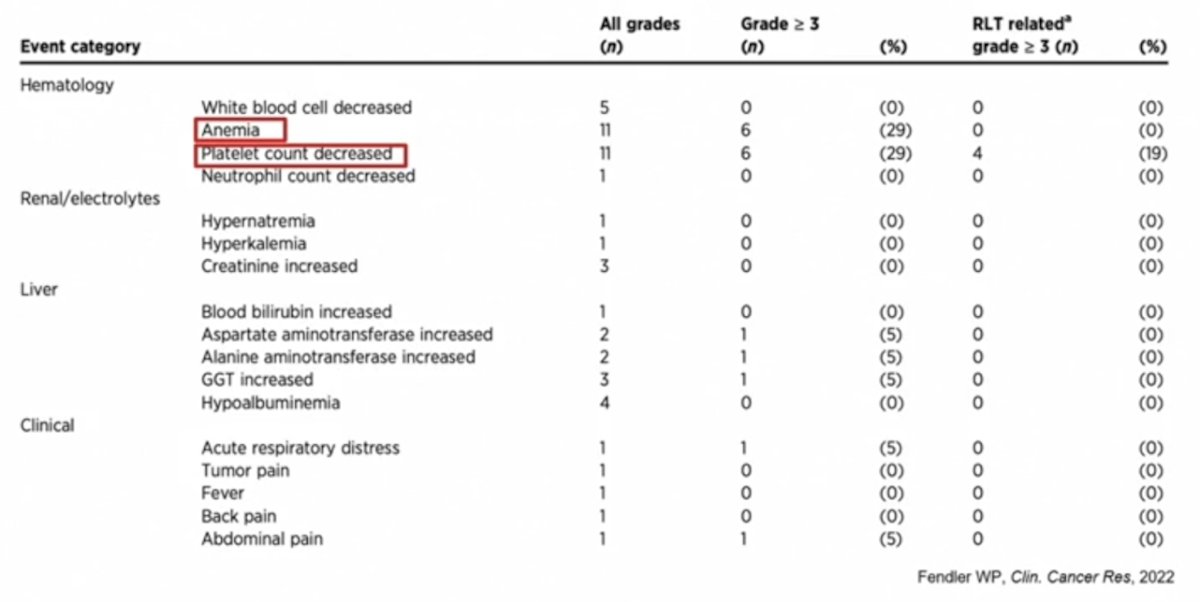
Are combination therapies more promising than FAP radioligand therapy alone? In sarcoma patients, FAP targeted radioligand therapy is being tested with 177Lu, 90Y, and 225Ac labeled 3BP-3940 in combination with immunotherapy.
Dr. Unterrainer concluded her presentation discussing the con stance for the future of FAP with the following take-home points:
- The current situation includes a “trial and error” approach: which radioligand isotope for which disease and which clinical scenario?
- For FAP therapy, there is no real clinical work horse scenario, and therefore, it is unclear where it is positioned in treatment algorithms
- Prospective data are currently missing
- There are often low absorbed doses in tumor lesions
- There is more to learn about the safety profile
- Are combination therapies promising?
Presented by: Lena Unterrainer, Technische Universität München, Munich, Germany
Written by: Zachary Klaassen, MD, MSc – Urologic Oncologist, Associate Professor of Urology, Georgia Cancer Center, Wellstar MCG Health, @zklaassen_md on Twitter during the 2026 PSMA & Beyond Conference, Los Angeles, CA, Thurs, Mar 26 – Fri, Mar 27, 2026.