

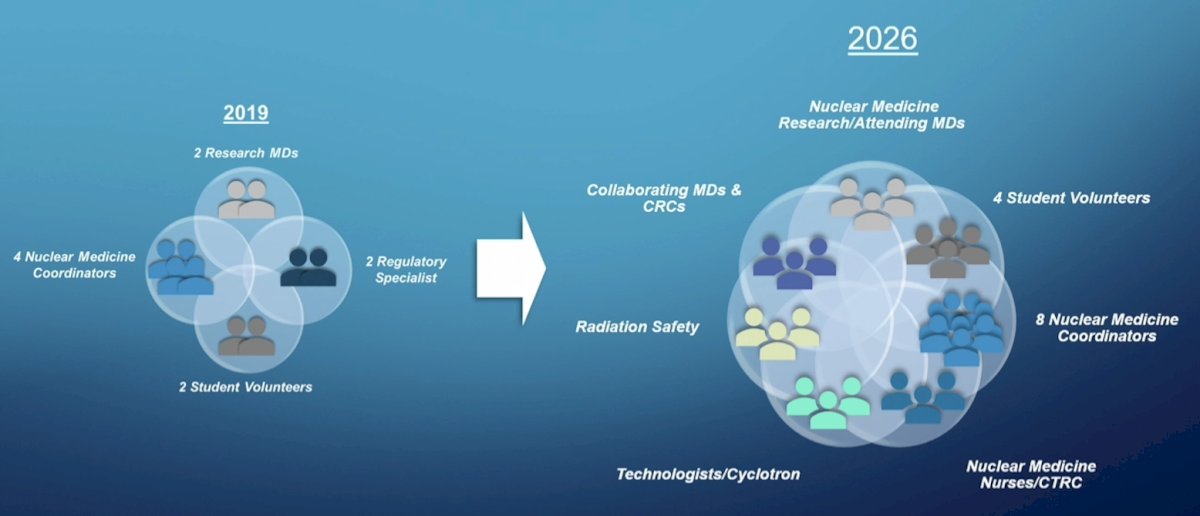
(UroToday.com) The 2026 PSMA & Beyond conference featured a clinical development session and presentation by Stephanie Lira discussing scaling operations in theranostics clinical research. There has been tremendous growth of the UCLA theranostics team, starting in 2019 with 2 research MDs, 2 regulatory specialists, 2 student volunteers, and 4 nuclear medicine coordinators. By 2026, the team now comprises nuclear medicine research and attending MDs, 4 student volunteers, 8 nuclear medicine coordinators, nuclear medicine nurses/CTRC, nuclear medicine technologists, radiation safety, and collaborating MDs and CRCs:
There are several core focus areas for program success:
- Acquire a comprehensive understanding of UCLA’s patient care, regulatory, and administrative policies, and processes
- Advanced patient centered engagement using CICare (connect, introduce, communicate, ask, response, exit)
- Development of tailored regulatory workflows for both investigator-initiated and industry sponsored trials
- Streamline workflows within the team and across collaborating departments
- Maintain strong cross-functional alignment within UCLA and with external partners
In order to bring a trial to launch and subsequent accrual, this requires a 6-9 month process, with many steps and parties required to make this happen after completion of the study design:
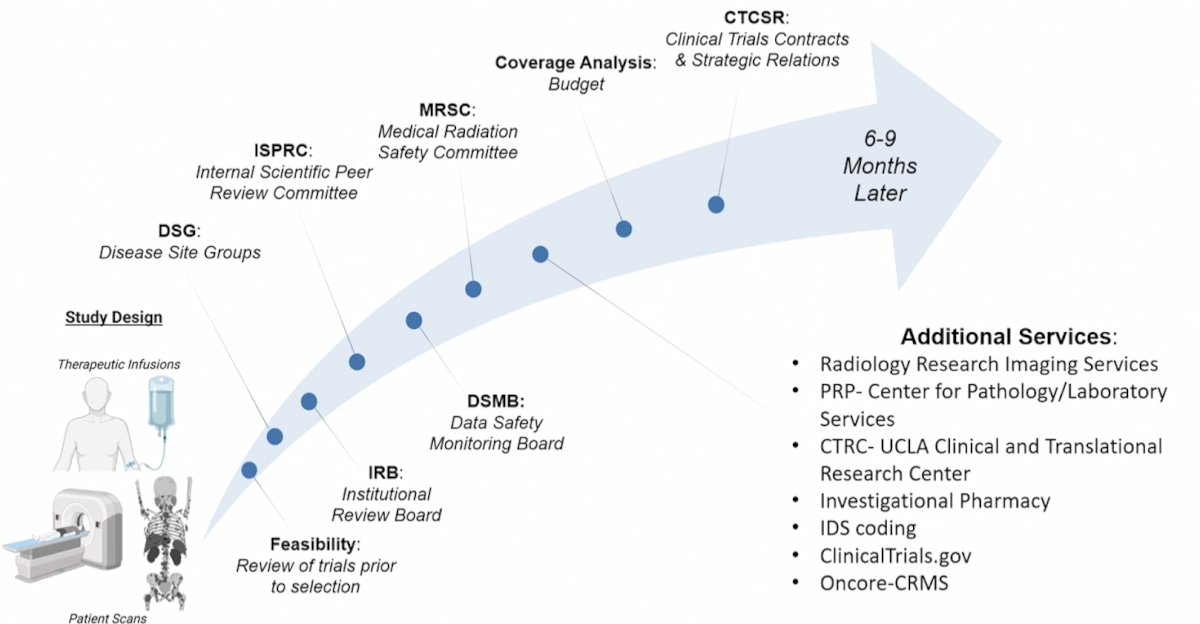
Patients are enrolled in one of UCLA’s trials after patient referrals are received from their primary care physician or as a self-referral. Patients are pre-screened to confirm trial eligibility, followed by in person or remote consent. A key to trial success is the importance of being in alignment with clinical staff members on study related assessments.
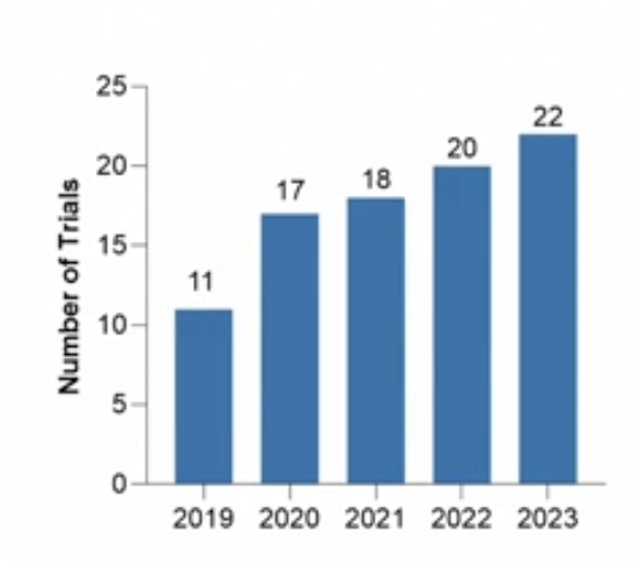
The UCLA theranostics clinical research program expanded from 10 team members in 2019 to 19 in 2023, operating with a single outpatient clinic (clinical and research), which included 1 SPECT/CT, 2 PETs, and 2 infusion chairs. This team significantly increased trial volume, with the majority centered on imaging between 2019-2022. The following figure shows the number of clinical trials by year:
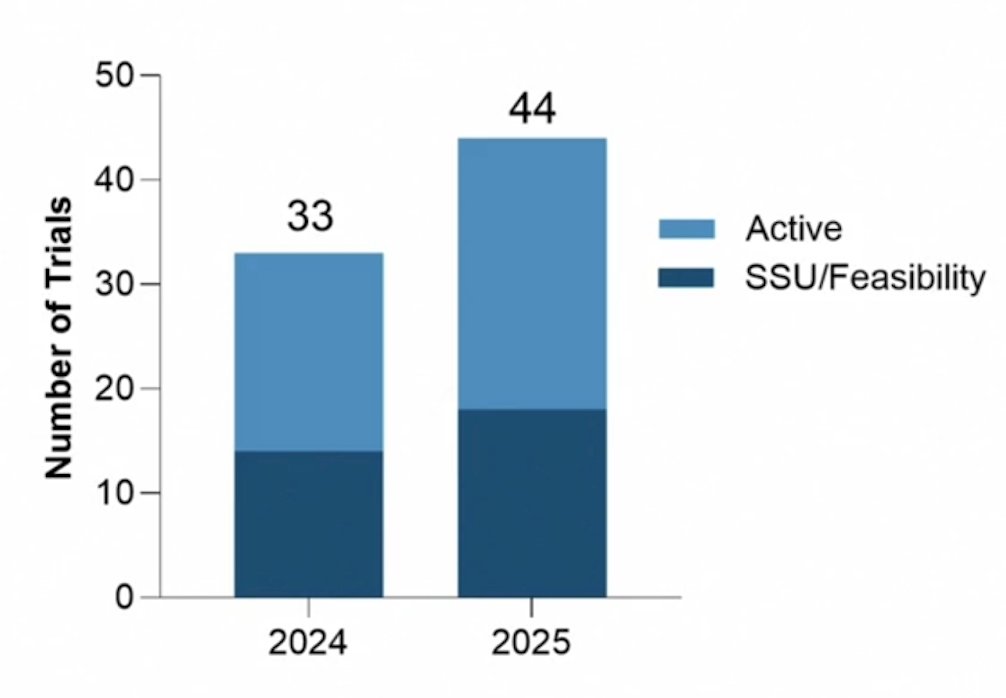
Key milestones included 68Ga-PSMA-11 receiving FDA approval on December 1, 2020, and Pluvicto receiving FDA approval on March 23, 2022. The new Theranostics Center had a grand opening on April 29, 2024, which is a new outpatient center with 8 infusion chairs and 2 nuclear medicine technologists. Between 2024-2025, the theranostics program had a surge in growth with key collaborations with UCLA medical oncology, urology, and radiation oncology, resulting in an increasing complexity of trials:
Stephanie notes that there have been several obstacles along the way, including:
- Limited scanner availability
- Regulatory timelines and restrictions
- Staff limitations
- An influx of radioligand therapy trial.
Keys to success have been and continue to be dedicated research slots, protocol feasibility reviews, outsourcing, staggering activation and research appointments, and teamwork. Appointment output for 2025 included 309 scan appointments, 209 infusion appointments, and 72 clinic appointments:
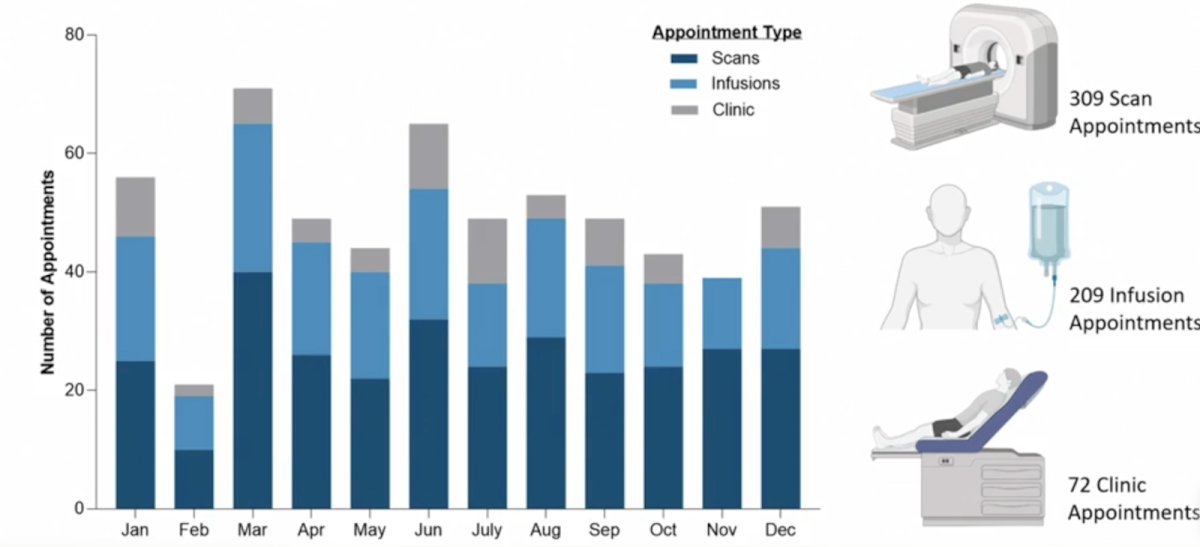
The first several months of 2026 are also off to a strong start, including 69 scan appointments, 46 infusion appointments, and 17 clinic appointments. Ultimately, the keys to success in 2026 for the theranostics clinical research program include (i) additional research appointment slots, (ii) new scanners, (iii) advancements in documentations and workflows, and (iv) growth of the team.
Presented by: Stephanie Lira, UCLA Theranostics Clinical Research Program, Los Angeles, CA
Written by: Zachary Klaassen, MD, MSc – Urologic Oncologist, Associate Professor of Urology, Georgia Cancer Center, Wellstar MCG Health, @zklaassen_md on Twitter during the 2026 PSMA & Beyond Conference, Los Angeles, CA, Thurs, Mar 26 – Fri, Mar 27, 2026.