

(UroToday.com) The 2026 PSMA & Beyond conference featured a clinical development session and presentation by Dr. Jeremie Calais discussing a review of phase 1/2 compounds recently published. Without question, there has been a radiotheranostics boom over the last several years, with >500 clinical trials underway in >20 cancer types, and continued innovation in radioisotopes and targeting moieties. Additionally, there are a host of novel PSMA radiopharmaceuticals being testing beyond 177Lu-PSMA-617, as well as novel targets for radiopharmaceuticals, antibody drug conjugates, cell-based therapies, and other targeted therapies.
To assess recently published therapeutic radiopharmaceuticals in phase 1-2 trials, Dr. Calais undertook a search of clinicaltrials.gov on March 24, 2026, with the following search terms: 177Lu, 90Y, 131I, 67Cu, 161Tb, 225Ac, 212Pb, and 211At. After filtering from the year 2020 and including only phase 1 and phase 2 trials, the search resulted in >500 trials. These were exported into an Excel file, and “classic” or previously approved trials were excluded, such as 177Lu-PSMA-617, 177Lu-PSMA-I&T, 177Lu-DOTATATE, 177Lu-DOTATOC, Iodine-131, and Y90 microspheres. Next, a manual search for human data was completed using PubMed and conferences to generate a list of ~75 different compounds being assessed. A final search was performed of the Oncidium Foundation, theranostictrials.org, and UroToday.
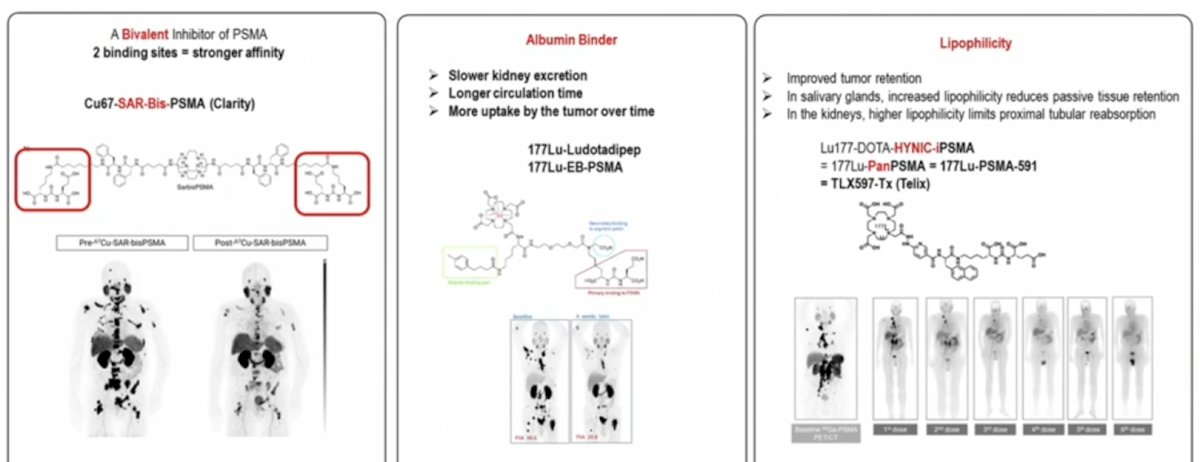
Next generation ligands include 67Cu-SAR-Bis-PSMA (Clarity), a bivalent inhibitor of PSMA with two bindings sites. 177Lu-Ludotadipep and 177Lu-EB-PSMA use an albumin binder, which results in slower kidney excretion, longer circulation time, and more uptake by the tumor over time. Third, 177Lu-DOTA-HYNIC-iPSMA (ie. TLX597-Tx from Telix) uses lipophilicity to improve tumor retention, and this property also reduces passive tissue retention in the salivary glands and limits proximal tubular resorption in the kidneys:
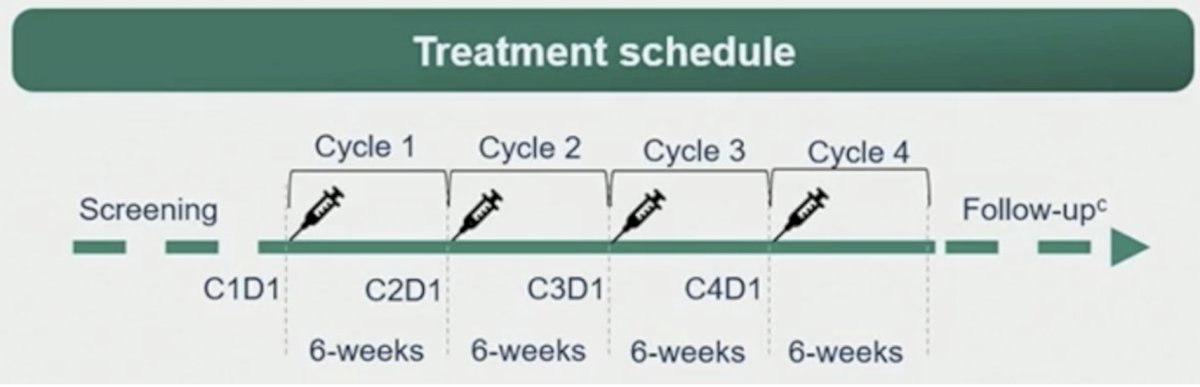
One specific PSMA-targeted actinium-225 therapy with an albumin binder presented at ASCO GU 2026 is 225Ac-PSMA-Trillium (BAY 3563254) in the phase I PAnTHA trial. PAnTHA consists of dose-escalation and dose-expansion parts, with the dose-escalation results reported at ASCO GU 2026. Patients had mCRPC with metastases overexpressing PSMA on PET imaging (uptake >liver in ≥1 lesion), ≥1 prior androgen receptor pathway inhibitor, and (if eligible) 1 or 2 prior taxanes, and no prior radiopharmaceutical. 225Ac-PSMA-Trillium was given intravenously every 6 weeks for up to 4 doses:
In this trial of 50 patients, there were no dose-limiting toxicities or treatment-related deaths. Treatment emergent adverse events occurred in 100% of patients, most commonly dry mouth (86%; 56% grade 1, 30% grade 2, 0 grade ≥3). Other common treatment emergent adverse events were fatigue (54%) and nausea (48%). Overall, 44% had grade ≥3 treatment emergent adverse events, most commonly lymphopenia (20%), 16% had serious treatment emergent adverse events, and 6% discontinued treatment due to treatment emergent adverse events:

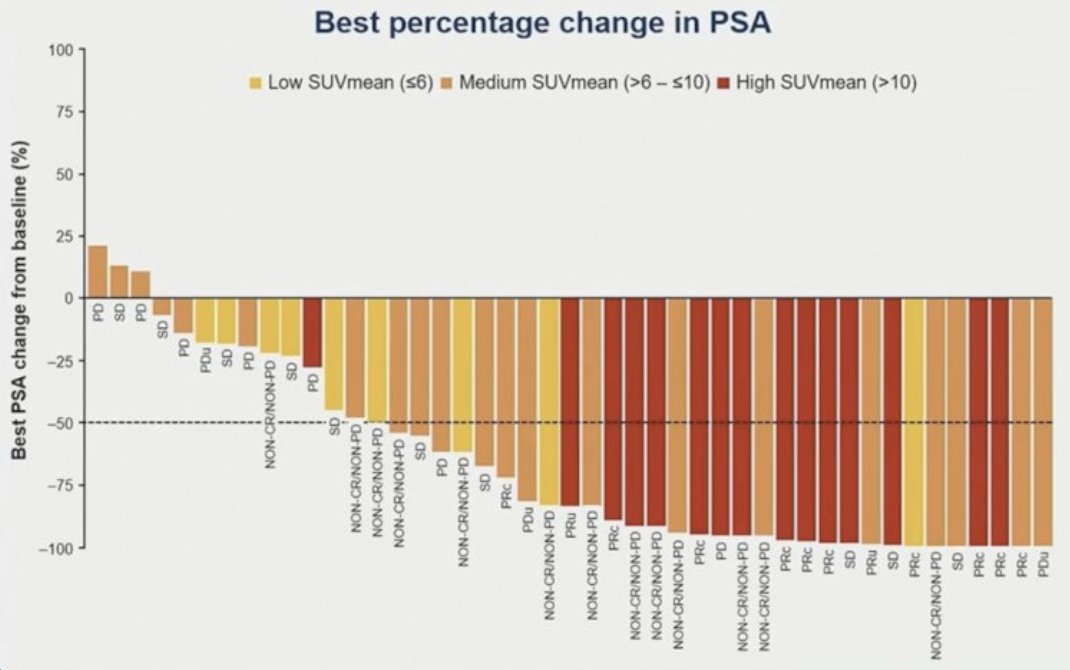
Based on safety and preliminary antitumor activity data, 125 kBq/kg was selected as the recommended dose for expansion. PSA responses were seen in 93% of patients with high PSMA expression at baseline (SUVmean >10):
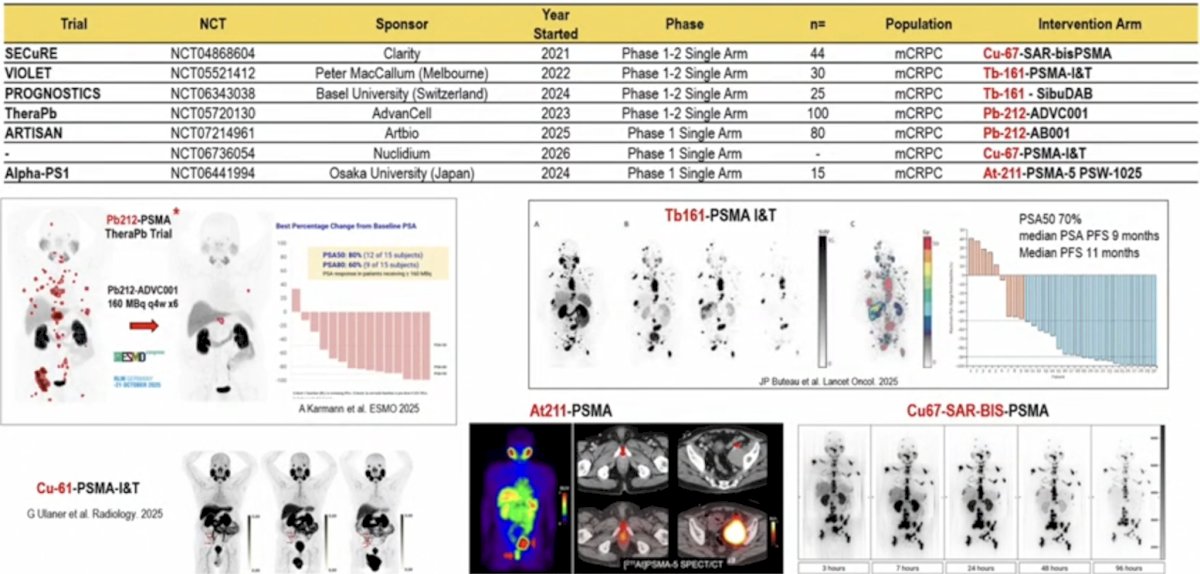
Furthermore, Dr. Calais highlighted that research in targeted radionuclide therapy is rapidly expanding beyond lutetium-177, with several novel isotopes such as lead-212, terbium-161, copper-67, and astatine-211 currently under investigation. These next-generation agents differ in emission properties, potentially improving tumor dose delivery and overcoming resistance seen with beta emitters. Early trials, including SECuRE (Cu67-SAR-bisPSMA), VIOLET [1] and PROGNOSTICS (Tb161-based agents), and TheraPb and ARTISAN (Pb212 constructs), are testing these compounds in mCRPC. Preliminary findings are promising, with the Pb212-PSMA TheraPb study reporting PSA50 responses in 70% of patients and a median progression free survival of 9–11 months:
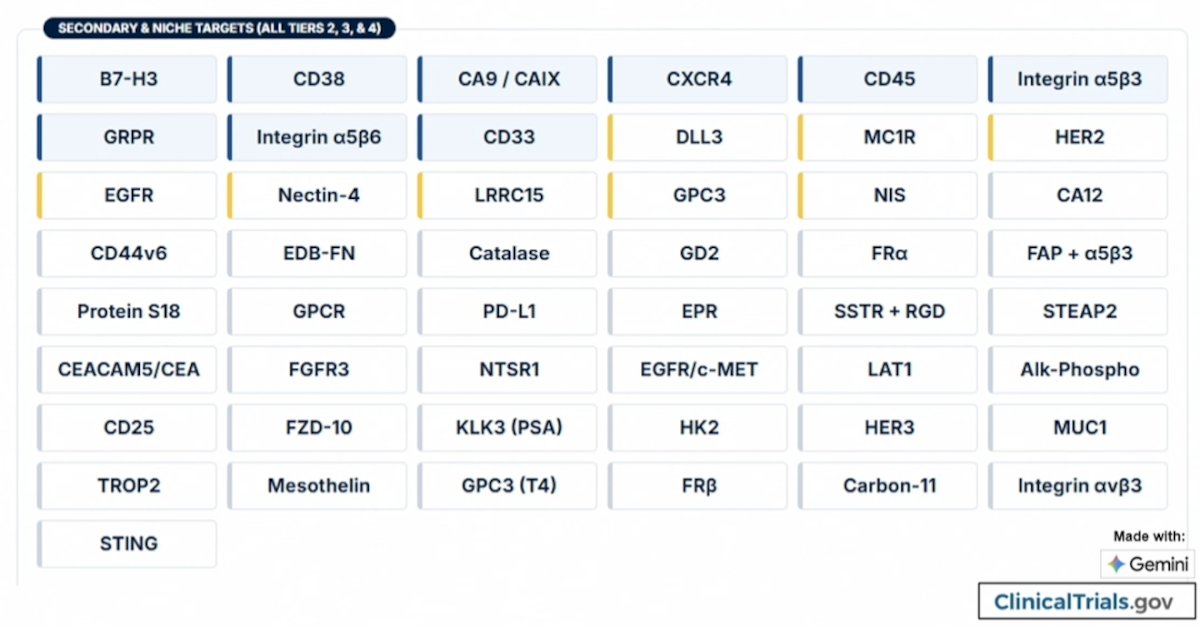
As far as targets of therapeutic radiopharmaceuticals published in phase 1-2 trials on clinicaltrials.gov with human data published, this includes tier 1 targets such as PSMA (33.5%), FAP (12.6%), and SSTR (12.0%). Additional tier 2-4 targets are as follows:
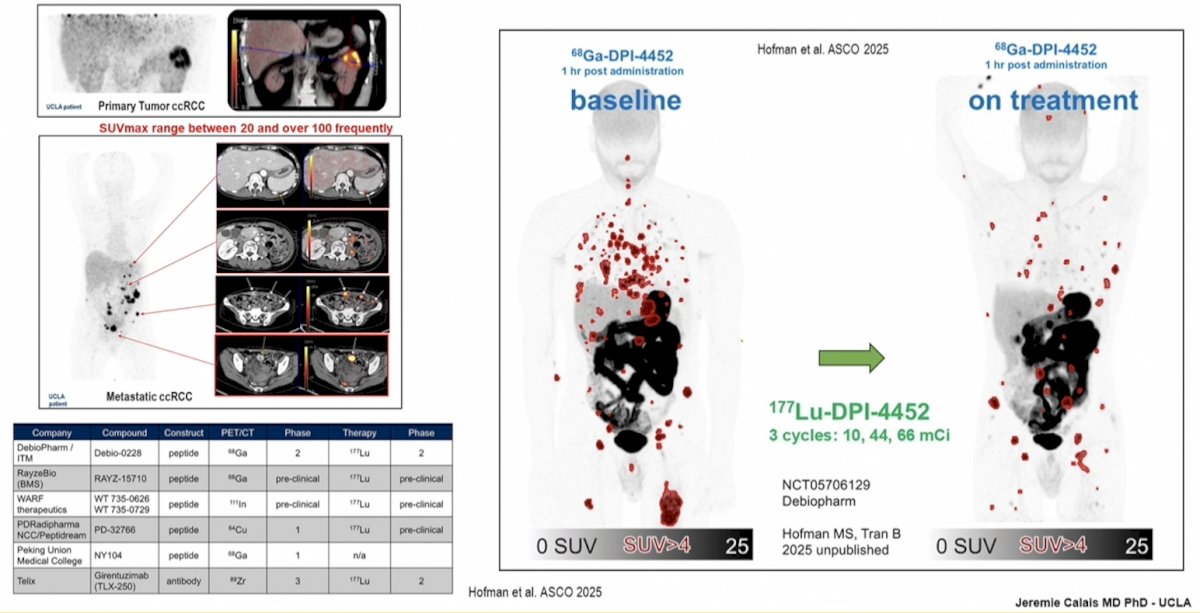
Theranostic advances extend beyond PSMA and SSTR, spotlighting Carbonic Anhydrase IX (CAIX) as a novel and promising target, particularly in clear cell renal cell carcinoma (RCC). Dr. Calais showed data for 68Ga-DPI-4452 PET imaging, which demonstrates strong uptake in both primary and metastatic clear cell RCC lesions, often with SUVmax values exceeding 20 and even more than 100. Early therapeutic experience using 177Lu-DPI-4452 across three cycles (10, 44, and 66 mCi) has shown meaningful radiotracer retention and on-treatment response compared to baseline scans. These findings underscore the expanding role of molecularly targeted radionuclide therapies across genitourinary malignancies, marking CAIX an exciting potential option in radiotheranostics:
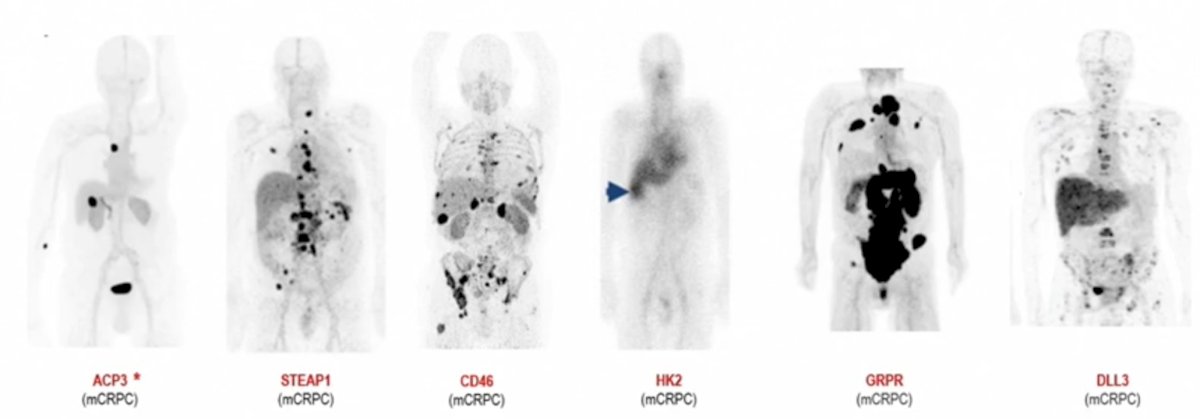
Dr. Calais also discussed the emerging role of Fibroblast Activated Protein (FAP) as a theranostic target, presenting compelling clinical imaging and treatment data where FAP-targeted radioligand therapy has shown promising responses after multiple treatment cycles. Other targets for prostate cancer include ACP3, STEAP1, CD46, HK2, GRPR, and DLL3:
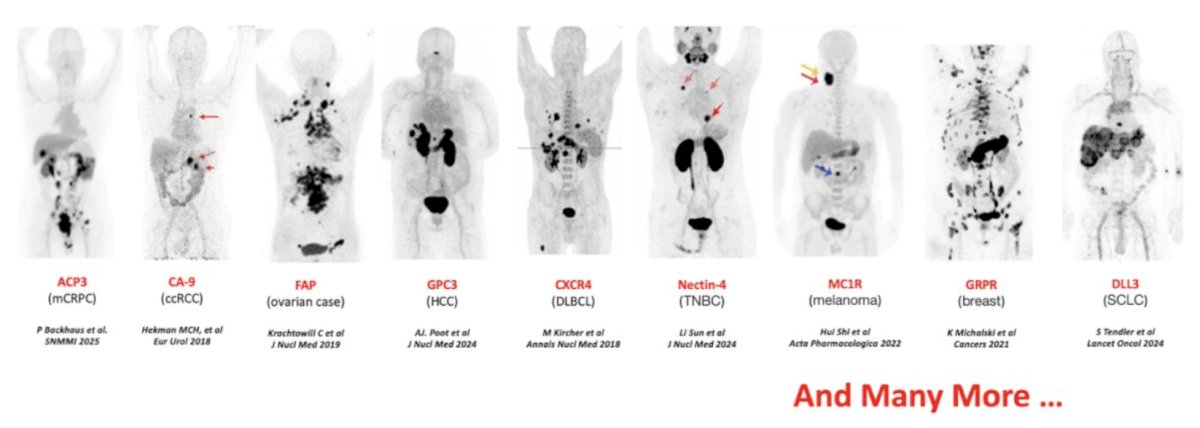
There are also other targets in other cancers, including the aforementioned CAIX in renal cell carcinoma, FAP in ovarian and other solid tumors, GPC3 in hepatocellular carcinoma, CXCR4 in lymphoma, Nectin-4 in triple-negative breast cancer, MC1R in melanoma, GRPR in breast cancer, and DLL3 in small-cell lung cancer, illustrating how the radiotheranostics field is rapidly evolving to test options over a range of malignancies:
Dr. Calais concluded his presentation discussing a review of phase 1/2 compounds recently published by highlighting that the UCLA Theranostics Clinical Research Program portfolio currently has 24 active trials and 19 trials in activation.
Presented by: Jeremie Calais, MD, PhD, UCLA, Los Angeles, CA
Written by: Zachary Klaassen, MD, MSc – Urologic Oncologist, Associate Professor of Urology, Georgia Cancer Center, Wellstar MCG Health, @zklaassen_md on Twitter during the 2026 PSMA & Beyond Conference, Los Angeles, CA, Thurs, Mar 26 – Fri, Mar 27, 2026.
References: