

(UroToday.com) The 2026 PSMA & Beyond conference featured a targeting the cell surface session and presentation by Dr. Evan Yu discussing modalities for targeting the cell surface. Tumor associated antigens across molecular subtypes of prostate cancer include PSCA, PSMA, STEAP1, KLK2, and DLL3, which are all potential targets for therapeutics:
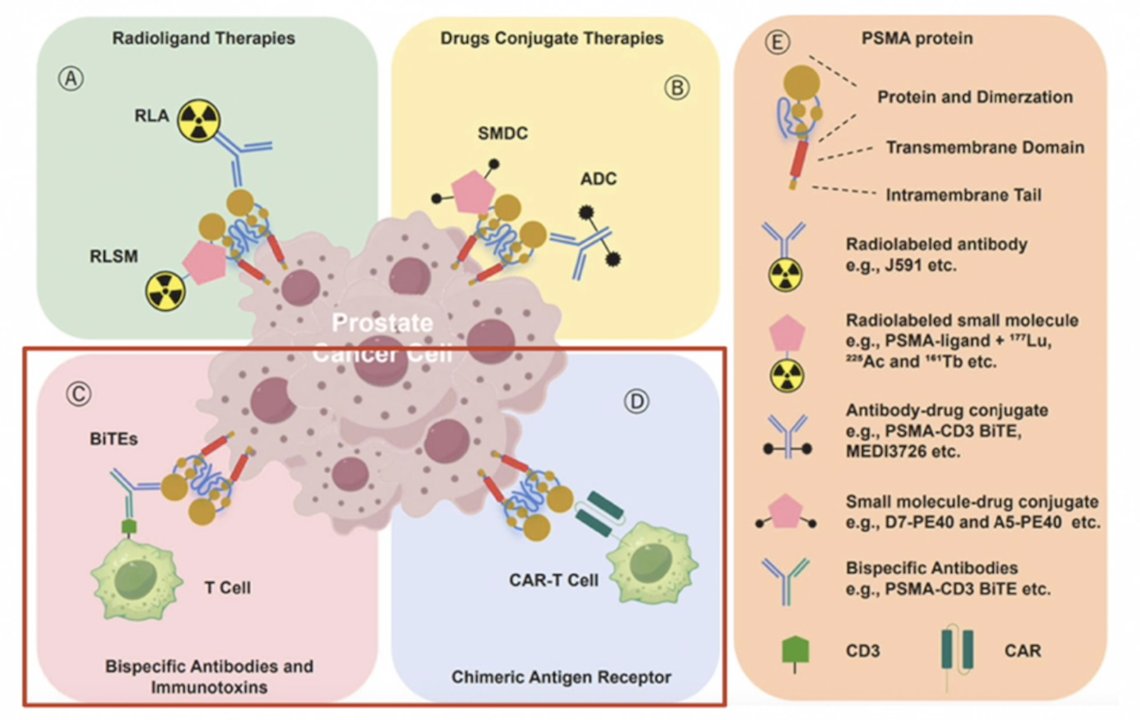
There are several aspects to what makes a good drug and surface combination, including:
- Target biology and expression
- Binding domain
- Payload or effector
- Linkage and stability
- Tumor penetration and trafficking
- On-target and off-tumor risk
- Resistance and antigen escape
There are also several key properties associated with cell surface targeting, such as (i) high tumor expression density, (ii) tumor restricted (or at least dispensable normal tissue), (iii) cell surface and accessible, (iv) internalizing versus non-internalizing (platform dependent), and (v) stable expression under treatment pressure. Prostate cancer specific nuances include:
- Lineage dependence versus treatment induced expression
- Changes with androgen receptor signaling inhibition
- Neuroendocrine differentiation risk
- Heterogeneity across metastases
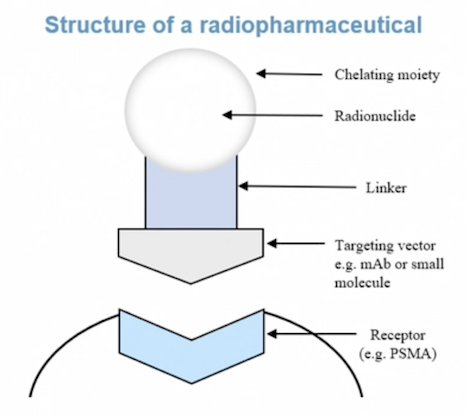
With regards to radioligand therapy, there are several core components, including the targeting moiety (small molecular versus antibody fragment), the radionuclide (alpha versus beta emitter), and chelator chemistry (stability in circulation versus off-target release). There are also several engineering tradeoffs:
- Tumor penetration versus residence time
- Cross-fire effects as a feature, not as a bug
- Dosimetry as precision oncology
- Internalization helps, but is not strictly required
Antibody drug conjugates are comprised of an antigen, antibody, cytotoxic payload, and a linker, with the following schematic and mechanism of action:
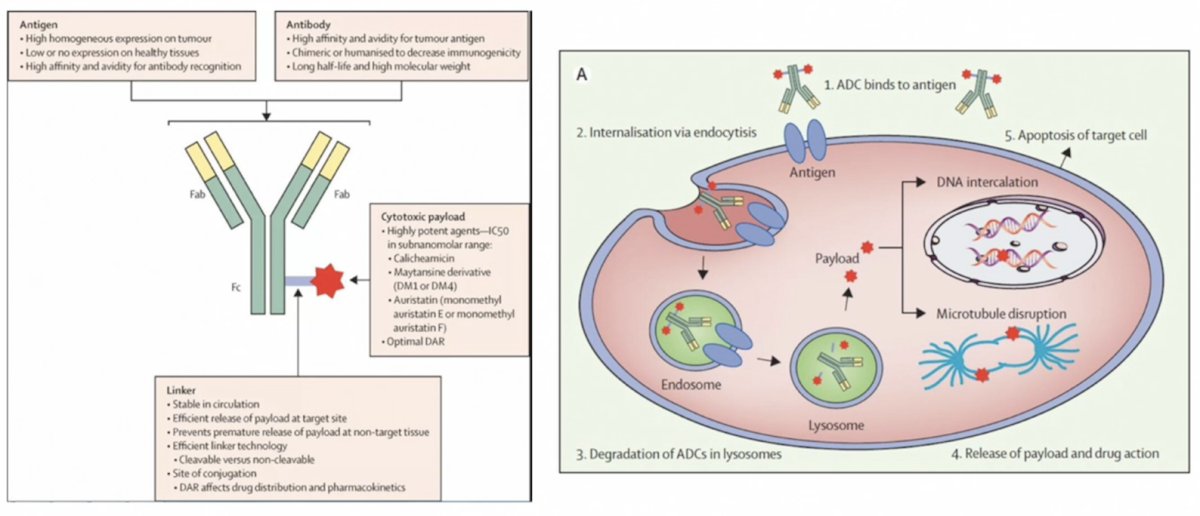
Dr. Yu emphasized that there are several antibody drug conjugate engineering considerations, notably that internalization is mandatory, the bystander effects can be good or bad, and resistance can occur via target downregulations, efflux pumps, or lysosomal changes.
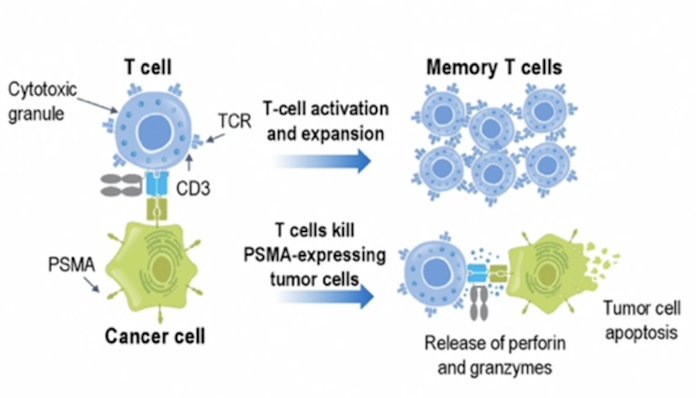
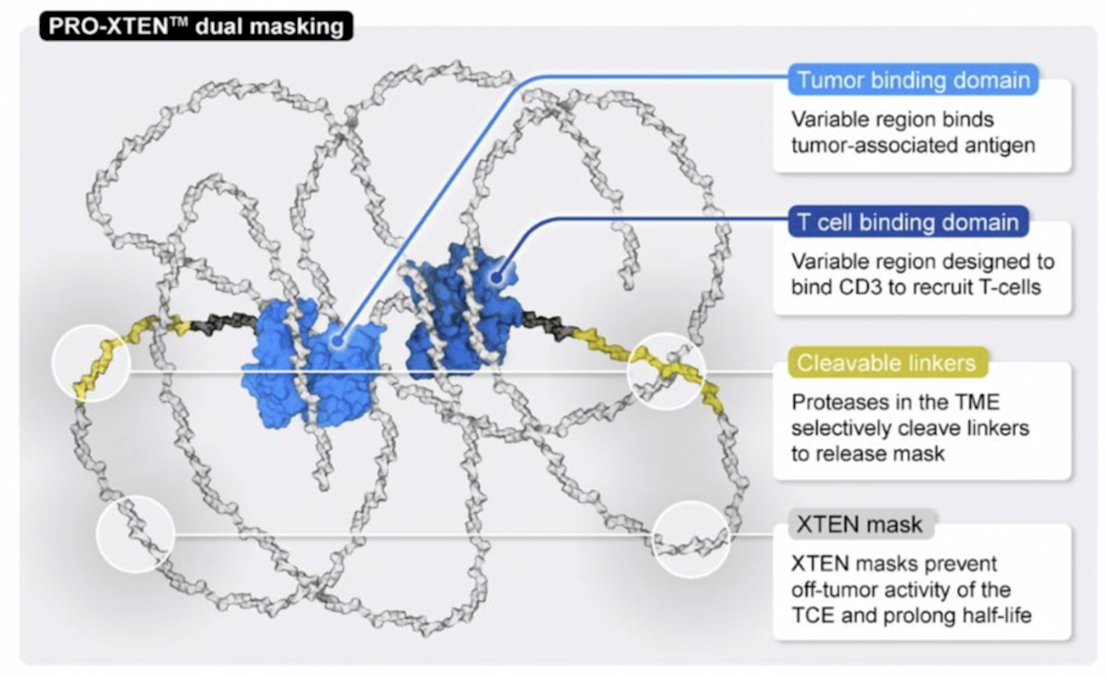
Next, Dr. Yu discussed bispecific antibodies, which bind to two different targets. This can be two different associated antigens, whereas some can bind immune checkpoints, and can also involve engaging with T cells. Gating is important for conditional activation, and dual antigen gating requires both tumor antigens or immune checkpoints to be present for activity. Masked gating has the antibody masked by a peptide that is cleaved by tumor associated proteases, these agents are inactive systemically and then activated by the tumor microenvironment:
At ASCO GU 2026, Dr. de Bono presented the preliminary phase 1 dose escalation results of VIR-5500, a dual-masked PRO-XTEN T-cell engager for patients with mCRPC. PRO-XTEN masks T-cell engagers and has the best in class therapeutic index and long-term durability in oncology:
As of January 9, 2026, 58 heavily pretreated mCRPC participants (94.8% post-taxane; median 4 prior lines of therapy) received ≥ 1 dose of VIR-5500. There were no dose limiting toxicities (pre-defined toxicities occurring during cycle 1) reported. The incidence of related grade ≥ 3 adverse events was 12% and cytokine release syndrome was mostly limited to grade 1 and 2. PSA declines were noted in all participants dosed at ≥ 3000 ug/kg Q3W, including clinically significant and deep PSA reductions (82% PSA50 and 53% PSA90):
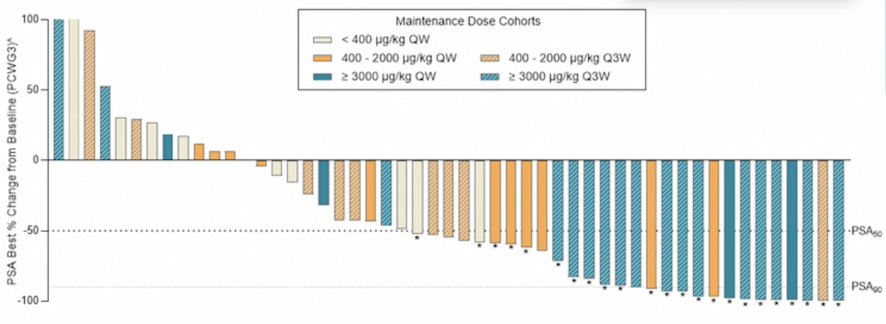
Preliminary evidence of durable PSA responses lasting over one year was noted in select patients undergoing intra-patient dose escalation. An objective response rate of 45% was observed in 5 out of 11 RECIST-evaluable patients treated at doses ≥ 3000 µg/kg Q3W.
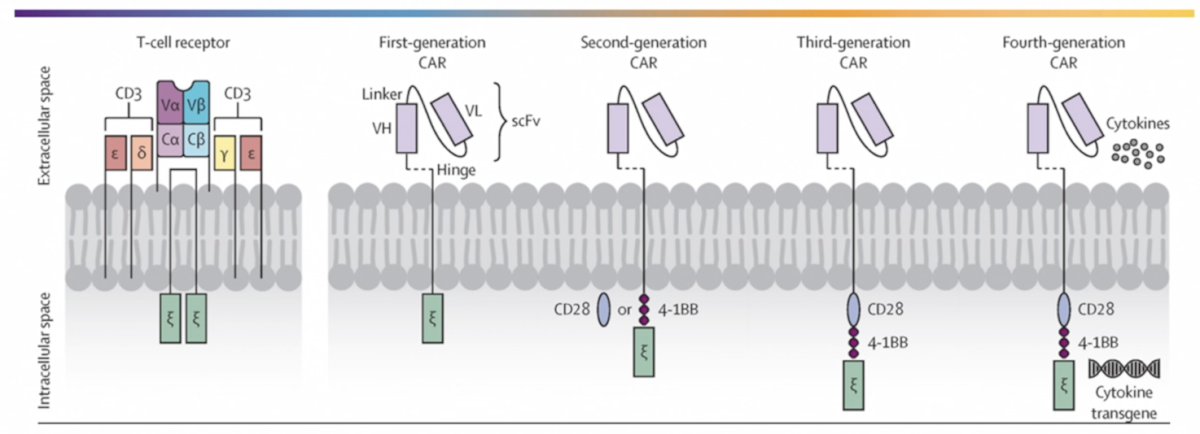
CAR-T cells are autologous and allow for additional modifications. We have now moved from first generation CAR-T cells to fourth generation, which allows for the addition of a cytokine transgene:
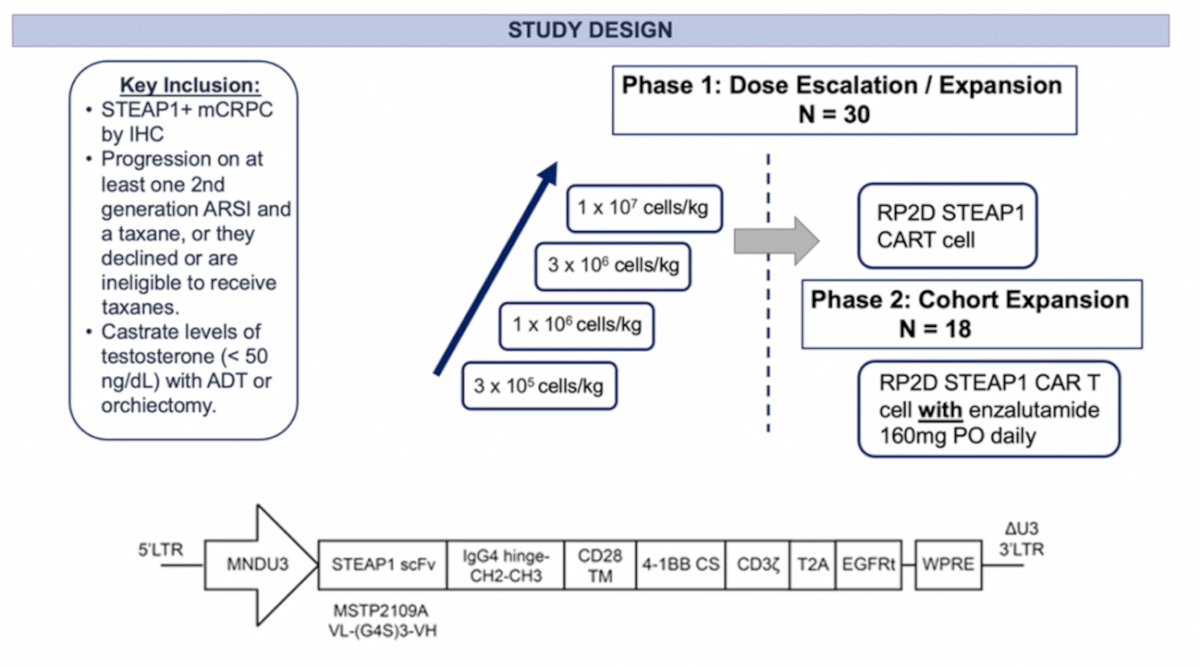
Dr. Yu and his group are running a phase 1/2 dose-escalation and cohort study of STEAP1 CAR-T with enzalutamide in patients with mCRPC. The trial design is as follows:
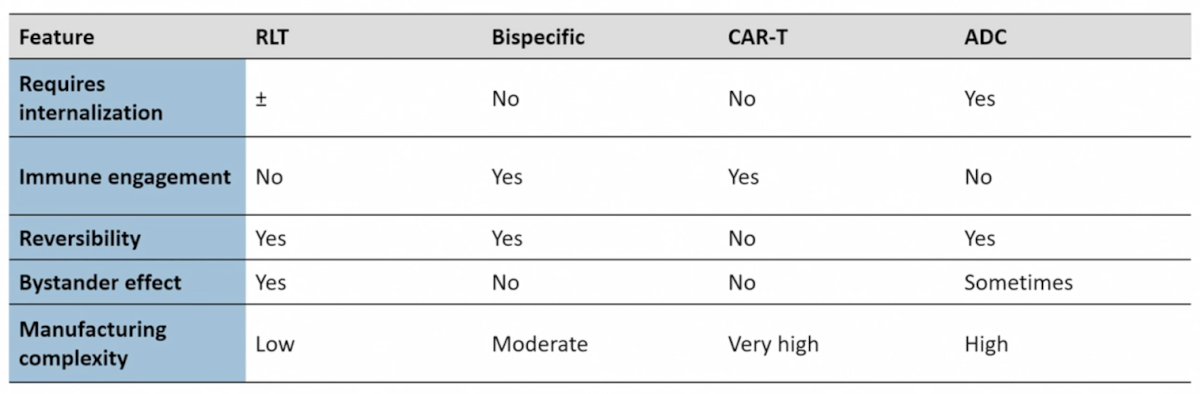
To summarize, Dr. Yu provided the table below highlighting a cross-platform comparison of the aforementioned modalities:
Finally, Dr. Yu highlighted the phase I PC-SYNERGY trial to attempt to overcome heterogeneity and understand the landscape of targets in prostate cancer. The first aim is to create a multi-dimensional single cell atlas defining the heterogeneity of metastatic prostate cancer, and the second aim is to analyze samples from clinical studies to determine how cancers evolved after treatments targeting surface markers/proteins.
Dr. Yu concluded his presentation discussing modalities for targeting the cell surface with the following take-home points:
- There are many new cell surface targets in prostate cancer beyond the androgen receptor and PSMA
- Cell surface targets, for example STEAP1, KLK2, TROP2, B7H3, and CD46, are ideal for targeting prostate adenocarcinoma with radioligand therapies, antibody drug conjugates, bispecific antibodies, and/or CAR-T
- Different characteristics of the modality emphasize that there is no “one size fits all” theme
- Although radioligand therapy is the only modality that has made prime time in prostate cancer, others are surely to come
- But the time is now to study phenotypic heterogeneity in prostate cancer, as it will likely have a role in treatment resistance
Presented by: Evan Yu, MD, Section Head of Cancer Medicine in the Clinical Research Division at Fred Hutchinson Cancer Center. He also serves as the Medical Director of Clinical Research Support at the Fred Hutchinson Cancer Research Consortium and is a Professor of Medicine in the Division of Oncology and Department of Medicine at the University of Washington School of Medicine in Seattle, WA
Written by: Zachary Klaassen, MD, MSc – Urologic Oncologist, Associate Professor of Urology, Georgia Cancer Center, Wellstar MCG Health, @zklaassen_md on Twitter during the 2026 PSMA & Beyond Conference, Los Angeles, CA, Thurs, Mar 26 – Fri, Mar 27, 2026.
Related content: Modalities for Targeting the Cell Surface "Presentation" - Evan Yu