

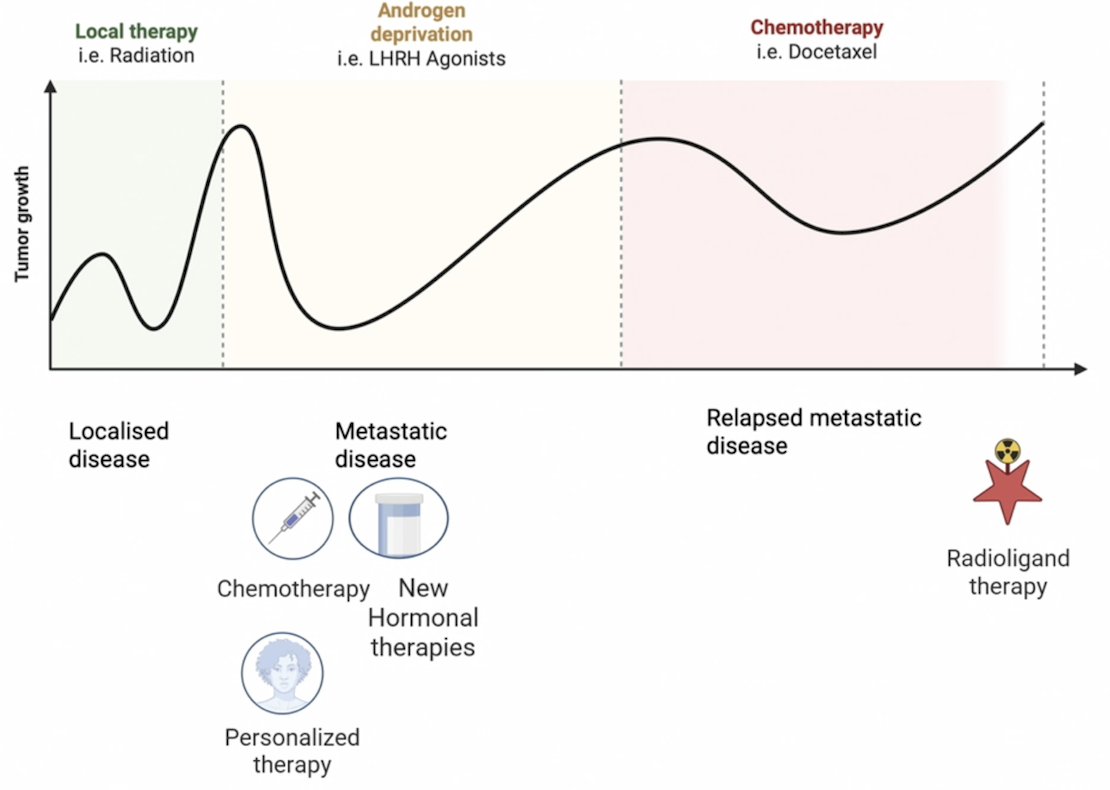
(UroToday.com) The 2026 PSMA & Beyond conference featured a clinical trial updates session and presentation by Dr. Nick James discussing the STAMPEDE2 PSMA-Lu comparison. An overview of prostate cancer reveals several important treatment themes, including for localized disease, relapsed or advanced disease, later relapse post hormone therapy, and therapy migration:
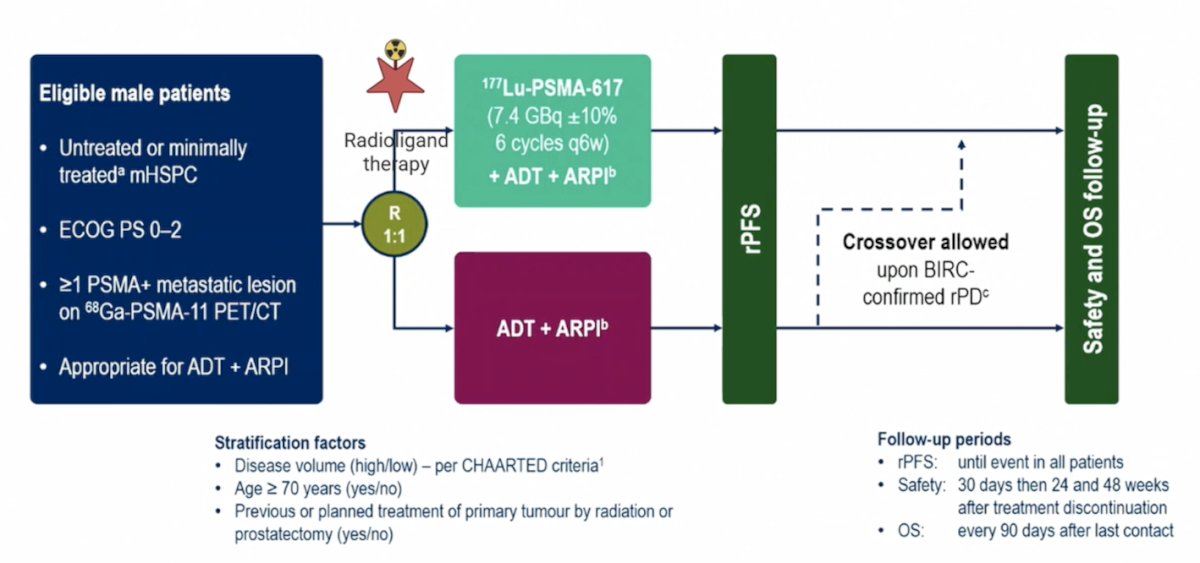
Dr. James started by highlighting the PSMAddition trial, which randomized men with untreated or minimally treated metastatic hormone sensitive prostate cancer (mHSPC) and ≥1 PSMA-positive metastatic lesion on 68Ga-PSMA-11 PET/CT to the experimental arm comprising 177Lu-PSMA 617 (7.4 GBq ±10% 6 cycles every 6 weeks) + ADT + androgen receptor pathway inhibitor versus the control arm of ADT + androgen receptor pathway inhibitor. Of note, crossover to the 177Lu-PSMA 617 arm was permitted after radiographic progression:
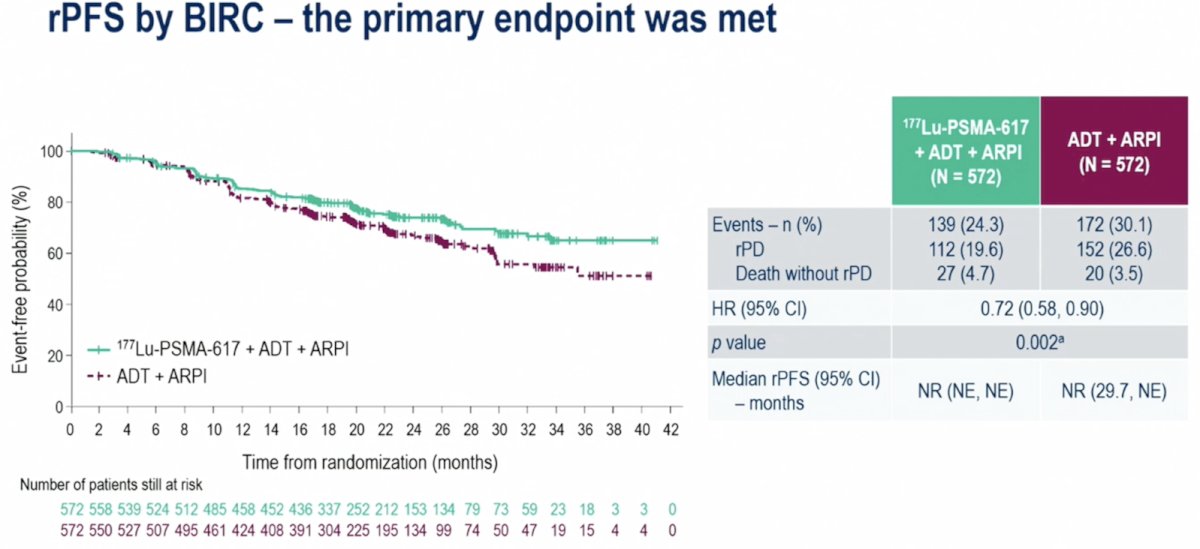
The study met its primary endpoint of radiographic progression free survival, which was significantly prolonged with the addition of 177Lu-PSMA-617 (HR 0.72, 95% CI 0.58-0.90, p = 0.002), however the median radiographic progression free survival has not been reached in either arm:
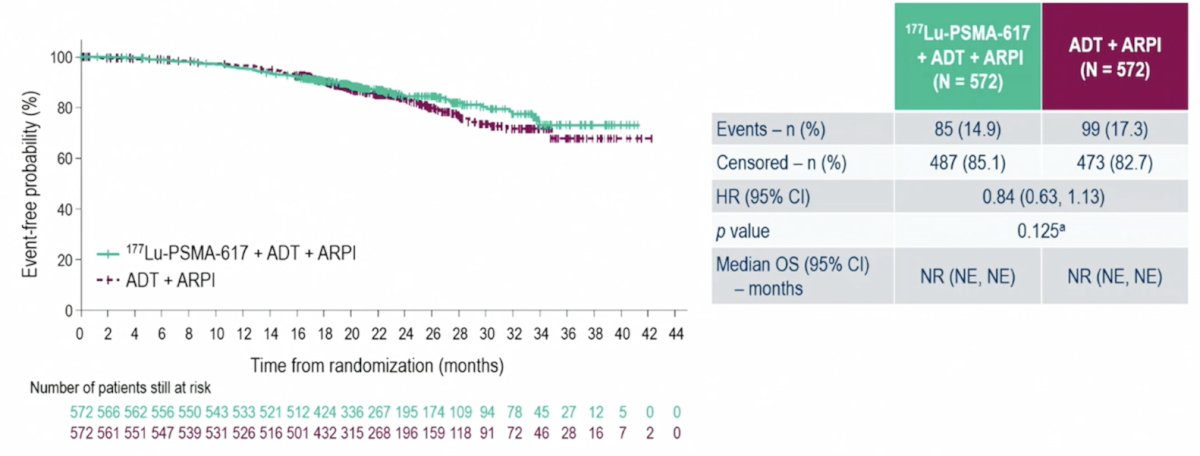
Overall survival analysis to date demonstrates a trend towards an overall survival benefit in the intervention arm (HR 0.84, 95% CI 0.64-1.13; p = 0.125):
In advanced prostate cancer, multiple drugs are now used upfront, with survival times increasing from 2-3 years in 2004 to 7-10 years by 2025. Despite this, few if any patients are cured, and there is diminishing returns with upfront intensification. Multiple new classes of therapy are emerging, but how do we test them all?
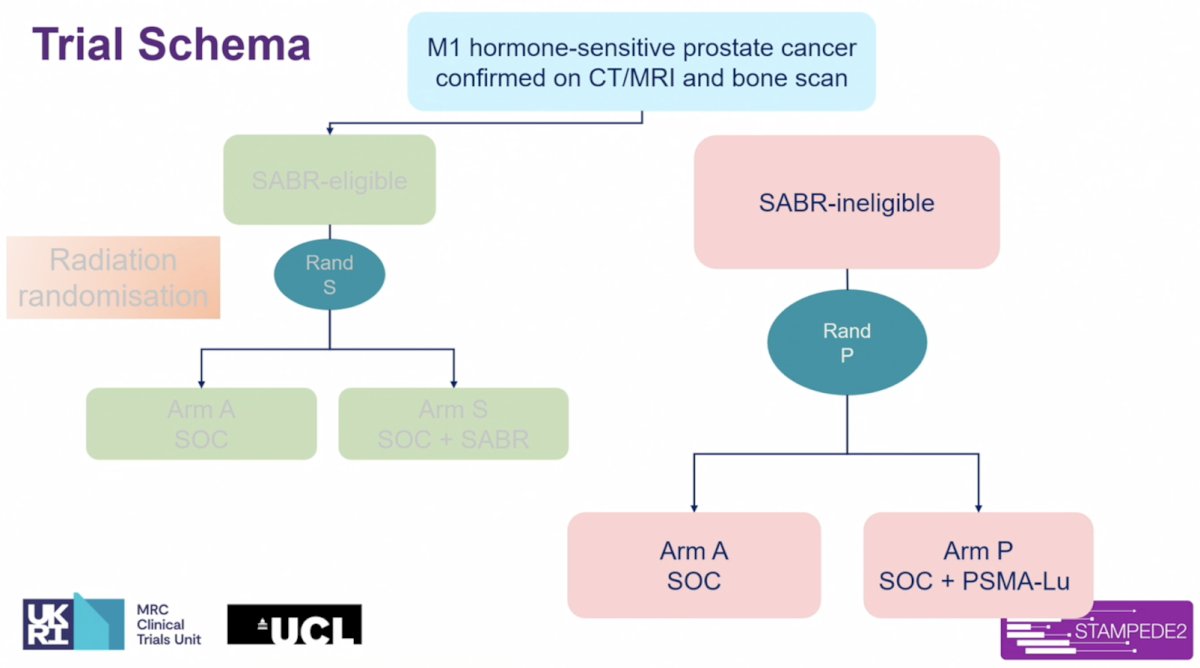
STAMPEDE2 builds upon STAMPEDE, with two comparisons (and several more in discussion), including:
- Comparison S: Stereotactic ablative body radiotherapy, testing stereotactic ablative body radiotherapy + standard over care alone versus standard of care alone in patients deemed eligible for stereotactic ablative body radiotherapy (oligometastatic)
- Comparison P: PSMA-177 lutetium, testing 177Lu-PSMA-617 + standard of care against standard of care alone in patients deemed ineligible for stereotactic ablative body radiotherapy (polymetastatic)
STAMEDE2 comparison P includes an intensified schedule to maximize isotope delivery, with all doses given by week 13:
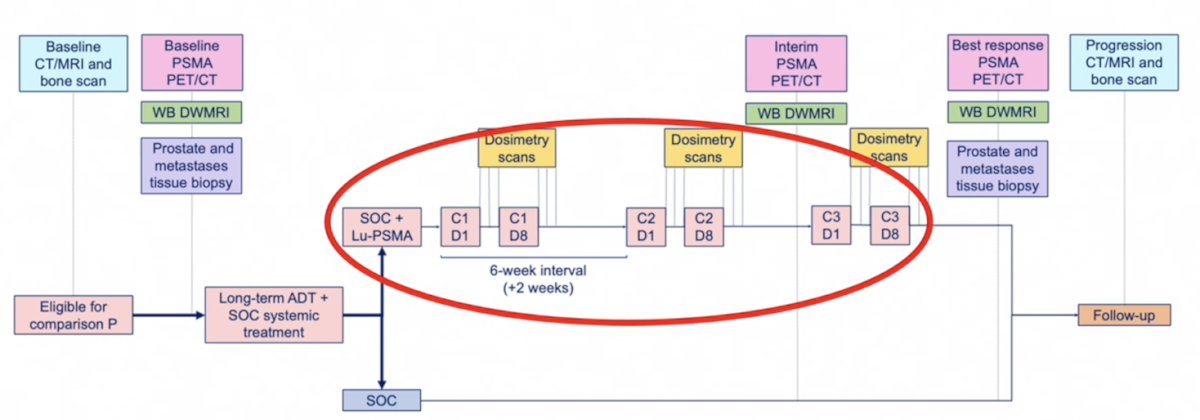
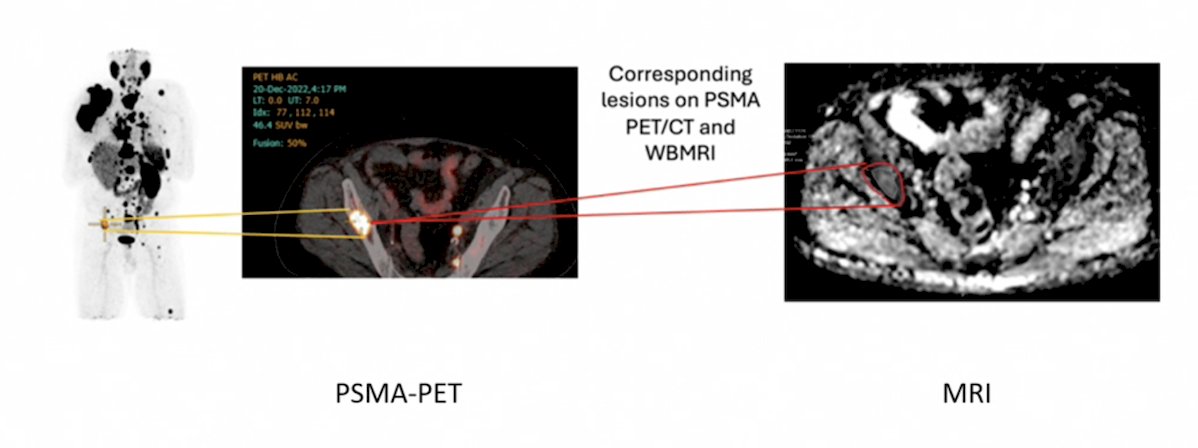
A dosimetry study will assess the impact of ADT + androgen receptor pathway inhibitor on dose delivery per lesion and on normal tissues. Additionally, dual whole body MRI and PET imaging will assess the response to therapy. At PSMA and Beyond 2026, Dr. James presented early unpublished dosimetry and imaging data from STAMPEDE2 comparison P.
For the remainder of his presentation, Dr. James discussed his group’s PCF Tactical Award, “Unraveling drivers of treatment resistance to 177Lu-PSMA-617 in patients with mHSPC and identification of new therapeutic targets to overcome it.” They hypothesize that:
- Radiologically-detected residual disease at maximum response to primary therapy includes tumor clones that lead to treatment resistance in advanced prostate cancer
- In depth analysis of residual disease will identify drivers of resistance, biomarkers for treatment selection, and new therapeutic targets for intervention
The above hypotheses will be assessed with (i) radiomics of differential response, (ii) correlative biological analysis of resistant tumors, (iii) integrative analysis of radiomic and biological data, and (iv) identifying druggable targets that are drivers of treatment failure. Biopsies of residual disease will be targeted, given that MRI gives detailed information on sites of viable tumor, and the group has the expertise for targeted biopsy of bone lesions:
Dr. James concluded his presentation discussing the STAMPEDE2 PSMA-Lu comparison with the following take-home points:
- Early data shows that an intensified schedule is feasible and safe
- Emerging imaging and dosimetry data will inform future trial design
- International recruitment is set to commence in the second quarter of 2026 in Germany, Ireland, Spain, and hopefully Italy
Presented by: Professor Nick James, Institute of Cancer Research, London, United Kingdom
Written by: Zachary Klaassen, MD, MSc – Urologic Oncologist, Associate Professor of Urology, Georgia Cancer Center, Wellstar MCG Health, @zklaassen_md on Twitter during the 2026 PSMA & Beyond Conference, Los Angeles, CA, Thurs, Mar 26 – Fri, Mar 27, 2026.
Related content: STAMPEDE2 PSMA-Lu Comparison "Presentation" - Nicholas James