

(UroToday.com) The 2026 PSMA & Beyond conference featured a PSMA PET session and presentation by Dr. Peter Choyke discussing whether what we see on PSMA PET matters. Dr. Choyke started his presentation by highlighting that the use of PSMA PET in the diagnosis and staging of patients, as well as selecting mCRPC patients for 177Lu-PSMA-617, is well established. But, there are still some questions regarding the impact on long-term outcomes for utilization of PSMA PET in the biochemical recurrence setting.
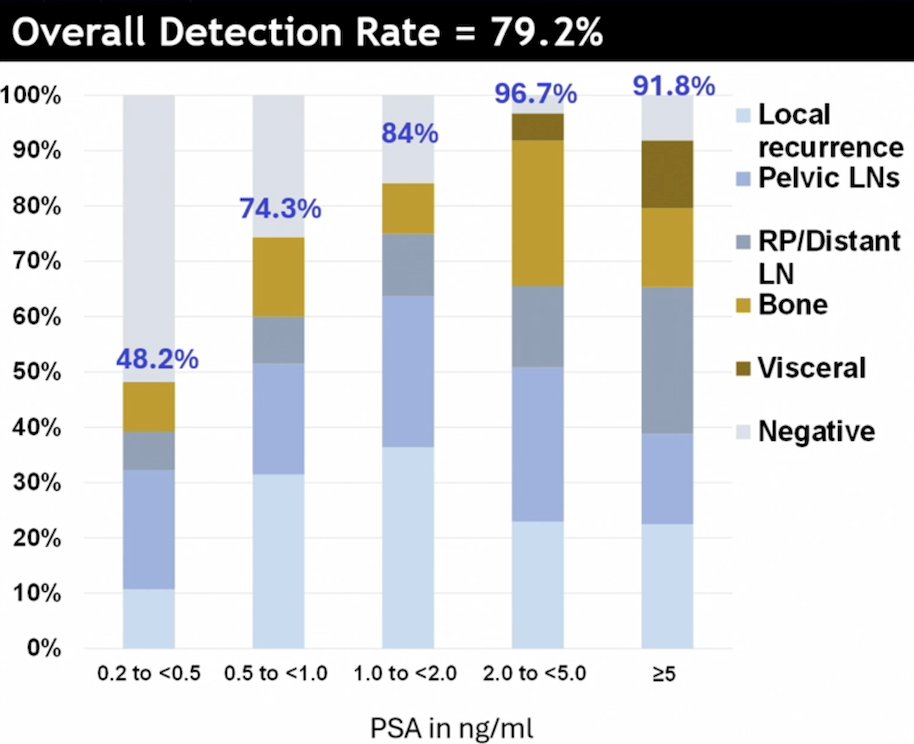
In 2022, Mena et al.1 reported a two-institution analysis assessing predictors of 18F-DCFPyL PET/CT positivity in patients with biochemical recurrence of prostate cancer after local therapy. Among 245 patients, 79.2% (194/245) had a positive 18F-DCFPyL PET/CT result, with detection rates of 48.2% (27/56), 74.3% (26/35), 84% (37/44), 96.7% (59/61), and 91.8% (45/49) for PSAs of <0.5, 0.5 to <1.0, 1.0 to <2.0, 2.0 to <5.0, and ≥5.0 ng/mL, respectively:
Importantly, Dr. Choyke stated that most patients with biochemical recurrence do not develop metastases as defined by conventional imaging criteria:
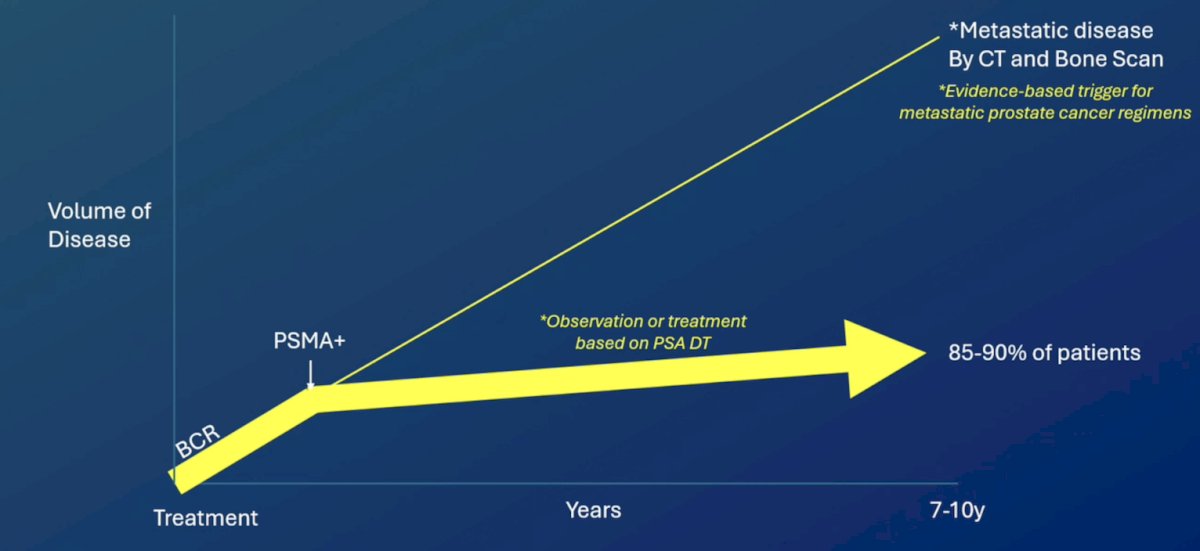
Stensland and colleagues2 previously reported national long-term survival estimates after radical prostatectomy for prostate cancer in an important study from the Veterans Health Association. Among 21,992 patients who underwent radical prostatectomy from 2005 to 2015, 5,951 (27%) patients had biochemical recurrence. Among these patients, 677 (11%) developed metastasis. The 10 year overall survival rate was 70%, and among biochemical recurrence patients, 1,140 died, of which 224 patients died from prostate cancer. At 5 years, the prostate cancer specific survival rate was 98%, and at 10 years, the overall survival rate was 94.4%.
Taking the available literature into account, Dr. Choyke emphasized that there is a lead time bias for PSMA PET positive biochemical recurrence to metastatic castration sensitive prostate cancer (mHSPC):
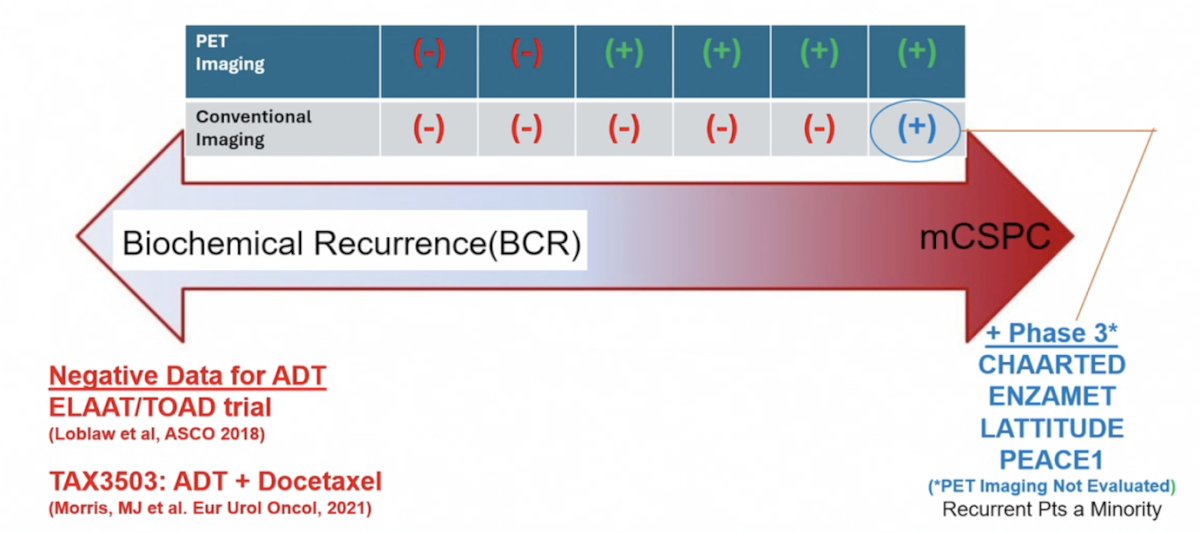
There are two important scenarios with regard to biochemical recurrence and the PSMA PET era.
Before PSMA PET:
- Biochemical recurrence was monitored with bone scan and CT based on PSA kinetics
- Observation was considered appropriate management for many patients
- Treatment was appropriate for some patients, based on PSA doubling time (ie. <6-9 months)
- Therapies were dose reduced (ie. intermittent, treatment holidays)
After PSMA PET:
- Biochemical recurrence is detected by PSMA PET
- Treatment is given immediately, regardless of PSA doubling time
- Therapy is more intense: the same as metastatic regimens
- Is there an actual benefit to doing this?
- There are manifest risks and loss of quality of life
There are several notable harms of ADT and androgen receptor pathway inhibitor therapy, including (i) cardiovascular disease/lipid profiles, (ii) diabetes, (iii) obesity, (iv) osteoporosis/fractures, (v) gynecomastia, (vi) fatigue, (vii) hot flashes, (viii) depression, cognitive impairment, seizures, and (ix) sexual dysfunction, low libido, and erectile dysfunction.
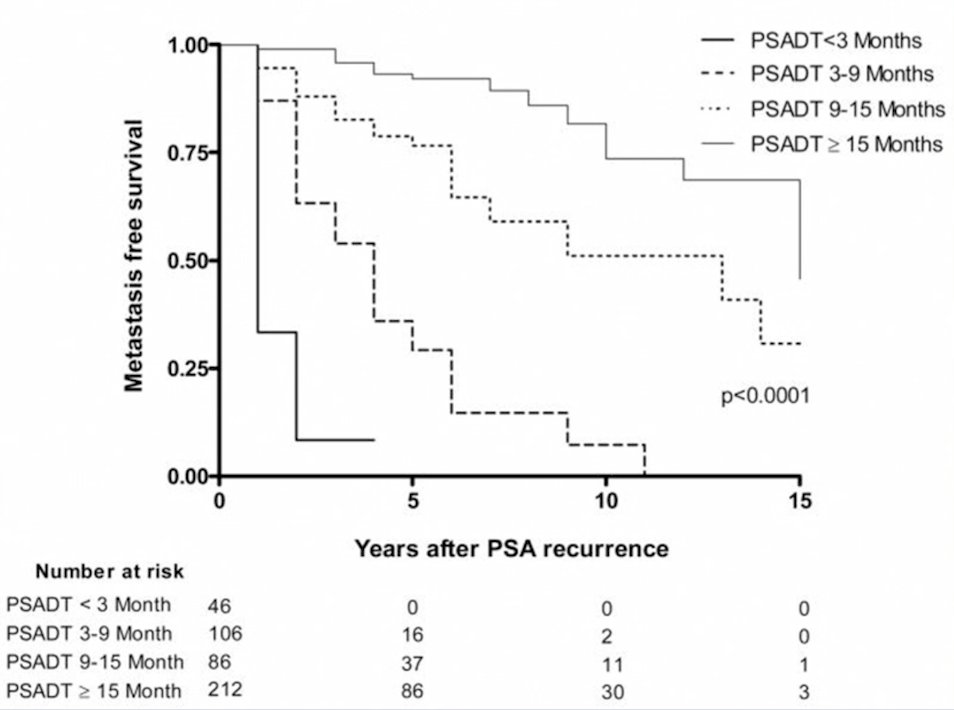
Although not as glamorous as many contemporary biomarkers, PSA doubling time is a highly established biomarker. In a 2012 study by Antonarakis et al.,3 they assessed the natural history of metastatic progression in men with PSA recurrence after radical prostatectomy. Over a median follow-up after prostatectomy of 8.0 years, 134 of 450 patients (29.8%) developed metastases, while the median metastasis free survival was 10.0 years. On multivariable regression analysis, PSA doubling time (<3.0 versus 3.0-8.9 versus 9.0-14.9 versus ≥15.0 months) was associated with metastasis free survival:
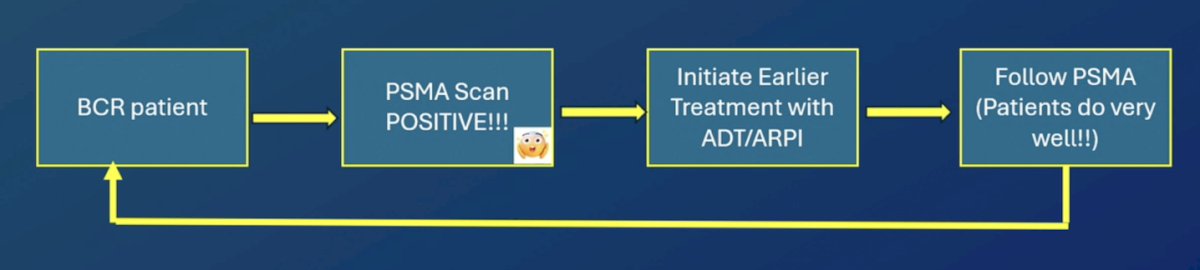
Dr. Choyke’s assessment of a positive PSMA PET scan in the biochemical recurrence setting is that treatment gets initiated earlier with an ADT + androgen receptor pathway inhibitor, and patients (not surprisingly) do very well:
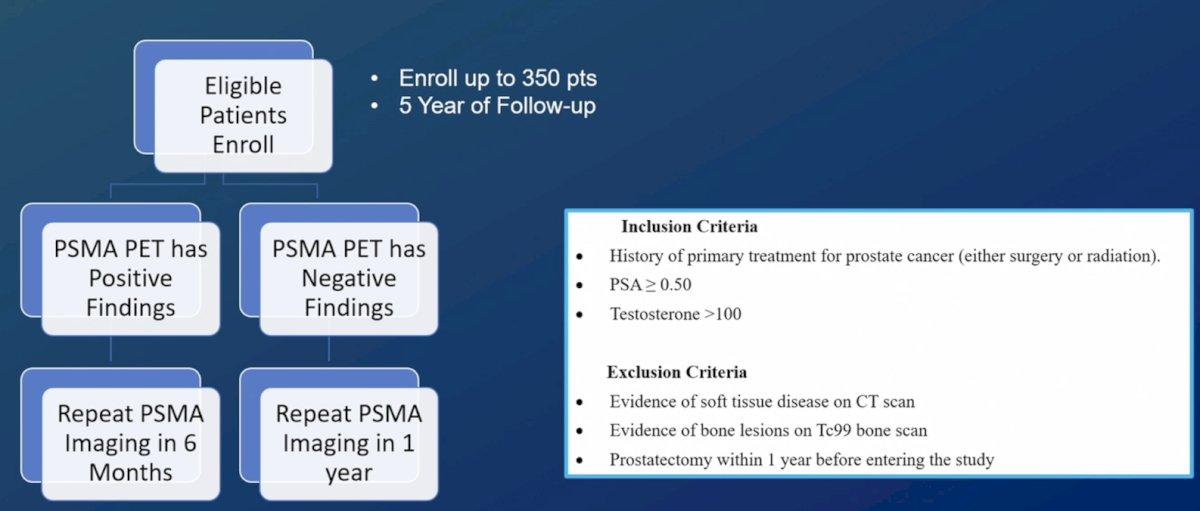
Because of stage migration and the latency period for many patients with biochemical recurrence, Dr. Choyke and colleagues at the NCI initiated a prospective PSMA PET monitoring study. Among 350 patients with a history of treated prostate cancer (either surgery or radiotherapy), a PSA >= 0.50 ng/mL, and testosterone > 100, patients with a positive PSMA PET had repeat imaging in 6 months, and patients with a negative PSMA PET had repeat imaging in 1 year:
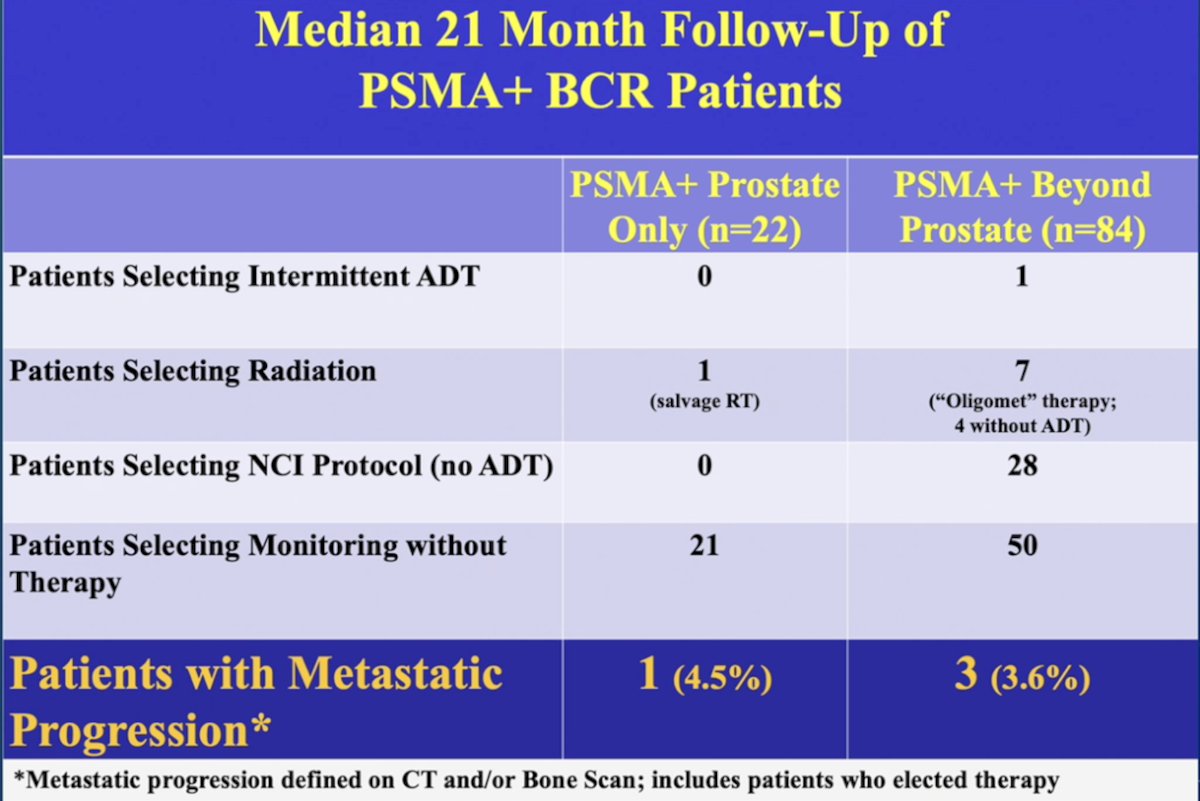
Dr. Madan presented the 21 month follow-up data at ASCO GU 2026 for those with a positive PSMA PET, with the following results, including only 1 patient with PSMA PET positivity in the prostate bed having metastatic progression:
Dr. Choyke concluded his presentation discussing whether what we see on PSMA PET matters with the following take-home points:
- PSMA PET in biochemical recurrence is leading to earlier, more intensive treatments without evidence of benefit
- Risk of prostate cancer-related death is low, whereas the risks of adverse consequences of ADT + androgen receptor pathway inhibitors are real
- Conventional imaging and PSA doubling time are the only evidence-based metrics to guide therapy in advanced prostate cancer
- More data about the benefits/risks of earlier treatment are needed before PSMA PET is used to guide therapy in biochemical recurrence
- These are important lessons for the future of molecular imaging probes
Presented by: Peter Choyke, MD, FACR, National Cancer Institute, Bethesda, MD
Written by: Zachary Klaassen, MD, MSc – Urologic Oncologist, Associate Professor of Urology, Georgia Cancer Center, Wellstar MCG Health, @zklaassen_md on Twitter during the 2026 PSMA & Beyond Conference, Los Angeles, CA, Thurs, Mar 26 – Fri, Mar 27, 2026.
Related content: Does What We See on PSMA PET Matter? "Presentation" - Peter Choyke
References:
- Mena E, Rowe SP, Shih JH, et al. Predictors of 18F-DCFPyL PET/CT positivity in patients with biochemical recurrence of prostate cancer after local therapy. J Nucl Med. 2022 Aug;63(8):1184-1190.
- Stensland KD, Caram MEV, Herr DJ, et al. National long-term survival estimates after radical prostatectomy for prostate cancer. Urology. 2024 Feb:184:135-141.
- Antonarakis ES, Feng Z, Trock BJ, et al. The natural history of metastatic progression in men with prostate-specific antigen recurrence after radical prostatectomy: long-term follow-up. BJU Int. 2012 Jan;109(1):32-39.