

(UroToday.com) At the 2025 PSMA and Beyond annual meeting, Dr. Martin Pomper presents on the next generation of PSMA Radioligands. The PSMA space is getting crowded with multiple radionuclides and isotopes and unanswered questions on which targeting platform is most ideal and whether precision dosimetry is needed or even feasible. Rational combinations are being tried. But despite all of the advances, we are still not curing prostate cancer. Dr. Pomper notes RLT therapy generally show high upfront response but inevitably recur. He asks the provocative question, should no clone be left behind?
Dr. Pomper placed a comparison slide of alpha emitter Ac-PSMA 617 versus its competition in this clinical space, Lu-PSMA 617 and the chemotherapy Cabazitaxel. He notes the very different efficacy when compared to chemotherapy and believes access to theragnostic remains an inequity in treatment.1-3
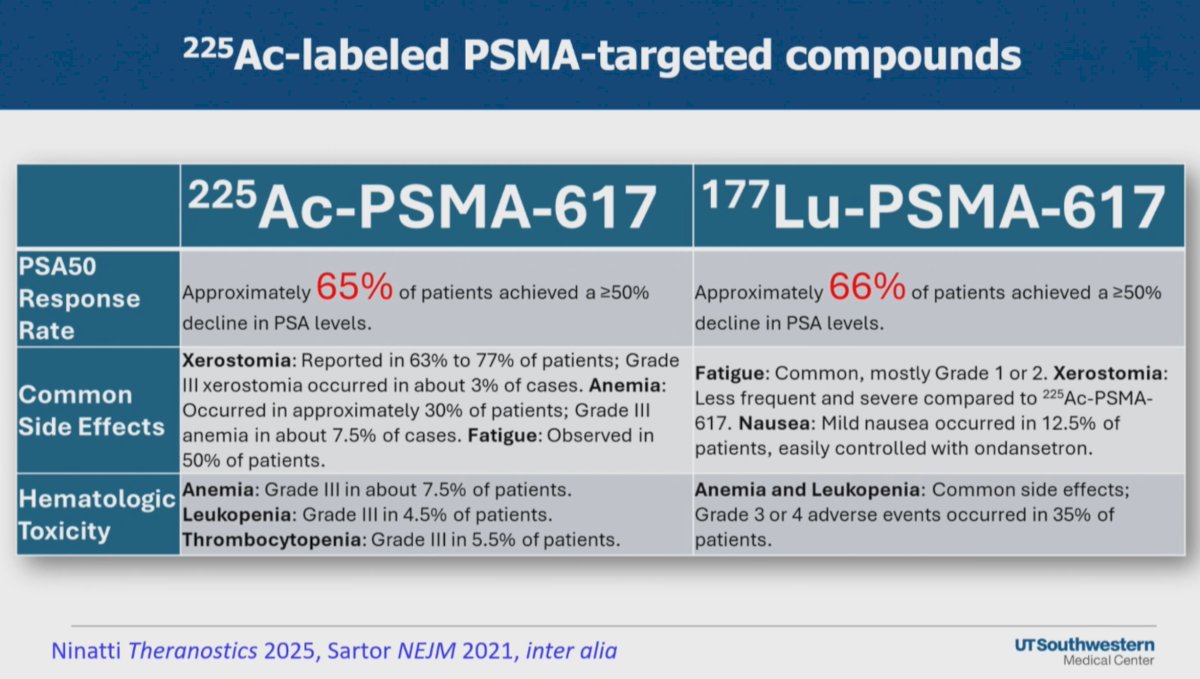
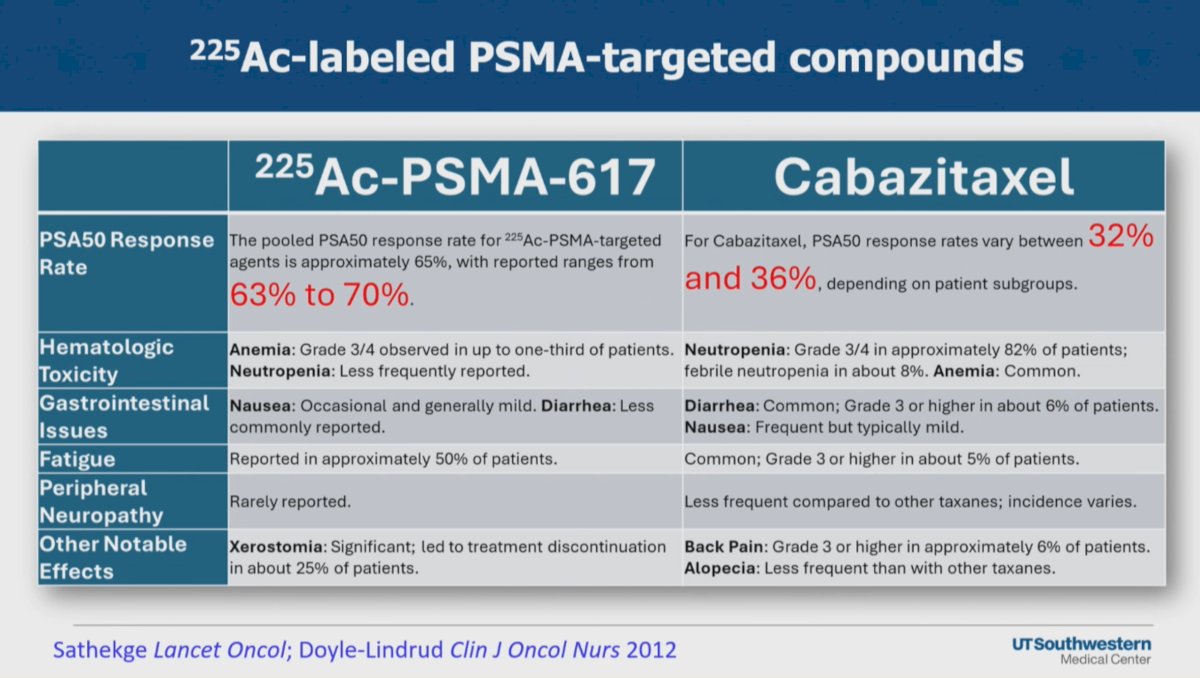
Dr. Pomper reminds us that both beta and alpha emitters have significant toxicity, particularly salivary glands, and there are also concerns regarding their long-term toxicity to the kidney; various efforts have been made to mitigate these off target effects. He highlighted a novel PSMA inhibitor, PSMA-769 with a more favorable tumor to kidney ratio.4

All of the above really suggests the search is not done for the ideal alpha emitter, Dr. Pomper suggests evaluating the clinical evidence surrounding astatine, noting it is a tamer alpha emitter with a simpler decay pattern and much shorter half-life.

Astatine also has attractive tumor concentration presence with more minimal off target effects. Concentration level at 21 hours post dosing is observed in the tumor with more rapid dissipation from off target organs. This has been looked at in first-in-human trials.

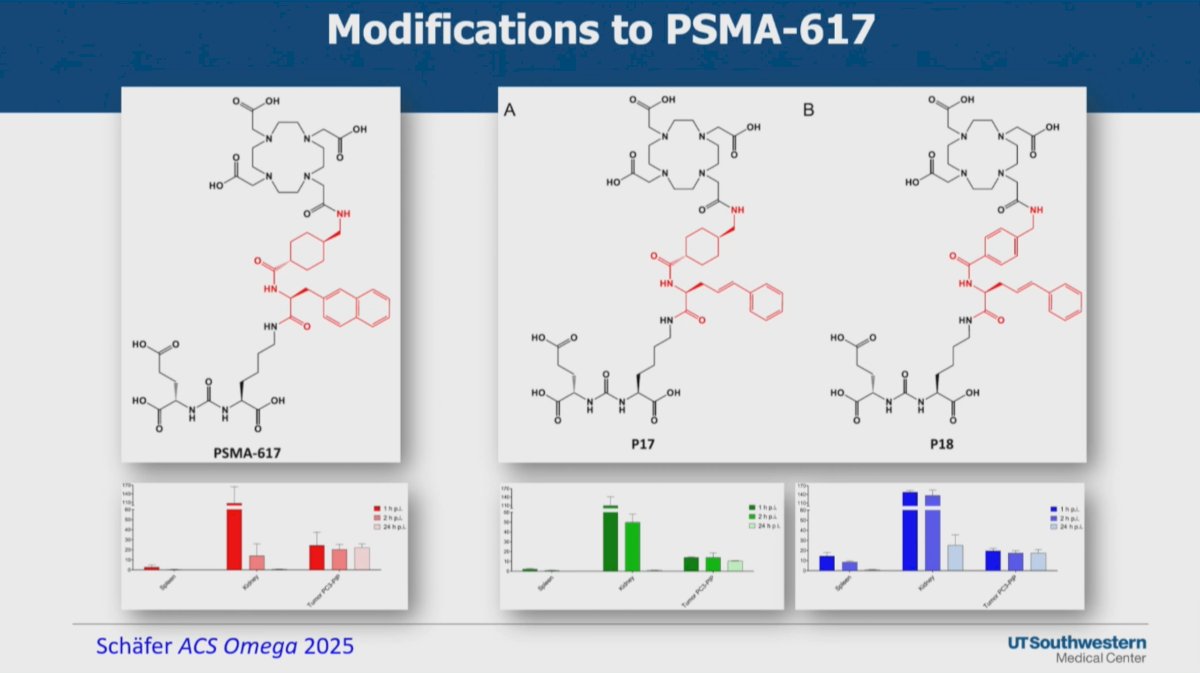
Other approaches have been to modify PSMA-617, variants have yielded more hydrophilic options with less binding to albumin. This pharmacological feature is thought to lessen trafficking to off target organs such as the salivary gland. However, Dr. Pomper notes, “617 is hard to beat”.
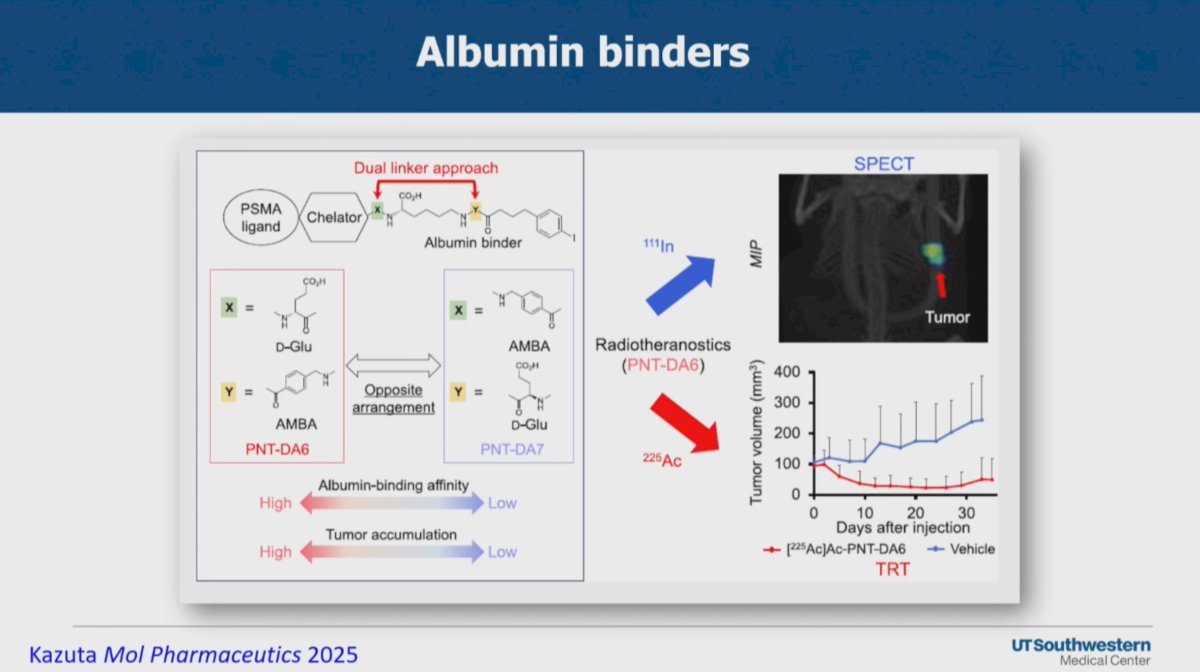
Dr. Pomper also offered an opposite approach, with agents that are albumin binders. The rationale behind albumin binders is that albumin bind will ensure more circulating time in the body with possibly more tumor (on effect) exposure. However, lingering questions regarding toxicity from such an approach, especially in the bone marrow remain unknown.
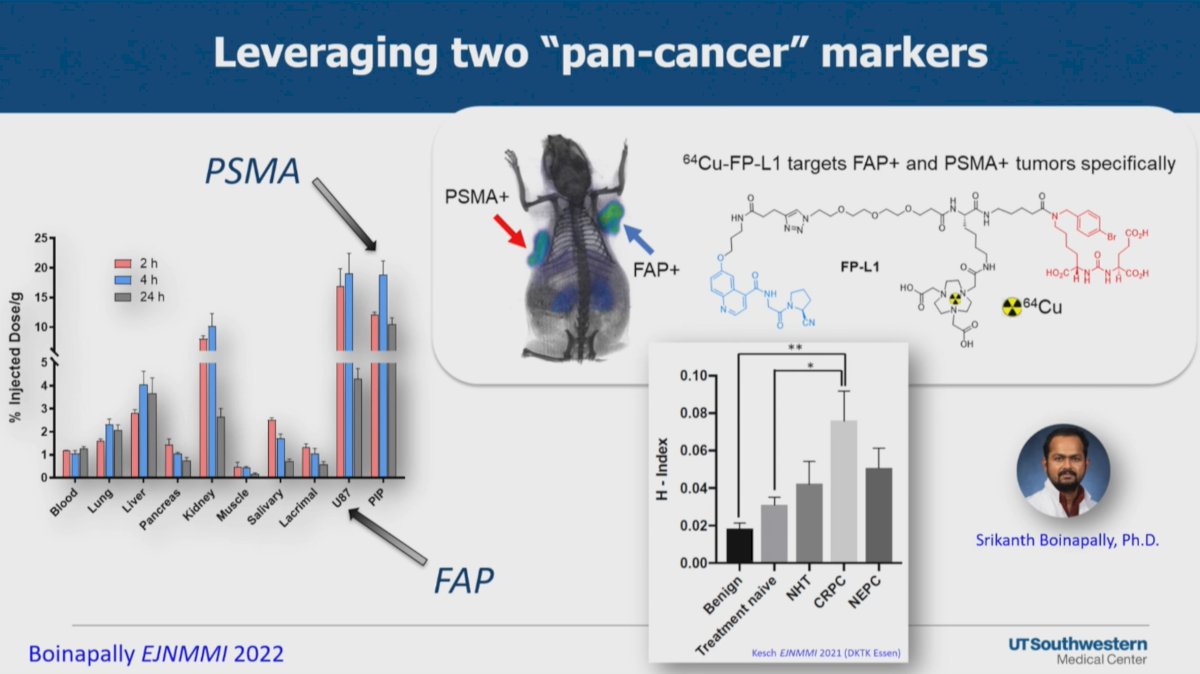
Dr. Pomper also highlighted two novel developments as we push the field of novel radioligands forward. There is work done creating a “pan-cancer” marker. We know neuroendocrine prostate cancer does NOT mark with PSMA, and reliance on PSMA based scans would miss this important disease state. However, by marking both PSMA and FAP, better visualization and potential future target for NEPC may be possible.
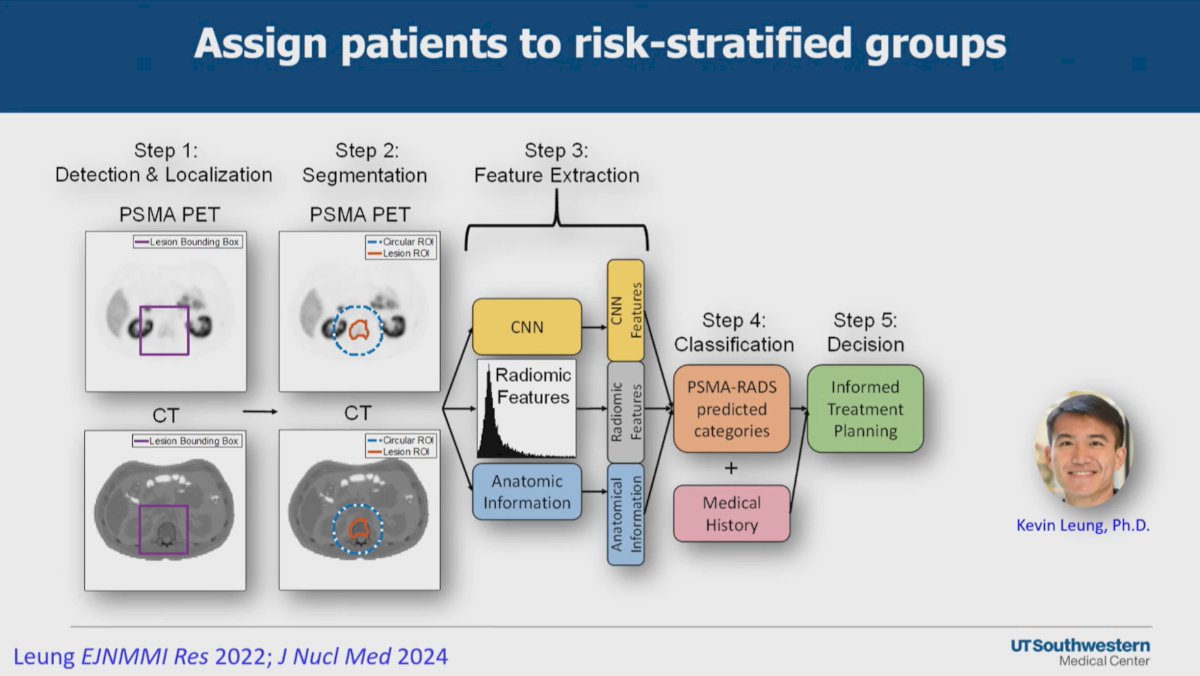
Finally, Dr. Pomper talked about work with AI that is in its infancy but holds promise to provide an entirely personalized treatment plan per patient on a per lesion basis, utilizing both scan data and incorporating anatomical, medical and radiomic features.
In conclusion, Dr. Pomper gave a technical talk giving us a broad overview of next generation of radioligands in concept and development.
Presented by: Martin Pomper, MD, PhD, University of Texas, Southwestern
Written by: Helen Moon, MD, Hematologist and Oncologist at the Kaiser Permanente Riverside Medical Center, Principal Investigator with the Cancer Clinical Trials Access Program, Southern California Permanente Medical Group, during the 2025 PSMA and Beyond Annual Meeting, Los Angeles, CA, Fri, Mar 28 – Sat, Mar 29, 2025.
- Jones T. Nauseef et al. Phase I/II study of 225Ac-J591 plus 177Lu-PSMA-I&T for progressive metastatic castration-resistant prostate cancer. JCO 40, TPS5100-TPS5100(2022).DOI:10.1200/JCO.2022.40.16_suppl.TPS5100
- Sartor O, de Bono J, Chi KN, Fizazi K, Herrmann K, Rahbar K, Tagawa ST, Nordquist LT, Vaishampayan N, El-Haddad G, Park CH, Beer TM, Armour A, Pérez-Contreras WJ, DeSilvio M, Kpamegan E, Gericke G, Messmann RA, Morris MJ, Krause BJ; VISION Investigators. Lutetium-177-PSMA-617 for Metastatic Castration-Resistant Prostate Cancer. N Engl J Med. 2021 Sep 16;385(12):1091-1103. doi: 10.1056/NEJMoa2107322. Epub 2021 Jun 23. PMID: 34161051; PMCID: PMC8446332.
- De Wit R, de Bono J, Sternberg CN, Fizazi K, Tombal B, Wülfing C, Kramer G, Eymard JC, Bamias A, Carles J, Iacovelli R, Melichar B, Sverrisdóttir Á, Theodore C, Feyerabend S, Helissey C, Ozatilgan A, Geffriaud-Ricouard C, Castellano D; CARD Investigators. Cabazitaxel versus Abiraterone or Enzalutamide in Metastatic Prostate Cancer. N Engl J Med. 2019 Dec 26;381(26):2506-2518. doi: 10.1056/NEJMoa1911206. Epub 2019 Sep 30. PMID: 31566937.
- Vaidyanathan G, Kang CM, McDougald D, Minn I, Brummet M, Pomper MG, Zalutsky MR. Brush border enzyme-cleavable linkers: Evaluation for reducing renal uptake of radiolabeled prostate-specific membrane antigen inhibitors. Nucl Med Biol. 2018 Jul-Aug;62-63:18-30. doi: 10.1016/j.nucmedbio.2018.05.002. Epub 2018 May 5. PMID: 29803076; PMCID: PMC6054815.