

(UroToday.com) At the 2025 PSMA and Beyond annual meeting, Dr. Scott Tagawa presents the role of PSMA targeting antibodies with a focus on radionuclides. He notes that this is a growing field with multiple PSMA-TRT under investigation in clinical trials.
Dr. Tagawa starts his talk by noting how the key difference in size of both constructs leads to notable differences in target uptake and exposure.
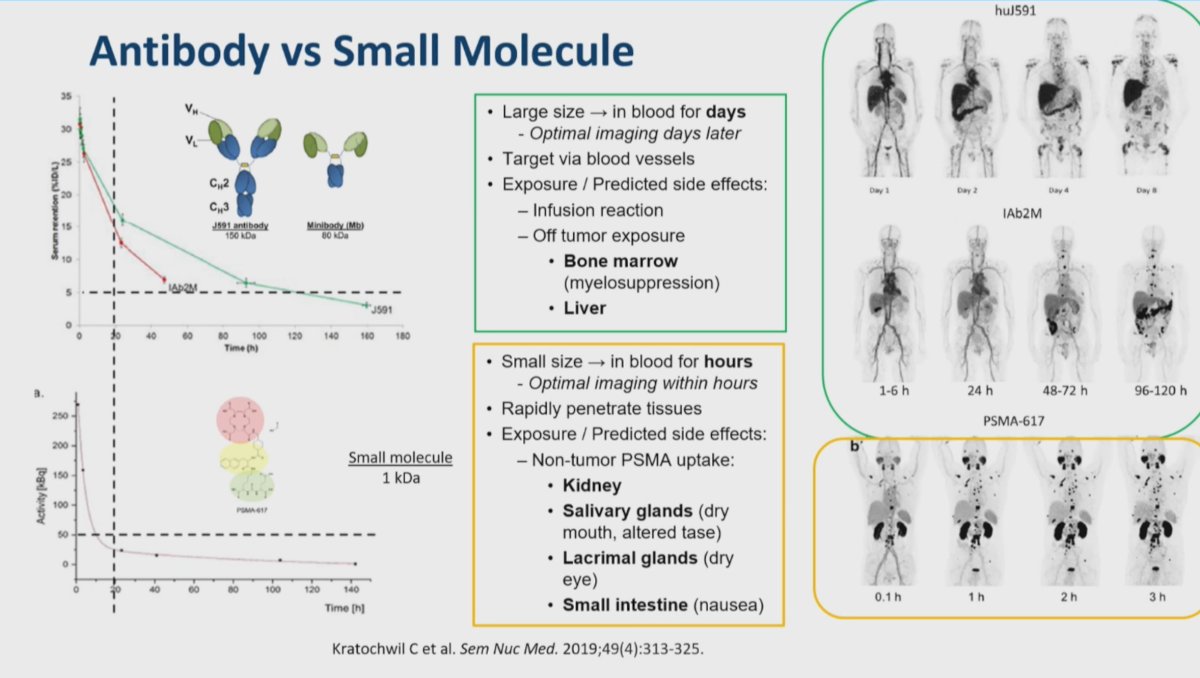
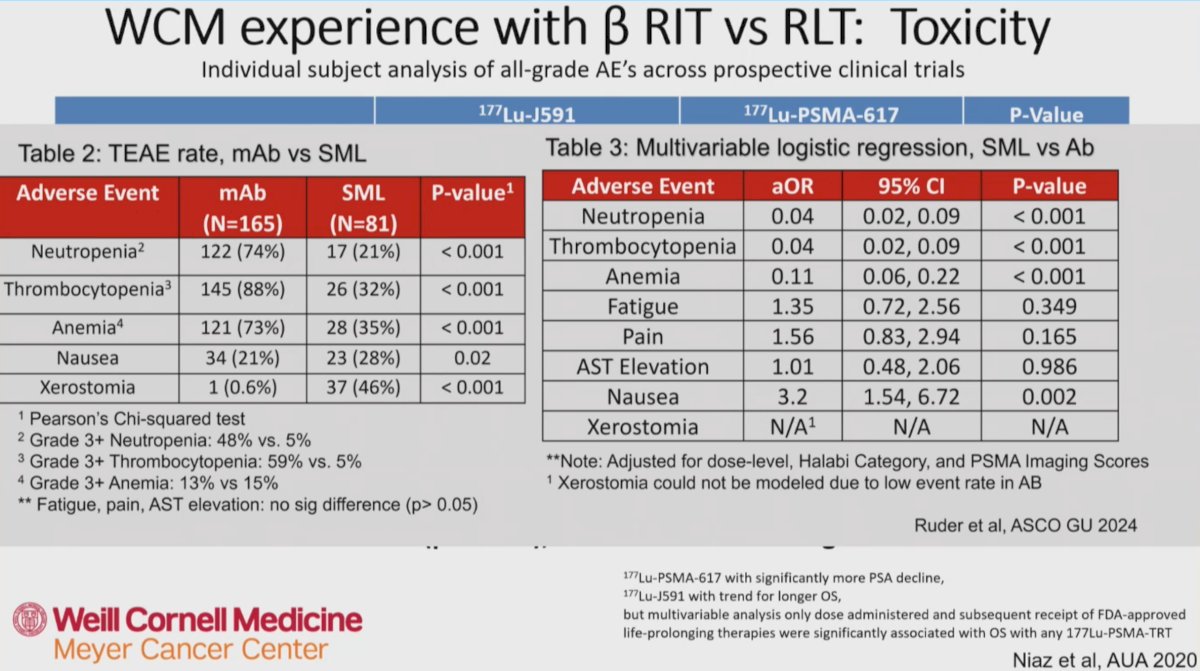
This size difference translates into a different toxicity profile. A small molecule radionuclide appears to have significantly less hematological effect, but significant xerostomia compared to the monoclonal Ab J5911
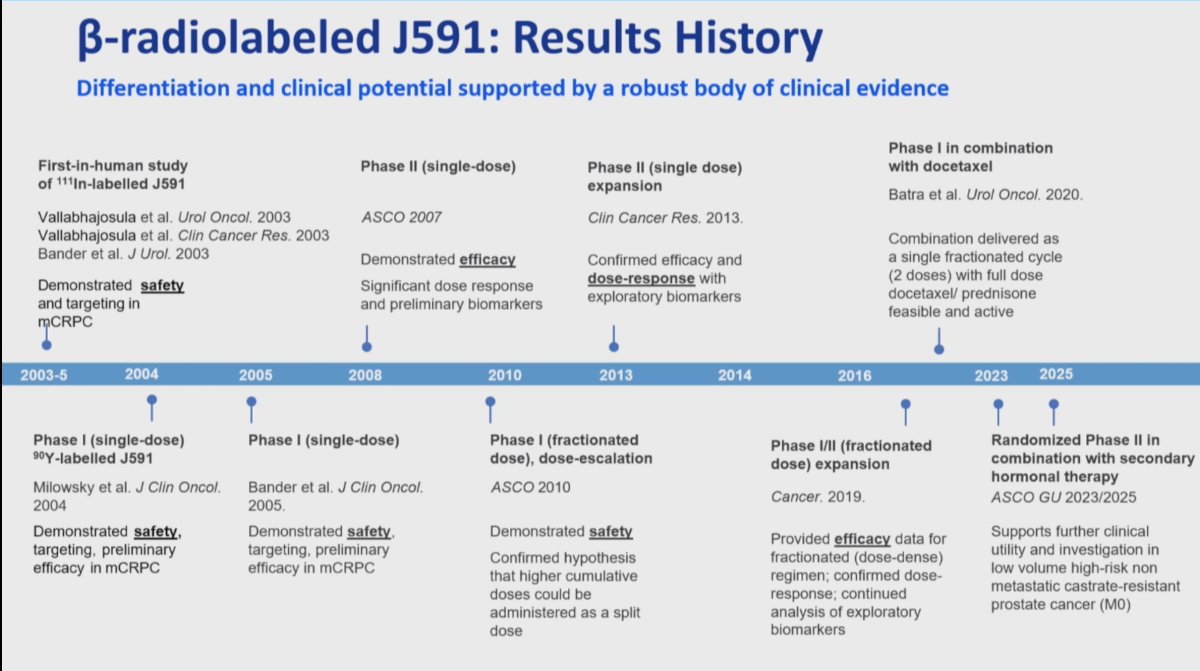
He then presented the history of beta radiolabeled monoclonoal antibody development.
Dr. Tagawa presented the dosimetry data of Lu-PSMA J591 that support its further developments in prostate cancer, with significant PSA (87.5%) decline with dose of 45 mCi/m2 achieved. This compound is currently being investigated in a phase 3 randomized trial: ProstACT-Global.

Dr. Tagawa then pivoted to compounds using alpha radiation (Actinium) PSMA monoclonal antibodies. He notes this is an exciting development in the RLT as alpha radiation is known to have much higher radiation density than beta radiation. Phase 1 data is available that establishes safety and hints at a notable PSA response. Further clinical development is planned.2
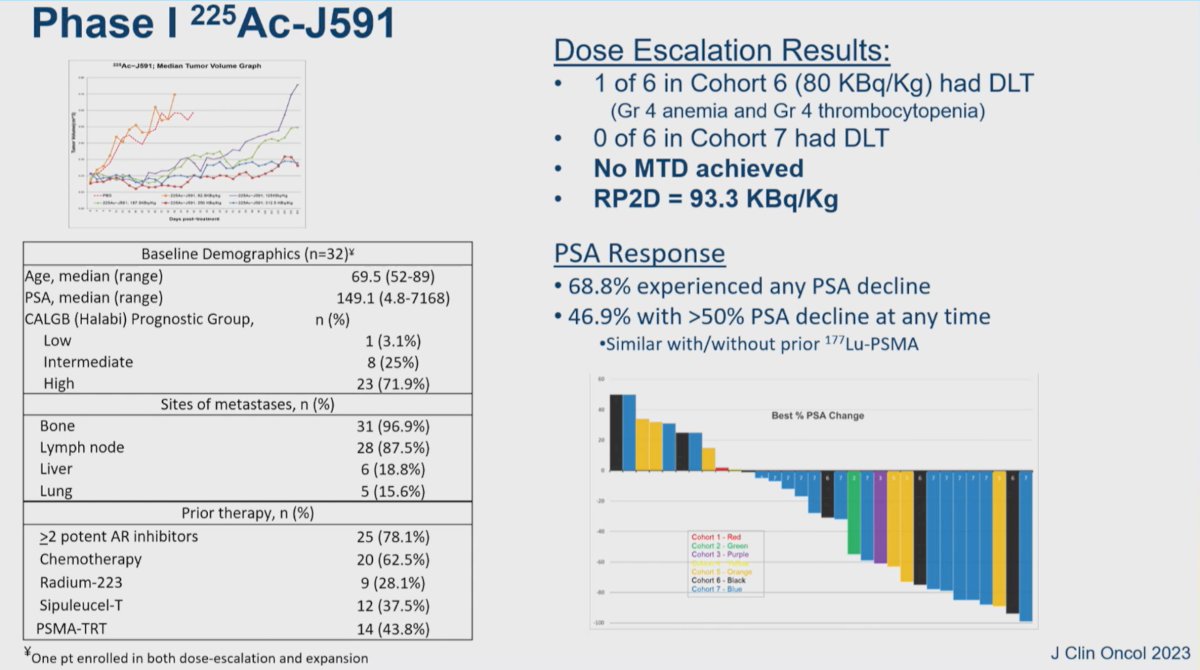
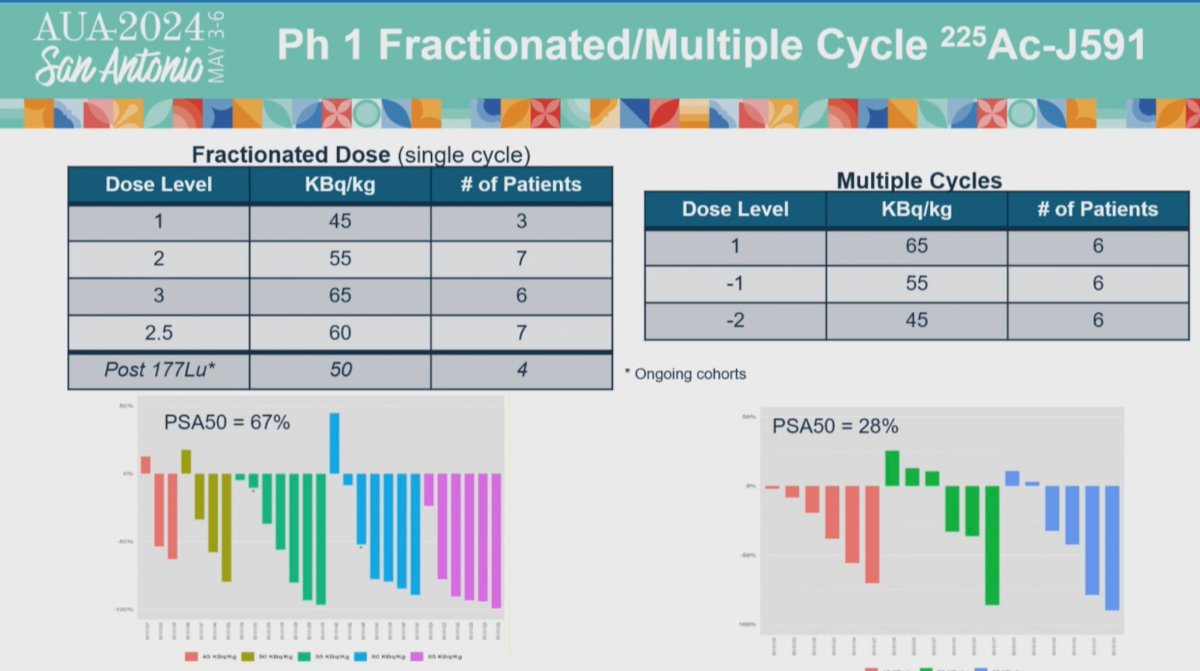
Aside from the alpha versus beta radiation, Dr. Tagawa also notes this agent is examining the treatment schedule we have come to expect for RLT. Is fractionated dose, a more intensive series of dose; more efficacious than standard interval (every 6 weeks)? This was looked at in terms of safety for Ac-J591 and found to be safe; however noted efficacy difference is seen. Fractionated dose (Day 1 and 15) yielded high PSA 50 responses and this has been selected as the treatment plan going forward in phase II.
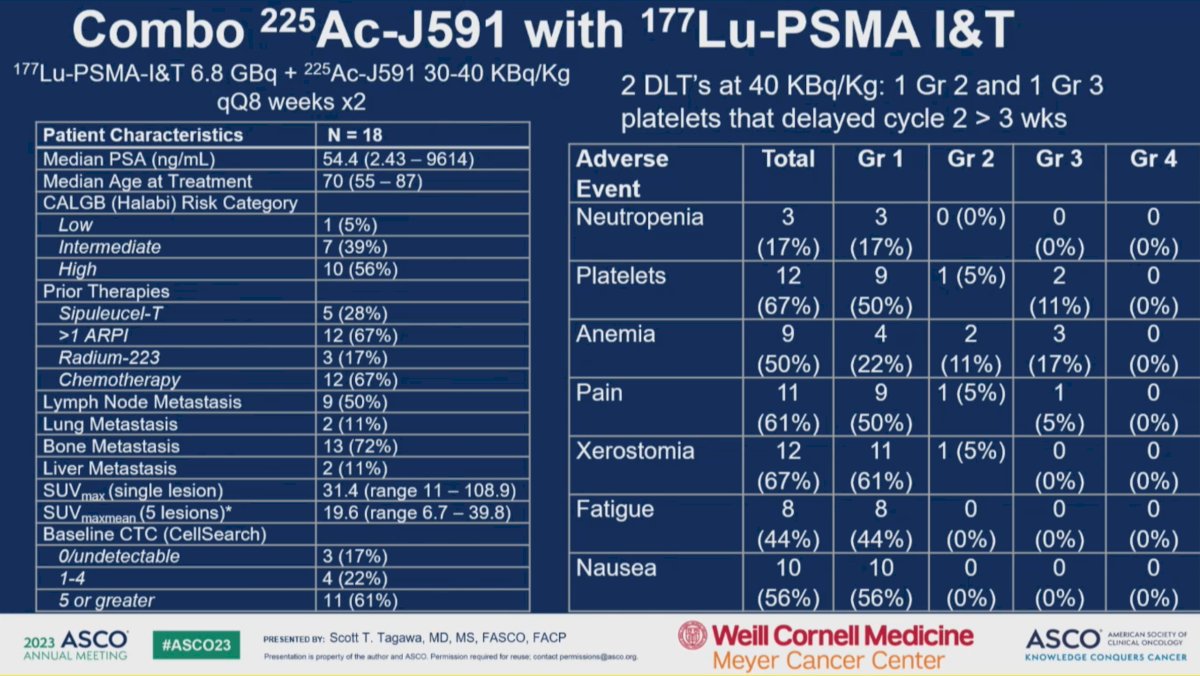
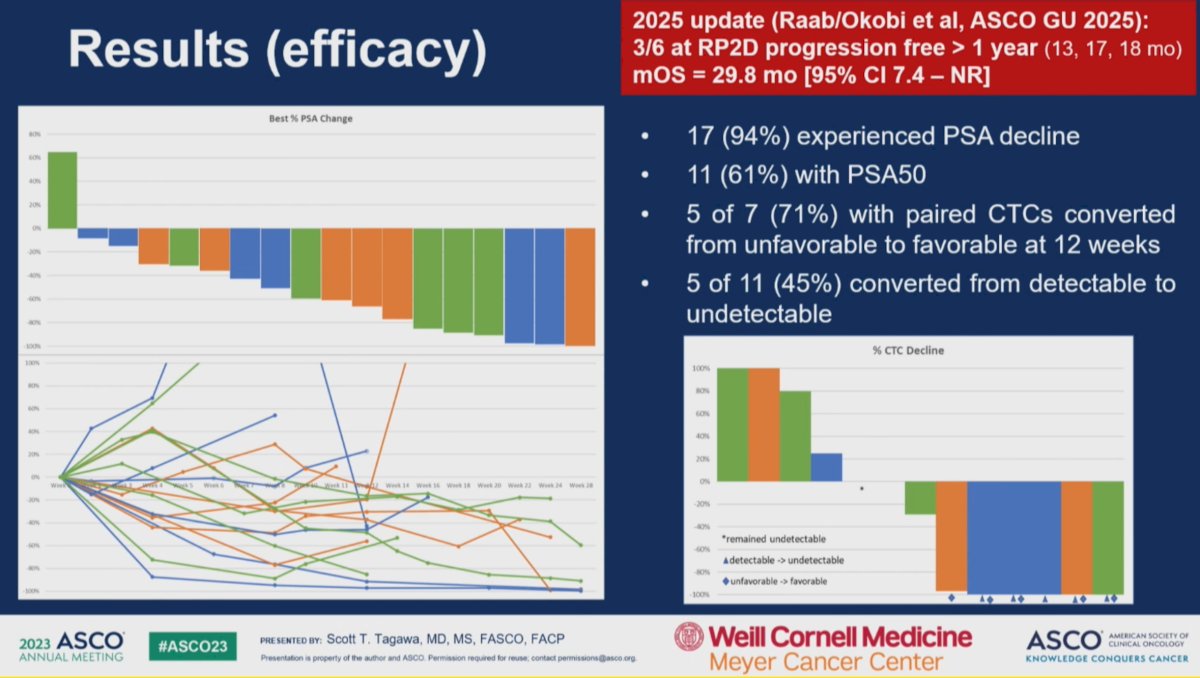
Dr. Tagawa then asked the following question: is there a way to leverage the clinical benefit of both alpha and beta radiation by combination therapy? He notes preclinical data exist that supports such approach. During ASCO 2025, he presented the following results with combined Ac-J591 and Lu-PSMA I&T. The combination appears to be safe with provocative response data that hints at possible longer duration of response from the combination.3
Teasing further, Dr. Tagawa brought up the idea of combination alpha RLT with immunotherapy. Multiple immune strategies have been tried in the treatment of prostate cancer, a notable immune cold tumor. Results have been disappointing so far, but could alpha radiation prompt a temporary immune hot environment? Especially for the believers of the abscopal effect? This agent is currently being examined in combination with pembrolizumab in an effort to provide data.
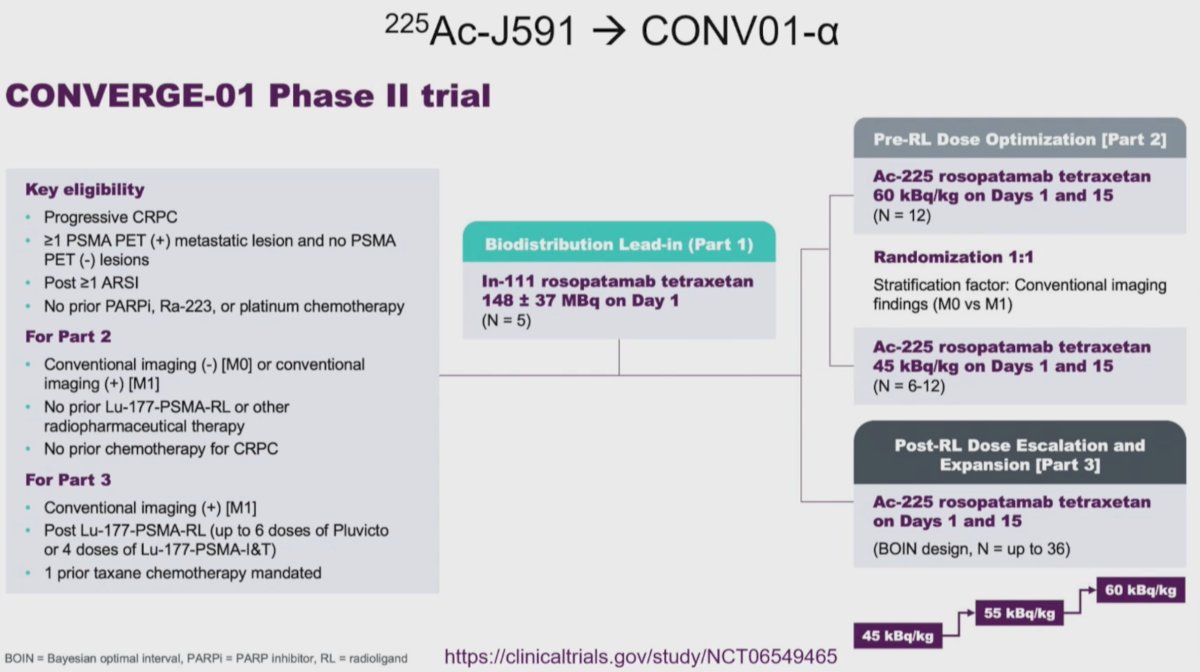
Commercialization of Ac-J591 will be with the CONVERGE-01 trial and this is the design:
In summary, Dr. Tagawa notes
- Both small molecule and monoclonal Ab can effectively target PSMA positive cells
- The two entities have very different kinetics and biodistribution
- Intracellular retention is a known difference but whether that translate into clinical impact is up for debate
- Alpha emitters such as Ac-J591 is undergoing development with a different treatment paradigm, utilizing fractionated schedule rather than a timed interval schedule.
Presented by: Scott Tagawa, MD, MS, Weill Cornell Medicine, New York
Written by: Helen Moon, MD, Hematologist and Oncologist at the Kaiser Permanente Riverside Medical Center, Principal Investigator with the Cancer Clinical Trials Access Program, Southern California Permanente Medical Group, during the 2025 PSMA and Beyond Annual Meeting, Los Angeles, CA, Fri, Mar 28 – Sat, Mar 29, 2025.
References:
- Niaz MJ, Batra JS, Walsh RD, Ramirez-Fort MK, Vallabhajosula S, Jhanwar YS, Molina AM, Nanus DM, Osborne JR, Bander NH, Tagawa ST. Pilot Study of Hyperfractionated Dosing of Lutetium-177-Labeled Antiprostate-Specific Membrane Antigen Monoclonal Antibody J591 (177 Lu-J591) for Metastatic Castration-Resistant Prostate Cancer. Oncologist. 2020 Jun;25(6):477-e895. doi: 10.1634/theoncologist.2020-0028. Epub 2020 Jan 30. PMID: 31999003; PMCID: PMC7288642.
- Scott T. Tagawa et al. Prostate-Specific Membrane Antigen–Targeting Alpha Emitter via Antibody Delivery for Metastatic Castration-Resistant Prostate Cancer: A Phase I Dose-Escalation Study of 225Ac-J591. JCO 42, 842-851(2024). DOI:10.1200/JCO.23.00573.
- Jones T. Nauseef et al. Phase I/II study of 225Ac-J591 plus 177Lu-PSMA-I&T for progressive metastatic castration-resistant prostate cancer. JCO 40, TPS5100-TPS5100(2022).DOI:10.1200/JCO.2022.40.16_suppl.TPS5100.