

(UroToday.com) At the 2025 PSMA and Beyond annual meeting, Dr. Matthias Eiber discussed the current thoughts surrounding PSMA-617 versus PSMA- I&T. PSMA-617 is commercially approved; however, there are other PSMA RLT therapies coming online.
A prominent one is PSMA-I & T. Dr. Eiber takes us through the available data:
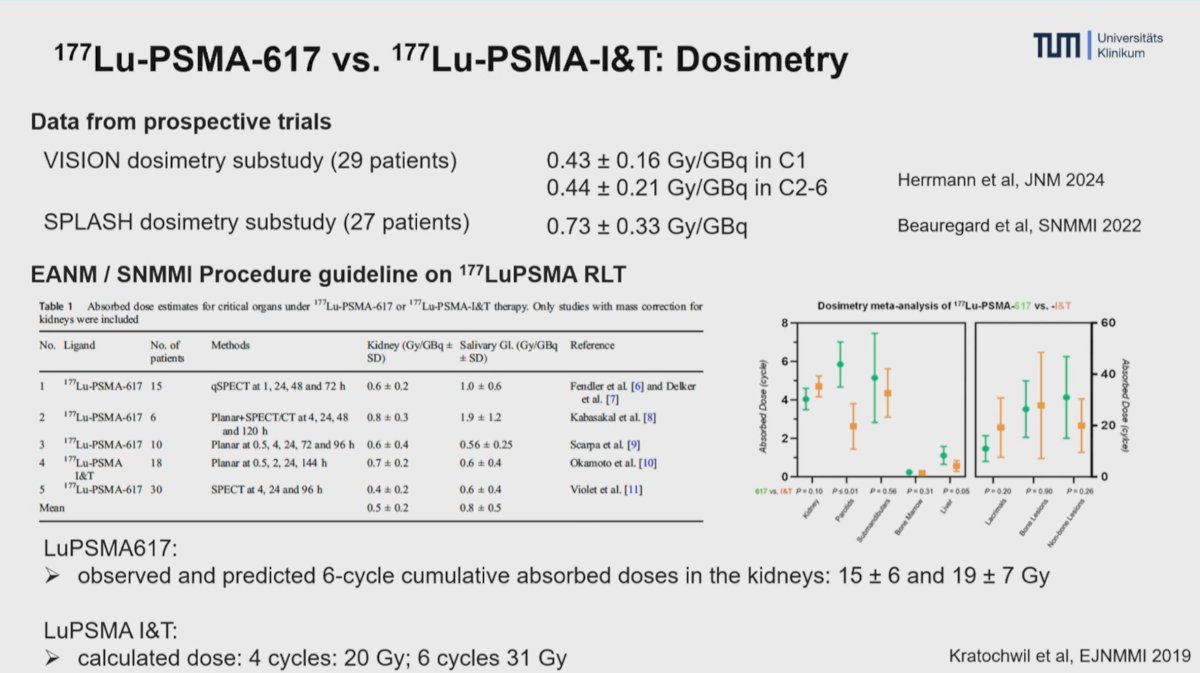
PSMA-I&T have similar molecular structure and an identical PSMA-binding motive; however, construct differences result in a less lipophilic property and also an additional iodine that allows for dual binding. Clinical experiences are becoming available, and a good comparison would be looking at the results of the PSMAfore trial (using PSMA-617) versus SPLASH (PSMA-I&T)1,2

Dr. Eiber notes the two trials were similarly designed and included a similar patient population. He points out that the total dose given were different (up to 6 doses for PSMA-617 and up to 4 doses with PSMA-I&T), side effect profiles were very similar.
Dr. Eiber also points out available German studies featuring matched pair comparisons of the two RLT therapies. He highlighted a data set published in 2022 where 110 patients were matched by clinical history, age at first cycle, and other characteristics. The two agents appear to be more similar than different in this data set. Yielding similar survival and similar adverse events

Before the field comes to the conclusion these two agents are the same, Dr. Eiber points out their differences in dosimetry, especially as it may affect total number of doses given and the late renal effects are of particular concern.
The field is also rapidly expanding with onboarding of newer PSMA-ligands. He notes radio hybrid PSMA are true theragnostic ligands with improved characteristics with one of them 18F-rhPSMA-7.3 already approved under the POSLUMA brand. Pre-clinical work suggest these new radio hybrids have more balanced rapid clearance and higher tumor accumulation.
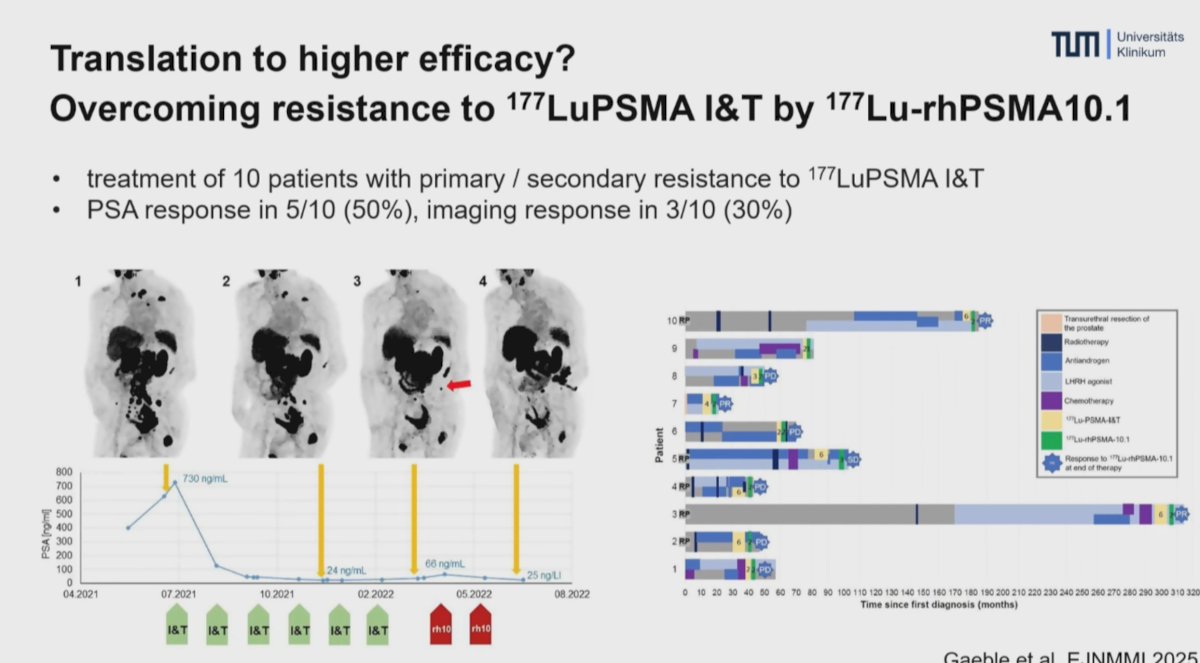
He showed early clinical work with 177-rhPSMA 10.1, with a small study of 10 patients who have failed PSMA-I&T. they were offered 177-rhPSMA 10.1 and showed a robust PSA response and imaging response.
In addition to the promising clinical data, he also points out the safety favorability of Lu-rhPSMA 10.1. Remember, dosimetry from PSMA-617 and PSMA-I&T suggest renal uptake of 0.43 and 0.73 respectively, he notes mean absorbed kidney dose to be 0.266 Gy/GBq and 0.130 Gy/Gby (0.63 with PSMA-617 in VISION).3
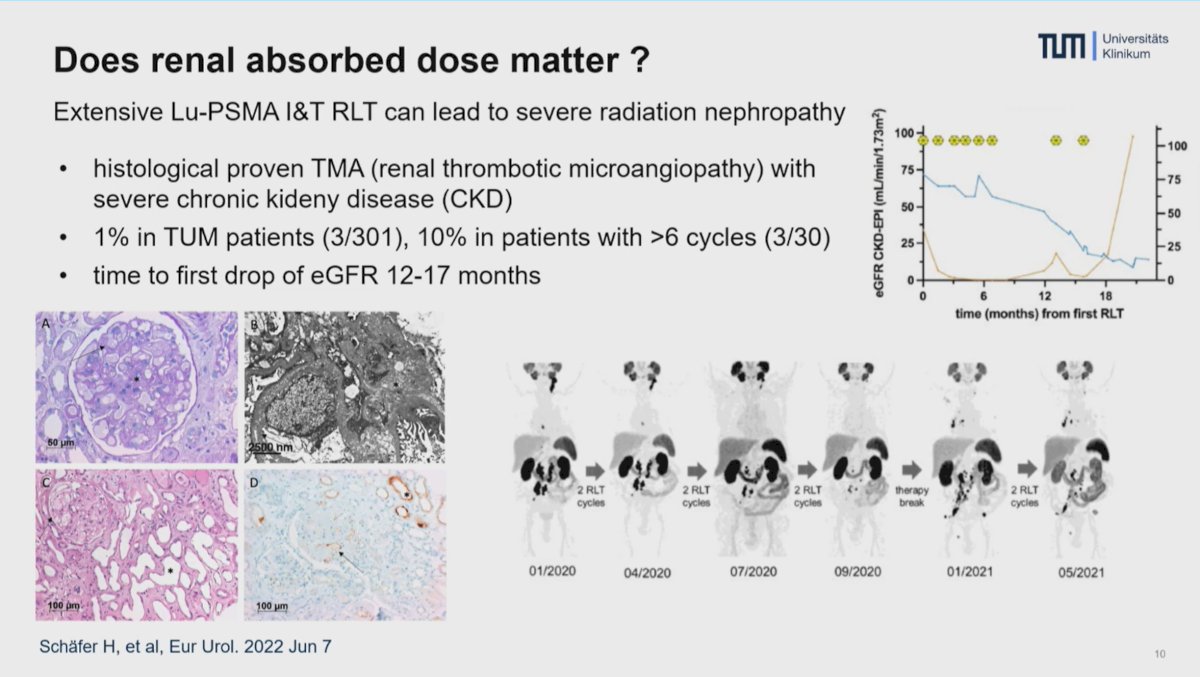
While there is not a maximum dose established with RLT currently, he notes that in Germany (where there has been access to RLT for quite a long time), there is a growing body of evidence regarding severe radiation nephropathy. This is a delayed effect that is seen 12 to 17 months post initiation of therapy. The more RLT therapy, the more renal toxicity. He notes that there is now one case of a patient placed on dialysis after receiving more than 10 doses of RLT therapy; making cumulative renal toxicity an important consideration.
In conclusion, Dr. Eiber highlighted the following:
- In his personal view, PSMA-617 and PSMA-I&T likely have similar efficacy
- There are hints PSMA I&T have higher absorbed dose
- Second generation PSMA-ligands are coming on line
- Longer tumor retention
- Higher on target dose hoped
- This may lead to adjusted treatment protocols.
Presented by: Matthias Eiber, MD, PhD, Technische Universität München, Germany
Written by: Helen Moon, MD, Hematologist and Oncologist at the Kaiser Permanente Riverside Medical Center, Principal Investigator with the Cancer Clinical Trials Access Program, Southern California Permanente Medical Group, during the 2025 PSMA and Beyond Annual Meeting, Los Angeles, CA, Fri, Mar 28 – Sat, Mar 29, 2025.
References:
- Morris, Michael J et al. 177Lu-PSMA-617 versus a change of androgen receptor pathway inhibitor therapy for taxane-naive patients with progressive metastatic castration-resistant prostate cancer (PSMAfore): a phase 3, randomised, controlled trial. The Lancet, Volume 404, Issue 10459, 1227 – 1239.
- Sartor, Oliver et al. Efficacy of 177Lu-PNT2002 in PSMA-positive mCRPC following progression on an androgen-receptor pathway inhibitor (ARPI) (SPLASH).Annals of Oncology (2024) 35 (suppl_2): 1-72. 10.1016/annonc/annonc1623.
- Caroline Foxton, Bradley Waldron, Rikke Veggerby Grønlund, et al. Preclinical Evaluation of 177Lu-rhPSMA-10.1, a Radiopharmaceutical for Prostate Cancer: Biodistribution and Therapeutic Efficacy. Journal of Nuclear Medicine Mar 2025, jnumed.124.268508; DOI: 10.2967/jnumed.124.268508.