

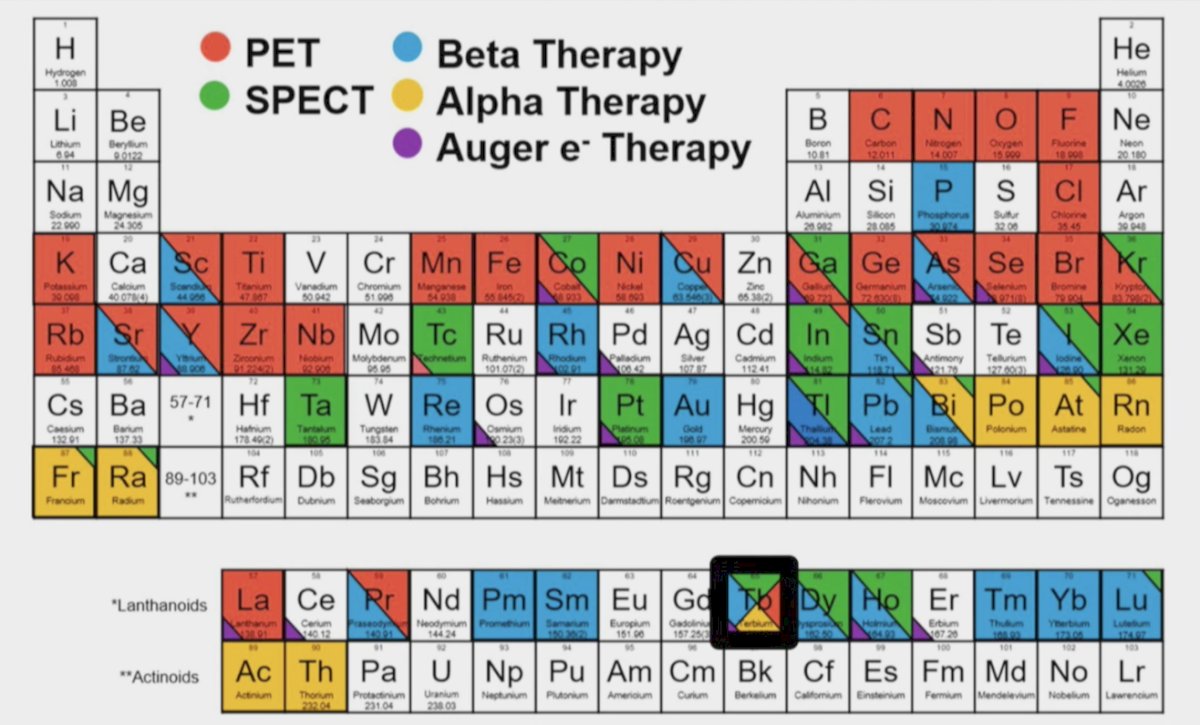
(UroToday.com) The 2025 PSMA and Beyond annual meeting featured an alpha and other radionuclides session and a presentation by Dr. Michael Hofman discussing the role of other radionuclides such as Tb161. Dr. Hofman started his presentation by highlighting how Terbium fits in to the periodic table of elements, and in the context of PET, SPECT, beta therapy, alpha therapy, and auger e- therapy:
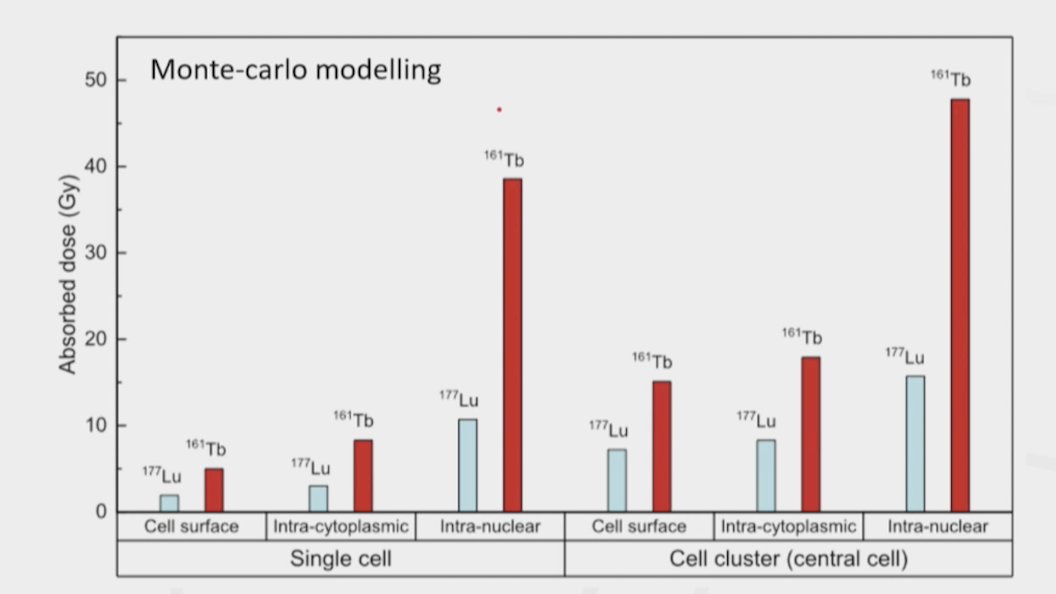
Dr. Hofman then discussed the VIOLET phase I/II trial assessing Terbium-161 (161Tb) at the Peter MacCallum Cancer Centre. The reason for needing additional radioligand therapy options beyond 177Lu-PSMA-617 is that even among patients that have a complete response with 177Lu-PSMA-617, mCRPC eventually progresses. This may originate from micrometastases too small to receive a lethal dose of beta-radiation alone. Previous work has suggested that 161Tb compared to 177Lu better targets single cell and micrometastases:
In mice models, 161Tb has shown decreased tumor growth and increased survival among patients treated with 161Tb-PSMA-617:

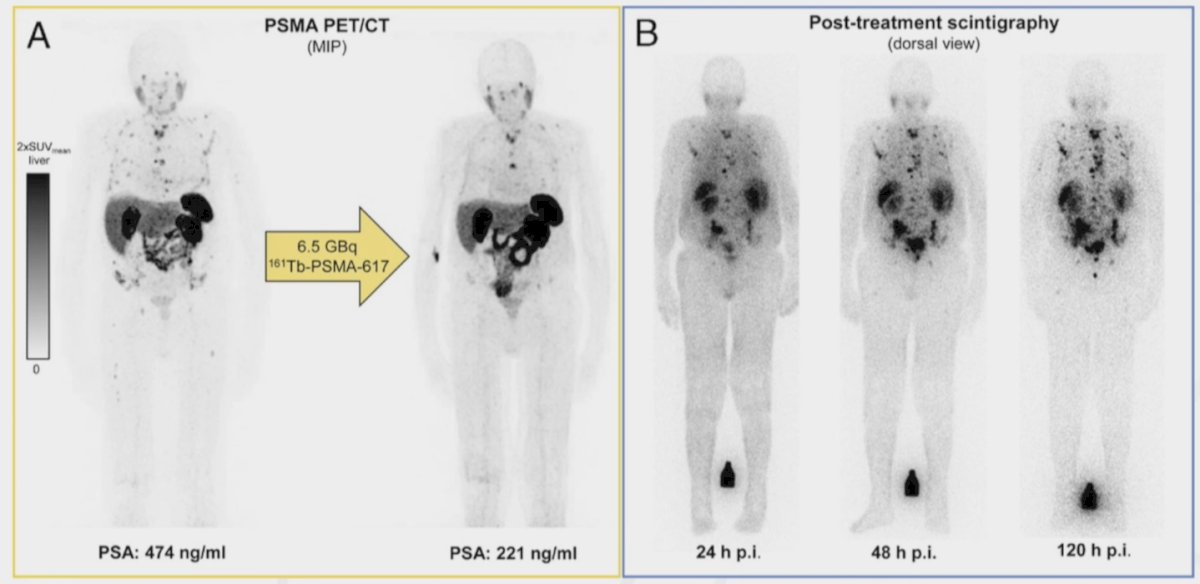
Dr. Hofman also notes that 7.4 GBq of 161Tb is not the same as 7.4 GBq of 177Lu, stating that 161Tb results in increased delivered dose per unit of activity by 40% compared to 177Lu. The following case study demonstrates the response to 161Tb after 8 cycles of 177Lu-PSMA:
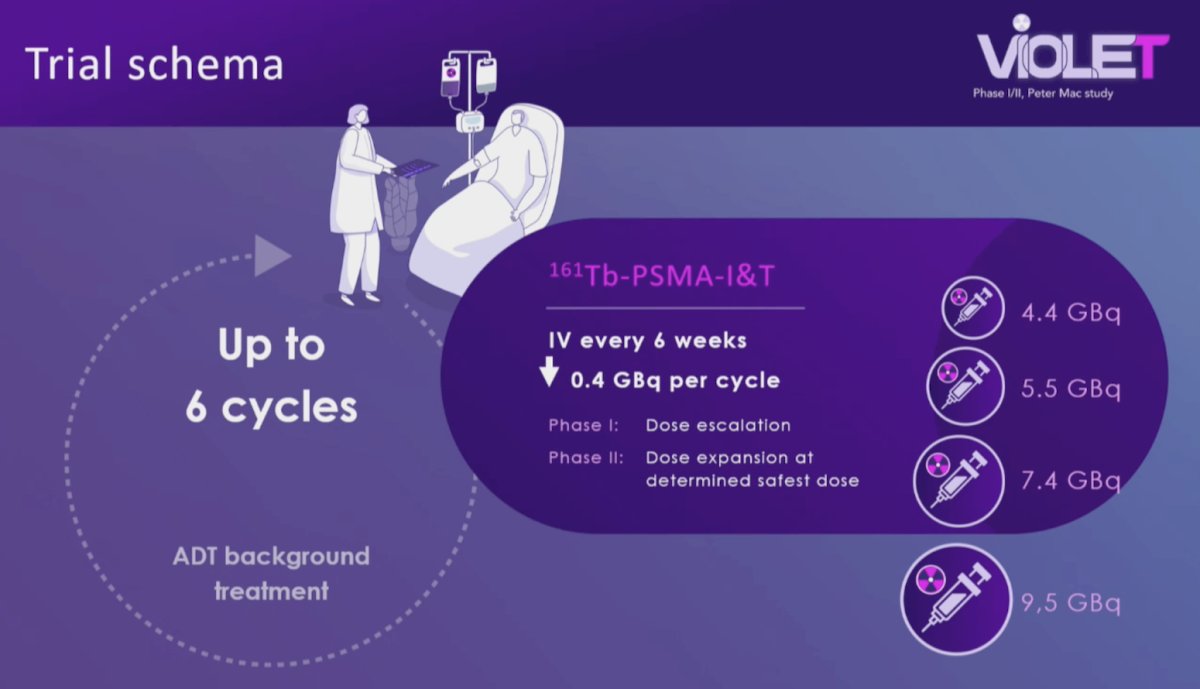
In the VIOLET trial, 30 patients were included if they had disease progression after 1+ taxane and a second generation antiandrogen. They also had to have PSMA positive disease with no discordant disease on FDG PET. Screening included a CT scan, bone scan, PSMA PET scan, and FDG PET scan, as well as a tumor biopsy. Patients received up to 6 cycles of 161Tb-PSMA-I&T IV every 6 weeks (0.4 GBq per cycle):
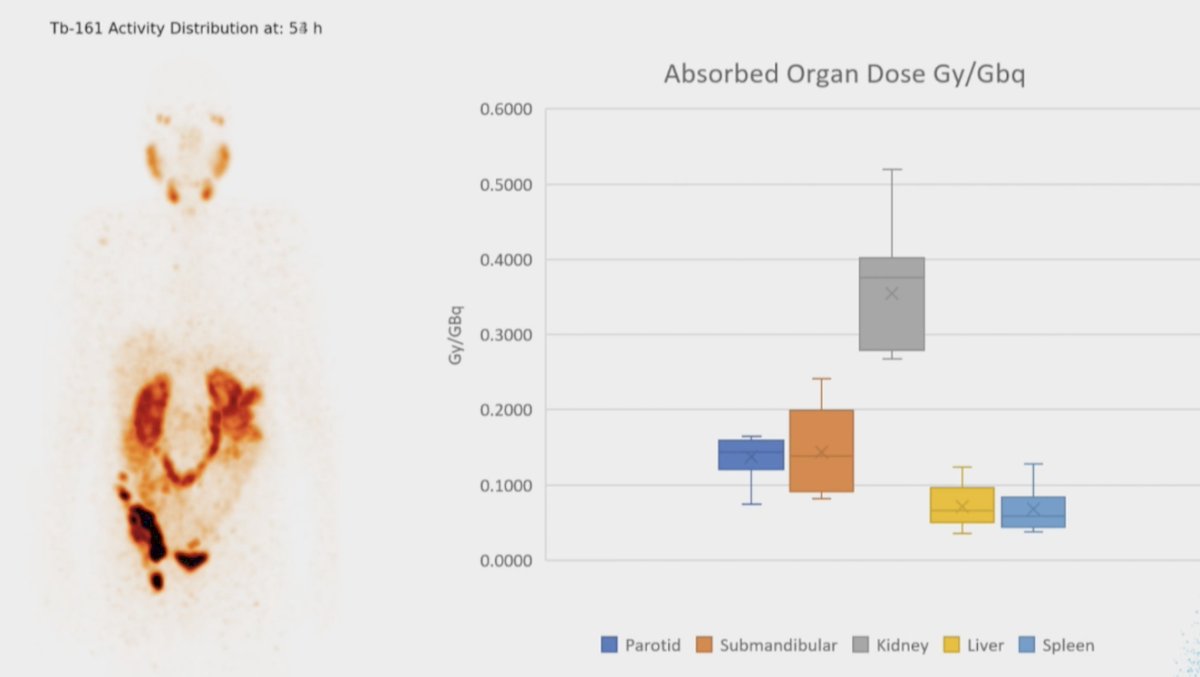
Of note, the trial completed accrual 6 months ahead of schedule, which demonstrates the feasibility of 161Tb global supply. The first results of VIOLET, specifically the radiation absorbed dose, were presented at the EANM 2023 annual meeting. These results showed a normal organ dosimetry of 161Tb comparable to 177Lu:
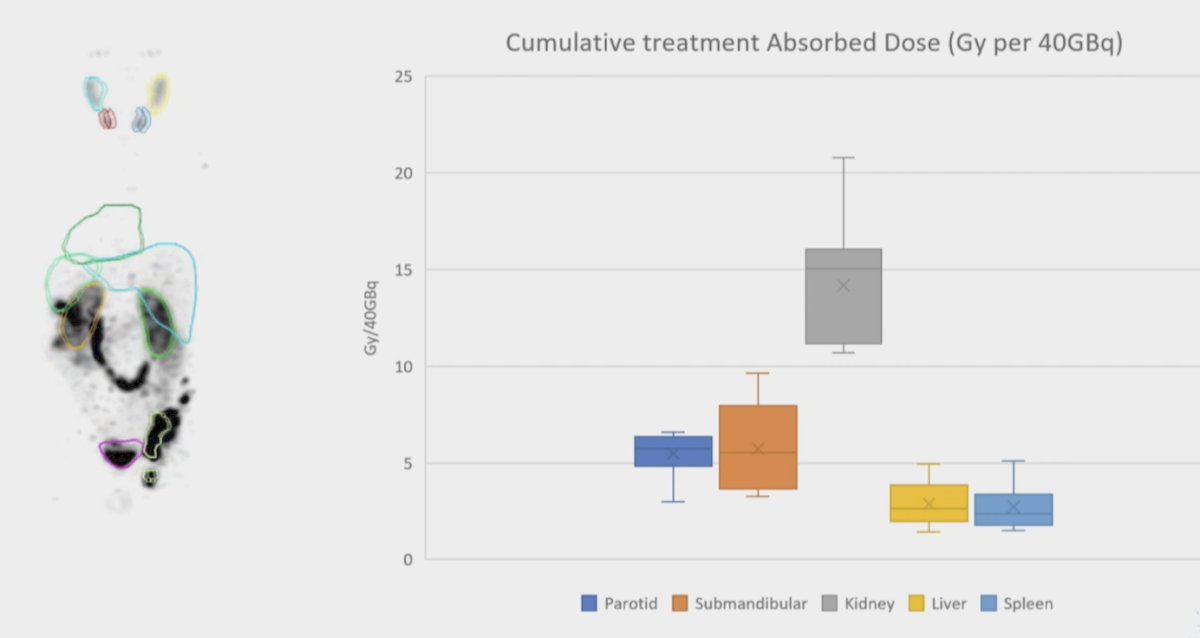
Moreover, there was a 40 GBq cumulative extrapolation:
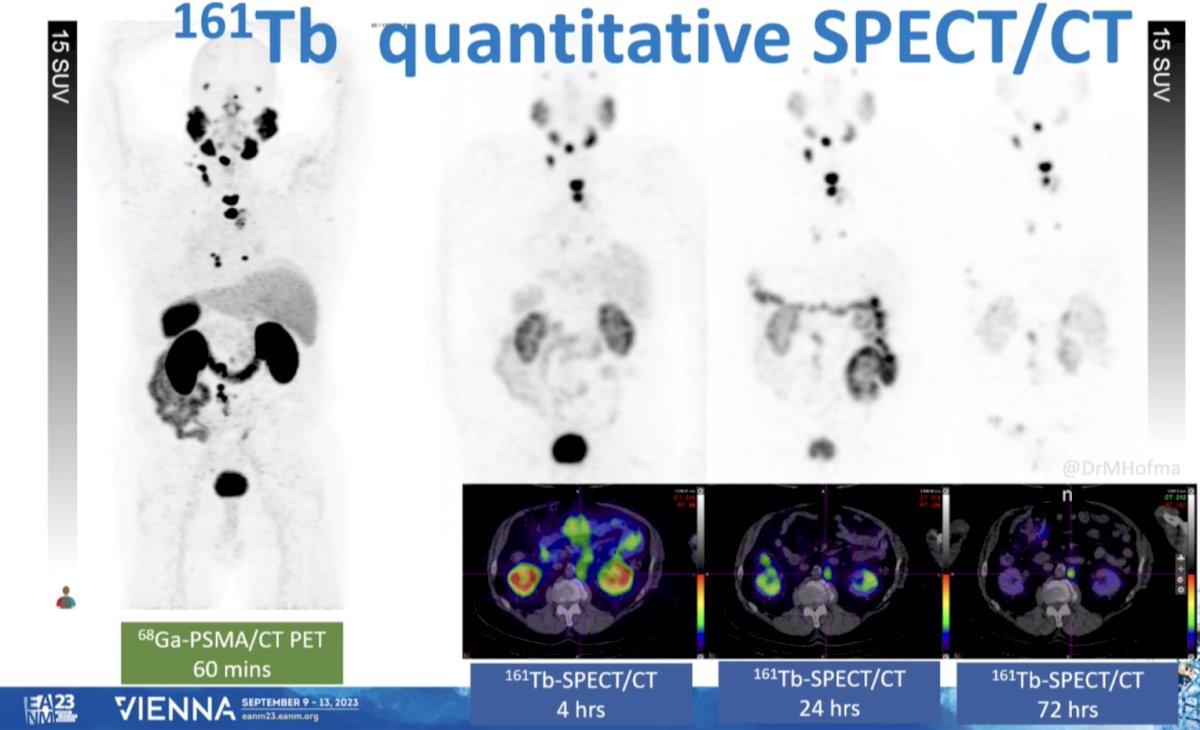
161Tb quantitation on SPECT/CT was also as expected at 4 hours, 24 hours, and 72 hours:
The conclusions from the 161Tb EANM 2023 presentation were as follows:
- Strengths of VIOLET: a prospective study, first-in-human, and phantom validation with quantitative SPECT/CT imaging
- Weaknesses: the biological contribution of Auger electron is not quantified, partial volume effects are not modelled, and there is no plasma sampling
- Clinical implications: normal organ dosimetry is safe, and the dose delivered to the kidneys and salivary glands is similar to 177Lu
- We await the results of the VIOLET trial for efficacy, which will be present at the upcoming ASCO 2025 annual meeting
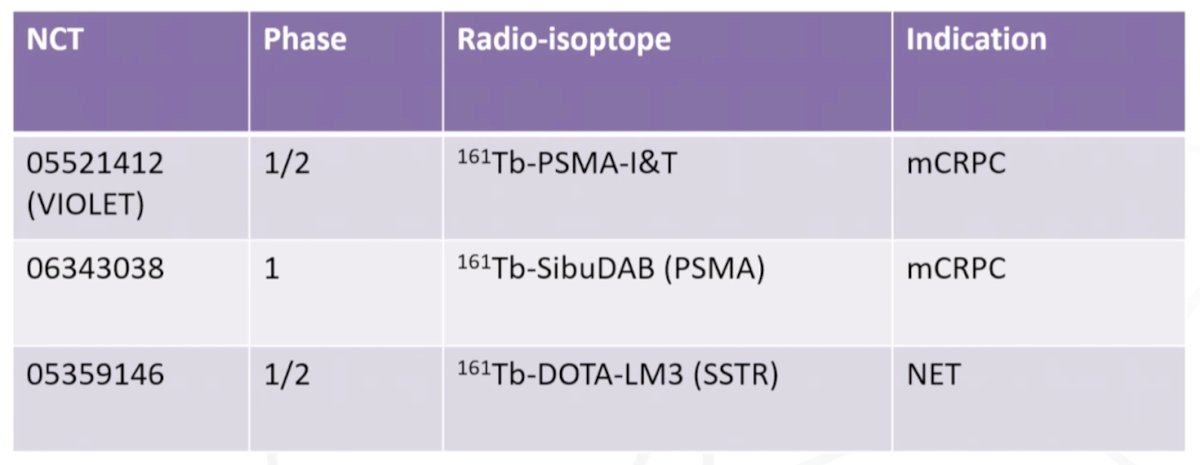
To date, there are 3 clinical trials assessing 161Tb, two in mCRPC and one in neuroendocrine tumors:
Dr. Hofman concluded his presentation by discussing the role of other radionuclides such as 161Tb by emphasizing that yes, 161Tb is really happening.
Presented by: Michael Hofman, MBBS, Peter MacCallum Cancer Centre, Australia
Written by: Zachary Klaassen, MD, MSc – Urologic Oncologist, Associate Professor of Urology, Georgia Cancer Center, Wellstar MCG Health, @zklaassen_md on Twitter during the 2025 PSMA and Beyond Annual Meeting, Los Angeles, CA, Fri, Mar 28 – Sat, Mar 29, 2025.