

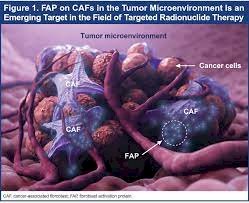
(UroToday.com) The 2025 PSMA and Beyond annual meeting featured a new developments in genitourinary radioligand therapy session and a presentation by Dr. Vadim Koshkin discussing an opportunity for radioligand therapy in bladder cancer. Prior to discussing FAP-targeted theranostics in urothelial cancer, Dr. Koshkin noted that fibroblast activation proteins (FAPs) are expressed on cancer associated fibroblasts present in the tumor microenvironment. They are also present in many epithelial cancers, and maybe a potential imaging and therapeutic target:
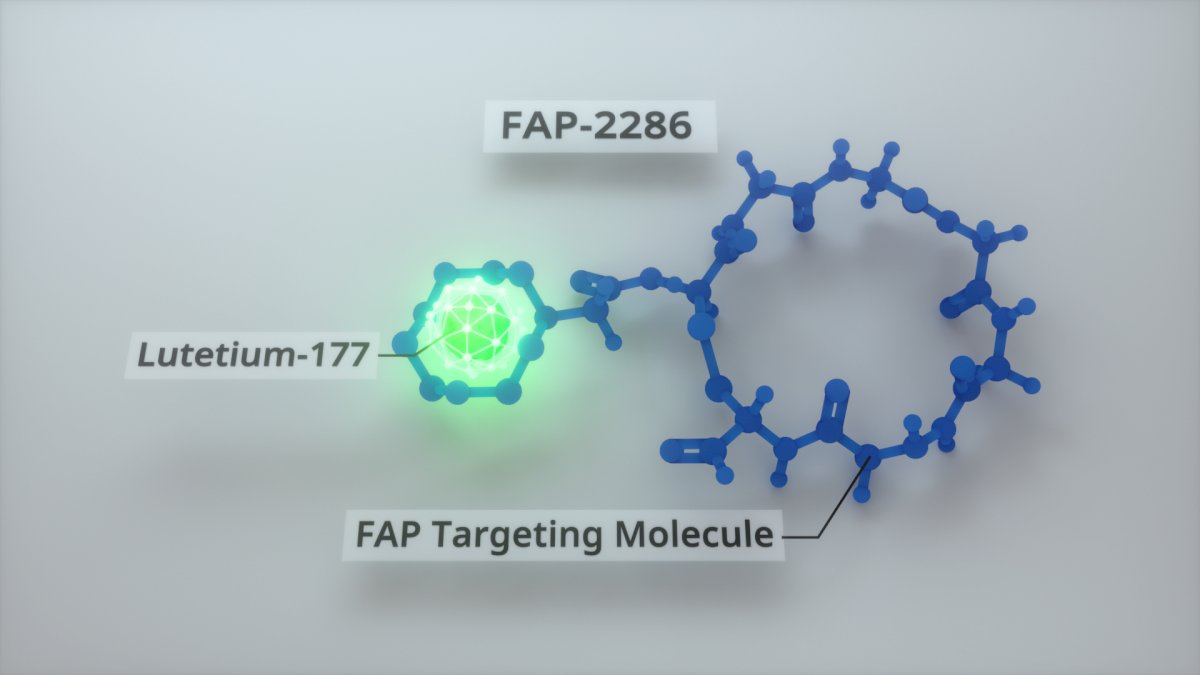
Compounds such as 68Ga-DOTA-FAPI and 68Ga-FAP-2286 are used for imaging applications. FAP-2286, a cyclic peptide binding to FAP, can be conjugated to Lutetium-177 and used as a theranostic agent in patients with FAP-positive tumors.
In 2024, Dr. Koshkin and colleagues reported the first in human phase I/II imaging study of 68Ga-FAP-2286 of multiple tumors (including urothelial carcinoma) with confirmed metastatic disease based on RECIST 1.1, as well as non-metastatic disease.1 The bladder cancer subset included 21 patients, with the highest absolute FAP uptake in bladder cancer (average SUVmax 16.6), among all tumors:

Positive FAP uptake was noted across a variety of metastatic lesions, with good detection of small lymph nodes < 1.5 cm and <1.0 cm:
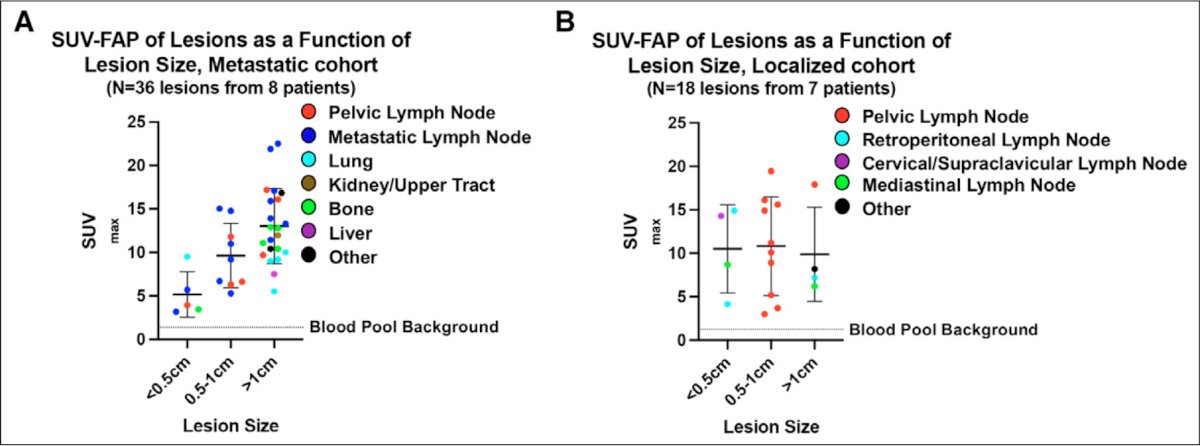
Thus, 68Ga-FAP-2286 has the potential for more accurate staging in the perioperative setting and impact clinical decision making.
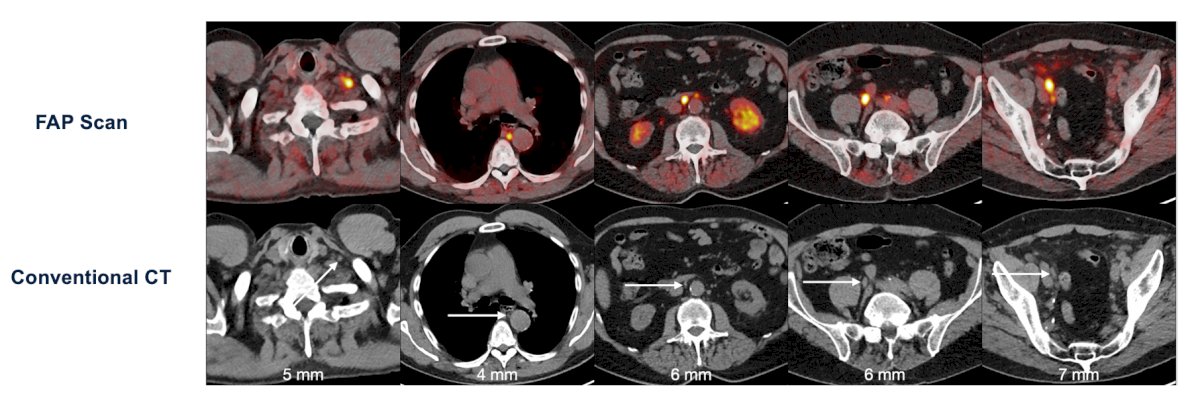
68Ga-FAP-2286 has the ability to identify false negatives on conventional imaging. Dr. Koshkin presented a case of a 76 year old man with muscle invasive bladder cancer (cT3) who was recommended to undergo neoadjuvant chemotherapy followed by a radical cystectomy. Conventional imaging scans showed no evidence of metastatic disease and no lymphadenopathy. He subsequently underwent a 68Ga-FAP-2286 PET showing widespread lymph node involvement, including a supraclavicular node, which was biopsied and confirmed metastatic urothelial carcinoma. The patient was started on systemic therapy for metastatic disease and was spared a radical cystectomy:
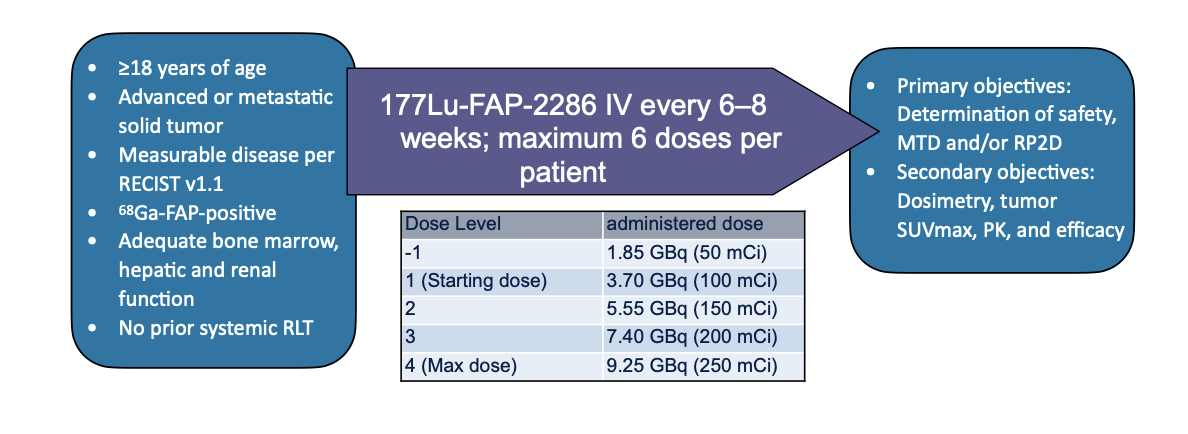
The LuMIERE trial is a phase 1/2 study evaluating the safety, dosimetry, and preliminary activity of 177Lu-FAP-2286 in patients with advanced solid tumors.
The trial design of LuMIERE is as follows:
Presented at ESMO 2024, 27 patients have been treated across 6 US sites with the adverse event profile including 14 patients (52%) with treatment related adverse events, 2 patients with grade 3 treatment related adverse events (7%; 1 lymphopenia, 1 hemoptysis), and no grade 3 adverse events related to neutropenia, thrombocytopenia, or anemia. The following shows the RECIST assessments over time of 177Lu-FAP-2286:
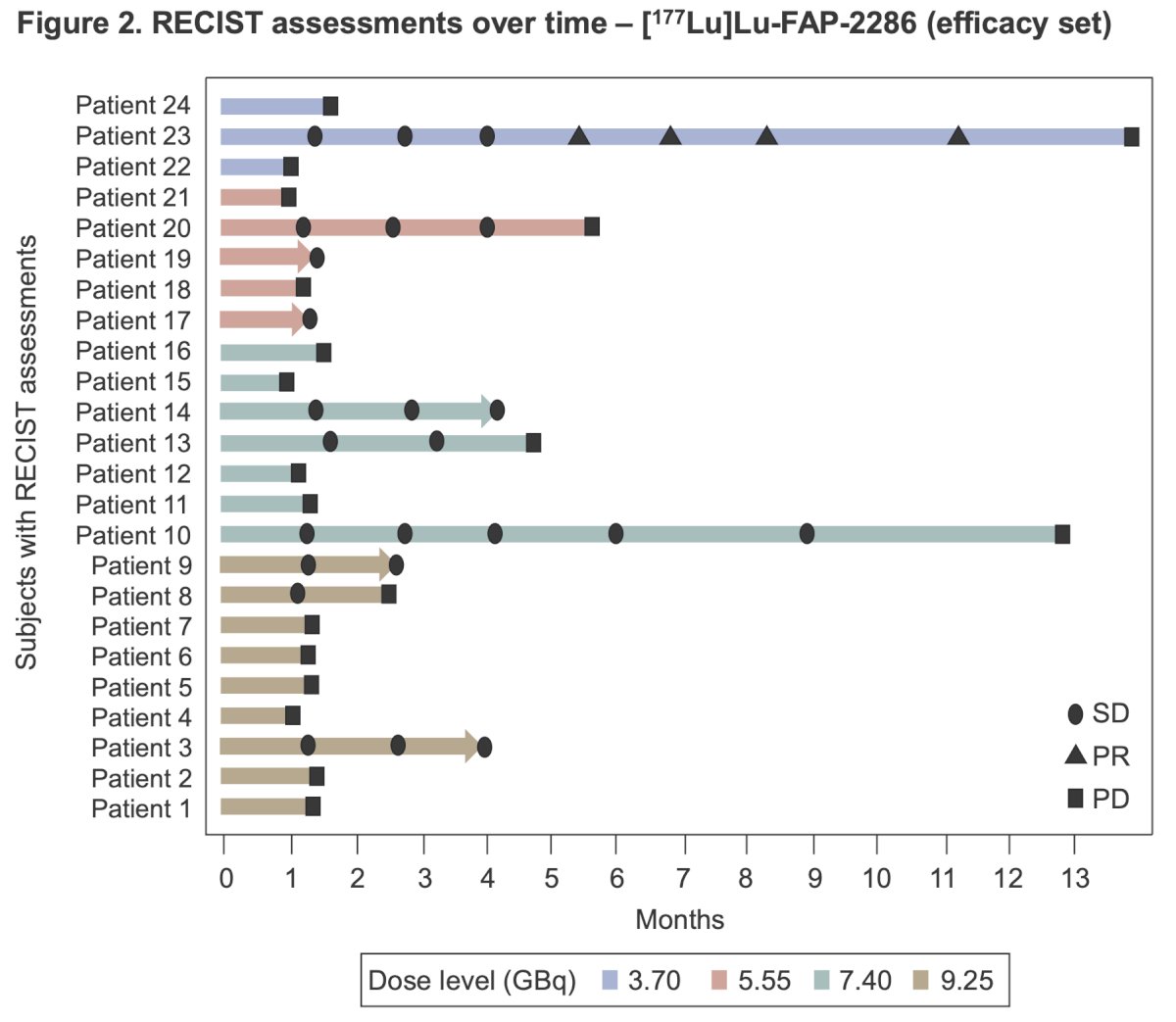
Based on these results, the recommended phase 2 dose of 68Ga-FAP-2286 is 9.25 GBq administered every 4 weeks, and the phase 2 trial is ongoing, but will not include a urothelial carcinoma cohort.
Dr. Koshkin then discussed Nectin-4 targeting in urothelial carcinoma. Nectin-4 is a surface protein ubiquitously expressed in metastatic urothelial carcinoma. Enfortumab vedotin is an antibody drug conjugate targeting Nectin-4, with an MMAE payload that has transformed the metastatic urothelial carcinoma landscape. The combination of enfortumab vedotin + pembrolizumab is now standard of care in first line metastatic urothelial carcinoma, with an objective response rate of 68% and a median overall survival of 31.5 months.2 There is a potential for moving enfortumab vedotin + pembrolizumab into the perioperative (curative-intent) setting, and enfortumab vedotin monotherapy is already approved in the treatment-refractory setting.3 Currently, the mechanism of acquired resistance to enfortumab vedotin is being explored, and Nectin4 targeted therapies with alternate mechanisms of action may be feasible for enfortumab vedotin refractory patients.
With regards to imaging of Nectin-4 expression, 68Ga-N188 is a radiotracer developed from a bicyclic peptide scaffold with high affinity for Nectin-4. Duan et al.4 previously reported that 68Ga-N188 imaging detects Nectin-4 positive tumors, and can non-invasively quantify Nectin-4 expression to help select patients for Nectin-4 targeted therapy:
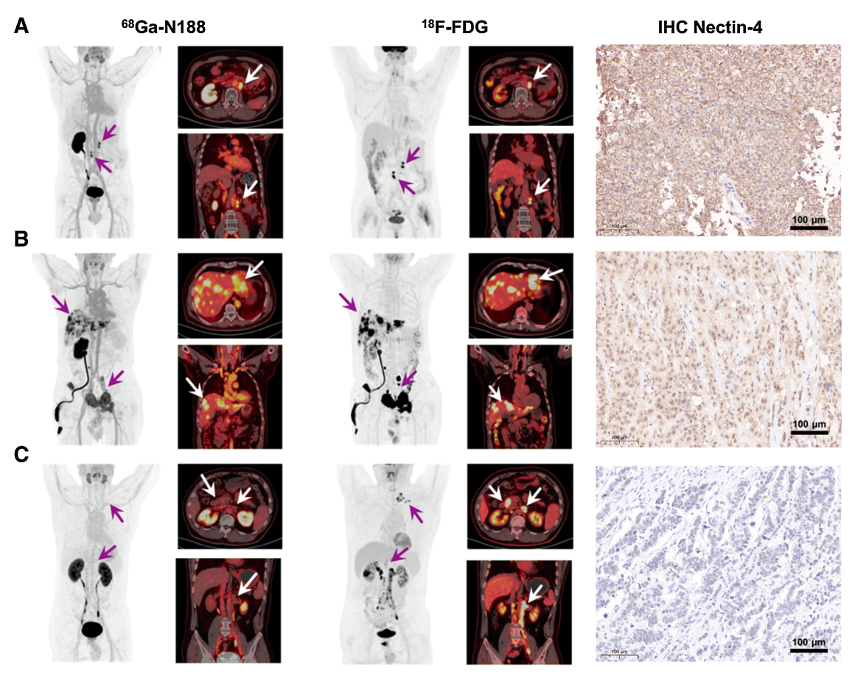
There is also a strong correlation between 68Ga-N188 SUV values and Nectin-4 expression on histopathology (not seen with FDG PET):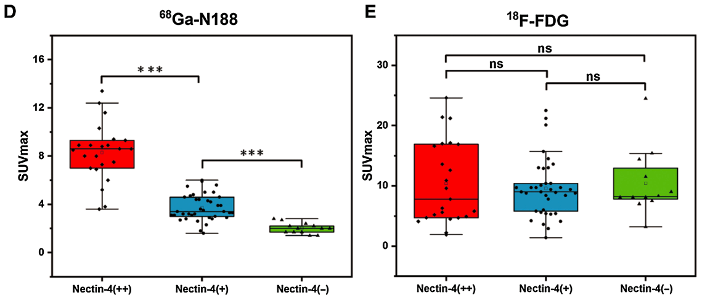
In 2024, Zhang et al.5 assessed 62 patients with 16 different malignancies (including urothelial carcinoma) with both 68Ga-N188 and 18F-FDG PET/CT imaging. They found comparable detection rates for 68Ga-N188 (95%) compared to 18F-FDG PET/CT (93.3%). Additionally, 68Ga-N188 PET showed a positive correlation with membranous Nectin-4 expression (r = 0.458; p = 0.005), but not with cytoplasmic Nectin-4 expression: 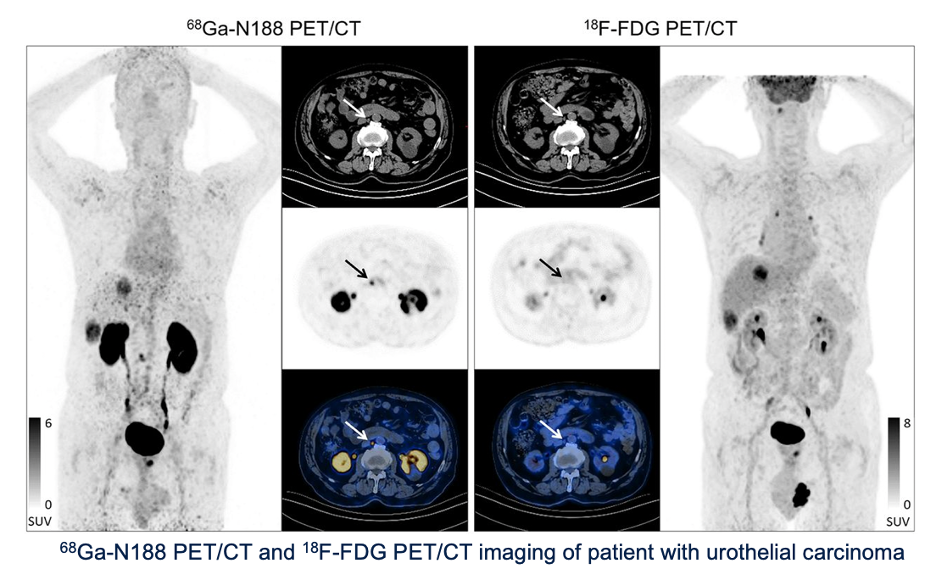
Thus, is the next step a Nectin-4 targeted radiopharmaceutical? The following trial design is of a first-in-class Nectin-4 targeted radiopharmaceutical AKY-1189, noting the part 1 dose escalation in metastatic urothelial carcinoma patients, and part 2 dose expansion of multiple tumor types: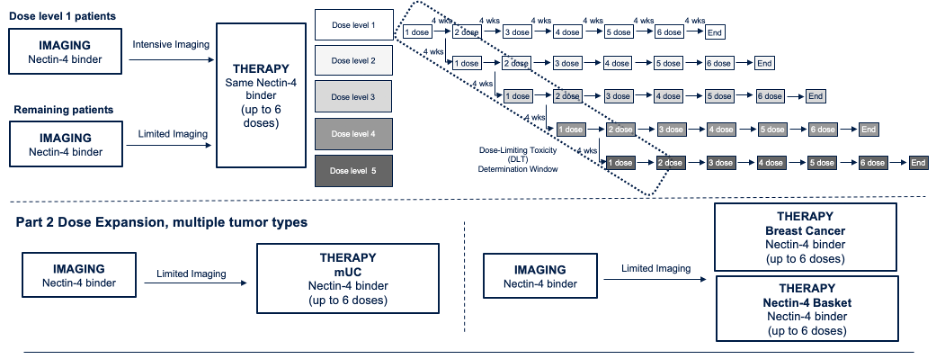
Dr. Koshkin concluded his presentation by discussing an opportunity for radioligand therapy in bladder cancer with the following take home points:
- FAP-targeted imaging has promising data in urothelial cancer – is there a role for FAP-targeted radiopharmaceuticals?
- Nectin-4 targeted imaging can potentially select patients for targeted therapy
- A clinical trial of Nectin-4 targeted radiopharmaceuticals is launching soon
- There is a possibility of radioligand therapies for other established targets in advanced urothelial cancer (Trop-2, HER2, etc), as well as in non muscle invasive bladder cancer and muscle invasive bladder cancer settings
Presented by: Vadim Koshkin, MD, University of California, San Francisco, San Francisco, CA
Written by: Zachary Klaassen, MD, MSc – Urologic Oncologist, Associate Professor of Urology, Georgia Cancer Center, Wellstar MCG Health, @zklaassen_md on Twitter during the 2025 PSMA and Beyond Annual Meeting, Los Angeles, CA, Fri, Mar 28 – Sat, Mar 29, 2025.
References:
- Koshkin VS, Kumar V, Kline B, et al. Initial experience with 68Ga-FAP-2286 PET Imaging in patients with urothelial cancer. J Nucl Med. 2024 Feb 1;65(2):199-205.
- Powles T, Valderrama BP, Gupta S, et al. Enfortumab Vedotin and Pembrolizumab in Untreated Advanced Urothelial Cancer. N Engl J Med. 2024 Mar 7;390(10)875-888.
- Powles T, Rosenberg JE, Sonpavde GP, et al. Enfortumab Vedotin in Previously Treated Advanced Urothelial Carcinoma. N Engl J Med 2021 Mar 25;384(12):1125-1135.
- Duan X, Xia L, Zhang Z, et al. First-in-human study of the radioligand 68Ga-N188 targeting Nectin-4 for PET/CT imaging of advanced urothelial carcinoma. Clin Cancer Res. 2023 Sep 1;29(17):3395-3407.
- Zhang J, Duan X, Chen X, et al. Translational PET imaging of Nectin-4 Expression in Multiple Different Cancers with 68Ga-N188. J Nucl Med. 2024 May 6;65(Suppl 1):12S-18S.