

(UroToday.com) The 2025 PSMA and Beyond annual meeting featured new developments in genitourinary radioligand therapy session and a presentation by Dr. Robert Flavell discussing STEAP1, DLL3, and CD46. Why should we evaluate targets beyond PSMA in prostate cancer? There are well documented favorable responses to PSMA radioligand therapy observed in patients with high PSMA uptake on imaging, however low uptake is more common in aggressive variant prostate cancer. This suggests a need for new targets beyond PSMA:
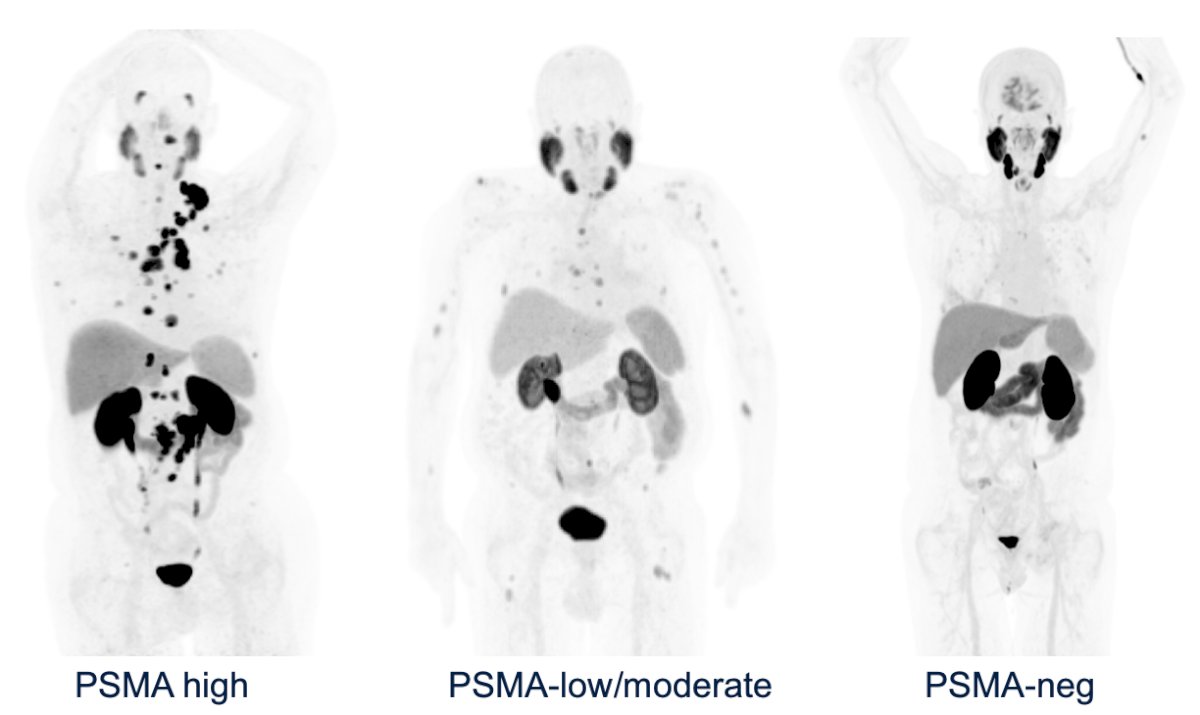
Dr. Flavell noted that low molecular weight ligands such as 68Ga-PSMA-11, 18F-DCFPyL, 177Lu-PSMA-617 are fast clearing. Specific, high affinity peptides/small molecule ligands are not uniformly available, often repurposed from endogenous ligands or prior medicinal chemistry efforts. Moreover, antibodies and antibody fragments may be employed and repurposed from biological therapies.
Dr. Flavell then discussed STEAP-1 (Six-transmembrane epithelial antigen of the prostate), a transmembrane protein highly expressed in prostate cancer, however, the function is not clear:

There are numerous therapies now under development targeting STEAP-1, including antibody drug conjugates, CAR-T, and bispecific. For example, xaluritamig (AMG-509) is a bispecific CD3 targeted T-cell engager that demonstrated encouraging clinical activity in a phase I study (49% PSA50 response rate and 24% objective response rate):
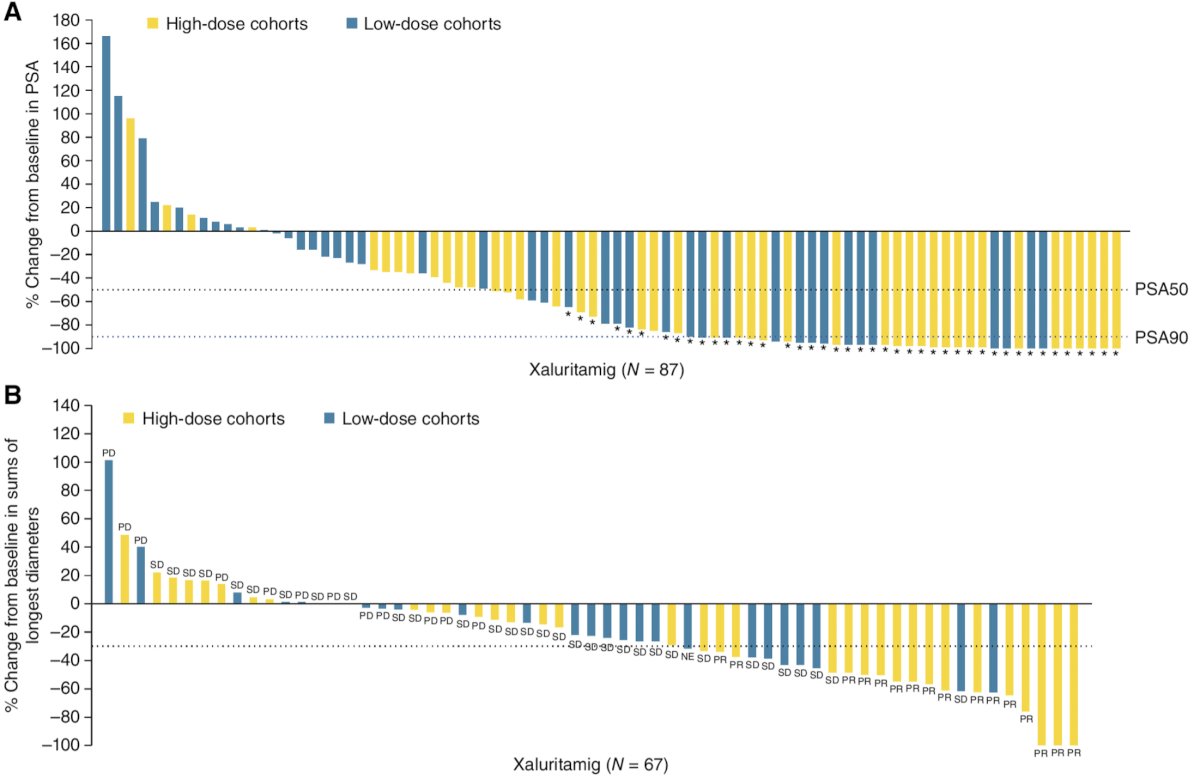
Similar to other antigens in advanced prostate cancer, expression is not uniform, suggesting a role for companion biomarkers.
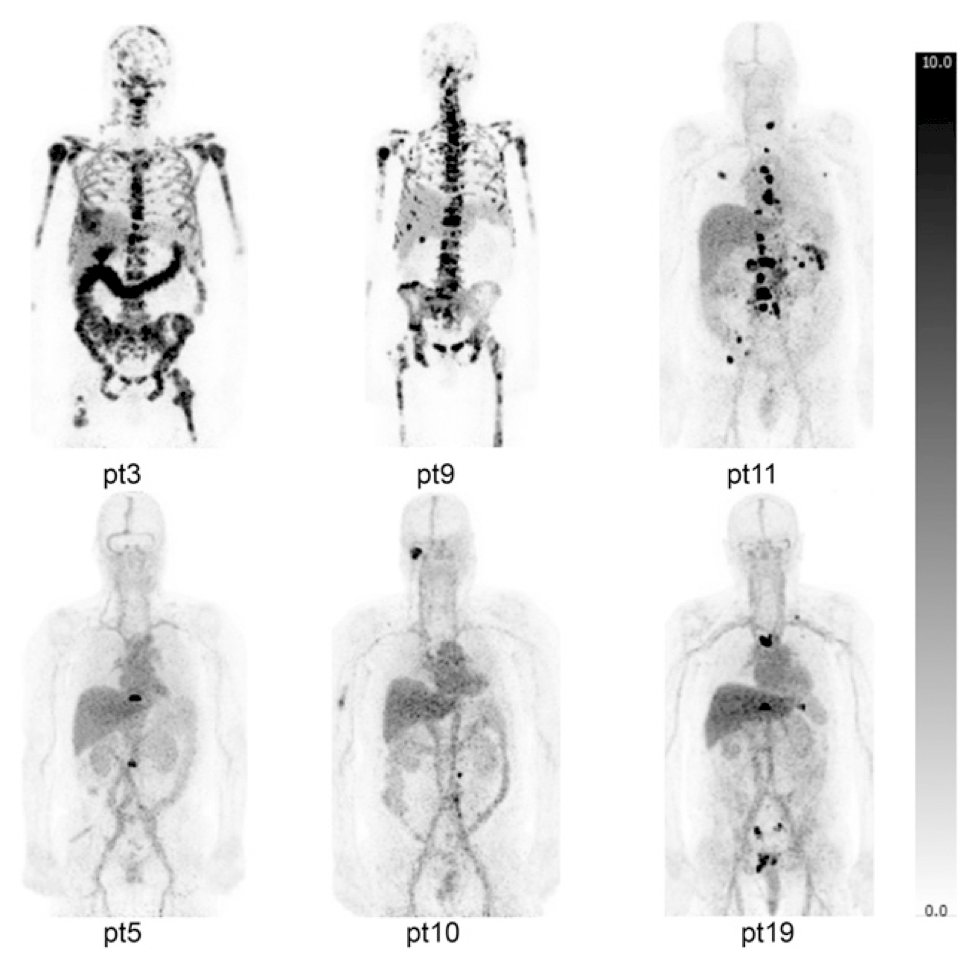
In 2019, Carrasquillo et al.1 evaluated the ability of PET/CT with 89Zr-DFO-MSTP2109A, an antibody that recognizes STEAP1, to detect lesions in 19 patients with mCRPC. They noted that excellent uptake was observed in bone and soft-tissue disease, with a median SUVmax of 20.6 in bone and 16.8 in soft tissue. Sixteen of 17 lesions biopsied were positive on 89Zr-DFO-MSTP2109A, and all sites were histologically positive. However, there was no correlation between SUVmax tumor uptake and STEAP1 immunohistochemistry, survival after antibody conjugate treatment, number of treatment cycles, or change in PSA level:
DLL3 (delta like ligand 3) is an inhibitory notch ligand that is aberrantly expressed on the cell surface in high grade neuroendocrine tumors, including small cell lung cancer and neuroendocrine prostate cancer, but not prostate adenocarcinoma. Therapeutic agents targeting DLL3 include bispecific T-cell engagers, antibody drug conjugants, CAR-T, and radioligands, which are now at various stage of development. Preclinical development of 89Zr/177Lu (177Lu-DTPA-SC16) IgG has shown promising imaging and therapy results and development of 89Zr-DLL3 ScFv uptake is associated with DLL3 expression and neuroendocrine prostate cancer.2
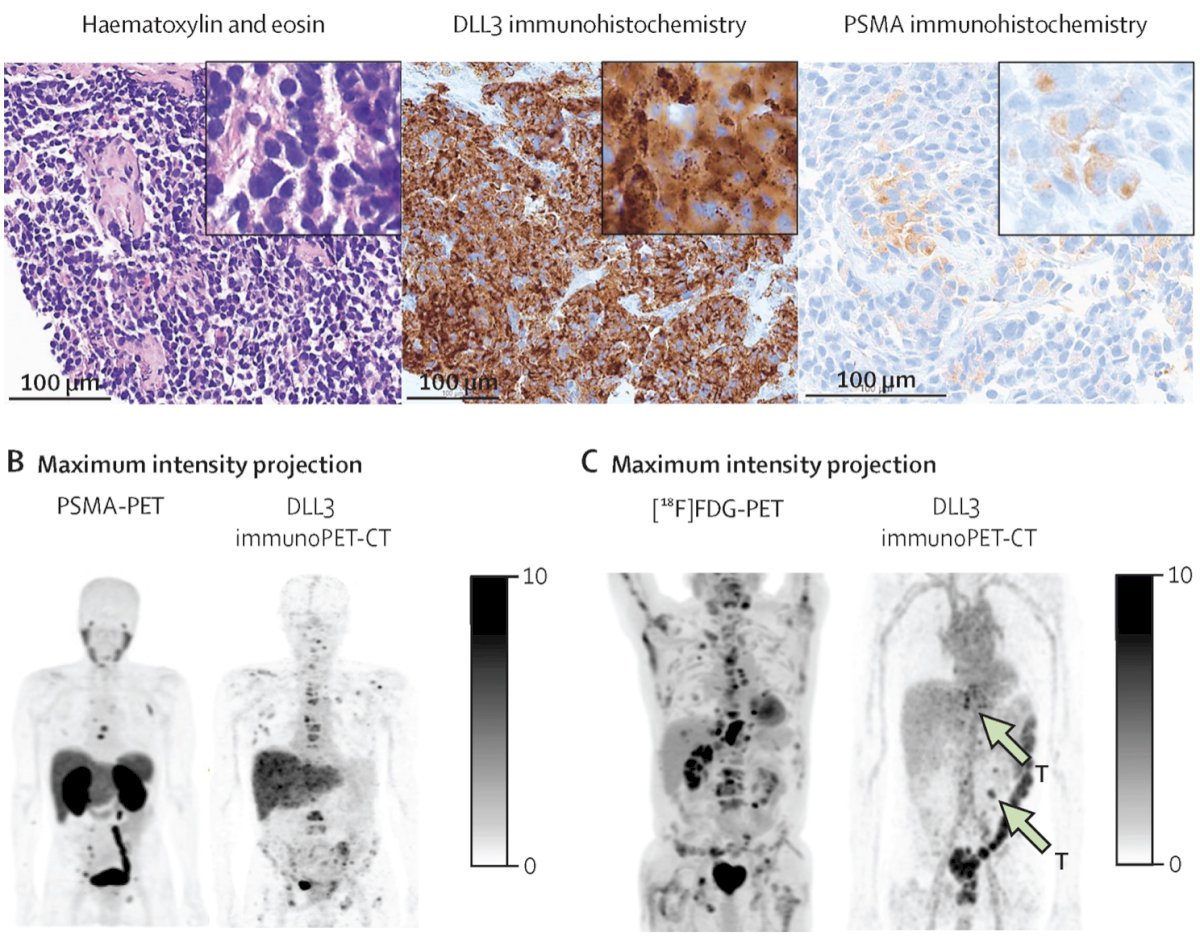
In 2024, Tendler and colleagues3 reported a phase 1/2, first-in-human trial assessing [89Zr]Zr-DFO-SC16.56 in 18 patients with high grade neuroendocrine tumors of the lung and prostate. Tumor uptake by [89Zr]Zr-DFO-SC16.56 was congruent with DLL3 immunohistochemistry in 15 (94%) of 16 patients with evaluable tissue. Two patients with non-avid DLL3 small cell lung cancer and neuroendocrine prostate cancer by PET scan showed the lowest DLL3 expression by tumor immunohistochemistry:
Finally, Dr. Flavell discussed CD46, which is highly expressed in prostate cancer, as well as other cancers. The antibody YS5 binds a cancer specific epitope on CD46, which has been developed into an antibody drug conjugate (FOR46/FG3246), demonstrating clinical activity in a phase 1 dose escalation study: 36% PSA50 response and 20% objective response rate:

[89Zr]DFO-YS5 has been developed as a CD46 targeted PET imaging agent, with high uptake in PDX models. Additionally, 225Ac-Macropa-PEG4-YS5 is in preclinical development for treatment.
Dr. Flavell concluded his presentation discussing STEAP1, DLL3, and CD46 with the following take home points:
- There are several emerging antigens in prostate cancer that may be targeted with radiopharmaceuticals for imaging and therapy
- This talk has surveyed three emerging targets with early clinical stage radiopharmaceuticals testing for imaging
- STEAP1 is a promising target in mCRPC
- DLL3 is expressed in neuroendocrine carcinoma, including small cell lung cancer and neuroendocrine prostate cancer
- CD46 is expressed in solid tumors, including both adenocarcinoma and neuroendocrine prostate cancer
Presented by: Robert Flavell, MD, PhD, University of California, San Francisco, San Francisco, CA
Written by: Zachary Klaassen, MD, MSc – Urologic Oncologist, Associate Professor of Urology, Georgia Cancer Center, Wellstar MCG Health, @zklaassen_md on Twitter during the 2025 PSMA and Beyond Annual Meeting, Los Angeles, CA, Fri, Mar 28 – Sat, Mar 29, 2025.
References:
- Carrasquillo JA, Fine BM, Pandit-Taskar N, et al. Imaging patients with metastatic castration-resistant prostate cancer using 89Zr-DFO-MSTP2109A anti-STEAP1 antibody. J Nucl Med. 2019 Nov;60(11):1517-1523.
- Chou J, Egusa EA, Wang S, et al. Immunotherapeutic targeting and PET imaging of DLL3 in small-cell neuroendocrine prostate cancer. Cancer Res. 2023 Jan 18;83(2):301-315.
- Tendler S, Dunphy MP, Agee M, et al. Imaging with [89Zr]Zr-DFO-SC16.56 anti-DLL3 antibody in patients with high-grade neuroendocrine tumours of the lung and prostate: A phase 1/2, first-in-human trial. Lancet Oncol. 2024 Aug;25(8):1015-1024.