

(UroToday.com) The 2025 PSMA and Beyond annual meeting featured an alpha and other radionuclides session and a presentation by Dr. Alfred Morgenstern his group’s Ac225 PSMA experience. 225Ac-PSMA for therapy of prostate cancer is a success story for targeted alpha therapy, with the following developmental timeline:
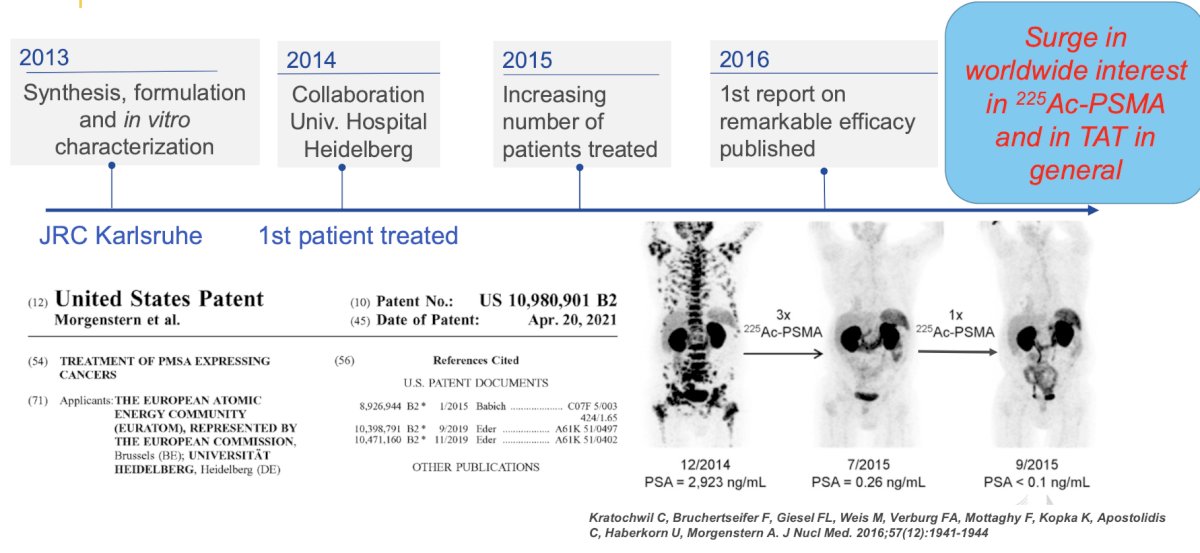
Early clinical development of Ac-PSMA with the Joint Research Centre and partner hospitals is as follows:
- 2014: with University Hospital Heidelberg focusing on dose finding, dose de-escalation, 225Ac/177Lu cocktail (PSMA-617)
- 2017: with Steve Biko Academic Hospital focusing on early treatment lines, chemotherapy-naïve patients (PSMA-617, PSMA-62)
- 2017: with the Technical University of Munich focusing on post Lu-PSMA (PSMA-617)
- 2021: with Erasmus focusing on phase I dose escalation 225Ac-PSMA I&T
- 2021: with Steve Biko Academic Hospital/St. Vincent’s Hospital focusing on the phase I dose escalation study AcTION (PSMA-617, Novartis)
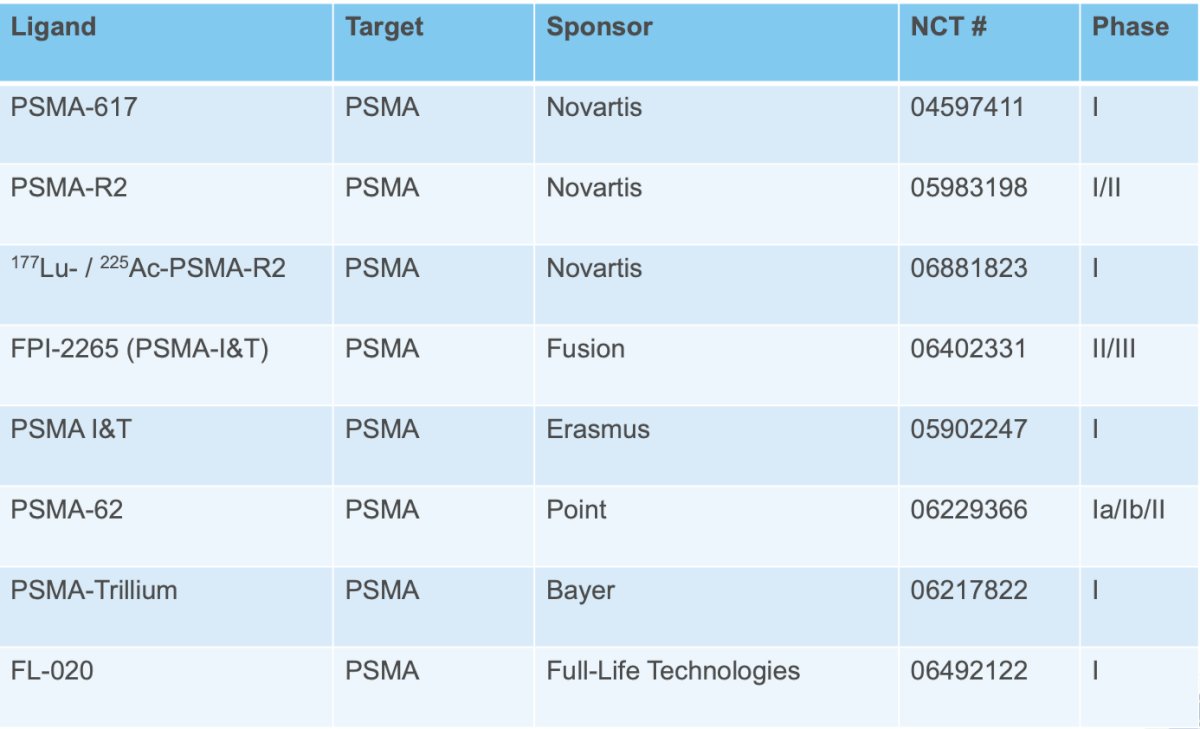
To date, these partnerships have led to an experience of radioligand therapy in more than 900 patients. Dr. Morgenstern highlighted the following PSMA-targeted small molecule 225Ac trials:
The following are selected prostate antibody alpha trials:

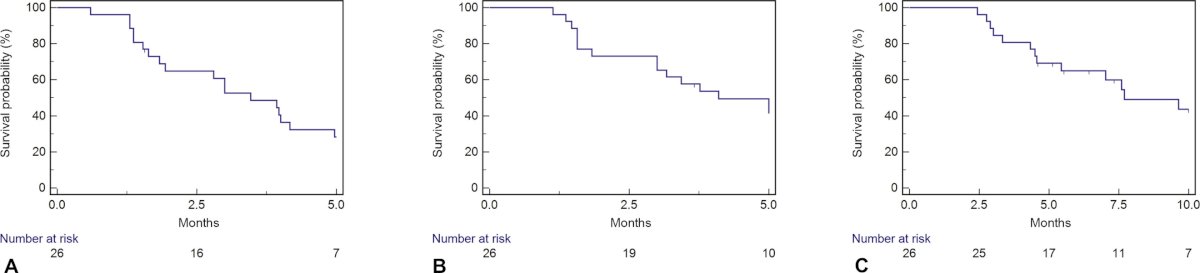
In 2021, Feuerecker and colleagues [1] reported on the safety and activity of 225-Actinium-PSMA-617 among 26 patients that progressed after Lu-177-PSMA. The PSA50 response was 65%, and (A) median PSA-PFS was 3.5 months (95% CI 1.8–11.2), (B) median clinical PFS was 4.1 months (95% CI 3–14.8), and (C) median overall survival was 7.7 months (95% CI 4.5–12.1):
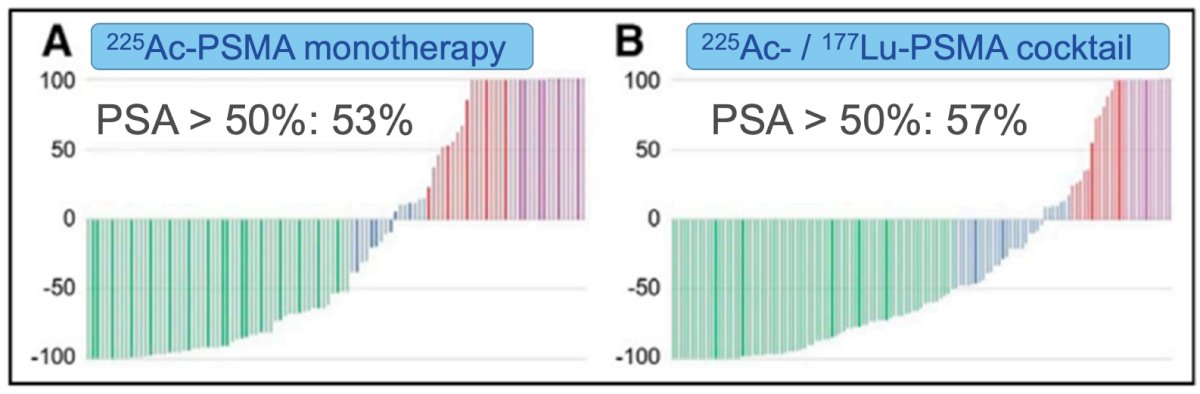
The PSA best response and the PSA best response for Lu-177-PSMA versus Ac-225-PSMA-617 is also noted:

Grade 3-4 toxicity included anemia (35%), leucopenia (27%), and thrombocytopenia (19%), with grade 1-3 xerostomia in all patients, leading to cessation of treatment in 23% of patients. Thus, the benefits and risks of Ac-225-PSMA-617 in this patient population should be weighed carefully.
In 2024, work from Dr. Morgenstern’s group looked at de-escalated 225Ac-PSMA-617 versus 177Lu/225Ac-PSMA-617 cocktail therapy [2]. Among 233 patients retrospectively assessed, group 1 patients received 225Ac-PSMA as a de-escalated monotherapy (n = 104; median 6 MBq), and group 2 received 177Lu-PSMA (median 4 GBq) plus 225Ac-PSMA (median 4 MBq) as a cocktail regimen (n = 129). In the 225Ac-PSMA as a de-escalated monotherapy group, the PSA50 response was 53% compared to 57% in the 177Lu/225Ac-PSMA-617 cocktail group:
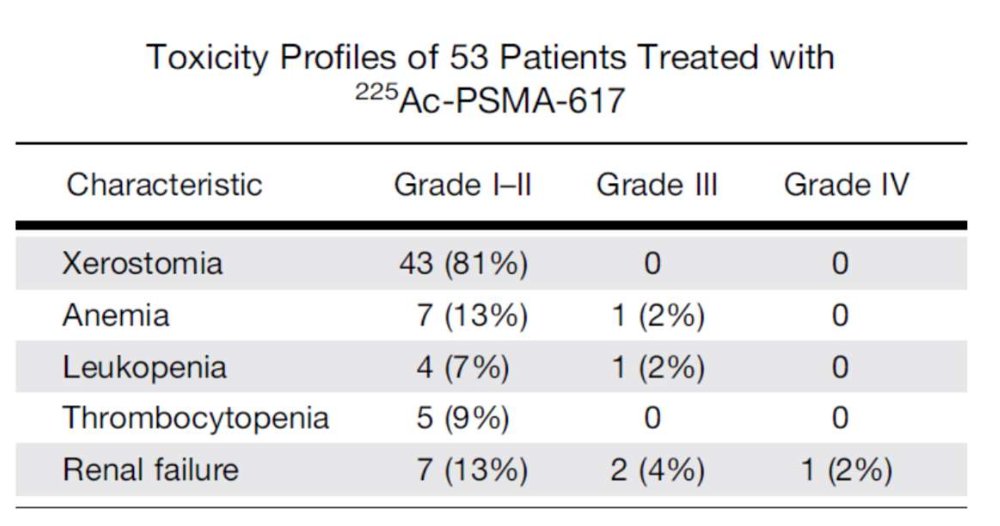
In contrast to high dose regimens, there was no discontinuation of therapy due to xerostomia. Looking at additional work from Dr. Morgenstern’s group, they previously assessed 53 mCRPC patients that received 225Ac-PSMA therapy immediately after receiving ADT [3]. Overall, 48 patients (91%) had a PSA decline of at least 50%, and 51 patients (96%) had any decline in PSA. The following waterfall plot shows the percentage change in PSA levels after treatment with 225Ac-PSMA-617:
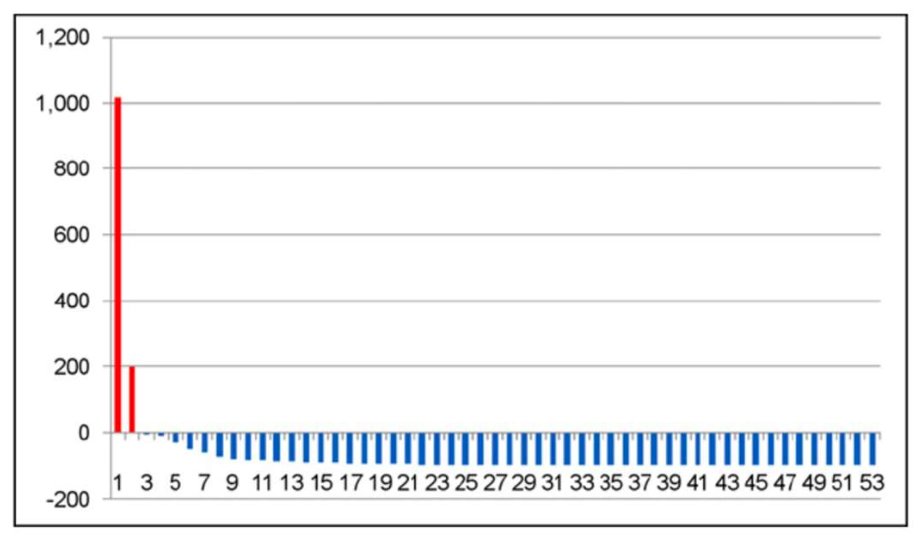
In this study, the median overall survival for patients with a PSA decline > 50% was > 55 months (with the median not reached at follow-up). Side effects noted were frequent grade 1/2 xerostomia, but no severe hematologic toxicity. Renal toxicity was observed in patients with preceding renal impairment, thus medium and long term toxicity need to be carefully monitored:
In 2021, Dr. Morgenstern’s group reported the first patient with 5-year complete remission with 225Ac-PSMA-617 in the chemotherapy naïve setting.
In 2024, 225Ac-PSMA-617 was assessed in the retrospective multicenter WARMTH Act study [4], specifically 488 patients at 7 centers (South Africa, Germany, India, Australia). 225Ac-PSMA-617 was associated with a median overall survival of 15.5 months and median progression free survival of 7.9 months. Any PSA decline was noted in 73% of patients and PSA50 response was noted in 57% of patients:

Dr. Morgenstern concluded his presentation discussing his group’s Ac225 PSMA experience with the following take home points:
- The development of 225Ac-PSMA has been the game changer for targeted alpha therapy
- 225Ac-PSMA not only offers a new treatment option for prostate cancer, but has strikingly demonstrated the potential of targeted alpha therapy with 225Ac
- Numerous novel 225Ac-radiopharmaceuticals are under development and in clinical testing
- The limited supply of 225Ac is currently slowing down R&D, and additional production methods are under implementation
Presented by: Alfred Morgenstern, PhD, Joint Research Centre, Karlsruhe, Germany
Written by: Zachary Klaassen, MD, MSc – Urologic Oncologist, Associate Professor of Urology, Georgia Cancer Center, Wellstar MCG Health, @zklaassen_md on Twitter during the 2025 PSMA and Beyond Annual Meeting, Los Angeles, CA, Fri, Mar 28 – Sat, Mar 29, 2025.
References:
- Feuerecker B, Tauber R, Knorr K, et al. Activity and Adverse Events of Actinium-225-PSMA-617 in Advanced Metastatic Castration-Resistant Prostate Cancer After Failure of Lutetium-177-PSMA. Eur Urol. 2021 Mar;79(3):343-350.
- Rathke H, Winter E, Bruchertseifer F, et al. De-escalated 225Ac-PSMA-617 versus 177Lu/225Ac-PSMA-617 cocktail therapy: A single-center retrospective analysis of 233 patients. J Nucl Med 2024;65:1057-1063.
- Sathekge M, Bruchertseifer F, Vorster M, et al. mCRPC patients receiving 225Ac-PSMA-617 in the post-androgen deprivation therapy setting: Response to treatment and survival analysis. J Nucl Med. 2022 Oct;63(10):1496-1502.
- Sathekge MM, Lawal IO, Bal C, et al. Actinium-225-PSMA radioligand therapy of metastatic castration-resistant prostate cancer (WARMTH Act): A multicentre, retrospective study. Lancet Oncol. 2024 Feb;25(2):175-183.