

(UroToday.com) The 2025 PSMA and Beyond annual meeting featured a PSMA session and a presentation by Dr. Phillip Kuo discussing guidelines and scoring systems of a PSMA PET report. Dr. Kuo started his presentation by proposing a standardized PSMA PET reporting template for clinical trials and standard clinical care:1
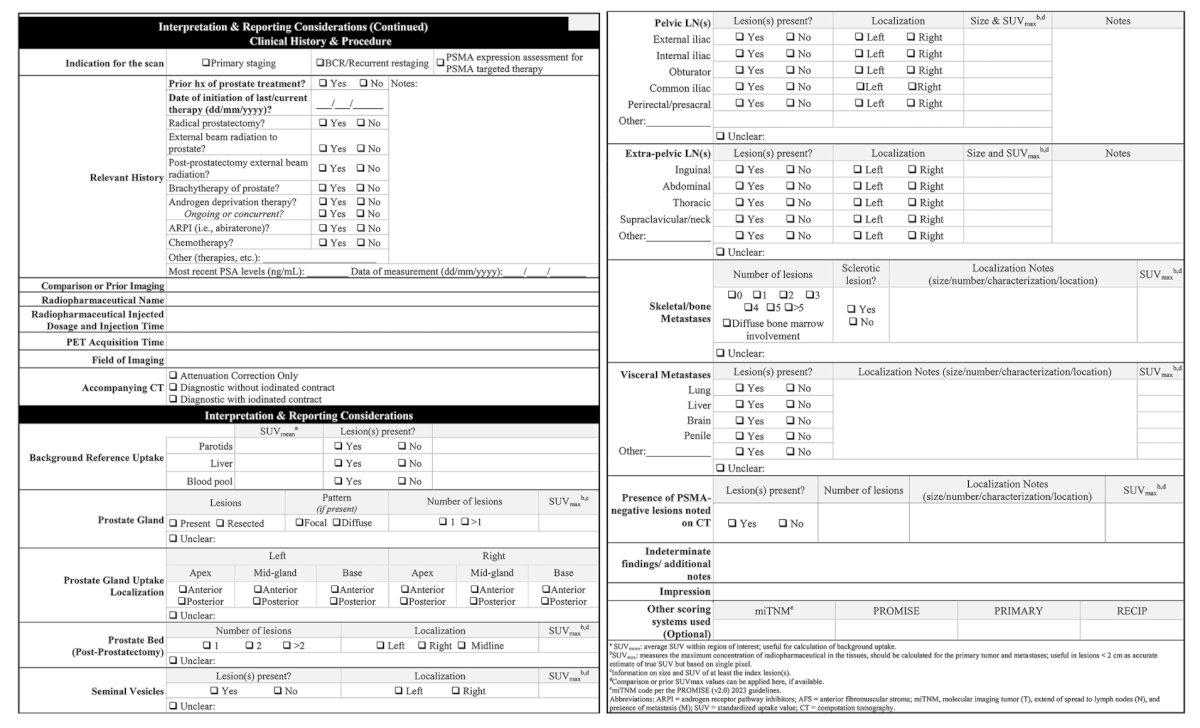
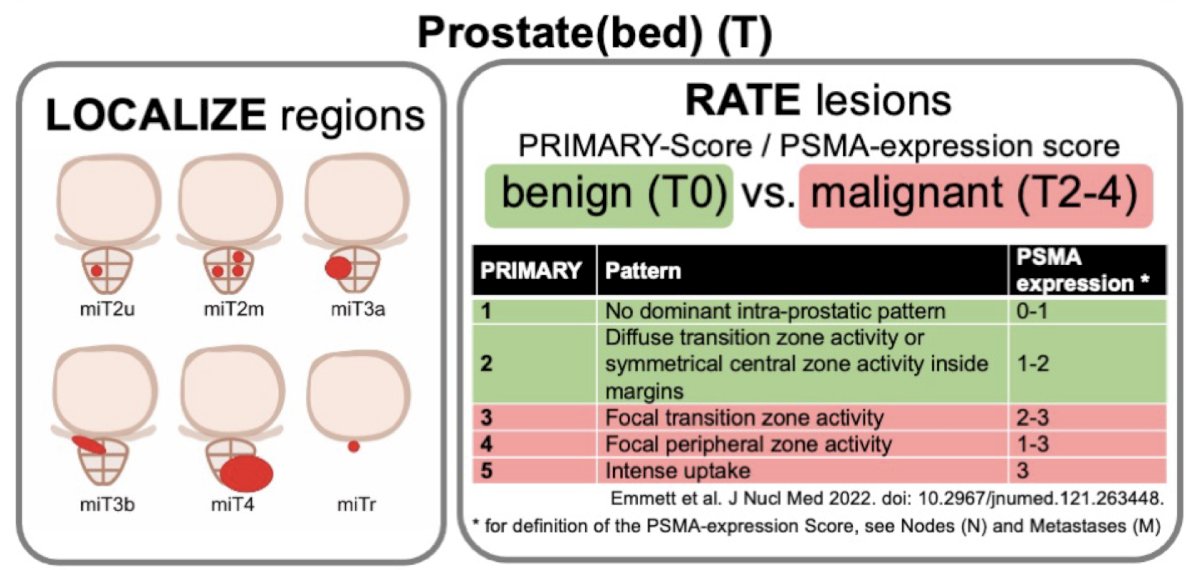
In 2023, Seifert et al.2 published the second version of the prostate cancer molecular imaging standardized evaluation framework including response evaluation for clinical trials (PROMISE V2). PSMA expression assessed by the PSMA-expression score was used in several trials, and a low PSMA-expression score is a negative prognosticator of overall survival after 177Lu-PSMA radioligand therapy. The proposed imaging parameters recorded for response assessment in clinical trials can be utilized to determine response according to PSMA-PET progression or RECIP frameworks, but also future response criteria:

This includes characterization of the prostate bed (T-stage):
As well as characterization of the nodes (N-stage) and metastases (M-stage):

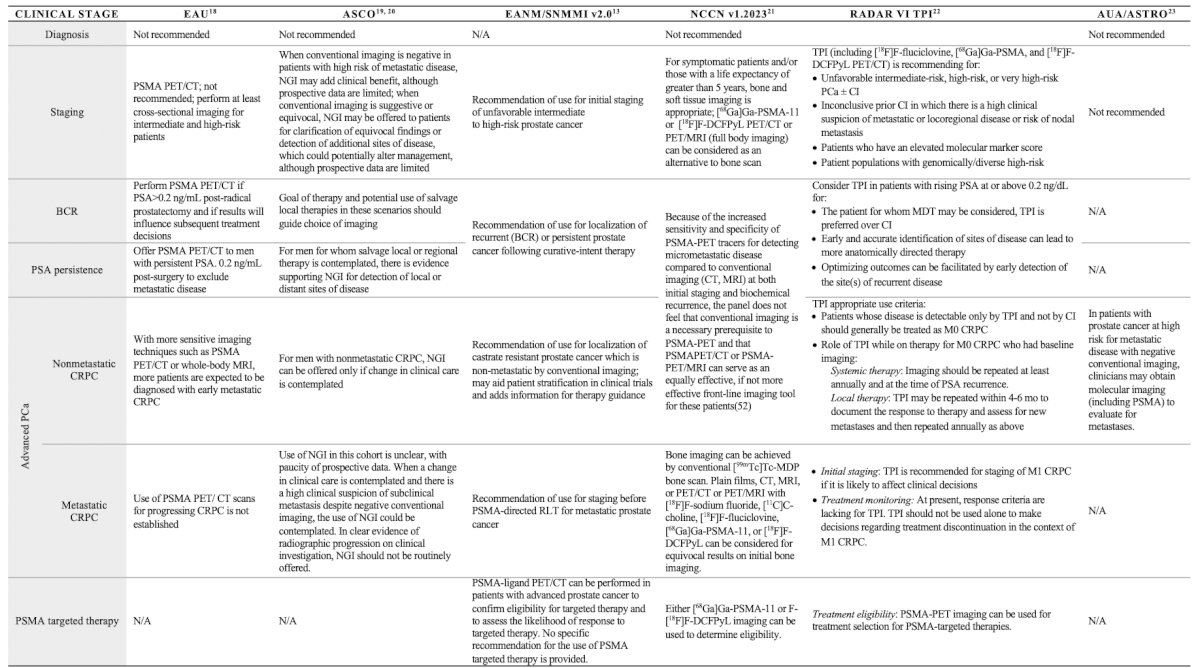
Context matters with PSMA PET use, as noted in the current summary of recommendations on use of PSMA PET by all of the key guidelines:1
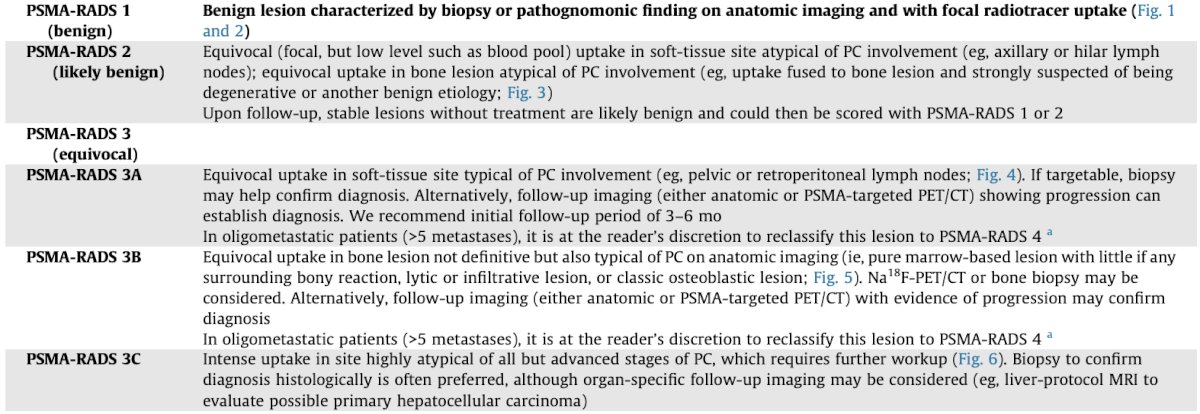
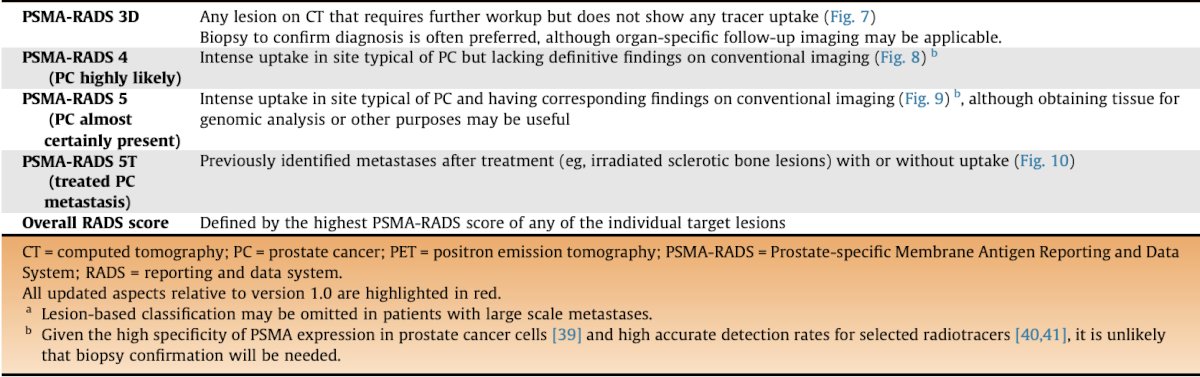
Next, Dr. Kuo discussed PSMA-RADS, which is was introduced for standardized reporting.3 PSMA-RADS version 1.0 allows classification of lesions based on their likelihood of representing a site of prostate cancer on PSMA-targeted PET. The goal of PSMA-RADS v2.0 was to include a refined set of categories in order to optimize lesion-level characterization and best assist in clinical decision-making. The following table is an overview of different PSMA-RADS scores (v2.0):
Dr. Kuo emphasized that there are certain barriers to implementing standardized guidelines and scoring systems:
- They take time to fill out
- May be difficult to incorporate into standard dictation systems
- Artificial intelligence will likely assist with overcoming these barriers:
- Identification of disease
- Segmentation
- Quantitative analyses
- Auto-filling of CRFs
- Generating findings
- Generation impressions
Dr. Kuo concluded his presentation discussing guidelines and scoring systems of a PSMA PET report with the following take home points:
- There is overlap and differences between trials and standard of care
- Context matters in both clinical trials and standard of care
- Standardized templates are important tools, but should not supplant critical thinking
- We should not lose the forest for the trees
Presented by: Phillip Kuo, MD, PhD, FACR, City of Hope, Los Angeles, CA
Written by: Zachary Klaassen, MD, MSc – Urologic Oncologist, Associate Professor of Urology, Georgia Cancer Center, Wellstar MCG Health, @zklaassen_md on Twitter during the 2025 PSMA and Beyond Annual Meeting, Los Angeles, CA, Fri, Mar 28 – Sat, Mar 29, 2025.
References:
- Esfahani SA, Morris MJ, Sartor O, et al. Standardized template for clinical reporting of PSMA PET/CT scans. Eur J Med Mol Imaging. 2024 Dec;52(1):335-341.
- Seifert R, Emmett L, Rowe SP, et al. Second version of the prostate cancer molecular imaging standardized evaluation framework including response evaluation for clinical trials (PROMISE V2). Eur Urol. 2023 May;83(5):405-412.
- Werner RA, Hartrampf PE, Fendler WP, et al. Prostate-specific Membrane Antigen Reporting and Data System Version 2.0. Eur Urol. 2023 Nov;84(5):491-502.