

(UroToday.com) The 2026 AUA annual meeting featured a non-muscle invasive bladder cancer session and a presentation by Dr. Ashish Kamat discussing the duration of response to UGN-102 by age at baseline across 3 clinical trials in patients with recurrent low-grade intermediate risk bladder cancer. Young onset bladder cancer is a newly defined entity, and the Bladder Cancer Advocacy Network (BCAN) and International Bladder Cancer Group (IBCG) arrived at a consensus definition of young onset bladder cancer as diagnosis aged <= 50 years. Importantly, the young onset bladder cancer population is distinguished by a higher percentage of low grade disease than is typically diagnosed in an older population. UGN-102, a reverse thermal hydrogel formulation of mitomycin (75 mg), is FDA-approved for the treatment of adult patients with recurrent low grade intermediate risk non muscle invasive bladder cancer. At the AUA 2026 annual meeting, Dr. Kamat and colleagues assessed the therapeutic efficacy of UGN-102 in different age groups across three prospective clinical trials.
Data were pooled from three studies: OPTIMA II (NCT03558503)1 and ENVISION (NCT05243550)2 were single arm studies, and ATLAS (NCT04688931)3 patients were randomized to receive UGN-102 or transurethral resection. Only the UGN-102 treated patients are included in this analysis. All patients received six once-weekly intravesical instillations of UGN-102 (75 mg). Eligible patients had low grade intermediate risk non muscle invasive bladder cancer with ≥1 prior episode of non muscle invasive bladder cancer. Complete response was defined as an absence of bladder cancer per negative white light cystoscopy, negative urine cytology, and, when indicated, a negative for-cause biopsy. The outcomes were analyzed by age group at baseline: ≤50 versus >50 years; <55 versus ≥55 years; and <65 versus ≥65 years. Duration of response was assessed using Kaplan Meier methods. The pivotal, ongoing ENVISION trial includes up to 5 years of follow-up and was analyzed separately to evaluate longer-term duration of response.
In total, 338 patients treated with UGN-102 were included in this analysis. Baseline patient demographics and prognostic factors are shown in the following table:
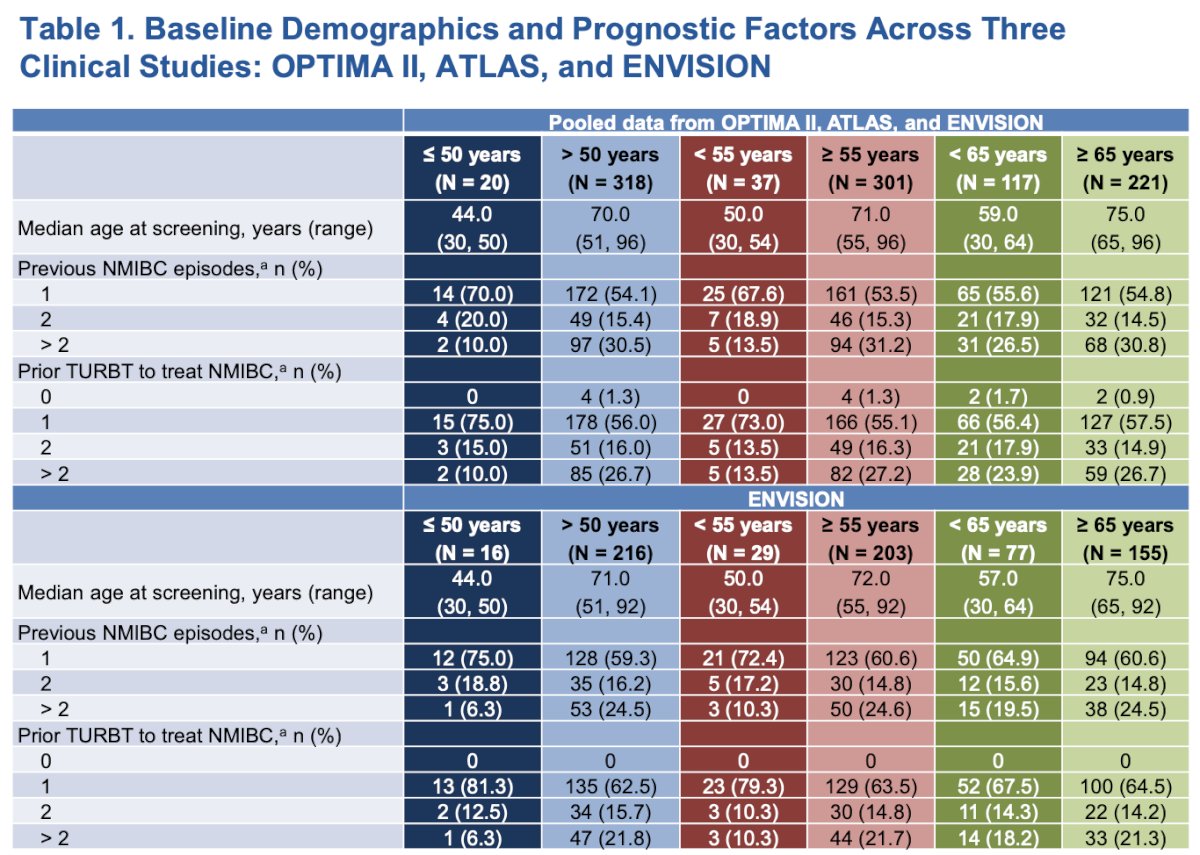
Across the pooled analysis age groups, >= 60% of patients were male, >= 95% were White, >= 67% were not from the United States, >= 93% received all 6 instillations of UGN-102, >= 85% had a tumor longest diameter <= 3 cm, and >= 81% of patients had multiple tumors. Younger patients tended to have had numerically fewer prior non muscle invasive bladder cancer episodes and TURBTs compared with older patients from the pooled analysis.
Patients younger than 50 years of age shared similar complete response rates with older patient groups, with no evidence that age negatively impacted response:
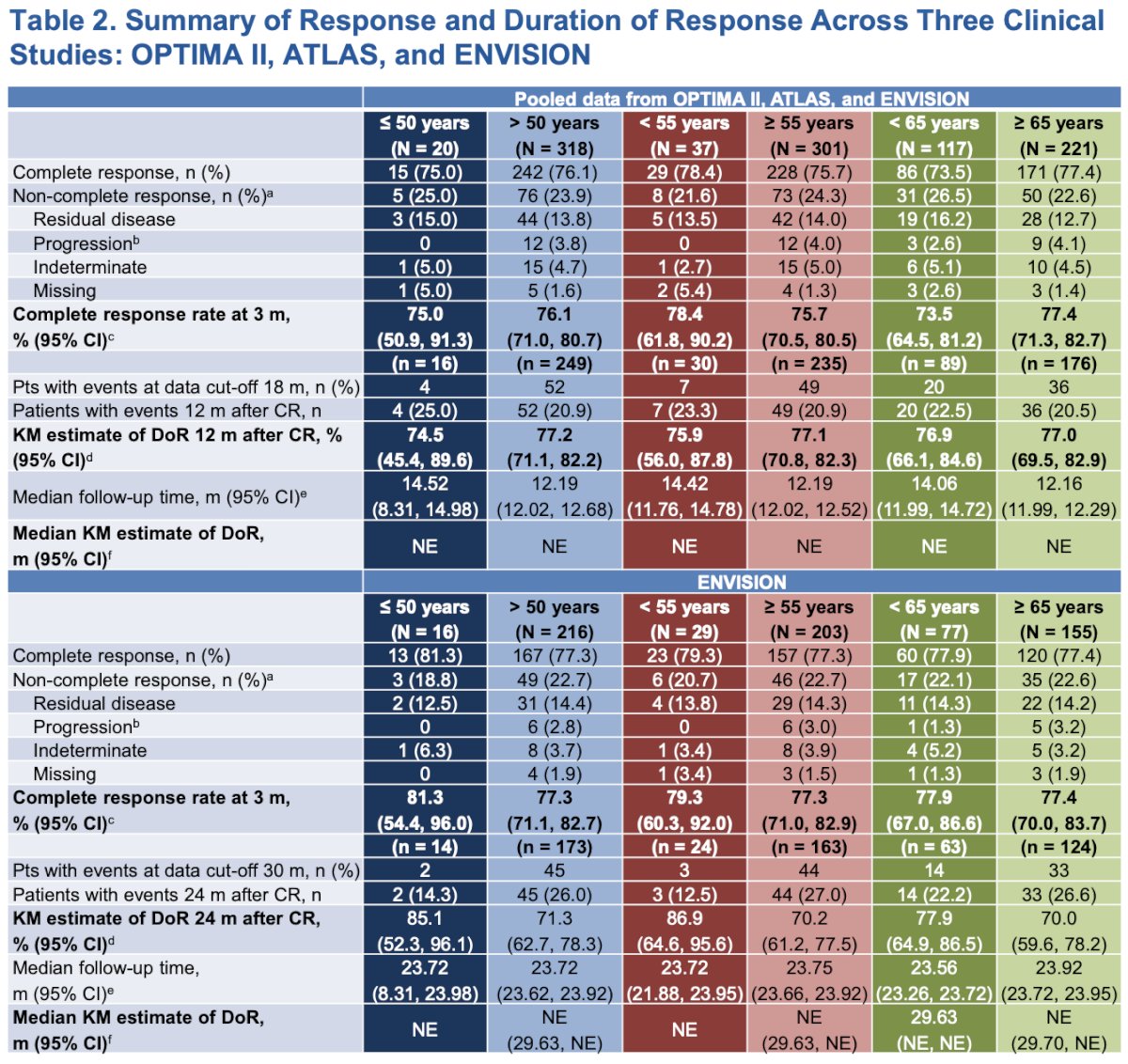
There were no patients with young onset bladder cancer that showed disease progression at 3 months, and most patients remained event-free 12 months after complete response (pooled datasets) and 24 months after complete response (ENVISION dataset). The Kaplan Meier estimate of duration of response was ≥ 74% across all pooled age subgroups at 12 months after complete response and ≥ 70% across ENVISION subgroups at 24 months after complete response. The median duration of response was not estimable for any age subgroup from either the pooled or ENVISION-only analyses due to the low event rate:
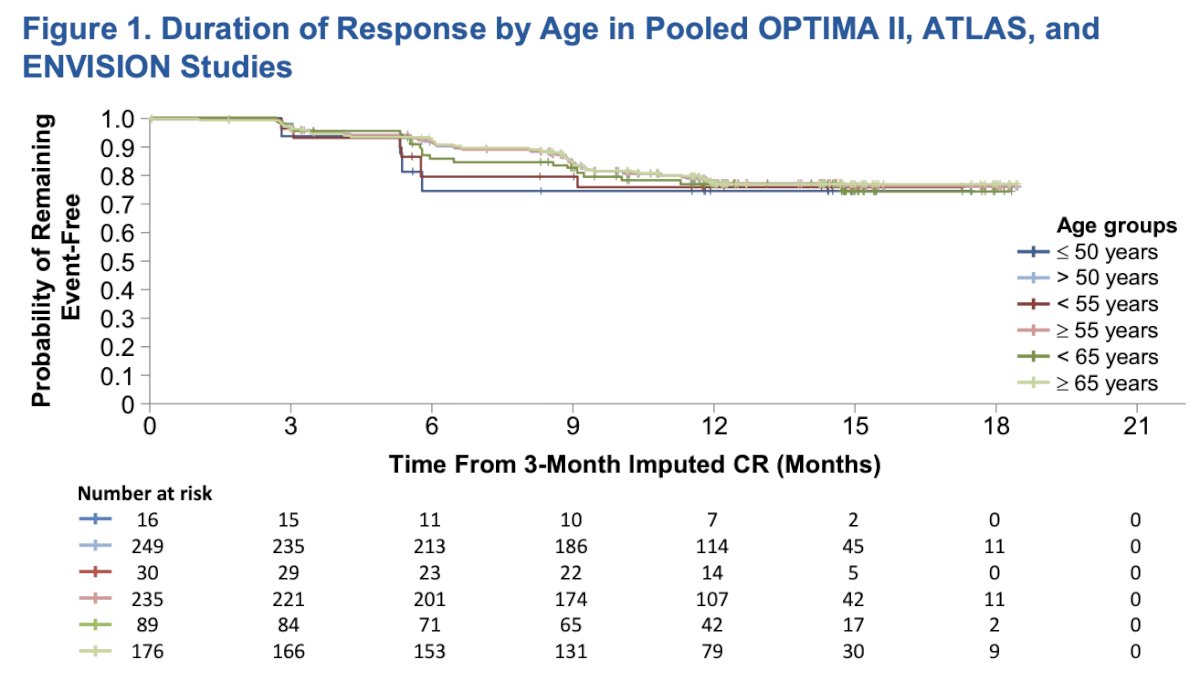
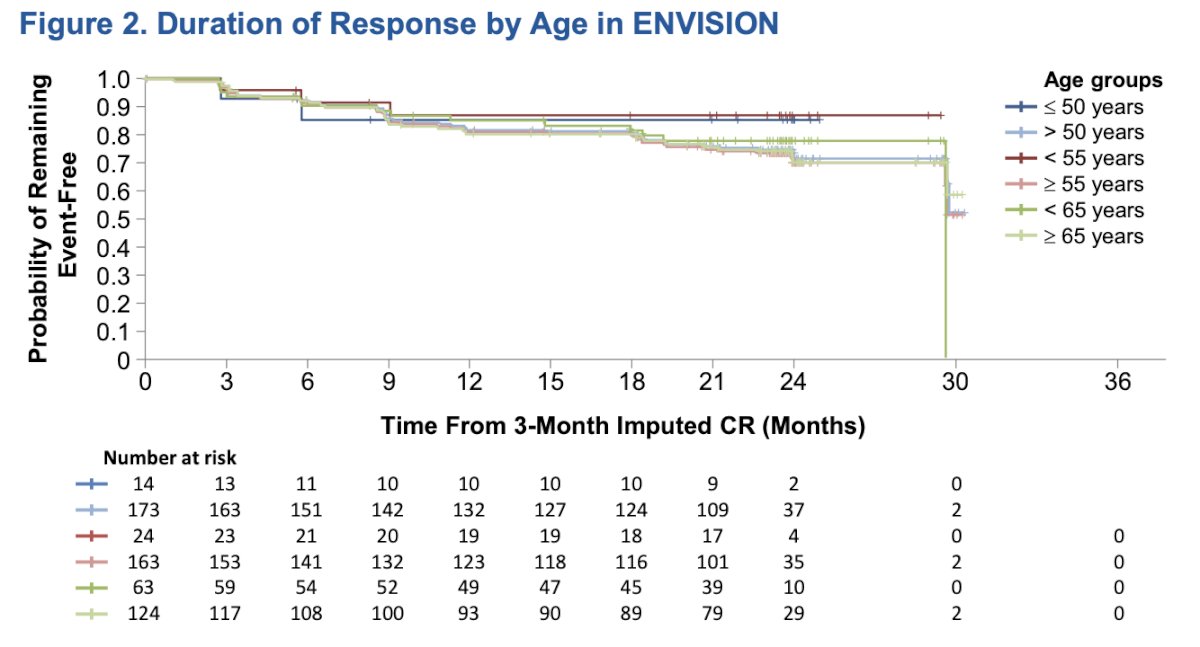
Dr. Kamat concluded his presentation discussing the duration of response to UGN-102 by age at baseline across 3 clinical trials in patients with recurrent low-grade intermediate risk bladder cancer with the following take home points:
- UGN-102 demonstrated consistent efficacy and durability across different age groups
- Most patients achieving the complete response rate at month 3 remained event-free for the subsequent 12 months (pooled data) and 24 months (ENVISION) across the age subgroups
- Younger patients tended to have had numerically fewer prior non muscle invasive bladder cancer episodes and prior TURBTs compared with older patients from the pooled analysis
- The small young onset bladder cancer subgroup size and post-hoc design limit definitive conclusions
Presented by: Ashish Kamat, MD, MD Anderson Cancer Center, Houston, TX
Written by: Zachary Klaassen, MD, MSc – Urologic Oncologist, Associate Professor of Urology, Georgia Cancer Center, Wellstar MCG Health, @zklaassen_md on Twitter during the American Urological Association (AUA) 2026 Annual Meeting, Washington, DC, Fri, May 15 – Mon, May 18, 2026.
References:
- Chevli KK, Shore ND, Trainer A, et al. Primary chemoablation of low-grade intermediate-risk nonmuscle-invasive bladder cancer using UGN-102, a mitomycin-containing reverse thermal gel (Optima II): A phase 2b, open-label, single-arm trial. J Urol. 2022 Jan;207(1):61-69.
- Prasad SM, Shishkov D, Vladimirov Mihaylov N, et al. Primary Chemoablation of Recurrent Low-Grade Intermediate-Risk Nonmuscle-Invasive Bladder Cancer with UGN-102: A Single-Arm, Open-Label, Phase 3 Trial (ENVISION). J Urol. 2025 Feb;213(2):205-216.
- Prasad SM, Huang WC, Shore ND, et al. Treatment of low-grade intermediate-risk nonmuscle-invasive bladder cancer with UGN-102 +/- transurethral resection of bladder tumor compared to transurethral resection of bladder tumor monotherapy: A randomized, controlled, phase 3 trial (ATLAS). J Urol. 2023 Oct;210(4):619-629.